Unknown's avatar

About Ray

Raised in America, from the Midwest to the West Coast on a starchy diet of movies and comics and science fiction paperbacks. There's a Mid-East connection in there too. I write about such states as California and Ohio, and such provinces as Guangdong. Now in Taiwan.

Book Review: How Does One Dress to Buy Dragonfruit?

Dragonfruit

https://thenanfang.com/book-review-one-dress-buy-dragonfruit/

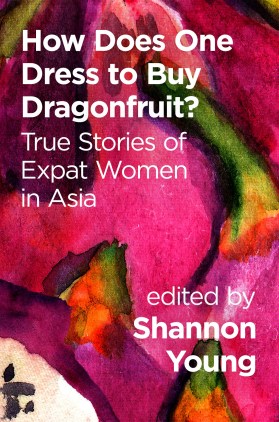
How Does One Dress to Buy Dragonfruit? True Stories of Expat Women in Asia is a new book that explores the feminine side of expat life. Edited by Shannon Young, the anthology covers the stories of 26 women, mostly split between Hong Kong and Japan (from Tokyo to Fukushima), and differs from most travel memoirs by giving new perspectives to Westerners in Asia.

The first, “Forwarding Addresses,” concerns shopping for tropical fruit and coins the title of the entire book. Written in letters, Shannon Dunlap describes her time in Cambodia and the difficulties in learning to speak rudimentary Khmer. The author even recognizes her own privilege in being able to already speak English, and at least she tries to adapt to local customs.

“The Weight of Beauty” by Dorcas Cheng-Tozun takes place in Shenzhen. Again about language, but this time concerning the plight of being a Chinese-American fluent in Cantonese but not Mandarin. It’s not easy to look like everyone else and be judged for not speaking the common tongue, something white expats don’t have to deal with. Cheng-Tozun decides to take a language class, and finds an empathetic connection by discussing life’s tragedies with her teacher.

Stephanie Han is another displaced Asian (ethnically Korean) and authors “Happy Anniversary.” Taking place in the important year of 1997 in Hong Kong, Han is able to eavesdrop on racist rants from the British. A romance in the second-person, she eventually grows past the anxieties of being a nationless expatriate.

“Jewish in China” by Eva Cohen also explores various ethnic combinations. Jews in China are often told they are “so smart and so good at business”, as this writer can attest to. During a Passover sedar, Cohen meets a Chinese professor of Jewish studies with an incredible background. The professor has even published works about the Jews of Kaifeng.

“Huangshan Honeymoon” by blogger Jocelyn Eikenburg concerns interracial marriage and her disappointing honeymoon in Anhui, with a father-in-law and rainy weather interrupting the expected majestic scenery. Chinese husbands are big on filial piety. It’s a challenge, as Eikenburg reflects on the early days of the relationship back when her to-be husband’s father was against their dating, but in the end she feels closer than ever to her new family.

Susan Blumberg-Kason, author of the memoir Good Chinese Wife, lived in Hong Kong in the 90s, and recently returns in “Ninety Minutes in Tsim Sha Tsui” to reflect over some very personal memories, such as receiving news that her Chinese husband at the time had given her an STD. It continues with a one-time meeting of her then-husband’s ex-wife. Don’t we all all wish we could go back and give our younger selves advice?

“Cross” by Safron Marchant shows a deeper side to the themes of pregnancy and motherhood. Marchant tries to start her own family by way of fertility treatment in Hong Kong. The trials are very tough; hormones and clinic visits can be devastating. “Here Comes the Sun” by Leza Lowitz rounds out the theme of motherhood. It’s never easy, as Lowitz fails at pregnancy and goes through the complex process of adopting in Japan. It is heartwarming at the conclusion, with the new mother’s efforts finally rewarded.

Some stories are not as strong as others, which is part of the deal when it comes to anthologies. From getting pregnant in Vietnam to retiring in Malaysia, busing in Bangkok, and vacationing in Mongolia, the range of writing styles and scenes are very diverse.

How Does One Dress to Buy Dragonfruit? is recommended for both men and women. Anyone interested in travel, immigration, women’s issues, and simply human stories will easily find something interesting within this anthology.

Now available at bookstores in Hong Kong and on Amazon.

European and British comics

In one of my last comics-themed posts, I would like to round it out with my forays into European comics.

Let’s not forget there is a whole planet Earth of this medium. There’s Japan, obviously!


Interestingly, Scott McCloud in the brilliant essay Understanding Comics studied the basic underlying structure to Western and Eastern sequential art forms. McCloud concluded that American and European storytelling is fundamentally the same even if the subject matter varies; while Japanese comics from romance to space opera use an altogether different mindset of “directing” techniques.


Anyway: America tends to get the most attention with all the expensive superhero movies these days. But for decades the problem in the West was that comics were assumed to be for children and not given serious thought by social critics.

Meanwhile in Europe, graphic novels have had a strong tradition of recognition by adults and kids for decades. It’s that avant-garde sentiment, y’know.

Firstly, Great Britain. Those originators of the English language tend to be better at writing in general. Ever noticed that? All the great writers are British, from Shakespeare to Vertigo and Image. They called it the British Invasion, the comics version not the rock version, ’twas the 80s not 60s. (Like rock music, America invented it and the British improved it.) As I’ve written about extensively.

What I haven’t mentioned in those extensive writings is the sci-fi anthology series 2000 A.D. Almost everyone, from Moore to Morrison, got their start there. I’ve read the occasional B&W shorts in reprint form.

Furthermore, if I am getting into 2000 A.D. then I must get into Judge Dredd.

wpid-20150507_131732.jpg

Yes, the Stallone movie was awful. Sorry about that. However the 2012 film was quite good.

What you may not know is that the comic is legendary. Going all the way back to 1977, the fascistic judge has had a prolific career. Written by John Wagner, the saga of Mega-City One is one of the most hardcore dystopias ever portrayed in fiction. I came across the graphic novel Tour of Duty, and was impressed enough to go back and read a whole lot. That good. Robot Wars, Cursed Earth, Judge Death, The Apocalypse War, Day of Judgment. Lots of mutants and genocide and critiquing the American dream and so forth, ain’t no harsher more biting stories than those. Dredd is the quintessential outsider’s take on Americana, and what a take those Brits can scribe.


Then there’s the continent. The French-speaking world in particular.

Belgium is famed for Tin Tin by Hergé. Even living in China, I found some English-translations of the classic albums. European comics tend to come in a certain oversized slim album-sized editions.

It’s fun and all, as Tin Tin and Snowy traverse the world. But wasn’t my favorite. Stories like The Blue Lotus are a bit racist, admittedly. Won’t even get into the African stuff.

I’d recommend The Secret of the Unicorn and Red Rackham’s Treasure because of the very fine 2011 Spielberg animated film.

The_Adventures_of_Tintin_-_11_-_The_Secret_of_the_Unicorn


My favorite French comic ever would definitely be Asterix.

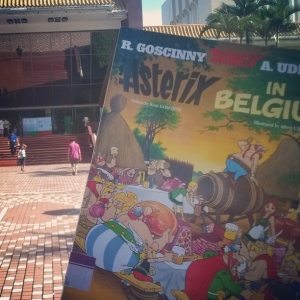
Luckily, I happened upon the Shenzhen Children’s Library which contains a great collection of the albums. Free to borrow! I must have read about twenty. Written by René Goscinny and illustrated by Albert Uderzo, the complete series is totally funny and hold up well today.

10696424_10152506784418411_6545953453448679408_n

Many of the best hail from the 1960s and 70s. Asterix and Cleopatra, Asterix at the Olympic Games, Asterix and the Roman Agent, The Mansion of the Gods, The Great Crossing. Gotta love that Obelisk, and I wish I could get ahold of some potion…


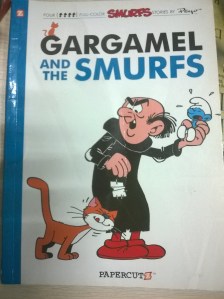
I even found some second-hand Smurfs comics in Shenzhen. Also from Belgium, by Peyo. Not bad, and very nostalgically indicative of the 1980s Hanna-Barbera cartoon from my childhood. Read a couple of them in English, and the library even has plenty translated in Chinese so as I can brush up on my 中文.

WP_20150114_003

“La la la la la la. la la la la laaaa!”


Hey, didn’t I say European comics were for grownups?

Continue reading

Time for Warren Ellis, comics writer

https://www.goodreads.com/review/list/765636-ray?shelf=warren-ellis


DSC00563

That’s just a blurry pic I took at Comic Con ’07 or ’08. He is SO funny in person.


Warren Ellis is a damn interesting writer.

He’s British, smart, and touches on occulty themes, and yet he was not part of the original 90s “British Invasion” of comics writers such as Alan Moore, Neil Gaiman, and Grant Morrison.

His work is violent, intelligent, sometimes dark, with a wicked sense of humor.

In my youth I read some of his Marvel work, like Thor and British X-spinoff Excalibur. I had mixed feelings, because it was that kind of “grim and gritty” style of postmodern comics. Ellis, similar to another (Irish) writer Garth Ennis, clearly hates the superhero genre. He has no use for it, other than a method of making a living sellilng comic scripts. In a perfect world these authors could do other genres without having to slum it among the capes. So they write heroes, all the while cynical and despising what heroism stands for. Still, makes for interesting stories at times.

Warren Ellis is a much sought-after writer for both DC and Marvel, but he rarely does mainstream work anymore. And that’s good.

I became a real fan of the Wildstorm era. Wildstorm, if you recall, was Jim Lee’s company within Image Comics, after all the big name stars left Marvel in the early 90s. Those early comics more than often shit, but Lee ended up with more staying power than, say, Rob Liefeld.

One of those Wildstorm books happened to be Stormwatch, which wasn’t anything great. Seemed another overblown X-Men rippoff about a government team or something. Warren Ellis came upon the title with little fanfair, and it soon gained critical acclaim. No one saw that coming.

I missed it the first time around, but around the mid-2000s I was ruffing it in Los Angeles and enjoyed going to a downtown library. They had an extensive graphic novel collection. I had little money and lots of free time. So I decided to catch up and see what I’d been missing.

Authority_Widescreen_by_Hitch

Stormwatch was cool, but eventually all the characters were killed off and something new came along: Authority. That’s what it was truly all about.

Authorty, illustrated by Bryan Hitch (of Ultimates fame) was one of the first “widescreen” comics. Every issue was epic. It starred Apollo and Midnighter — a gay version of Superman and Batman, and Jenny Sparks the spirit of the Twentieth Century. Unapologetic in its epicness, they fought gods and aliens and were always high-level high-concept.


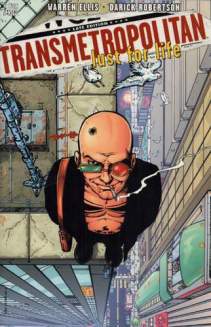
Moreover, Warren Ellis’s greatest legacy would be Transmetropolitan. Those graphic novels I ever so cherished, as they kept me going during my starving artist years…

Transmetropolitan_2

Published by Vertigo, and that’s more like it. Actually was originally published by DC’s “Helix” imprint, but that went under and only Transmetro remained to become one of Vertigo’s most successful.

The story of gonzo journalist Spider Jerusalem in that Hunter S. Thompson vein, but in an unidentified bizarre sci-fi future. There were crazies with alien DNA, a Nixonian character affectionately referred to as “the Beast”, and an even worse President called the “Smiler.”

Each issue punched you in the face and laughed loudly while doing that. Anarchy and journalistic integrity and weird post-science concepts. At 60 issues, by far a record for Ellis. Well done, sir.


In the 2000s Ellis continued with some Marvel projects in the midst of the more mature Quesada era. These weren’t quite rated R books from Image or Vertigo, but better than anything else out.

Nextwave Agents of H.A.T.E. was a cult hit, full of B-list characters like Machine Man and Boom Boom fighting against the Beyond corporation’s ‘Unusual Weapons of Mass Destruction.’ H.A.T.E. being a hilariously biting satire of S.H.I.E.L.D. The whole comic was full of pithy one-liners, nothing else like it from Marvel. First arc was about the dragon Fin Fang Foom and had many comments about purple underpants and lack of genitals. Only lasted 12 issues, which is unfortunately typical for Ellis.

Delicious art by Stuart Immonen.

hlwq5li7zeou1uygycoz


Meanwhile at Marvel, Mr. Ellis wrote the Iron Man: Extremis storyline. You may recognize the nanotechnological elements in the film Iron Man 3, based off the comic.


Outside of the superhero world, we have Fell. This award-winning comic simpler in scope, starring detective Richard Fell in a very dark crime drama.

Fell_-1_cover


There were other little books here and there I read, miniseries from Image and Wildstorm post-bought out by DC.

Global Frequency, pretty cool. Typical Ellis, an elite team of agents fighting the secret forces of incomprehensible technology and great mysteries (un)revealed at the end.

Ministry of Space, an alternate reality take on what if proper British gentlemen won the space race.

Red, more spies. The bad movie was based off that, sorry.

Supergod, apocalyptic religious-transhumanist themes published by Avatar Press. I’d recommend a lot of his latter years work from Avatar.

Yet even Warren Ellis sometimes misses the mark. Personally, I had to give up on the webcomic FreakAngels


The ultimate Warren Ellis opus would absolutely have to be Planetary: Continue reading

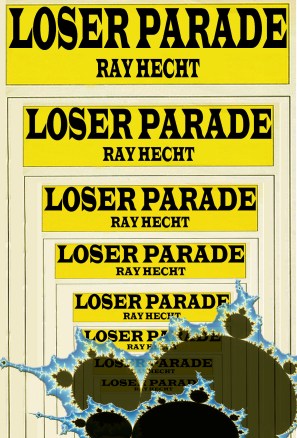
Loser Parade – my first novel, now free on Amazon KDP edition

wpid-loser-parade-cover.jpg.jpeg

http://www.amazon.com/Loser-Parade-Ray-Hecht-ebook/dp/B00ETYSS5W


With this, the last of my free giveaways this season. Allow me to present my first novel: Loser Parade

(Well, my first halfway decent novel)

Written many years ago, so please don’t judge too harshly…


Fenton Ota is at his wit’s end. He thought he would have been more of a success at this point. What happened? He finds himself in Los Angeles an utter failure as an actor, and in the end there is nothing he can do but call Mom and go back to Ohio. The shame!

What is it they say about how you can never go home? Once back in Cincinnati with his tail between his legs, he reconnects with old pals, struggles to build himself up, and eventually embarks on a new goal: writing and directing his own play. Ostensibly based on his own “experiences.” Based on this author’s experiences. Writing about the fictional character who is him, writing about this author, writing about him, and so on. It gets a bit metafictional and postmodern.

He is, of course, doing this all for a girl. And their relationship is all based on lies. Ain’t love grand?

A tale of the creative process, the white lies that get out of proportion, and the deeper questions of just what is a story. Sometimes we are all losers, but hopefully its never too late to grow up.

Pedder Art Galleries in Hong Kong

I recently went to Hong Kong to check out some art galleries.

I highly recommend going to the Pedder Building on Pedder Street in Central. It’s very easy to get to; simply take the MTR to Central and walk out of Exit D1 and you’re right there.

1


From up to down: The 1st floor contains Gagaosian Gallery – 2nd floor PearlLam Galleries – 4th floor Hanart TZ Gallery – 3rd floor Ben Brown Fine Arts

2


The Rudolph Stingel exhibition at Gagaosian contained some interesting golden and metallic prints, large abstract scratches made from audience participation. I found it poignant that if you look directly into the reflective material you see yourself..

This slideshow requires JavaScript.


PearlLam exhibited ‘Perfection by Chance’ Yi Pai series, the space regularly presenting leading Chinese artists. Works by Qin Yufen, Su Xiaobai, Su Xinping, Tan Ping, Yang Zhilin, and Zhu Jinshi curated by Professor Gao Minglu.

This slideshow requires JavaScript.


Hanart TZ Gallary with Roundsky: paintings by Emily Cheng. Very new agey, lots of religious symbolism incorporating text into the paintings. Read closely.

And, the space had personalized arcade console with a working game!

This slideshow requires JavaScript.


Ben Brown presented Simon Birch: The Inevitable. I found these paintings very powerful. Large-scale, a painter with much talent in presenting the human form but choosing to cut up the figures, especially the faces. Seemed full of anger, almost violent, never still.

This slideshow requires JavaScript.


Some fine work up there.

All in all, it was a great day.

20150430_190453


Free eShort Story: 411

wpid-411.jpg
More free eBooks, do enjoy. This promotion will be lasting for several days further.

If you get anything out of this short story, tell your friends and share! And please feel free to post a review if so inclined… (As always, the Kindle app is free)


411 being an old horror tale I wrote years back, loosely based off of my time as a 411 operator. Does it disturb at all?


http://www.amazon.com/411-Ray-Hecht-ebook/dp/B00EUBZRL2

Continue reading

Jim Starlin – Marvel Comics 1970s and Thanos of the Power Cosmic

Previous: Marvel 2000s

Allow me to take a moment to express my fondness for the works of Jim Starlin.

Since Guardians of the Galaxy – and yes the Avengers – has become mainstream, everybody knows Drax the Destroyer and Gamora and the Infinity Gems/Stones.

Most of all, now everyone knows Thanos.

Thanos_GOTG


But for it goes way back. When I was a precocious teen in the 90s, I couldn’t help but fall for the Infinity Gauntlet crossover. It was so epic, so cool. Thanos the all-powerful against a horde of superheroes and space beings. Followed by the exponentially-less cool Infinity War and Infinity Crusade, it was the epitome of overblown early 90s comicbook crossovers. What better to be introduced to the grand Marvel Universe?

The real story of Jim Starlin goes back much further that that. The cosmic escapades I am describing explore one of the great long-form stories of our time, with about forty years of history.

In the 1970s Marvel Comics was on top, having surpassed DC in the previous decade’s Silver Age quality. The medium was full of wonder, although it did get ridiculous as much as it got experimental. The Defenders, Howard the Duck, Jack Kirby’s Captain America. Comics hadn’t exactly grown up by then, no Claremont X-Men yet, but there was much fun to be had in the disco era.


Jim Starlin first got his break in 1972. He wrote and drew three issues of Iron Man, in which the metallic hero fought the Blood Brother aliens. And suddenly it was revealed they were working for the master villain of all time: Thanos.

The cosmic saga had begun.

29-7

It was in the pages of Captain Marvel that the saga truly unfolded. Starting with issue 25, the eponymous Marvel character finally found his own voice. The Kree alien (actually named “Mar-Vell”) was joined by the cosmic being Eon to become a protector of the universe, and was faced off against Thanos powered by a cosmic cube. The universe was just barely saved in the end.

I came across the trade paperback collection in my youth and I’m glad I did. The Infinity crossovers of the 90s made more sense with the backstory. That was the beauty of being into superheroes, to go back and endlessly collect and learn the whole story… Baroquean really…

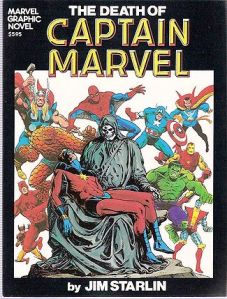
There was also Tbe Death of Captain Marvel, the first official graphic novel of Marvel. A sort of proto-crossover, it was simply about the Captain getting cancer and retiring from the world of the living. In typical fashion, Starlin explored themes of the afterlife and the psychedelic depiction thereof.

That was back when characters stayed dead.

DeathofCaptainMarvel


Starlin is known just as well for Adam Warlock, a random character created by Kirby, who later became a sort of Christ-like figure. The artificial humanoid died and resurrected himself a number of times, just as often to fight against Thanos as he did ally with the mad Titan. An unlikely antihero.

The original build up of the Infinity Gems in comics was harder for me to find. I tracked down some rare reprints, an unsuccessful miniseries from the mid-90s. Weird stuff. Another villain was the Magus, who was Adam Warlock from the future and had started his own evil religion. Warlock had to erase the timeline to win. I think we can all relate to these kinds of psychological adventures.

Warlock original cover


It was a grand cosmic mythology, on par with Kirby’s Fourth World. The universe was a place of alien empires, tyrants with omnipotent power, and strange abstract beings overseeing the functions of all reality.

By the way, speaking of Kirby, Jim Starlin explained in interviews that Thanos wasn’t based on Darkseid — DC’s megavillain of similar stature — but rather  more based on Metron originally. What with the floating chair.


Starlin is mainly well-known for the space operas, but he also had a diverse career. Even wrote Batman in the 1980s during the Death in the Family arc with poor dead Robin II. Cosmic Odyssey for DC as well, and his own creation Dreadstar. In later years, Rann-Thanagar War comes to mind.


But Starlin’s greatness is really showcased with the cosmic stuff.

In 1989 he wrote Silver Surfer (no longer illustrating) in a prelude to the Infinity Gauntlet. The anthropomorphic nature of Death had brought Thanos back from the grave, to harness his power and bring an evil balance the universe.

Much has been written of the ‘Infinity Wars’, the return of Adam Warlock and his multiple personas. It was Marvel of the 90s okay, and it was great. The followup series Infinity Watch wasn’t that great but it did further expand the mythos, as Warlock led his own ragtag team. Pip the Troll and Moondragon may not be top-tier franchises, but Drax and Gamora certainly grew in popularity in that series. And look that them today, full-fledged movie stars!

Continue reading

Free eBook: The Ghost of Lotus Mountain Brothel

wpid-ghost-2.jpg.jpeg


For today, my old historical eNovella is free on Amazon:

And don’t forget, the Kindle app is free as well.


http://www.amazon.com/Ghost-Lotus-Mountain-Brothel-ebook/dp/B00JJUXZFE

Continue reading

My Interview on Speaking of China:

SOC-2013-final-banner


Please read my interview concerning my eBook Pearl River Drama for the website Speaking of China.

Many thanks to fellow Ohioan-expat Jocelyn Eikenburg for the interviewing me, and for appreciating my meager writings.


Interview with Ray Hecht on “Pearl River Drama: Dating in China”

Continue reading

Marvel Comics – the 2000s

Previous: DC Comics 2000s – Gail Simone

Goodreads Shelf: Marvel


Back in my twenties, the prime of my life. Although I said I swore off Marvel, it didn’t take long for me to get back into the so-called ‘House of Ideas.’

It was Joe Quesada in the 2000s who headed the new era of mature storytelling for a certain biggest American comic company. He did away with the archaic comics code authority stamp, that self-censorship system imposed during in the 1950s ‘juvenile delinquency’ scare, Quesada was right to disregard, and mainline Amero comics became more like PG-13 films or prime-time television dramas. DC followed suit eventually as well, took them long enough.

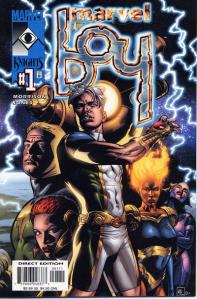
I particularly had to take notice when Grant Morrison was invited to write New X-Men. That changed everything. By the by, Morrison’s first for the company (at this time, never mind the 90s Skrull Kill Krew), was Marvel Boy. Totally awesome, with high concept ideas such as a humanless corporation villain and interstellar immigration policies. And a Fantastic Four miniseries illustrated by Jae Lee.

MarvelBoy1-2000


So, while I was already there I decided give some other X-Men a go. Chris Claremont went to X-Treme X-Men, after his return didn’t work out. I gave it a chance. Chuck Austin in Uncanny was, unfortunately, considered among the worst runs ever.


Geoff Johns on Avengers, as said.


Then, Mark Waid got to write Fantastic Four! A lot of fun, and joined by the late Mike Weiringo of Flash fame. The first family of the Marvel Universe were seen as ‘imaginauts,’ as they explored time and space and other universes. Doctor Doom got a bit of an occultic retcon, and it was well done indeed. I love when Fantastic Four is done right.

markwaidgreatest3


Earth X came out in 1999, but I read the graphic novel a year or so later. Created by Alex Ross initially (written by Jim Kreuger) following DC’s Kingdom Come, the dystopian premise was a future in which everyone has super powers except for Captain America.

Earth_X

Jim Kreuger followed it up with Universe X and Paradise X, and I read all with great anticipation. Kreuger told a sort of final chapter to the Marvel Comics saga, revealing every secret character by character, giving a bittersweet farewell to everyone from Spider-Man to Galactus…


(Do prepare to see a lot of pics with Captain America standing there inspiringly, in this blog)


Meanwhile, the next big thing was to be the Ultimate Universe. Starting with Ultimate Spider-Man — written by Bendis whom I rarely cared for — it was a separate reality that was supposed to reboot everything for the sake of newer readers. Unburdened by decades of continuity, the Ultimate universe started anew with fresh modern takes on the various franchises.

Marvel Millar wrote Ultimate X-Men, and it was not good at all. Millar is an interesting writer; he’s pretty much a hack and yet a very entertaining hack. These days he’s only concerned with making comics to serve as movie pitches, such as Kick-Ass and Secret Service.

There was one masterpiece that stood out. Ultimates, by Millar and brilliant artist Bryan Hitch. That is, specifically the 13-issue Ultimates and sequal 13-issue Ultimates 2.

Ultimates_01_promo

There wouldn’t even be the Avengers film phenomenon if not for Ultimates.

Millar was very successful at turning the Avengers into an incredibly awesome action movie franchise. Of the ‘widescreen’ style, written snarkily like the wittiest rated R cult classic, there was Captain America as WWII badass, homicidal Hulk, and biggest impact of all was Tony Stark/Iron Man as self-obsessed genius asshole. Thor as a new age guru was an interesting take. The super team and S.H.E.I.L.D. were all presented bit fascistic if you analyze too much, yet what a ride.

Very quotable. Cap: “SURRENDER??!! You think this letter on my head stands for France?” And when the villains overtake Manhattan: “The Great Satan has been liberated.”

With the climax of the first volume fighting aliens, familiar? I must admit I am definitely invested in the Marvel Cinematic Universe, and I fully give the Ultimates their do!


Other Mark Millar impacts included the crossover Civil War. Which will be getting a movie.

Civil_War_7

I didn’t read most crossovers of that decade. Secret Invasion by Bendis, no way. Fear Itself, yawn. Civil War was on of those cynical ‘realistic superhero’ tales in which Captain America goes to war with Iron Man over government registration of superhumans. The trade reprint seemed worth a read at the bookstore but not buying.

Spider-Man famously gave up his secret identity at the time, siding with Iron Man and revealing himself on camera as Peter Parker. Obviously, there was a retcon soon after and that never happened; back to the ol’ status quo for Spidey.

Afterwards, Cap was assassinated and resurrected Bucky/Winter Soldier replaced him for a while. I read some of Ed Brubaker’s run, it was critically acclaimed and so on, but kind of boring with all the predictable resurrections.


Continue reading

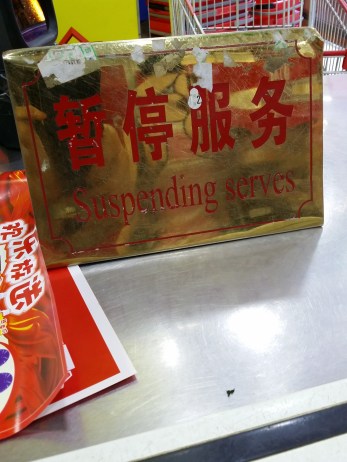
Suspending serves

I went to the supermarket, this lane was closed.

wpid-20150418_164055.jpg


Also: this isn’t Chinglishy but rather surprisingly racist whatever it’s supposed to mean…

wpid-20150418_163943.jpg

Gail Simone – more DC 2000s, and brief word on women in comics

Previous: DC Comics – 2000s

It’s been said that the comics scene — American superhero comics specifically, at least –is too much of a boy’s club. There are some legitimate criticisms in that, and I hope the field will prove more inclusive in the future.

I did like Louise Simonson’s 80s X-Men spinoffs, and Ann Nocenti’s Daredevil. Persepolis by Marjane Satrapi in the more indie vein. I grew up with Rumiko Takahashi’s Ranma 1/2 as for Japanese manga. Japan has always had plenty of female-friendly markets, and independent comics are surely more diverse.

Yet I have to admit that throughout the 2000s, the largest bulk of my reading centered on mainstream comics (mostly DC) by these authors: Geoff Johns, Grant Morrison, and Mark Waid.

Do allow me to add one more to the list: Gail Simone!

And I hope I’m not coming across as too affirmative actiony here, I really am a big fan.

Ms. Simone started out gaining prominence in the scene with her Women in Refrigerators blog, making the point that violence against women is often a plot point to motivate the male protagonist. And that’s not a very cool thing if you want to get more readers of the other 50% of the population.

She started writing Deadpool for Marvel, though I never read it I have heard good things, helping to build up the popularity of the character who is getting a movie. Deadpool is dark comedy, which is one of Simone’s best styles.

She truly has a brilliantly sick sense of humor.


For me, it began with Birds of Prey by Chuck Dixon. The series was great, as previously mentioned Barbara Gordon had become crippled and turned her talents towards being a sort of superhero tech operator. She mainly sent Black Canary on Bond-esque missions.

1091590-bop_01cover600cmyk_7_sm

Gail Simone took over the writing, and Oracle was further joined by Huntress and Lady Blackhawk. The series actually became even better.

There was a hiatus, and at the Brightest Day event she returned to Birds of Prey with a new number 1 and it was most certainly on my pull list. Although that only lasted 12 issues, because of Flashpoint. See why I don’t like reboots?


I enjoyed Birds of Prey plenty, and then I became a rather hardcore fan during the Villains United minseries as as part of Infinite Crisis crossover.

4-villain

The premise was that all the villains were teaming up into a grand secret society, with an inner circle led by Deathstroke, Black Adam, Lex Luthor, and Talia al Ghul.

Villains United wasn’t actually about the society, it was about a ragtag group of villains who wouldn’t play along. Deadshot, from the old Suicide Squad I loved, and a re-amped Catman, Rag Doll, Bane, and the new character their leader Scandal Savage — the daughter of Vandal Savage They became the mercenary group Secret Six (I’d list all six, but it wasn’t stable as some died and were replaced).

I knew something awesome was in the works. Best antihero villains-themed cover ever. The Six eventually got another miniseries, and then a long-running series that I followed to the bitter end. More below.


Simone wrote Wonder Woman for a while there by the way, and it was very well-received. So rarely is the character done right, a lot of those mythological epics are hard to do well. The new mega-villain Genocide was introduced. With a tweaked origin and a barbarian saga in mind, ’twas no George Perez but still quite good.

230450-18208-117754-1-wonder-woman


And then I moved to China in late ’08.

I continued to read Secret Six throughout my time in China. I brought all my back issues with me. Bought the new ones at my comic shop in Hong Kong.

wpid-20150410_153141.jpg

Continue reading

Geoff Johns – DC Comics 2000s

wpid-geoffjohns.jpg

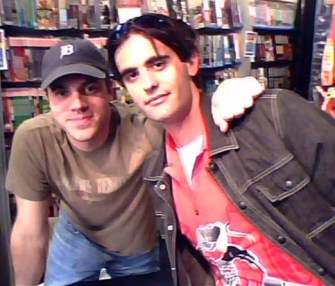
Met at comic shop opening L.A. Comic writers are always such nice guys.

Geoff Johns largely WAS the face DC Comics of the 2000s, in my twenty-something resurgence as a hardcore comics geek I basically read every single one of his books that entire decade.


Note: Goodreads Shelf: Geoff Johns — that 68 at last count


Johns is not going to win any big literary awards and change your life, and that’s not the point. He is a great entertainer, a great storyteller, never dumbing down and utilizing the best aspects of the superhero genre. Throughout the 2000s, he was particularly skilled at taking complex continuity and streamlining into a way that pleased hardcore fans and newcomers alike. Nowadays is a different story, but that’s what it was like at the time.

I remember first discovering the former screenwriter’s first published Stars and S.T.R.I.P.E. at the very beginning, a certain humble 12-issue series about the Star-Spangled Kid, an update on old Golden Age retired heroes. It was the perfect start. Nothing grim and gritty (although later I’d learned the main character Courtney Whitmore was based on Johns’ deceased sister), just fun comics with respect towards history.

1221


This also concerns Starman. Written by James Robinson in the 90s, Starman was one of DC’s finest works. Another legacy comic about a modern take on the Golden Age, Starman was very different from the norm. Jack Knight might be called a hipster hero today. His dad was the original Starman, and he was a normal, cultural guy with tattoos and good taste in movies, forced into the life.

Ultimately James Robinson ushered in the new JSA: the Justice Society of America. Thanks must also go to the success of the JLA at the same time, and DC was trying harder with classic team books.

JSA_Vol_1_26

Geoff Johns wrote from issue 5 and up to the end, and it was something special indeed. Unlike previous incarnations of these characters in Infinity Inc., the new book was ambitious and quickly became the centerpiece of the DC Universe. Arguably more crucial than the Justice League themselves. The society saved the world, introduced new mythos, let the original Flash and Green Lantern and Wildcat mentor the next generation, and not to mention a return to glory for Hawkman.


As for solo heroes, Geoff Johns took over The Flash…

This was back in the Wally West days, not Barry Allen like the new show currently airing. Barry had died way back in the Crisis on Infinite Earths event in the 80s, long replaced by his now grown sidekick. Wally was more of an everyman hero, without a secret identity, but still very much in the mainstream superhero scene.

1204

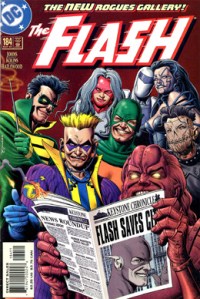
Flash already had very high standards, thanks to the extremely talented Mark Waid, and Johns – joined by artist Scott Kollins – focused on Wally as a sort of working class hero in a pseudo-Detroit. The villains were given the utmost important, with the Rogue’s Gallery often being the stars.

The Flash became my favorite hero of all.

I still really miss Wally West…


Geoff Johns was gaining traction, and got noticed by Marvel Comics. He had a brief run over on the flagship title The Avengers, as well some other miniseries such as The Vision and The Thing. He did as well there as expected – he was perfectly suited to Captain American in particular. Sadly, it was over all too fast and Johns signed on to be exclusive with DC and the run abruptly ended after a mere 20 issues. Avengers after that became New Avengers  by Bendis and I was no fan; that was point I cut off all Marvel and focused only on DC.

1228


Geoff Johns kept going. Teen Titans debuted, fusing the 80s Titans fused with Young Justice. I didn’t love the art and I kinda missed Peter David, but it was very much worth reading. Robin, Superboy (now revealed to be… spoiler ahead… Lex Luthor’s clone!), and Impulse took up the mantle of Kid Flash.

1219


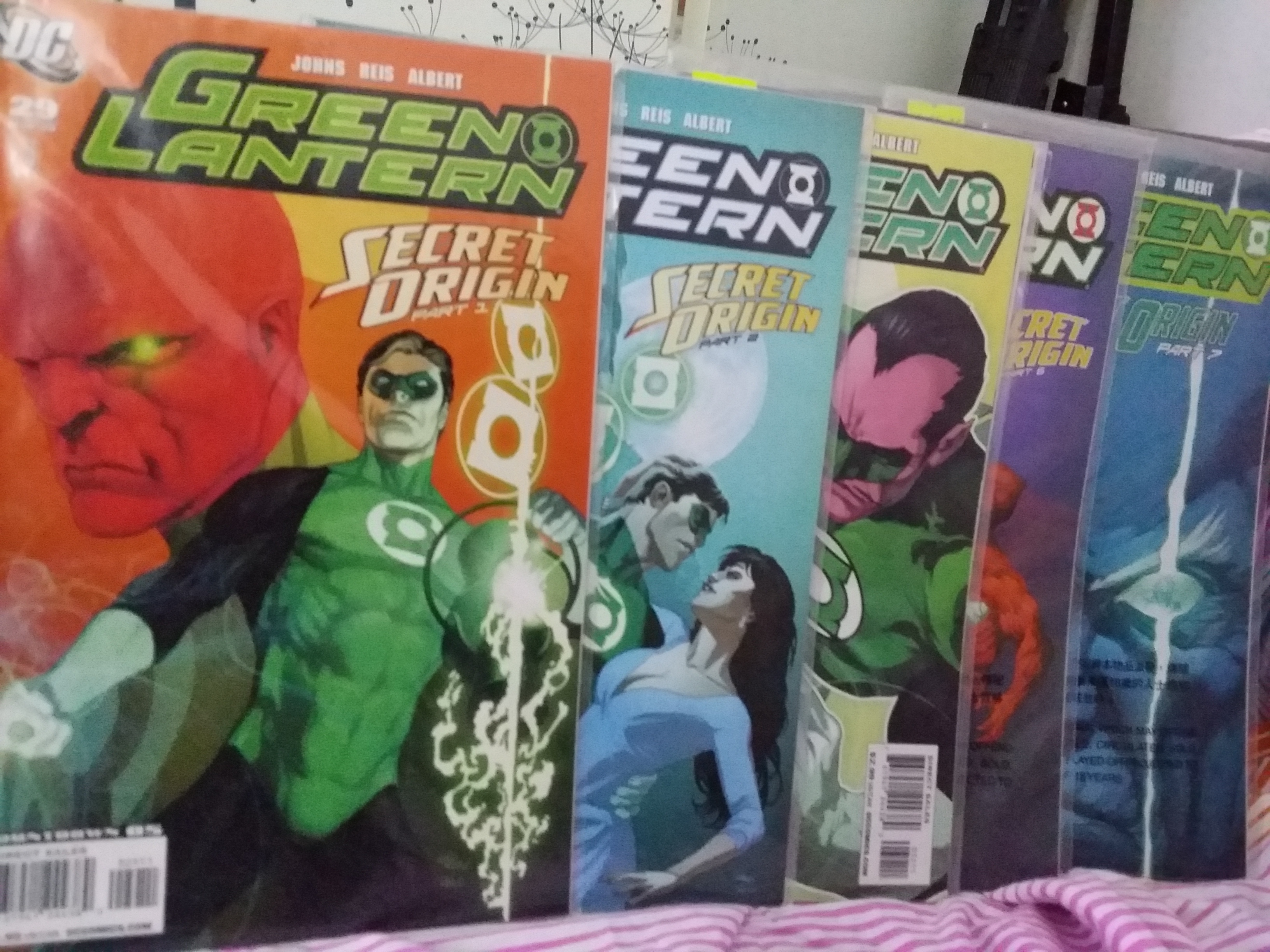
This would not be a post about Geoff Johns however, if I did not speak of his epics of epics: Green Lantern!

(Note many of the pics below I simply took myself, as I thought these comics worth saving in my China apartment right now)

wpid-20150401_204211.jpg

Continue reading

Smashwords Edition

Here is the latest…


pearlrivercover1


A new edition up on the Smashwords eBook website:

https://www.smashwords.com/books/view/532806


One advantage of Smashwords is that you can download in multiple formats, and don’t need a Kindle account. There’s the direct PDF, as well as .ebub.

I can also do a coupon code to give free copies, if anyone is interested. Just ask!

Of course, reviews as always are appreciated (especially – sorry SW – on the Amazon link: Amazon.com/dp/B00RQQIA26)

Money girlfriend

Drink tea, chat, talk about the project

image