X-Men # 246 – 247

So, I just decided to reread all the 1990s X-Men comics and have since procured 43 digital graphic novels.
In what no one asked for, I shall ‘live-read’ these and share my observations over the coming months. These comics are special to me, I have some free time on my hands, and I simply wanna embrace my inner nerd.
It begins thus: I have decided to start with Uncanny X-Men 246 and 247, as a sort of prelude to the graphic novel collection Dissolution & Rebirth. It was 1989, and this marks the end of the less fondly-remembered Australian Outback era. (I kind of liked it, Marvel was getting darker, and for some reason the X-Men were presumed dead and living in Australia.)
Anyway, the big Inferno crossover had recently ended and Jubilee just had her first appearance. Now it was time for a new era, and one by one each character would get sucked into the mystical Siege Perilous. In this issue here Rogue got sucked away, and soon everyone else would follow, until the mutants found themselves in a scattered diaspora and it would be a while until the cartoon-esque status quo would finally arrive. The continuity was admittedly complicated. Also, I liked the stylistic art by Mark Silvestri.
In the next issue, Jim Lee would illustrate his first issue and Marvel would begin to change. The 90s were a decade with many flaws, but at least the comics were fun and ambitious if not pandering, and the X-Men were the focal point of this new aesthetic…
Dissolution & Rebirth

This was the official beginning of the 1990s X-Men, heading towards the climax of the multi-decades-long Chris Claremont saga, and that makes for a confusing read.
Before the best-selling renumbered X-Men # 1, before the animated series status quo so many think of when they hear “the X-Men”, there was this transitionary time when the 80s had to wrap up in order to begin anew.
After the mutant team gave up and left Australian Outback, they went through the mystical Siege Perilous and ended up all over the world. In the premiere of superstar artist Jim Lee’s first issue, Storm seemingly dies (later it’s revealed she’s transformed into a child… yes, it’s confusing. That storyline did introduce the gentleman thief Gambit).
Then Wolverine and Jubilee go on the run, where they meet Psylocke who has been transformed into an Asian ninja—this happened to be due to Iron Man villain the Mandarin, during the Acts of Vengeance storyline in fact. That trope has aged a bit poorly, I admit, but this iteration of Psylocke sure looks cool.
In the meantime, there are many sub-par issues about the extremely slow-building Shadow King storyline on Muir Isle. The focus turns to Banshee and Forge for some reason, as if there weren’t enough characters, with mysterious psychic forces manipulating everyone. There’s also a buildup towards a showdown with apartheid-analogue nation of Genosha, crossover event scheduled for the next graphic novel, and amnesiac Colossus and Dazzler show up here and there along with Jean Grey and many weird bad guys.
Taking each chapter individually, there are a lot of high-quality stories in this collection. As a whole, it felt like too much. So many overlapping plot threads made it increasingly difficult to keep track of what the heck was going on, and in retrospect one can’t blame Marvel for soon wiping the slate clean and starting over.
Can only recommend for the most hardcore of fans, those who know all the backstory and can’t get enough. Still, that’s what used to make superhero comics fun. Eventually, it all becomes too much and reboots are inevitable. Note that this pattern is even happening to the superhero genre in film nowadays…
Anyway, it’s not the best X-Men ever, but Jim Lee and Gambit and ninja Psylocke would all be necessary elements to fully understand the mad decade that was the 90s.
Cable & the New Mutants
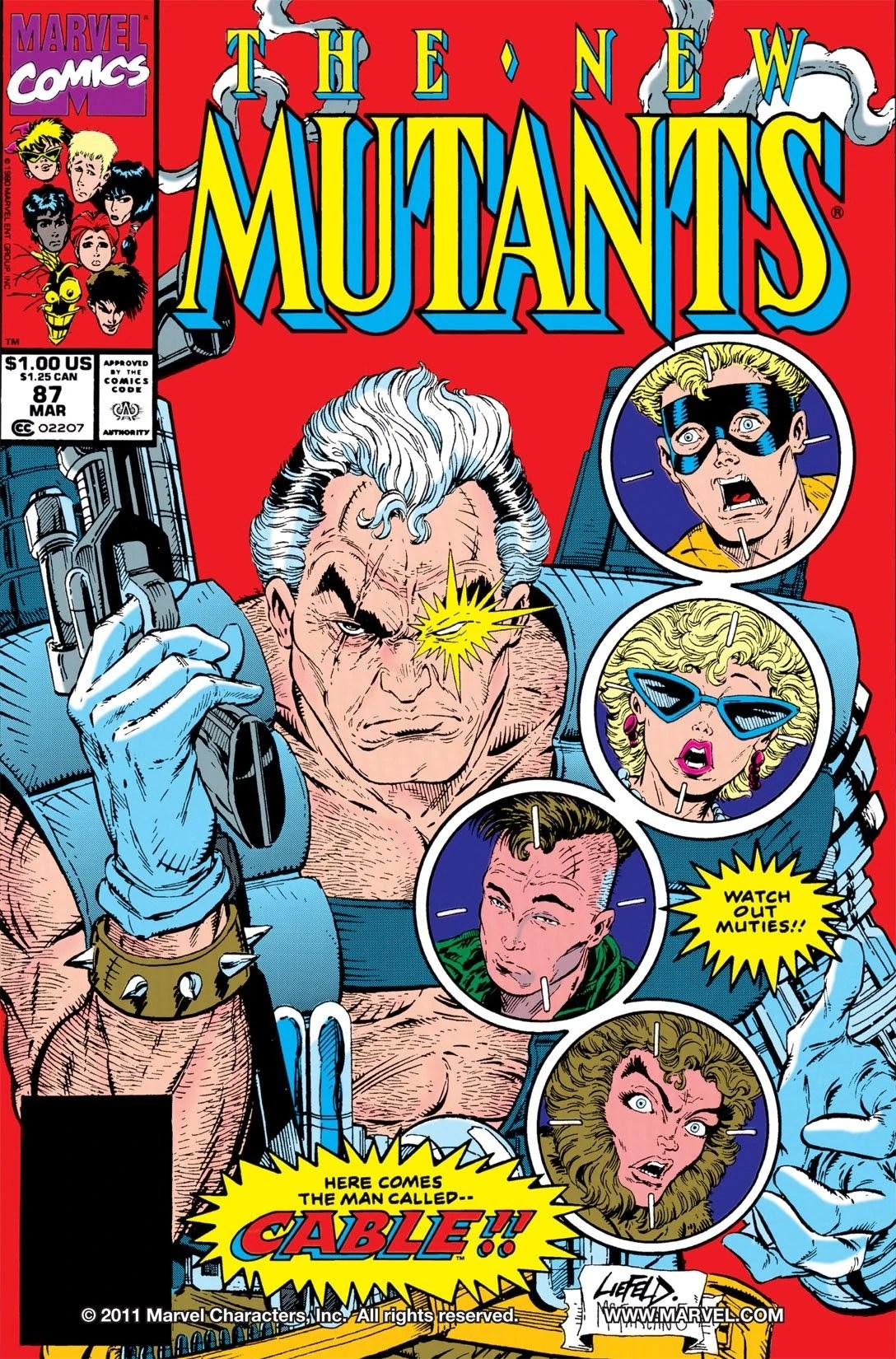
Just awful.
The Rob Liefeld era begins. I know it’s commonplace to hate on him online these days, which is well-deserved, but apparently these comics were a big hit circa 1990. In retrospect, we really should have known better…
It doesn’t get more 90s than Cable. After years of the New Mutants being about teenage superpowered students, all of a sudden Marvel pushed aside poor Louise Simonson and gave the reigns to this edgy young artist who wanted to direct a bad action movie.
It’s not just the overdetailed art and muscles and guns and ridiculous poses, it’s the storytelling. It’s honestly hard to keep track of what’s going on in these issues. It’s one thing for Liefeld to draw “badass” covers, but a comic needs to have a coherent story structure.
As far as I can follow, Cable goes on some missions fighting new villains the Mutant Liberation Front. Then, the New Mutants coincidentally run into him on the street (what great writing)! Then he’s their leader and they move into the destroyed X-Mansion and train in the danger room. Oh, and also an unnecessary crossover with Wolverine because of course.
Certainly worth rereading for the historical context, and admittedly Cable did become an intriguing character once professional writers came in and retconned his origin. But that was a long way off. At this time, just reading as a standalone graphic novel for what it was, these were objectively terrible comics.
X-Tinction Agenda

In this intermittent era of the X-Men, as most of the mutants come together after the Siege Perilous diaspora, one of the major dangling plot threads finally came to a close. Genosha, the apartheid-allegory country, had kidnapped members of the New Mutants and X-Factor, and it was time for the crossover event the X-Tinction Agenda.
A quite succinct crossover of that time, with nine specific chapters all continuing into each other in an orderly structure. (These days, it would be much broader and harder to follow.) The Chris Claremont and Jim Lee issues are of the high quality one would expect, wordy and detailed. The manga-inspired mechas and Genoshan tech by Lee particularly stand out. While Rob Liefeld’s art is as one would assume just plain bad. A shame, because Louise Simonson did a solid job of penning two thirds of the saga.
It’s a lot of fun seeing all these interactions for the first time. Everyone meets the new Psylocke, Gambit trades wits with Cyclops, Cable orders them around, Jubilee bickers with the similar mallrat teen Boom Boom, Jean Gray and Wolverine meeting after years apart with some very heavy sexual tension, a showdown between the transformed Archangel and his creepy arch foe Cameron Hodge, and more.
As it wraps up, Storm is transformed back into the adult she’s supposed to be. And it’s a new iteration for Wolfsbane, who becomes trapped in her werewolf form. A pretty good story, if not a bit bloated, and a precursor to the annual crossover events that were to come from now on.
I remember getting the graphic novel when I was young, and struggling to understand all the setup. That was the appeal for me, back then, to fill in the gaps and make sense of the broad X-universe. But that also makes for a challenging read for novices. It’s understandable that a soft reboot would be necessary soon after.
So make sure to read everything that came ten years before, or just enjoy the ride. I give it 3.5 stars.
Muir Island Saga

That’s it, after over a decade-and-a-half since the 1970s, Chris Claremont got to conclude his sprawling X-Men opus.
And unfortunately, he went out with a whimper not a bang.
The late 80s had the characters scattered all over the Earth (and the universe), and in the Muir Island Saga they got to come together again for the big showdown against the Shadow King. It was one of the longest subplots ever, a slow burn hinting for years that something that Moira MacTaggart was being mind-controlled and evil, apparently.
After a very well-drawn storyline in outer space, Professor X returns to Earth to face his psychic nemesis the Shadow King. Colossus and Rogue are brought back into the fold as well, following a weird Savage Land and Magneto interim, and then there’s a crossover with X-Factor so the original five X-Men get in there too.
The art is inconsistent and all over the place, Whilce Portacio drawing a particularly overdetailed issue, although the chapters drawn by Andy Kubert are kind of like foreshadowing for the artist who would later define the bulk of the 1990s. As for the writing, Claremont didn’t even finish the scripts halfway through.
It seems Marvel was to be more about teams of editors guiding artists at this point, written by committee, instead of supporting individual writers. Fabian Nicieza cowrote the rest as Claremont bowed out, and the Muir Island “Saga” doesn’t feel like a consistent vision at all. There is an interesting epilogue by Peter David, who was always good at mixing heart with humor, right before his seminal X-Factor reboot.
And that was that. After this, it’s X-Men # 1 time…
Mutant Genesis
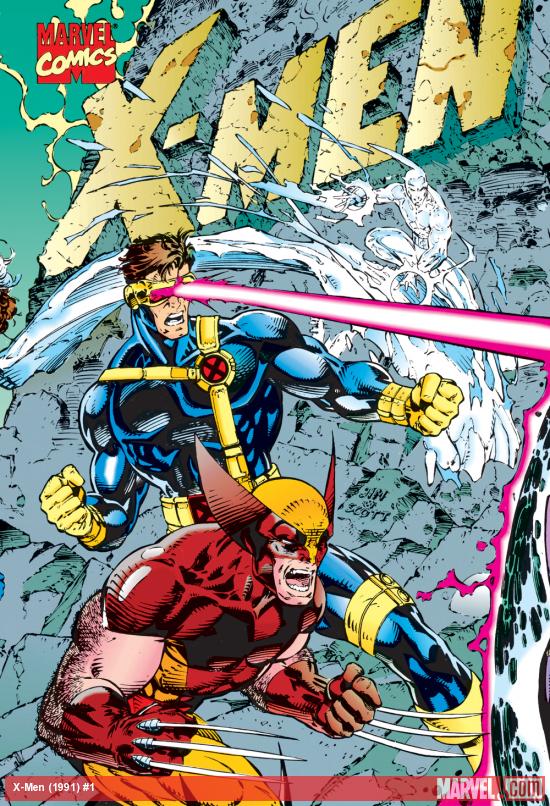
At long last, 1991’s X-Men # 1
It was the best-selling comic of all time. I had all five variant covers.
After sixteen years of Claremont telling one of the grandest meta-stories ever, they basically handed the reigns to superstar artist Jim Lee and restarted the franchise for maximum pandering.
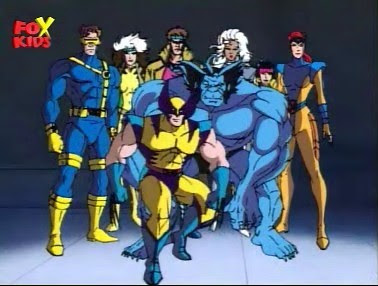
It’s not a bad thing to go back to the basics. The X-Men had all returned to the classic mansion, Professor X in charge, with so many team members that they divided it into blue and gold teams in order to justify also selling Uncanny X-Men at the same time. A lot of great costume redesigns such as with Cyclops, Storm, and Rogue which became the iconic “look” for the animated series most people are familiar with.
The villain, of course, had to be Magneto. Claremont, to his credit, had been giving him an arc back to evil for a while in the previous plotlines (can you believe he used to be the New Mutants’ headmaster?), so his long-winded speeches didn’t seem terribly unreasonable.
He was joined by a new team, the Acolytes, in a solid three issue battle that did feel like it was reason enough to reintroduce the entire team of 15-plus characters.
I don’t think those next issues just by Jim Lee were the best era, Omega Red etc., and he’d soon be off to do his own thing at Image and eventually co-run DC Comics of all things. I do however think 90s X-Men made for some great stories eventually. My main gripe here mainly might be the return to Wolverine’s bright yellow and blue costume, just why.
Anyway, this new status quo was something they had to do. There wouldn’t be a cartoon or an Age of Apocalypse if not for Mutant Genesis. It’s even a decent accessible read for novices wanting to start getting into comics without too much baggage. A fond farewell to Chris Claremont, a true legend, and an optimistic hello to the overspeculative decade of the 1990s.
X-Force # 1

How I ever even liked this as a kid, I’ll never know.
I guess there is something about Liefeld’s art that 11-year old boys think is cool, and that’s about as much credit one can give.
There really isn’t much story in the first four issues of the New Mutants’ evolved/devolved iteration as X-Force. After rushing to introduce several new characters such as Shatterstar and Feral in the previous final issues, they then just fight a lot with no characterization. There’s a crossover with Spider-Man, which results in Todd MacFarlane drawing Cable and Juggernaut, so at least that’s something nice worth looking at.
(Those pages are drawn sideways for multiple issues. Like two panels per page. Therefore, it’s as little story as possible while they just battle and pose and look cool.)
Deadpool also shows up, which is rather interesting historically-speaking, but overall this just doesn’t read well… Especially when compared to the high quality of Jim Lee’s X-Men which was out at about the same time.
As 90s rereads go, this doesn’t feel like necessary reading even as it introduces one of the major mutant spinoff teams. X-Force would get better in time, yet that was still going to take a while.
Sigh, why on earth am I bothering to reread this again?
X-Factor by Peter David
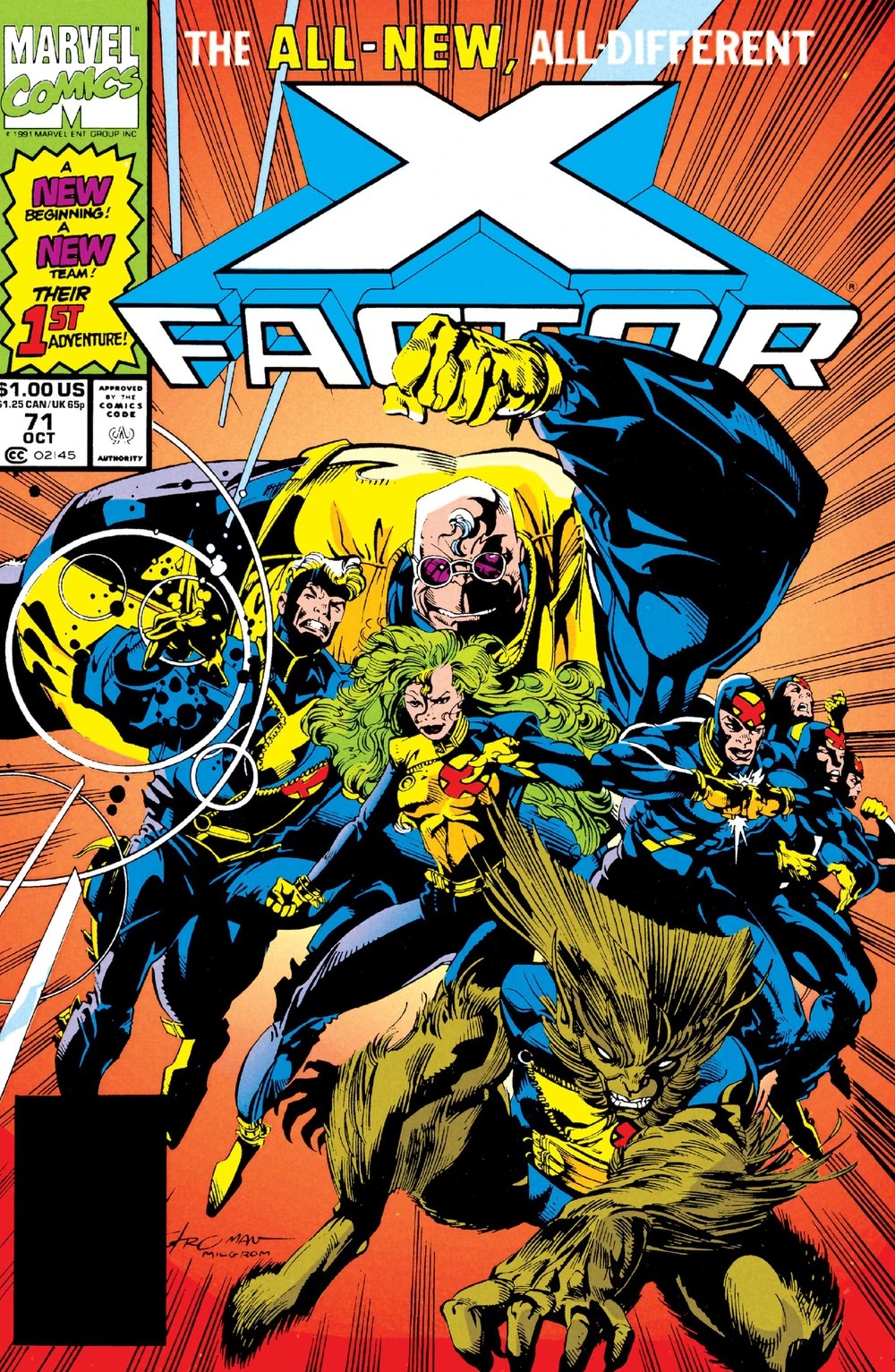
Peter David’s X-Factor is an interesting case study. It kind of seemed like an extra, unnecessary X-team filled up with random leftover characters who didn’t end up anywhere else. It was also just so 90s, with the uniforms and ridiculousness of Strong Guy in particular. And they were the premier government super team at the time.
The stylistic art in these early issues by Larry Stroman was a bold choice, very different from the other edgier books of the era. It would later look more conventional, but this was a dramatic start with issue # 71. What stands out the most was Peter David’s writing. It’s very funny, with superheroes bickering and witty dialogue. Quite similar to the 1980s Justice League International, in retrospect. David worked well with what was probably an editorially decreed lineup.
There was Cyclops’s brother Havok and former New Mutant Wolfsbane (she was in a movie), fresh from their brainwashing adventure in the X-Tinction Agenda crossover. Multiple Man, with the philosophical implication of his superpower getting explored in the opening storyline. And Havok’s girlfriend Polaris and the irritating speedster Quicksilver—both of whom were Magneto’s kids depending on the shifting continuity. And the aforementioned Guido who chose the dumbest name ever Strong Guy, who was so fun to draw.
Just nice and fun reads. I didn’t appreciate it enough when it first came out. I’m glad Peter David returned to X-Factor a number of times, and this particular All-New All-Different remake has aged well as something of a classic underappreciated in its time.
Weapon X

I almost forgot, Weapon X counts as a 90s X-Men classic right?
I do wish this stayed as the definitive Wolverine origin. Revealing just enough, with still plenty of mystery. He was a government agent, they experimented on him, that was all we needed to know. Why was it necessary to have so many details with Logan’s childhood? Ambiguity worked much better for the character.
What made Weapon X perfect was the Barry Windsor-Smith art. The structure was odd, as it was composed of very short chapters in the Marvel Comics Presents anthology comic at the time. It was such a unique style, about pain and torture and turning a man into an animal. Some of the images remain iconic, worth adapting into film and animation more than once.
It’s also a good self-contained graphic novel. Not bogged down by continuity and tie-ins, just one dark story. Recommended reading for both the completist and novice alike.
Wolverine # 50
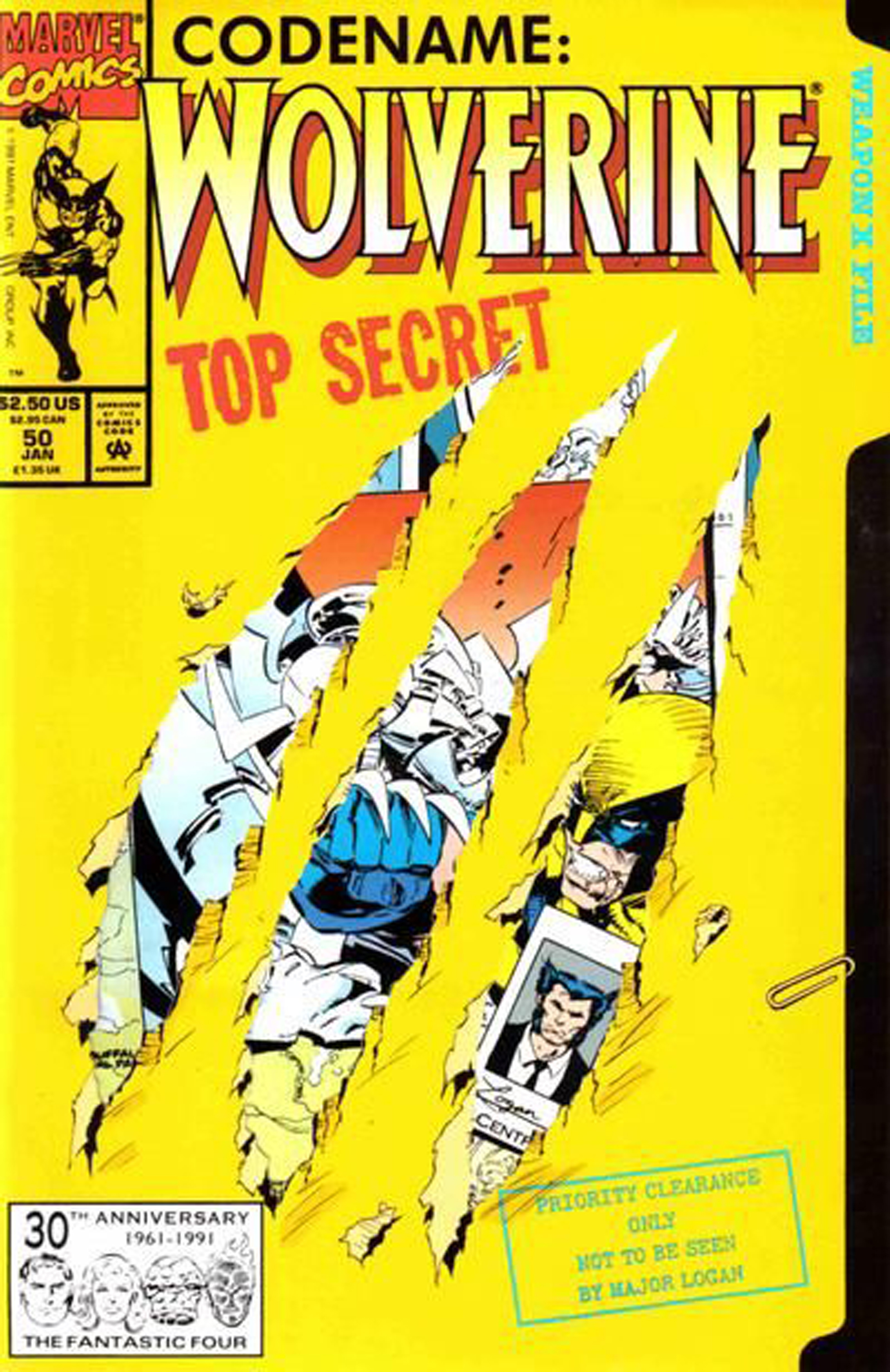
I had this issue! With the slashes in front, was the coolest gimmick cover ever.
Wolverine’s solo series never felt as necessary as the other X-spinoffs, at least in the late 80s/early 90s. He was mostly off to do his own thing with minimal connections to the mainline series. He wasn’t in those yearly crossovers yet, and it didn’t feel like he was part of a team.
There is one thing about this Weapon X sequel, it was when he officially switched back to his original bright yellow costume after the darker brown one throughout the decade he became one of Marvel’s biggest stars. This never sit right with me, even if Jim Lee decided it looked cooler and the colors stood out in the cartoon. He’s supposed to sneak up on you in the shadows, don’t you think? Glad that’s finally fixed these days.
But that’s a bit of a superficial take. Larry Hama’s writing of the Wolverine series was excellent. He truly got the gritty voice down. And I love Marc Silvestri, one of my favorite X-Men artists, who was relegated to Wolverine until right before the Image era. He’d fight Lady Deathstrike and the Reavers, as well as Sabretooth, and sometimes Jubilee would be the sidekick. This was a great version of Wolverine, perhaps only topped by Adam Kubert’s art in the next era.
I appreciate the standalone nature of these stories, timeless and worth rereading without worrying too much about dreaded continuity. There’s a good reason he became arguably the biggest breakout Marvel character since the Silver Age, without being overly ‘grim and gritty’ by the way, as portrayed in these solid issues.
Excalibur

Another X-spinoff that didn’t seem to “matter”, was Excalibur. Featuring Nightcrawler and Kitty Pryde relocated to the UK, it began by Chris Claremont and the great Alan Davis. Halfway through they left, the series mattered even less for a while, and by the 90s Alan Davis had returned as writer as well as artist.
This arc really felt like a culmination of all that had come before, concluding long-simmering storylines from years before. But it wasn’t just about Claremont’s Excalibur, it was also a conclusion to Alan Moore’s Captain Britain (also illustrated by Alan Davis back in the day). The Technet, an absurd group of villains, guest-starred in part of the multiverse mythos. It’s such a popular subject these days, and worth remembering that a lot of this was started by Alan Moore—like the Marvel Universe being 616. I’m sure he now regrets it.
So after reading the Captain Britain graphic novel reprint, and Excalibur # 1 – 25, then it finally all comes together by issue # 50. The villain Necrom may not have been that interesting, but the Phoenix was incorporated and this really was worth reading. Alan Davis has a wonderful imagination, and introduces new bizarre characters across the spacetime continuum as only he could. Eventually, Excalibur would get caught up in all the crossovers and become more of a regular X-Book, but this here was a great read for those keeping up with the classics.
Bishop’s Crossing

Over in the mainline title, Jim Lee was drawing his signature 90s look extremely well. He invented Omega Red, had a crossover with Ghost Rider (more on that later), wrapped up Longshot and Dazzler, and then went away. The writing was not really… good.
Meanwhile, Uncanny X-Men also had great art but divisive writing. But at least it was trying to be bold. The hot new artist there was Whilce Portacio, with scriptwriting by John Byrne of all people. The first issue opened with immediately killing off so many villains: the White Queens’ team the Hellions and the cyborg Reavers, in order to start introducing new ideas.
Byrne didn’t last long, and neither did Portacio. But the biggest legacy would have to be the introduction of Bishop. The time-traveling mutant cop, the first new member post-Chris Claremont, and he has still withstood the test of time and is a core X-Man to this day. Except for his hair, that aged badly.
That said, with the cool superheroes and fresh new start of it all, the story about Colossus’s long lost brother in another dimension wasn’t great. Like many of these pre-Image Comics hyped artists, the focus on was the drawing, on excuses to draw guns and muscles and weird techy costumes.
About halfway through the arc, Scott Lodbell became the new writer and stuck around to define the X-Men for the rest of the decade. Though the editors were really in charge, together the assembly line would eventually figure out a way to pander to fans and create the successful X-Men crossover machine.
The “gold team” may not have felt as important as the other title, but Wolverine is overused anyway, and I always appreciated the side that let Storm be the leader. It was a rocky start, yet at least they were ambitious. Just can’t say it lived up to Chris Claremont’s quality after # 281.
Ghost Rider: Brood Trouble in the Big Easy
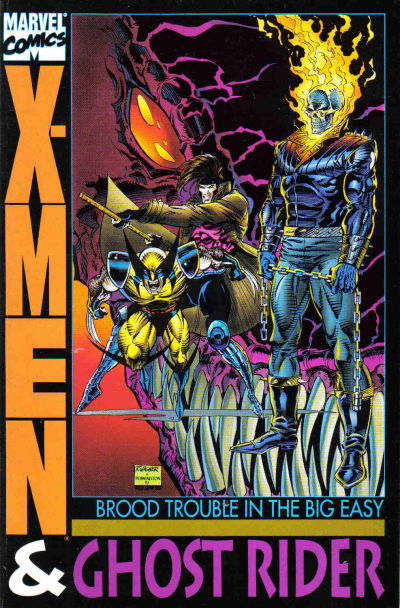
Ghost Rider was another early 90s “cool” title, and it only made sense for an X-Men crossover.
In that it didn’t make sense, it was just random fun. The X-Men traveled to New Orleans, as part of an early exploration into Gambit’s origins, and of course the alien Brood were there fighting a magical flaming skull biker hero.
There wasn’t much reason for this, which was awesome. I read it in slim graphic novel form, with artwork jumping from Lee’s bright colors to the darker and more simplistic look in Ghost Rider’s book. It was a bit ridiculous, but in a good way. This took itself just seriously enough to somehow work.
Shattershot

The crossover Shattershot was actually one of the first Marvel comics I remember reading as a kid. I must have been about eleven, and it was in one of those bundles you used to get at Wal-Mart. It wasn’t like I went to the comic book store to learn the backstory, nor could one Google the various wiki fan pages back then. It was totally confusing, which is why it intrigued me so.
I had little idea what was going on, and really enjoyed the thrilling art by Jae Lee and future editor-in-chief Joe Quesada. Shattershot consisted of four special annual issues, not directly connected with the regular series, introducing two X-Men teams, X-Factor, and also X-Force though that chapter took place in the future. Written by the dependable Fabian Nicieza, it had something to do with the interdimensional TV-related satirical villain Mojo, revealing the origin of Shatterstar whose background connected to the obscure X-Man Longshot. Also, time travel?
The high-concept scifi weirdness makes more sense upon rereading, but somehow even then it was a decent primer to the X-Men mythos. This left young me wanting to know more, inspiring the imagination with the sense that this universe had so much to offer. Honestly it was just a mid-tier example of 90s comics, but what can I say, it still has a nostalgic place in my heart.
X-Cutioner’s Song

In 1992, the biggest Marvel artists—primarily from X-Men—went on to form the creator-owned company that was Image Comics.
Only a year after rebooting the franchise, they just abruptly left. Jim Lee, Rob Liefeld, Whilice Portacio, Marc Silvestri, and more. Many of their storylines were still unconcluded, without much closure.
(It’s also worth noting, though these creators did have a point about labor rights and economic exploitation, they didn’t take any writers with them on this exodus. Those early Image comics were not really… good.)
So it was that replacements were needed, and I’d argue that the X-Men line actually improved from hereon. Andy Kubert started rough but soon became the best artist there for many years since, with a stylized approach that was superior to Jim Lee in my humble opinion. Greg Capullo was far better than Liefeld in X-Force as well, obviously.
And it was at this time that begot the first big crossover of the era: The X-Cutioner’s Song. It had its flaws, but in many ways this was when the new post-Chris Claremont status quo really started to work. Written by Fabien Nicieza trying to be more ‘edgy’, and Scott Loell over in Uncanny trying to imitate Claremont’s heart, the great Peter David was in there too.
So, Professor X had been shot by Cable! This was the inciting incident that led X-Factor to team up with all the X-Men to take down X-Force. There was a lot happening, with Mr. Sinister looming in the background as arch-villain Apocalypse was resurrected and returned to the scene. Revelations about Cable’s origins as Cyclops and Jean Grey’s (clone) child were finally uncovered, and somehow they made Rob Liefeld’s terrible supervillain Stryfe a compelling antagonist.
There was still work to be done to make all this coherent. But the writers and editors were getting better at taking all those elements of a bloated continuity, those too many cooks who ran out without even finishing, and making an interconnected universe that was fun to read. And it was satisfying to find all the issues and read in order, why I remember a neighbor kid in the suburbs who had collected the whole thing.
It was a pretty good start, probably overblown by the end, which is as good a representation of 90s X-Men comics as any. Definitely essential reading. I recommend get the graphic novel, don’t worry too much about the backstory, and just enjoy the ride for what it is. The next two or three crossover events will only get better.
A Skinning of Souls
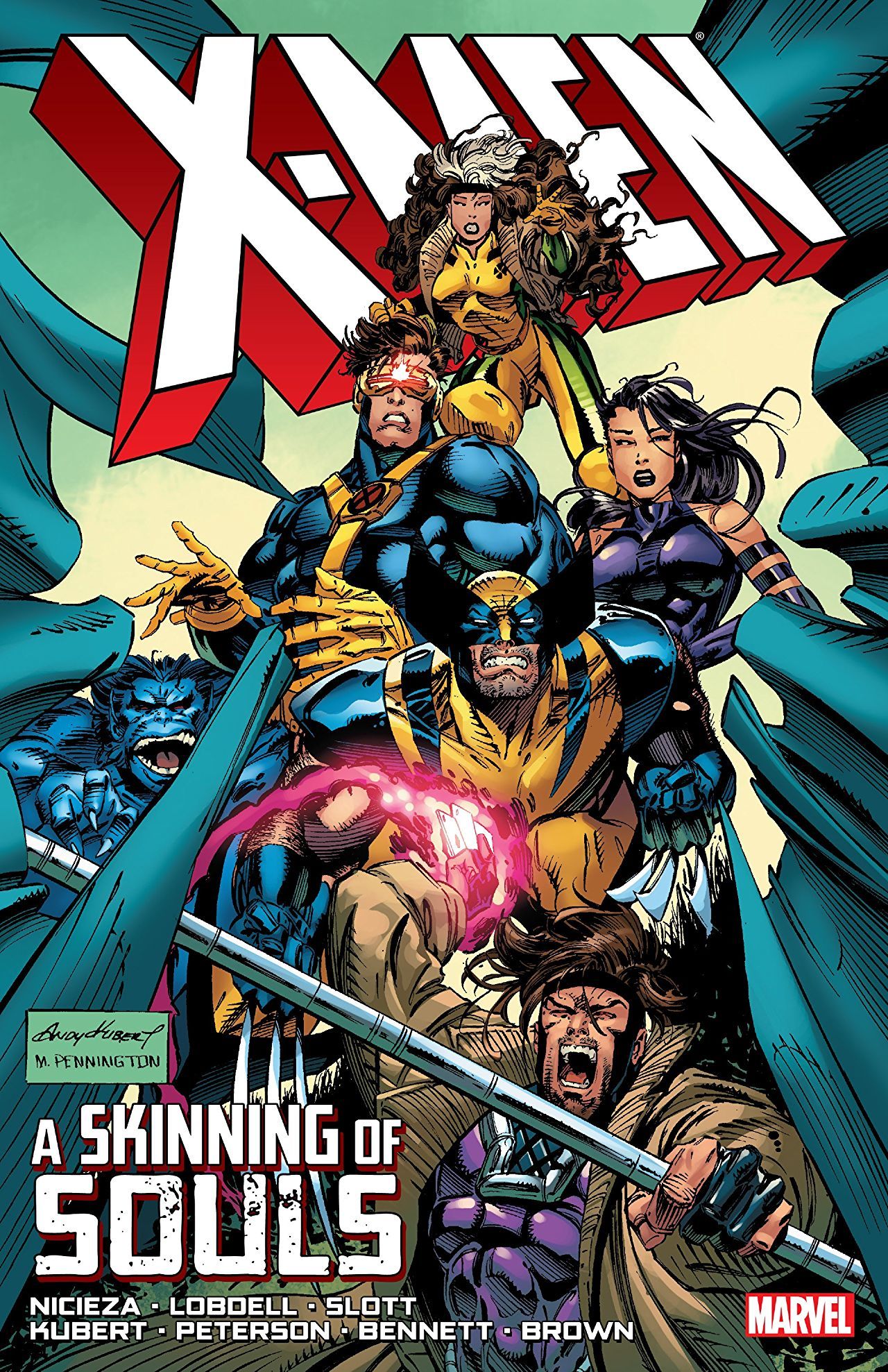
I have to admit it, I have a certain bias about this storyline. These were the first X-Men comics that I would buy as they were coming out, each month at a time, when I was just a kid. They’re special to me for this reason and I can’t quite take off the nostalgia goggles.
Looking back, I can’t recommend this arc for novice readers. It requires a lot of knowledge, but seeking out that knowledge is what used to be fun.
Firstly, the initial issues about Colossus going back to Russia aren’t very good. They were pushing Omega Red as a big villain at the time, while the Soul Skinner is a forgettable antagonist who promptly dies. Not required reading, although seeing Andy Kubert’s art develop is rewarding.
It’s issues #20 – #23 that get really interesting, and it’s about Psylocke’s origin. This was confusing to me at the time, as I had read earlier back issues of the character when she was just a purple-haired psychic who lived in Australia. While in the contemporary appearances, she was an Asian ninja. Now, as a grownup, I’ve read all of Claremont in order and I know of that time she was engineered by the Mandarin to be an assassin. The Jim Lee redesign was indeed great, though the premise has aged a bit badly even if the racial aspect is acknowledged here.
The sudden mystery of a second Psylocke showing up and the eventual revelation that she switched minds with Kwannon was a smart continuation of that story. And it’s always fun for the X-Men to fly to Japan for undercover missions. For a young reader, all of this was intriguing and encouraged me to learn more about the deep history of these comics.
There was also another subplot about Cyclops being tempted to cheat on Jean Grey with Psylocke. Never forget that X-Men works best when it’s essentially a soap opera. Then he goes away on vacation while he’s taunted by Mr. Sinister, which sets up further mysteries about the complicated lineage of the Summers family (just who was the real time-traveling son, Cable or Stryfe, and hints about another long-lost brother…).
Next up: Fatal Attractions. Before the big Magneto crossover which was setting up in Uncanny, these intermittent adventures kept me entertained in the meantime. Glad to see them republished in graphic novel format.
Fatal Attractions

The next big crossover was about Magneto’s triumphant return as the main big mad of the X-Universe. A sequel to X-Men # 1’s Mutant Genesis, it felt sufficiently epic as it slowly built up over previous issues. It wasn’t structured as one of those 12-chapter sagas, nor did everyone team up. Rather, one at a time, each title dealt with fighting the Acolytes or Magneto himself.
Depending on which graphic novel reprint, there were some tie-ins (such as X-Men Unlimited, rehashing the antagonist’s origin), which dragged out. But each core chapter was of good quality. And, they had those holographic gimmick covers which felt pretty cool in the mid-90s.
Story-wise, a lot was going with poor Colossus. They had done too much to him, killing his parents and brother and then ultimately killing off his little sister Illyana due to the AIDS-analogue Legacy Virus—don’t worry she has been brought back to life since then. So, he then decided to move up to space with Magneto in a tragic character arc.
The powerful villain Exodus was introduced, Fabian Cortez was also there and very evil. Scott Lodbell wrote most of the buildup stories in Uncanny X-Men, full of Claremont-esque characterization, with art by the master storyteller John Romita Jr which I did not appreciate when I was younger. Fabian Nicieza wrote more the action-oriented stories, featuring the return of Cable and the climatic showdown between Professor X and Magnus in X-Men # 25.
It took until Wolverine # 75, but this was when the popular solo mutant finally got to be part of these crossovers. That was due to the very good idea of having his adamantium skeleton ripped out, weakening the overpowered fighter, and introducing the idea of bone claws. I only wish they kept this iteration longer. Plus it was when illustrator Adam Kubert began his run, whose an even better artist than his brother Andy, and is still the best at Wolverine to this day.
Excalibur also became a more official spinoff at this time, with the epilogue giving Kitty Pryde and Colossus some closure. As a whole, these were more thematically connected and don’t read as well in one sitting when reprinted in book form. But each double-sized anniversary issue at the time did feel like a big deal, and is a worthy part of X-Men history.
Avengers/X-Men: Bloodties

The Bloodties crossover is an immediate sequel to Fatal Attractions, with the fallout from Magneto’s attack on the world being sufficiently a big deal enough to involve the Avengers.
It was 1993, the 30th anniversary of both premier super teams, and for a while the X-Men had been doing their thing without much contact in the rest of the Marvel Universe. It was a good time for one of these crossovers.
Genosha was in bloody civil war, which is a shame. If the country represents South Africa, then what does it say when a civil war is written in after freeing the oppressed mutants? It’s something of a “ripped from the headlines” approach, but an unfortunate take.
(And, since it’s a fictional place, it’s always easier to write an extreme dystopia. Grant Morrison’s E for Extinction would be even worse on Genosha, though that’s years later.)
Fabian Cortez, the Ramsay Bolton of mutantdom, is so sleazy here. He kidnaps Luna, the daughter of Quicksilver and granddaughter of Magneto, and kills everyone to take over. I suppose he would be the anti-Mandela in this scenario.
Then Nick Fury and SHIELD forbid the Avengers from interfering, as Luna is also the daughter of the Inhuman member Crystal in one of those complex superhero family trees, and the Avengers disobey orders to do the right thing because that’s always how these stories go.
The Avengers writer then, Bob Harras, also happened to be the X-Men editor at the time. The story is organized smoothly, and Steve Epting’s art is excellent in the years before he became the classic Winter Soldier artist in the aughts. The best part of this would have to be Andy Kubert drawing Captain America, it’s so epic.
This wasn’t the most popular time for the Avengers, far before the blockbuster films. Some of the designs age badly, like how they seemed to be desperately copying X-Men/Image style with some of their costumes like Hercules. And what’s with the jackets everyone wore back then?
Another thing: Exodus was a main antagonist in this story, who does come across as an Avengers-level threat, and more than a little evil. It’s kind of weird that he’s in the Krakoan council now but he’s far from the only reformed villain in the current status quo.
Well, it’s a product of its time, yet if you’d like to read an Avengers and X-Men crossover in one sitting then one can’t go wrong with these five chapters. Not as much commitment as the latter mega events Avengers vs X-Men and Judgment Day. Just the right amount of tragedy and action, a successful reminder of why we love crossovers.
The Wedding of Cyclops and Phoenix
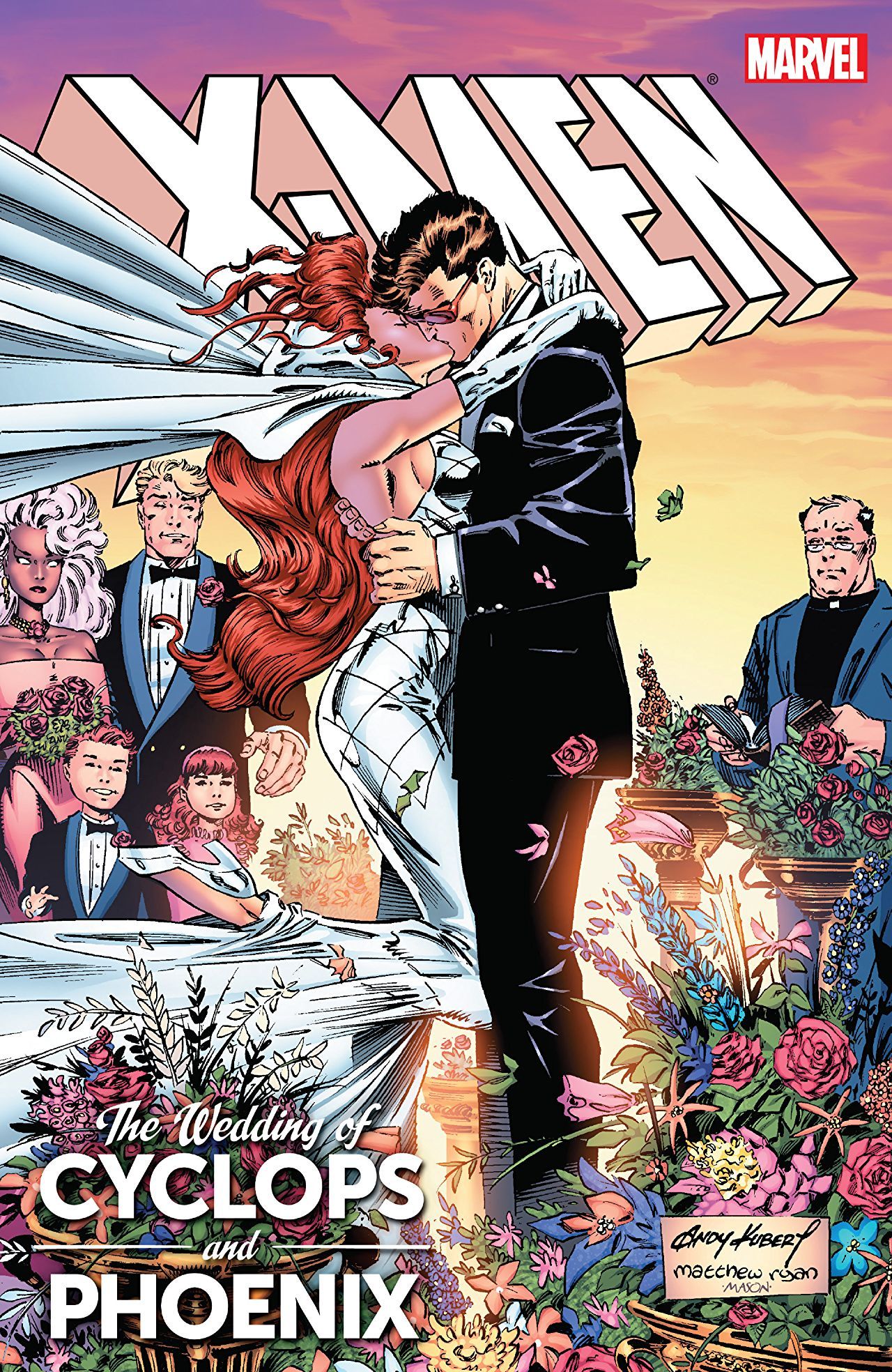
The wedding between Scott Summers and Jean Grey had a lot of foreshadowing and buildup, over multiple titles and included guest stars from all across the various mutant teams. But it wasn’t quite a crossover, at least not in the team-up and save the world sense.
The graphic novel covered a lot. But most of these chapters, while occasionally involving supervillains to battle, were really about the dialogue and characterization.
So much talking. There was the fallout from recent tragedies and reflections about the past, from Magneto getting his mind wiped to the death of Illyana. Cyclops talks it out with Cable, his son from the future, while blasting away at some one-note assassin. Jean Grey bonds with Jubilee. And apparently Angel/Archangel had been pining after Ms. Grey all along?
It’s always been part of the X-Men to have this kind of personal growth and character study, which is what separated it from other superhero franchises.
There was also a subplot about Sabretooth being held captive in the mansion, while the professor was trying to rehabilitate him. In my view, this drama didn’t work. Sabretooth is basically a serial killer, any attempt to reform him was a mistake. The plotline seemed to work as a replacement for Wolverine, since he had recently left the team, and everyone constantly whined how they missed him.
This graphic novel as a whole is probably too thorough, one really only needs to read X-Men # 30 and a few of the issues that preceded it. Was a nice moment for the classic couple to finally tie the knot and make it official, and for the tragic-prone heroes to get something nice and social to do without a cosmic threat interrupting them. Was handled respectfully, which was appropriate.
Next up: a very weird honeymoon and one of the better alien-villain events…
The Adventures of Cyclops and Phoenix

In the follow-up to Cyclops’ and Jean Grey’s wedding, they had their own limited series about the “honeymoon.” But it wasn’t so much a honeymoon, as it was they woke up in different cloned bodies thousands of years in the future in a dystopian world ruled by Apocalypse.
There, they find little baby Cable and spend years raising him. It’s sweet in a way, Cyclops finally getting to be a dad despite his awful parenting from years back. Being that this is the superhero genre, the only way he could do that was to time travel so most of it happened outside of the normal timeline. That’s still pretty nice.
Gene Ha, early in his career, illustrated in his signature detailed style, and somehow was able to make Scott Summers look recognizable without the signature visor. But the storytelling and world-building were poorly done, frankly. It was just a weird sci-fi world that didn’t feel very fleshed out. Ha would later become a much more accomplished artist when working with Alan Moore on Top Ten, still he had to start somewhere.
There are many other alternate X-Men worlds where dystopia is done better, from Days of Future Past to Age of Apocalypse. Scott Lodbell writes with just enough heart, with the parenting theme at the core of the story even if the fighting for survival parts don’t always work.
An interesting, albeit strange chapter in the 90s era. At least Cable is fleshed out and these characters get to explore their relationships with each other. Definitely not recommended for novice readers.
Phalanx Covenant
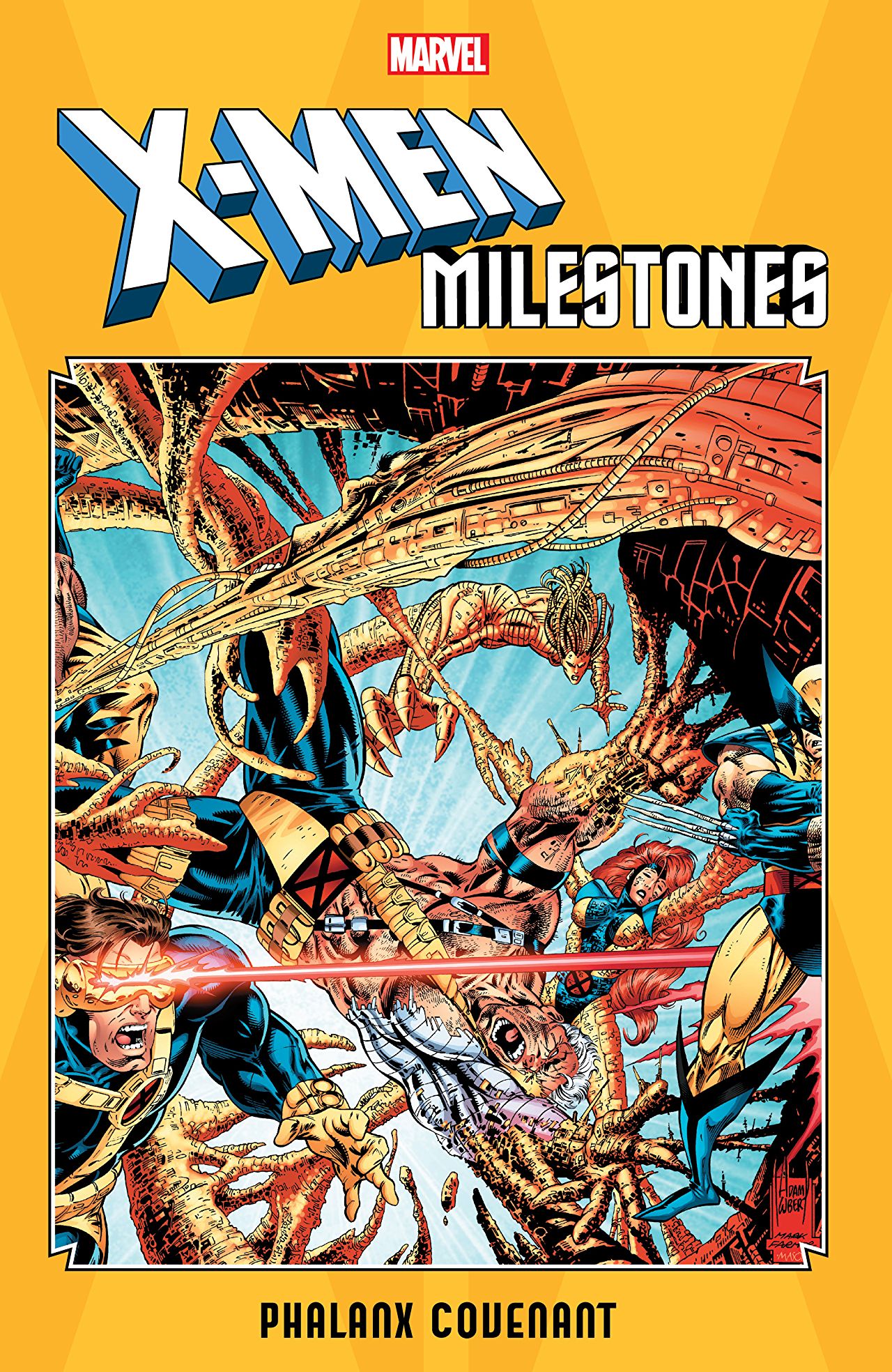
The Phalanx Covenant was another X-Men crossover that signaled a new chapter in the mutant mythos. While it may not have lived up to that legacy since, it was an ambitious goal to introduce Generation X and have a title about super kids learning at a school again.
It also heralded in an excellent new art style. Uncanny was previously illustrated by John Romita Jr., a solid storyteller who had been at Marvel for decades. But overall, the franchise still felt like it was in the shadow of Jim Lee. Suddenly along came Joe Madureira, bringing even more talent to 90s superhero comics. Inspired by manga, his was a more cartoony style, and was just what was needed to add something new and dynamic to the genre.
The Phalanx in particular were fun to draw. The techno-organic kinda aliens were weird, high-concept scifi villains as only these sorts of comics could come up with. In order to fight the threat of mutanity, people allowed themselves to be transformed into these liquid machine creatures. Which of course went beyond their programming and were now a threat to the entire earth.
There were three different storylines: First, the X-Men were kidnapped and replaced so Banshee and White Queen had to go rescue the new young characters from the Phalanx. It was a little convenient that mutants couldn’t be infected but were kept alive for experiments or something. Anyway, this was the way to introduce Generation X—more on them later. Jubilee was soon to be part of that group, by the way. Then X-Factor, X-Force, and Excalibur had to team up to destroy the Phalanx and save the world. Lastly, it was up to the returning Wolverine to join Cable along with Cyclops and Jean Grey to save the X-Men (and also offer some emotional denouement after that miniseries about how they raised Cable as a child).
This was a pretty successful structure in order to keep track of so many teams and superheroes, and fits well into graphic novel reprint fashion. There was a lot going on, with Doug Ramsey coming back to life as the robotic Douglock and Sabretooth’s semi redemption. For a novice reader, this was almost completely indecipherable. For someone familiar with the aliens Warlock and Magus since the 80s, this was quite a fun and satisfying crossover and update. I still have fond memories, and it mostly holds up.
Generation X

Something inconsistent about the X-Men and the themes of this franchise over the various eras, has been whether or not this is supposed to be about a school. Sometimes they’re superheroes, and sometimes they go back to their roots and focus on educating the superpowered youth.
The original five members were teens back in the Silver Age, then later there was the New Mutants, and the 90s iteration of this was Generation X.
They may not have had the longest legacy, unlike the New Mutants who became X-Force, and were basically replaced by Grant Morrison’s New X-Men campus somewhat in the vein of the first 2000s movie, but for a while they were a key and necessary part of the X-Universe.
Jubilee, still kind of popular during the heyday of the animated series, was no longer the POV character and instead headlined this team of students. The teachers were Banshee, a classic connecting to earlier generations of the mythos, and the White Queen who had began her transformation into good guy after her Hellions died earlier in the 90s soft reboot.
They consisted of a diverse international group, including Cannonball’s little sister among others (two of which had powers related to skin). Most of which have since become somewhat forgettable, unfortunately. Synch is currently an X-Man, so at least he eventually “graduated.”
The early issues were whimsical and experimental, with unique art by Chris Bachalo. It almost seemed more like a Vertigo comic, focused on characterization and conversation as writer Scott Lobdell continued his Claremont-esque inspiration. There was an outline of storyline introducing new villain Emplate and the mysterious Penance. Overall, wasn’t really about superhero battles, which just isn’t Bachalo’s strong suit.
It was a cool read, Marvel trying to make something marketed towards hip teenagers was interesting if not fully successful. A decent start, even if Generation X never got to go for very far.
Excalibur by Warren Ellis
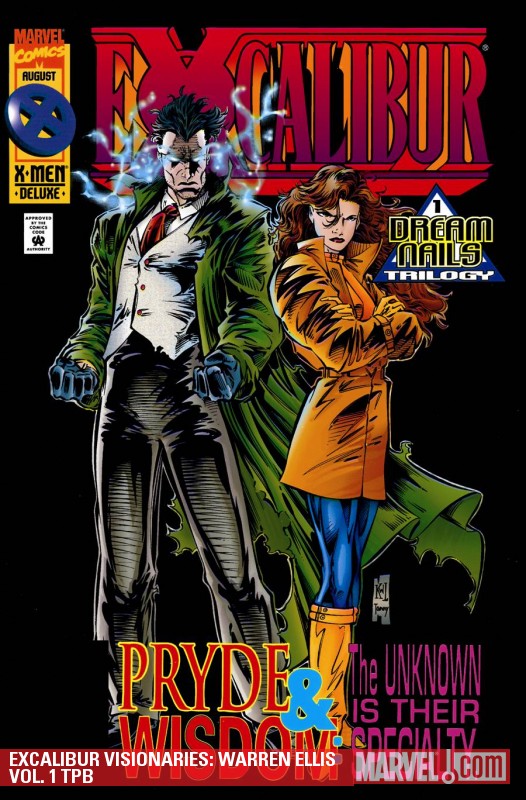
Although Warren Ellis has had recent controversies, he is regarded as one of the great modern comic book writers for good reason. Among his early work at Marvel was Excalibur, and he definitely improved things at the time.
Excalibur had just not been very good since Alan Davis departed, and was the weakest of all the spinoffs. The only issues worth reading were part of crossovers, frankly. Immediately after the Phalanx came and Douglock joined, Ellis came and added a dark tone.
It was also appropriate to have a British writer in charge of the U.K.-based team. Really, mutants should be more international and not just focused on America.
The current status quo was that they were living on Muir Island. There was the Soul Sword trilogy, an update on Kitty Pryde’s old friendship with the now deceased sorceress Illyana. It wasn’t the strongest start, but magical-themed stories do tend to work better for Excalibur.
One can tell Ellis put his spin on it when government agent Pete Wisdom showed up. This kind of character was something of a cliché, the grim curmudgeon in a trenchcoat chain smoking and complaining ala Alan Moore’s Constantine, but it’s a cliché for a reason. And so very British. What a bold move for him to become Kitty’s new love interest.
The stories got progressively darker, with an update on miserable Genosha and some creepy aliens. Eventually, Ellis also improved on Captain Britain and brought the iconic hero more back to his roots (that role as ‘Britannic’ was not working). Bringing Colossus back later was also a good idea.
Warren Ellis would grow considerably as an author, however flawed, but he wasn’t quite there yet at this point. Still worth reading, and glad that this particular X-title got a new chance.
Legion Quest

An interesting prelude to the epic Age of Apocalypse saga, in which Professor X’s overly powerful son wakes up from his coma in order to travel back in time and rewrite reality.
Only in comics would any of this make sense. The storyline is somewhat out of nowhere, with no foreshadowing at all other than a follow-up from that time years ago when Mystique’s lover Destiny died. Legion was there at that old battle and kind of at fault, so the story begins with Mystique going to Israel to hunt down and kill Legion. Then he reawakens more powerful than ever so when the X-Men come to stop him and a group of them get sucked back into the past.
His plan is to kill Magneto, to help Xavier’s dream or something, and it makes for some interesting flashbacks with young Charles even if it’s ultimately nonsensical. Some of it has also aged badly, which is best glossed over. Let me just make a brief comparison to Back to the Future and then move on.
Legion is way too powerful, and comes across as more of a plot device than valid threat. Time travel rarely conforms to any sort of logic anyway, but suffice to say in the end he accidently kills his dad and this causes a chain reaction which destroys the entire Marvel Universe (and led to the exceptional Age of Apocalypse). This was only a thing in the X-books, where it was portrayed as sufficiently epic as every title ended that much with the universe ending in a weird crystal explosion.
This had to do with the M’kraan crystal, even if it needn’t be explained that much. Personally, I just like the rules when every act of time travel creates an alternate reality and there’s no reason to make it needlessly complicated. The cosmic aspect did feel pretty weighted and sufficiently epic.
Ultimately, Legion Quest is somewhat essential reading in order to get to Age of Apocalypse. Also necessary to know that Bishop was stuck in the past, as the only man who remembers the “real” world because he’s a temporal anomaly. Other than that, Legion Quest was of average quality of X-Men in the 90s. The usual characterization, the soap opera of the relationships between the characters and the art etc. was up to par of the time. Fun, if not that literary.
Next up, one of the very best crossovers ever…
Age of Apocalypse – Alpha

Since the classic Days of Future Past, dystopias time-travel stories have been part of the X-Men tradition. As the spinoffs grew and comics became more complex, an arguably even better alternate reality dystopia came about in the 90s which kind of seemed like the pinnacle of the mutant saga: The Age of Apocalypse.
It began with X-Men: Alpha, an indulgent and violent first issue that very successfully introduced this brave new world. After Bishop was trapped in the past, where Professor X had been paradoxically assassinated by his own son (comics, right), the mad old man served as the point of view character to explain all this.
To sum up, one of the all-time great villains had taken over the world and now Magneto was the founder and leader of the X-Men. A resistance in a literal post-apocalyptic hellscape, all your favorite characters were redesigned in sometimes surprising ways.
Each comic was cancelled and rebranded for four full months. It really felt like a huge deal at the time, bold and ambitious. There was Astonishing X-Men, Amazing X-Men, etc. The first chapters usually began with Magneto showing up and giving the various teams new missions. These kind of alternate universe stories are always about fixing the timeline to undo it all, which is bit of a cheap narrative shortcut but it wasn’t yet so much of a cliché back then.
This was certainly not a single auteur’s vision, this was story by committee as multiple writers and editors had to organize a dozen-odd titles and figure out what the new status quo was. It actually worked, and felt like fully formed history was there. Various backstories referenced, with thoughtful characterization and motivations. Some heroes now villains, some villains now heroes. The vast cast was utilized well.
For example, Magneto’s team included Sabretooth and Exodus. Along with the animated Morph and recently deceased Blink, which felt both fresh and timely. It also must be mentioned that Magneto was married to Rogue, with a kid. While Gambit had his own team of X-Ternals thieves featuring Jubilee and Strong Guy who went on a cosmic adventure into space, which was written and illustrated by the X-Force team showing a completely different take the usual monthly setup. Wolverine was Weapon X, working for the European human council and in a relationship with Jean Grey. Factor X replaced X-Factor, with a focus on the original team as Cyclops was shown to be on the evil side working for Sinister along with the excellent villainous Dark Beast. Colossus and Shadowcat were cruel teachers leading the Generation Next. There were further fascinating character shakeups, with edgy Nightcrawler on the hunt for Mystique, while Angel was the shady Casablanca-esque club owner. And finally, some new enemies were introduced in the form of Apocalypse’s Four Horsemen, such as Abyss and Holocaust. A lot was going on, just too much to summarize.
It wasn’t perfect, and the writing could be cheesy. Magneto gave a lot of dramatic speeches… it was of its time. The Sentinels redesign in particular was not good, but most of the general world-building was thought out and executed competently. It was one of the most successful crossovers ever, for good reason. There was a lot of excitement in those days, and even when rereading in the modern era you can still feel it. A new classic indeed.
Age of Apocalypse – Omega

In many ways, it was the pinnacle and climax of the decades-long X-Men saga. I’m saying it here: Read all of the Chris Claremont issues from the 70s and 80s (Louise Simonson too), then read the various revivals and crossovers of the 90s, and finally just stop with the Age of Apocalypse. I mean it, at least for the 20th century, it was as good as it gets.
The ultimate payoff of knowing so many of these characters, to see them reimagined and be able to follow the whole thing. Also, superficial it may be but that was the time, it just looked cool. Like Sunfire in particular, and villains such as Holocaust. The brightly-colored Apocalypse himself. Only Storm was underutilized, but forgivable with so much else going on.
The finale, culminating in X-Men: Omega, didn’t fully live up to the promise and potential of the other stories. That’s ultimately okay, it was a high bar, but these things do have varying levels of quality.
There was an interconnected storyline about helping human refugees leading up to the big climatic battle. Jean Grey, for example, was with the one-armed Logan in Weapon X for a while and then switched to join Scott’s Factor X. Both of those were very well-written and illustrated, Larry Hama and Adam Kubert were always a great team; and John Francis Moore directing the more realistic Steve Epting was excellent (before his legendary Captain America run). Such Shakespearean family drama as evil Alex Summers fought brother against brother.
There was also Generation X, where Chris Bachalo helped to tell the weirdest and saddest story of them all. The writer Scott Lobdell had very different styles depending on the artist. In X-Men: Omega, Roger Cruz was a product of the time, focusing on the cool factor. Yet when scripting Joe Madureira’s Astonishing X-Men, the artist was in his peak and it absolutely holds up today among that writer-artist team’s best work ever.
There was also X-Calibre starring Nightcrawler, written by the great Warren Ellis in his early stages yet it wasn’t up to the usual quality. Another interesting title was X-Universe, which wasn’t a fully necessary read even if it was interesting to see the rest of the Marvel Universe show up in this world, with Tony Stark and Gwen Stacy among Ben Grimm and others. Overall, that superfluous spinoff only emphasized how much X-Men works best as its own universe. The art by the late Carlos Pacheco was awesome.
Even if the ending doesn’t quite live up to the potential, it was a hell of a ride. There’s also the longer legacy, with several characters escaping their doomed Earth to go to the standard 616. X-Man, a clone who was pretty much Cable, continued his title with # 5 although personally I never liked Jeph Loeb’s writing. Villains Sugarman and Dark Beast also escaped, with some more confusing time travel thrown in for good measure. In retrospect, funny how Dark Beast foreshadowed Beast’s recent turn.
And that was that. Next, Onslaught. Which I can’t recommend. Honestly, this was enough X-Men worth reading in the height of the 90s ambitions. Best to skip ahead to Grant’s New X-Men—
Road to Onslaught

Onslaught was not a successful X-Men event, especially with the benefit of hindsight, but this first volume unfortunately titled The Road to Onslaught is not so much a prelude to the corporate-sanctioned crossover but more of an introduction to the new X status quo following the Age of Apocalypse.
It began with X-Men: Prime, with art by Bryan Hitch before his much better 2000s work the Authority and then Ultimates. That one-shot wasn’t great but succeeded in setting up the various pieces so that more fulfilling stories could be told in their own titles. And then there was the obligatory sad tale of a mutant persecuted to death who was thereafter never mentioned again.
Uncanny X-Men began with a plotline about Gene Nation, new interdimensional Morlock villains who killed people by the dozens. It was a bit tryhard at being edgy, such was the time, and it did culminate in the excellent Uncanny # 325 with art by Joe Madureira at the top of his game. Marrow was introduced, as a dark foil for Storm, who somehow becomes an X-Man later even though she is quite the irredeemable murderer here.
Adjectiveless X-Men also began with a solid arc about the Acolytes’ space base exploding and Colossus falling back down to earth. This would lead to him joining Excalibur for an awkward reunion with Kitty, but that was for another book. In issue # 45, Gambit confronted Rogue who was on the run after kissing him and absorbing his memories. The couple had issues, and she went away for a while. This kind of soap opera was always what made X-Men great.
Post-Age of Apocalypse, there were a lot of villains from that universe who showed up to cause damage and hide in the shadows. With some time travel elements thrown in, it was revealed that Sugar Man was in Genosha all along, while Dark Beast created the Morlocks. The aforementioned Acolytes had battled Apocalypse’s very evil son Holocaust.
These were all great ideas, and it’s unfortunate they had to make a bigger deal out of the mysterious threat of Onslaught. Upon rereading, it didn’t seem that the writers knew yet about the surprise revelation concerning Professor X, but I shan’t say more in case someone doesn’t want spoilers thirty years later. Anyhow, that was the problem with forced big crossovers. The regular issues that the writers wanted to write were better. In conclusion, a nice start just not great overall if you know how it ends.
Onslaught

It may have started as an intriguing follow-up to Age of Apocalypse, but let’s be honest: Onslaught was a disappointment.
It was all building up to the big mystery reveal… and then it just felt forced and didn’t really go anywhere. A real shame, as Mark Waid (replacing the dependable Fabian Nicieza) coming to the X-titles was supposed to be a big deal. After a great run on the Flash, he was already an esteemed writer by this point and it was a real get for Marvel. In my humble opinion, he’s usually a better fit for DC.
The problem with epic crossovers every year, is that it eventually becomes impossible to outdo what’s come before. Compared to Apocalypse, Onslaught couldn’t keep up no matter how much the dialogue repeated how shocked everyone was. Waid did bring his signature focus on characterization, as the personal betrayal was supposed to be the focus of the story.
There were interesting things going on for Waid to write. Beast was replaced with his evil version, and Wolverine was going through a weird time as he mutated into a monster with no nose for reasons. The soap opera drama is what makes X-Men work, not end-of-the-world spectacle.
So, here’s the spoiler that was supposed to be the big hook making this work. Ready? Professor X was Onslaught, the traitor to the X-Men foreshadowed all along that Bishop had prophesized years prior, and they even incorporated that glitchy Jean Grey recording—which seems unnecessary since Bishop is from an alternate future but anyways.
And to make things more complicated, Onslaught was rather a psionic entity created when Xavier merged his mind with Magneto and was “controlling” the professor. Don’t worry, nothing was irredeemable with that explanation in place.
Also, Onslaught’s ultimate power was very undefined. He kept defeating any other powerful characters in whatever random ways, such as Juggernaut, even though how exactly was only psychic superpowers supposed to do that?
It was all very editorially-decreed. Furthermore, the rest of the Marvel Universe showing up may not have fit in an X-Men crossover. Then again, when the world is under threat I suppose it does make sense for the Avengers to show up. Crossovers are indeed fun for that reason. And seeing Joe Madureira and the Kuberts draw Captain America and Thor etc. is always great!
The Fantastic Four were there too, ostensibly because of their mutant son Franklin Richards. A lot was going on, like if you ever wanted to see Cable fight the Hulk or Spider-Man worry about New York being overrun with Sentinels. Very colorful.
Of course, this eventually led to the much-maligned Heroes Reborn, the most forced of the forced of the 90s. To be concluded next post…
Onslaught: Marvel Universe

The Onslaught crossover mercifully ends, with the overindulgent Onslaught: Marvel Universe one shot which takes this X-storyline and throws in all the main Marvel superheroes into a giant epic fight which makes no sense. But, it succeeded at the reboot that the editors wanted. Story just got in the way of that.
There were strong chapters of Onslaught, all within the main X-Men titles, which had progress and moved forward in interesting ways. What didn’t work were the tie-in issues with Sentinels flying around New York randomly running into Iron Man or whoever. It was the pinnacle of comics trying to look cool and essentially do nothing else.
That poor final chapter of Avengers, Mark Waid and Mike Deodato trying their best to give the flagship team a proper sendoff which ultimately only felt like filler. Fantastic Four fared better, with excellent art by Carlos Pacheco where many classic villains showed up (and turned out to be illusions) and it at least seemed like good closure.
Anyhow, in the Marvel Universe finale Onslaught was now in its most over-the-top final form. What was this “psionic entity’s” point again? To look super evil and buff, in edgy Magneto-esque armor, and rant about the destroying the world. That was it? Not much of a plan, actually.
The parts illustrated by Adam Kubert were awesome, which I do have to admit. And then it was over, the non-mutant heroes had to jump in a portal for poorly explained reasons, apparently that was like a big tragedy.
We all know the real reason. Behind the scenes, Rob Liefeld and also Jim Lee had decided to return to Marvel after upending the industry by founding Image Comics. In one of the worst ideas ever, titles like Waid’s great Captain America run had to be cancelled so that they could reboot everyone in a new universe with terrible art. Jim Lee’s side was decent, by the way. It was Liefeld’s infamous Avengers and Cap that was embarrassingly awful.
That being said, I am reviewing 90s X-Men here so I’ll stop now. Much has been written about the strange Heroes Reborn experiment elsewhere. Suffice to say, when the Heroes Returned a year later things got much better.
Onslaught leaves a bad taste in my mouth, partly because it’s one of those stories where the good guys save the world from a problem they created. Like, mutants are supposed to be a metaphor for marginalized groups who are unjustly discriminated against. Right? But in this case, fears of mutants are very valid. It’s not that an evil mutant was defeated by a good mutant. It’s that Professor X—supposedly the most saintly leader ever—accidently created a being so evil that it “killed” over a dozen of the biggest superheroes in the world. Yes it makes for drama and irony. But overall, isn’t the lesson therefore that mutants are inherently a danger to the world and should be controlled?
Afterwards, Xavier is hauled off by the government and that’s supposed to be such a sad scene. Yet if you think about the implications seriously, that would be very obvious and sensible.
Which is where Bastion comes in, the next big bad for Operation: Zero Tolerance. He was the mystery figure who had been leering in the shadows here and there, slowly preparing for the following summer’s required crossover. More on that next post, because it never ever ends…
Operation: Zero Tolerance

In retrospect, I should have stopped at Age of Apocalypse. But at the time, I was intrigued by Onslaught and read it to the end. Can you blame me?
Circa 1996/1997, my teenage self no longer felt the need to read every X-Men book as they were coming out. I had grown up. (I was reading Avengers and JLA, much higher standards you see.)
Still, a few years later I picked up the Operation: Zero Tolerance graphic novel to see what I had been missing out on. Curiosity satiated, it turned out that I hadn’t missed much.
It was a pretty standard mutant story. A dangerous new generation of Sentinels, nominally connected to the government, had kidnapped the X-Men. Being that the robotic villains were formerly human, it was all too similar to the Phalanx which were already far more interesting.
The big twist is that their mysterious pink leader, Bastion, had been Nimrod from the future all along. So, the X-Men escaped as they always do. Iceman was the protagonist in the flagship X-Men title, coming out of retirement to take the fight to the big bad guy. Most of the main chapters about Cyclops and Storm and company escaping where in Wolverine, decently written by Larry Hama. By the way, Wolvie wasn’t feral anymore and there was no explanation.
As individual stories, some of the comics were of high quality. Chris Bachelo’s art on Generation X stood out, where Jubilee was dealing with the psychological pressures of being taken prisoner. There were also the tie-ins featuring Cable and X-Force, which were not particularly interesting.
As a whole, it didn’t add up to anything with a lasting impact. And at the same time, Uncanny X-Men were off having better adventures in outer space. I’d definitely recommend the Trial of Gambit graphic novel over this.
This was also the end of Scott Lobdell’s tenure, replaced by Joe Kelly who’s a good writer but didn’t stick around long enough to have a big impact. That went for most of the X-Men writers until the next decade…
Thus, Zero Tolerance makes a fitting enough end for a 90s X-Men reread.
Ah, what an era it was. They were never as good as the Chris Claremont saga which changed the superhero genre forever, but many of the crossovers were highly entertaining and do leave fond memories. Especially for my generation. Even in its sometimes-immature excesses, it peaked in 1995. Sales reflected this, and the X-Men haven’t been quite the same since.
I have to reiterate: The best X-Men reading order is everything Chris Claremont from the 70s to 80s, then read the 90s crossovers, and just stop at Age of Apocalypse.
There were other eras, of course, in which critically acclaimed authors came on and revived the franchise to new heights. Those, however, are stories of the 21st century.
Of the 1990s and the 20th century, I am done here.
Epilogue – New X-Men by Grant Morrison

In the year 2000, appropriately enough, the first X-Men film had been released. And although the movie no longer looks very good compared to our slick modern superhero flicks, it did change the cinema landscape as audiences started to take the genre more seriously.
Not only that, it also changed the comics. The Ultimate line of Marvel comics had already taken way, in an attempt to update and simplify iconic characters like Spider-Man so that new readers could understand what the hell was going on. This went for the X-Men as well, but the less I say about Mark Millar’s leatherclad reboot experiment the better. (Ultimates on the other hand was great, but that’s another story.)
Over in the standard Marvel Universe, X-Men wasn’t doing well. Bogged down by the weight of years of continuity, the comics were incomprehensible to anyone but the most devoted of fans. This was a problem. They tried bringing back Chris Claremont. Unfortunately, it wasn’t the same as the old days and that didn’t work.
So in 2001, during that brief window when it was an optimistic new millennium and 9/11 hadn’t happened yet, Marvel Comics’ new editor-in-chief Joe Quesada was pushing the medium forward and had poached DC’s brilliant writer Grant Morrison. The mad genius Scottish author was allowed to do whatever they wanted, and this was just what was needed.
Along with fellow Scotts brilliant illustrator Frank Quietly, New X-Men was born and completely changed everything. New, non-“superhero” black costumes that actually looked cool. Beast was now a cat. White Queen, with new powers, was a core member and this was a great idea that’s worked well since then.
The boldest move of all, was a genocide in that poor fictional nation of Genosha in the very first issue. This is probably an overly done plot point nowadays, and I wish comics didn’t have to be so dark anymore—note Fall of X happening right now—but the point was it was time to clean the slate and tell brand new stories.
New X-Men is still one of the best X-Men eras for novice readers to pick up and enjoy. It also had the standard soap opera stories, outer space, and Phoenix etc. It still felt like X-Men. It was smart, subversive science fiction. Almost cyberpunk aesthetically, still not dated.
I’d recommend a reread anytime. After that, there was Joss Whedon’s follow-up Astonishing X-Men which is mostly optional. Some people like the mid-2000s Messiah trilogy and I have a soft spot for the post-MCU era’s Avengers vs X-Men and other works by Jason Aaron. Overall, it’s okay to just skip ahead to 2019’s House of X/Powers of X by Jonathan Hickman as the only X-Men since that is truly required reading and lives up to that level of quality.
All in all, X-Men is a series that peaked in the 1980s. The 1990s were fun, somewhat, and then there was Grant Morrison’s New X-Men which officially ended what came before and ushered in the 21st century. Don’t even get me started on the corporate shenanigans of Fox and Disney and the movie universe(s). Mostly thanks to Hickman, X-Men today is still relevant and cutting edge as ever. That being said, equally true, it’s always worth remembering what came before…
To me, my X-Men!











 Ray-Comics