Button Masher T.O.

Hi there, gamers!

Although my nerdy tendencies are primarily focused on the medium of comicsI do have more sides to myself as shared in this old post: Casual Gamer

With this in mind, I hope it is appropriate to interview Mr. Corey van den Hoogenband of the website Button Masher T.O.


bm

http://buttonmasherto.com


Let’s begin. Firstly, how would you describe the Button Masher T.O. blog?


Button Masher T.O. is a joint project among a handful of writers, podcasters, and video creators, covering and sharing the nerdy junk they love in Toronto and beyond. We’ve
been around for just over half a year and are proud to say we’ve had over 30,000 visitors, collaborated with several other talented bloggers and sites, and had articles upvoted to the top of various gaming subreddits on more than one occasion.


What is the backstory to the creation of Button Masher T.O. and what led you to write for it?


So Nic and myself, along with Damion, were the three original founders of the site, and the whole thing with Nic is that our entire ten-year friendship has essentially been one long conversation about video games. We met in the schoolyard talking about fake cheat codes we imagined for Soul Calibur II, and solidified our friendship through countless rounds of Smash Bros Melee. Seriously – COUNTLESS.Nic and I had been wanting to do something like Button Masher for years, and around December I felt really compelled to share a lot of gaming opinions. I write for another Toronto based arts blog that respects video games as an art form, but I knew that they weren’t really the place for games discussion – that’s just not what they cover. So rather than sulk at the fact my current site won’t publish my gaming stories, I opted to unite with Nic, along with Damion, to create a new site that would host all our gaming outbursts. Enter Button Masher T.O.


What is your personal process by which you get an idea for a post, and how do you go about writing it?

More likely than not, the process begins with me jumping out of bed late at night to grab my phone and make a memo about what it is I want to write about. I can say with confidence though that in my experience the key to writing a successful article is writing about what you care about and why you care about it. There’s going to be a million other sites covering the exact same news stories whether that’s gaming, politics, what have you – and readers can get that same news anywhere. What’s going to bring people towards your article is how you perceive that news. Your opinion is your greatest ally – and if it differs from everyone else, even better!

If you wanted an example, early in July a trailer dropped for the “A Matter of Family” Batgirl DLC for Batman: Arkham Knight. I noticed that in the trailer Harley Quinn, a character I think is great, is sporting her original outfit from the ’90s Batman cartoon. Instead of writing an article saying “Check out this new trailer!” like everyone else did, I wrote something along the lines of “Harley Quinn Goes Old School in New Batgirl DLC.” Even a month later, that article brings in at least 30 visitors a day.


Are there any writers who particularly inspire you?

I think I’m influenced most greatly by Greg Miller and the rest of the guys at Kinda Funny. I’ve been reading Miller’s stuff since he first showed up at IGN in the late 2000s, and his style of writing worked in such a way that it didn’t feel like text on screen, it felt like your nerdy friend telling you why you would or wouldn’t like game x. I hope my writing comes across the same way to readers – that there’s a guy on the other end who’s excited to tell them about whatever the article is about.


Now that the Button Masher podcast is up on iTunes, can you share some interesting things about making a podcast?

Without a doubt the hardest part of a podcast is starting each episode. Once the ball is rolling you feel fine going for 30, 40, 50 minutes, but I know whether it’s me on Podcast Engage or Nic hosting CineMasher, we always do four or five intro attempts before we get it right. “Heeeeello internet and welcome to the… no no no that was way too lame.” Picture that but in ten plus variations each episode.


I see you cover a lot of cool nerdy pop culture, focusing on video games but not exclusively so. From Muppets to Bojack Horseman, what are some of your favorite non-gaming franchises and stories?

Well the whole idea of not exclusively covering games is an extension of our longing to just share and celebrate the stuff that we would talk about anyways if Nic, Damion, the others, and myself were sitting around at a bar. When it comes to non-gaming I’d say some of my personal favourite franchises would have to be Batman: The Animated Series, Breaking Bad, the A Song of Ice and Fire books, and most recently this exceptional comic book series, Saga.


What were your favorite games growing up?

The Legend of Zelda: Majora’s Mask was the first game I got addicted to. I was too young to beat the game’s first temple so I’d just run around exploring Termina as Link until my three day cycle ran out, then I’d start again and repeat. You wouldn’t believe how excited I was when I found an old Nintendo Power Magazine with a walkthrough of Majora’s Mask’s dungeons and realized there was more to Zelda than just cutting down bushes. My life was changed…I’ve yet to figure out if that was for better or worse.


What are your favorite games currently?

Right now I’m obsessed with Batman: Arkham Knight. I caved and bought the 40 dollar season pass, so hopefully it’ll supply me with the Batman fix I desperately crave all the way up until the new year. I’m a weak, weak man.
Continue reading

HSK: 漢語水平考試

你好!

Better late than never:

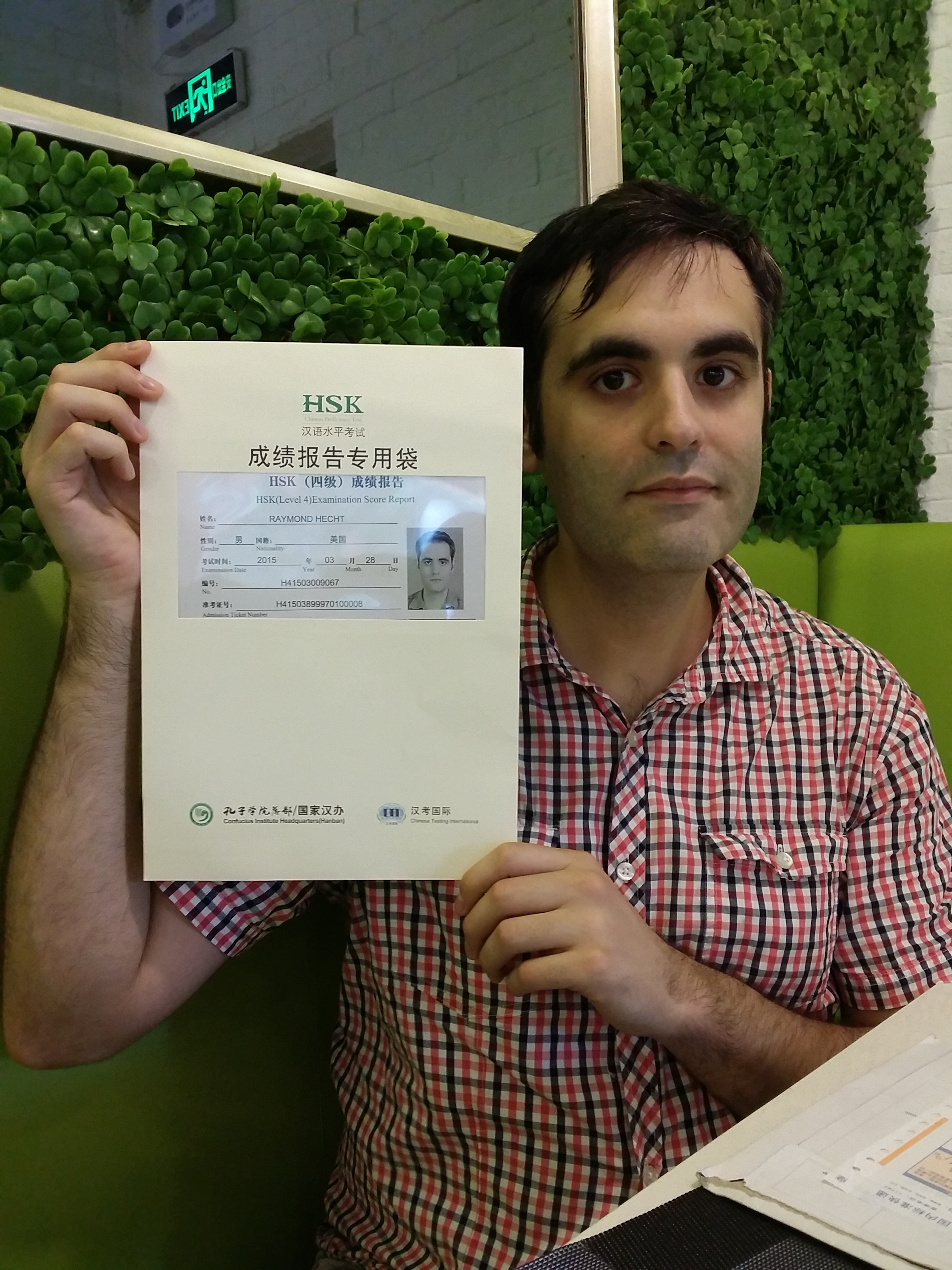
wpid-20150803_182319.jpg

A number of months ago I studied and studied until I was ready to take the HSK (Hanyu shuiping kaoshi/漢語水平考試, that is ‘Mandarin Chinese level test) level four. (四級)

Honestly, I’m not particularly good at Chinese. I have no natural talent at languages. I have however been constantly writing and rewriting characters over the last several years.

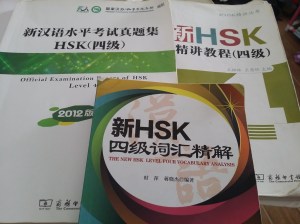
I didn’t take the level three, but the way to study is to memorize 600 vocabulary words from that test, and then 600 more level four. By the way, I’m obviously better at using pinyin feature to learn 漢字, which means I type Latin letters — English alphabet basically — on computers and phones. I can’t actually write all those characters from scratch, but I can definitely recognize them for reading. It’s like even in English I’m a bad speller but thank goodness for technology.

By the way my computer is stuck on Traditional script 繁體字. That’s okay.

I’d estimate I know 1800 to 2000 characters by heart? And still many thousands more to learn…

wpid-20150804_140755.jpg

So I met with my tutor once a week, and she set up the test at Shenzhen University 深大. I took practice tests many times over. The test portions consist of listening, reading, and writing. Putting sentences in order is among the hardest parts, and I improved the most on listening.. I think I average about a solid 80-something percent B.

Somehow my reading is not half-bad for a foreigner, if I do say so myself, yet I still struggle with spoken Chinese. I need to get out there more.

Anyway, it’s been months and now I got the certificate in the mail. I can hang it on my wall and put on a resume. See how that works out for me in the future.

wpid-20150803_181332.jpg


Perhaps next year the HSK 5–


Girl with the Microphone Tattoo: Dating in Hong Kong

This week’s interview is with the mysterious “Girl with a Microphone Tattoo”, a new blogger whom you must check out. Topics include some rather appropriate themes as per this site: Dating in Hong Kong.

Some very well-written and interesting perspectives below. Honest, frank, in tune with the modern state of romance in the world, and also anonymous


http://www.girlwiththemictattoo.com

207xoah


What inspired you to start such a personal blog?

I actually had a blog from a few years ago that discussed my personal life. As with the internet, things go awry and some people (who weren’t involved at all in the stories) started to attack me for my content which made me delete those posts immediately.

You actually were the one that inspired me to start this new blog. I really enjoyed reading your Dating in China series – I found it entertaining to hear things from a man’s perspective, cause most of the men in my life are largely closed off and unwilling to talk about such matters.

My friends had also always told me I had the most interesting and convoluted love life so I thought it’d be fun to share it to a wider audience and see what happens, without the consequences of people I know lashing out at me again.
 

Do you find the unique geographical circumstances of Hong Kong to be a positive or negative in dating? How would you compare it to dating in other places in the world?

The variety of people you meet is interesting to say the least. Because Hong Kong is such a compact city, it’s easy to meet different types of people easily and quickly. Another great thing about the compactness of the city is that I can go on dates without needing the stress of commuting, worrying if my hair is going to stay in place  or staging a conversation between me and my romantic partner.

I’ve found that in other places like North America, I would stress about different little things on my journey to the date – spending time on a conversation and/or stressing over how I look. In Hong Kong, it’s more about worrying about the transportation to the date: Whether it is crowd surfing on the MTR or worrying if you’re going to be that last person who squeezes into the bus… There is significantly less time for me to worry about date-y things until I get to the location.

That being said, I personally find that there are less variety of people with an international perspective in other places like North America, which is important to me since I grew up here and am seeking for someone who is worldly.


What are the advantages and disadvantages to the international flair of HK residents? Is it a good or bad thing that there are so many expats?

Personally, I don’t mind that there is such a large expat community because I love meeting new people with all sorts of backgrounds. But it does lead to a few nasty surprises sometimes when you realise the ephemeral nature of these relationships. It’s happened to me a couple of times where I found out this guy I really liked was leaving in a few weeks. So far nothing that crazy has happened to me but I have heard horror stories where people have just packed up and left without so much as a goodbye and that just breaks my heart. Those people are pretty much robots without a heart or conscience.

I know that these stories might be one in a million, but it really only takes one to fuck you up and cast a shadow on your future relationships.

As for HK residents, I like that a lot of them have an international flair and know what’s going on around the world beyond the Asian or HK bubble. It means I can basically talk to them about anything: From Marxist ideals to the Umbrella Revolution and Starcraft 2, the list goes on.


What advice would you give to someone starting out in the game of love in Hong Kong?

Don’t get too serious too quick. Sure, it might seem like the man/woman is perfect for you at the time but you really don’t know them yet. Take your time and get those good and nasty surprises out of the way before you really commit. Also, I have found that people here can be really flaky sometimes, (like a lot of the time) so bear that in mind and have some fun!


It seems hard to be a girl these days. Ever long for the days before Tinder and such apps, back when men were supposed to be more gentlemanly? On the subject, just what is your general opinion of dating apps?

Continue reading

#Free #eBooks by Ray Hecht

51SLY6fgvWL._UY250_

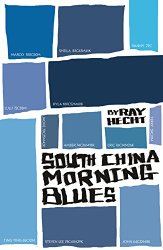
With my new novel South China Morning Blues coming out thanks to the good people at Blacksmith Books, I’d like to celebrate by freely sharing all my previous eBooks for this week only!

Remember, the Amazon Kindle app is free as well. Please don’t forget to write a review.

Go to http://amazon.com/author/rayhecht and check out the following:

41fgNJ9XdtL._UY250_

http://www.amazon.com/411-Ray-Hecht-ebook/dp/B00EUBZRL2

411 is a horrifying short story loosely based on my time as an operator in the early 2000s. Intended to disturb, the tale concerns a deranged disgruntled employee utilizing technology to enact revenge upon the world. Read if you dare.

51SS1oQD8uL._UY250_

http://www.amazon.com/Loser-Parade-Ray-Hecht-ebook/dp/B00ETYSS5W

Loser Parade is my first novel, written in my mid-20s, which juxtaposes Los Angeles culture against my hometown of Cincinnati, Ohio. Although dated, I hope that the story does well express the themes of lost love. Loser Fenton Ota comes home a failure, and decides to write and produce a play in order to impress a girl. Inevitably, a romance ensues and the relationship is entirely based on lies. Things take a turn for the strange when his play-within-a-play starts to get to his head…

41SQi-6Z5nL._UY250_

http://www.amazon.com/Ghost-Lotus-Mountain-Brothel-ebook/dp/B00JJUXZFE

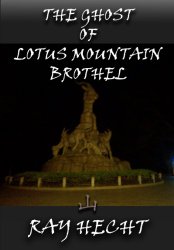
The Ghost of Lotus Mountain Brothel serves as sort of a prelude to the contemporary China novel. Set in Canton in the year 1911, the setting oddly reflects the present era of foreigner exploitation and political uncertainty. This historical novella presents the story of a lowly girl in times of great change. Revolution may be just around the corner, but she’s only trying to survive.

5167VtYaQFL._UY250_

http://www.amazon.com/Pearl-River-Drama-Dating-Memoir-ebook/dp/B00RQQIA26

Pearl River Drama is by far my most popular eBook, and perhaps with good reason. My expat memoir is, of course, focuses on dating. Through it all, I hope my heart made it through these experiences intact. “Sex, drugs, and Mandarin lessons” indeed.

Your Most Epic Weekend Chinglish

Hi everyone. In lieu of no Chinglish for a while, here’s a whole bunch:

wpid-20150720_101324.jpg

Don’t just push some

20150714_141154

Be confiscated, yo

20150714_140202

While at the bank, make copies at this Duplicator!

20150714_163748

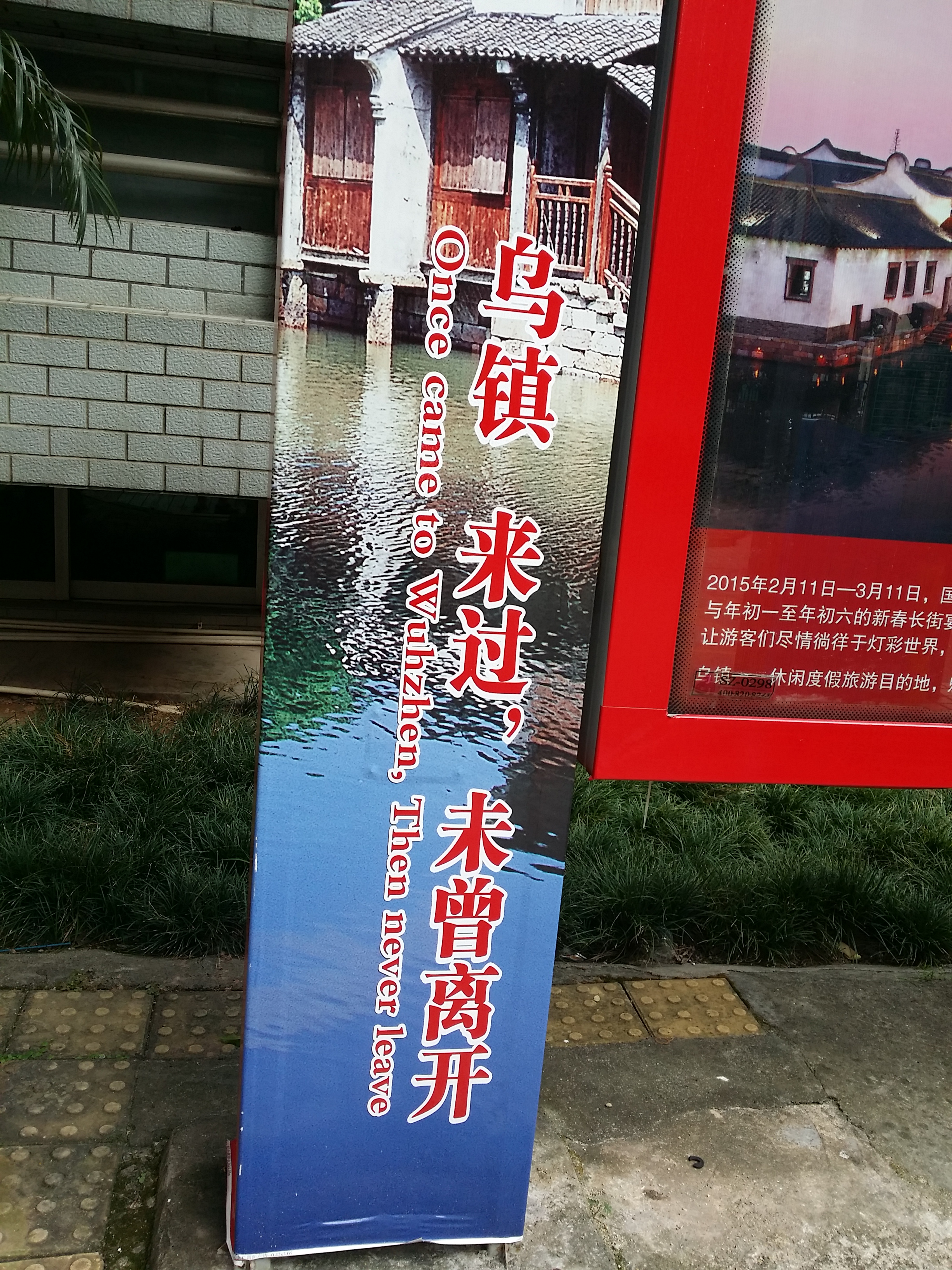
Trapped in Wuzhen

20150710_190249

Just too much. As a biciclyst, I thank the police for the kindly Reminder

Continue reading

Book Review: Year of the Fire Dragons

Fire-Dragons_A-259x400

https://thenanfang.com/year-fire-dragons-memoir-documents-expat-life-hong-kong/


Year of Fire Dragons: An American Woman’s Story of Coming of Age in Hong Kong is a new memoir by Hong Kong-based American writer Shannon Young, who is also editor of the anthology How Does One Dress to Buy Dragonfruit?

In Year of the Fire Dragons, Young gets very personal, and begins with the romantic story of meeting a Hong Konger named Ben in London. The long distance relationship continues while she intimately explores the Special Administrative Region.

The book details Young’s time as a NET teacher (Native English Teacher) in her first year in Hong Kong as she figures out how to maneuver the city. With an outsider’s perspective, she gives vivid descriptions of shopping markets, embraces the glamour of Central, learns about tensions with the mainland, discovers cultural differences in teaching, and travels the world.

The prose is often fanciful, with lines such as, “The humidity surrounded me like steam pouring out of a broken dumpling,” and, “As the sun dipped toward the horizon, we fell silent, watching the way it reflected through the quiet ripples marking our passage.”

Young is a talented writer. Her knowledge of food in particular truly gets to the core of Hong Kong culture. However, she can get lost in details at times, with scattered chapters ranging from Cantonese classes to clubbing in Lan Kwai Fong. She repeatedly introduces various friends over drinks and then we never see them again in the course of the book. Of course, it is a memoir and real life often doesn’t translate into novel-style story structure. Still, one of the most intriguing and consistent subplots is about her sister’s expat romance and wedding, which contrasts with Young’s own relationship.

The main bulk of the narrative concerns the challenges of having a long-distance partner, focusing on the tragic irony that her boyfriend Ben is from Hong Kong yet she lives there and he doesn’t. As the book progresses, Young finds it harder and harder to defend the two-year plus relationship to her coworkers and friends. No spoilers how it all turns out, but rest assured Young’s perspective is always optimistic despite tough times.

One of the most interesting parts comes in the midpoint when Young reveals her roots: her father was born in Hong Kong (though not raised there). Quotes from the letters of her Asia-traveling grandparents are included.

From 1955: Actually, Hong Kong is a wonderful place to live—we think. Of course there are many things one could complain about, as there are wherever you go, but we think there are far more things to enjoy and be thankful for.

Truly an amazing find, to see the similarities between expats of that era and those of today!

The book as a whole may not be particularly interesting for old China hands. Experienced expats and English teachers probably won’t learn many new things. But for readers less familiar with Hong Kong and life abroad, this memoir can make the perfect introduction.

Recommended both for Hong Kong newcomers and as a good gift for China-based readers to share with friends back home in order to explain what life is like for expats.

Year of Fire Dragons is published by Blacksmith Books, available in Hong Kong and on Amazon.


Shannon-Young-Writer-267x400

Author Shannon Young

Shenzhen Art Museum

Last weekend we went to the simply-named Shenzhen Art Museum, of which I am ashamed to say I had never yet been.

The museum is located deep in Luohu District’s Donghu park, a beautiful park indeed, but not particularly nearby any subway station and hence I rarely go. A simple museum, the day’s theme was “Thermomatter” concerning the nature of the city itself juxtaposed by village traditions with urban sprawl…

Notably featured in SZ Daily:

20150710_210833


I appreciated the photography, electrical grid, and particularly the piece entitled Mother.

20150711_10402020150711_104147 20150711_104847 20150711_104750

20150711_10501820150711_105107

20150711_105324

20150711_104956


Continue reading

My first Chinese wedding

No, not my first Chinese wedding. I mean my first Chinese wedding — of other people — I’ve ever been to.

Recently, my good friend got engaged and invited me to Hainan, the tropical island paradise of a province, and I was to attend his wedding. Always wanted to go that island, and always wanted to to one of those big festive Chinese weddings I’ve heard so much about. Made plans and I dusted off my old dress jacket and off we went.

Flew into Haikou city, the capital. To be honest, not my favorite city. People usually go to Sanya, the more touristy locale apparently overrun by Russians. I did enjoy the beaches in Haikou because they’re relatively deserted, and there were some decent natural hot springs, but overall it was a bit of a dead city. Really tricky to just find restaurants.

Then came the big day. The train at the airport conveniently goes right to the nearby small town of Wenchang, the bride’s hometown, which is actually better than Haikou. Plenty of places to eat. We were even nicely gifted with a hotel room.

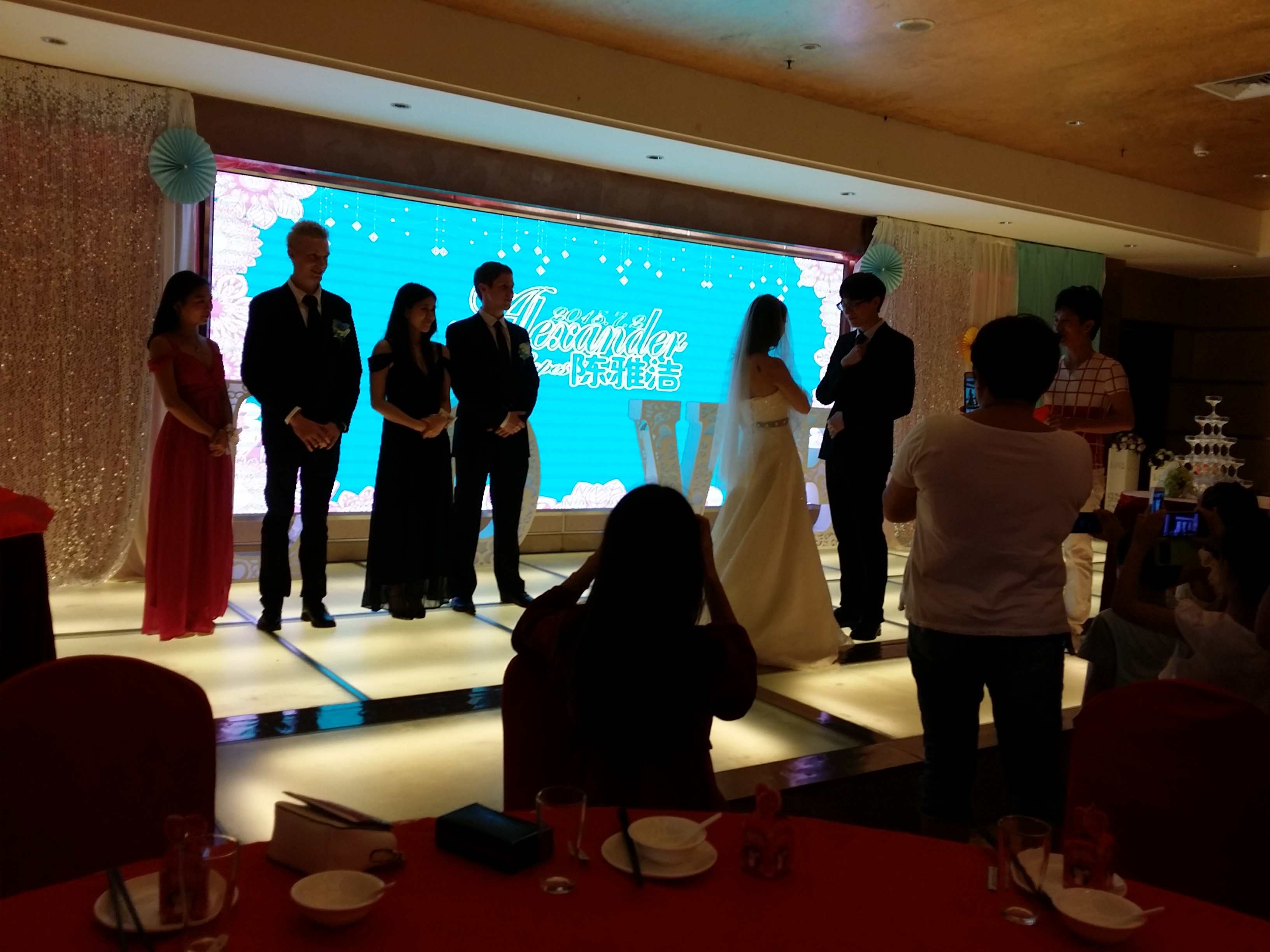
The ceremony was at the adjoining big hotel. Look, he’s a celebrity.

20150702_173808


The big day. That’s me, and my lovely date.

20150702_182048


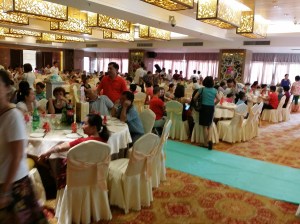
300 people in attendance. All the bride’s family. My American friend only had a relative few friends from the Shenzhen scene. We did get to sit in the front, VIP.

20150702_181144


It surprised me how matter-of-fact the proceedings were. The groom did admit he found some of the rituals awkward. All the guests came in, paid a hongbao (red envelope, typically filled with *cash*), as if it was basically a show.

A show indeed. Here is the happy couple wearing undergoing the shaking-hands-with-guests-at-entrance move, with her in a red dress initially.

20150702_180518


All in all it was a very structured affair. She changed into a white dress inside, but it wasn’t a Christian affair by any means. No priest, not quite walking down the aisle. The MC host of some wedding company was in charge, and it seemed like he did this sort of thing onstage all the time.

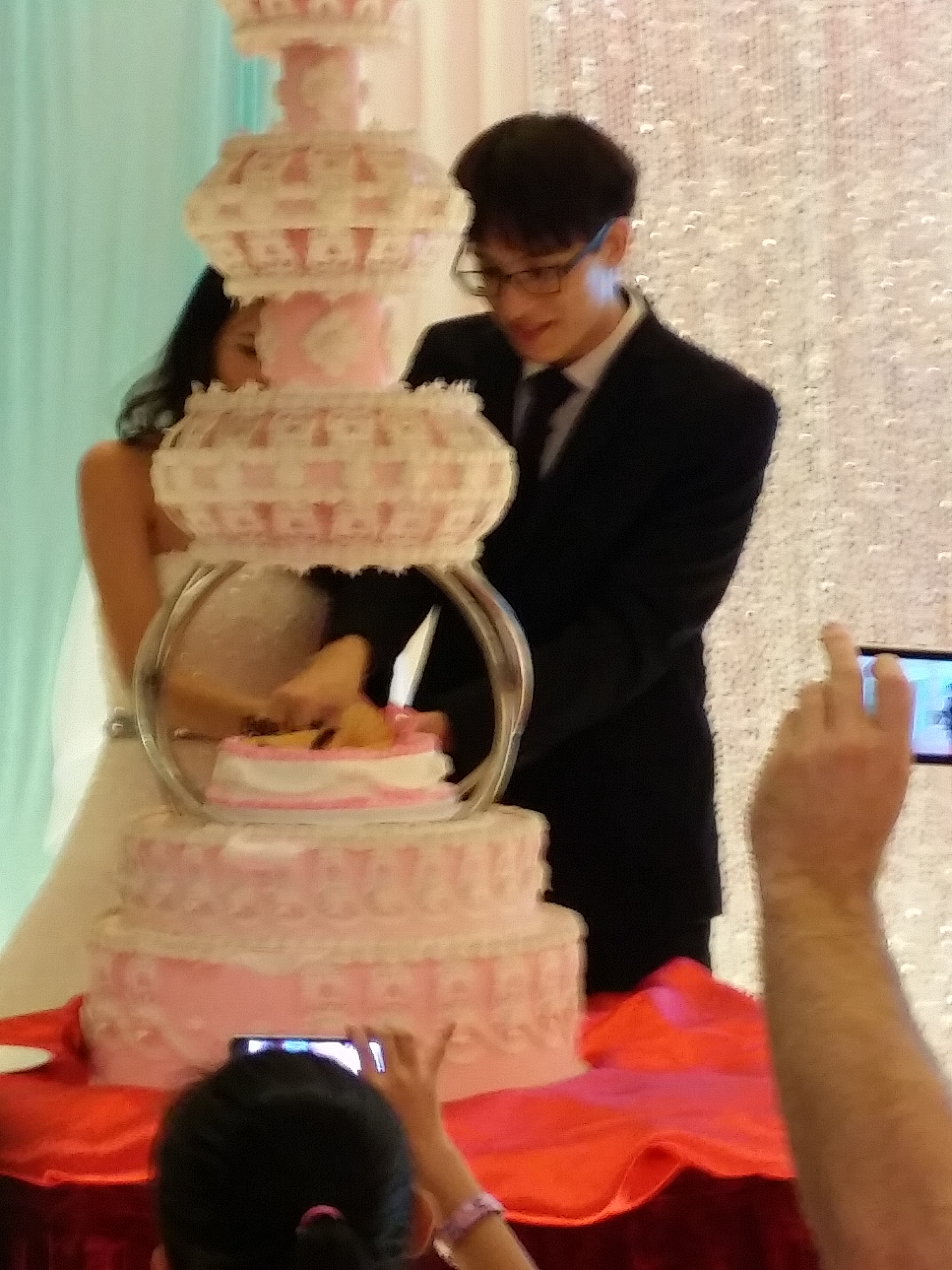
One thing checklisted after another. Pour the champagne, cut the cake, take pictures with the family. All with appropriate accompanying soundtrack.

20150702_185353

20150702_185549

20150702_190005 (1)


Continue reading

Writing, dumplings, and the expat life with Amanda Roberts

Last week’s interview with Jocelyn Wong about food was surprisingly popular, and I hope you all enjoy this interview with writer Amanda Roberts of TwoAmericansinChina.com.

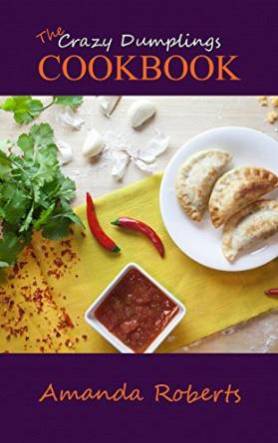
She has a cookbook available that you just may find interesting…

Crazy Dumplings

download


First of all – as the typical question goes – what brought you to China?

It was a dream of mine for a long time to teach in China. I graduated with my master’s degree in English in 2009, right about the time as the economic crash, so full-time teaching jobs in the U.S. just weren’t available. By the time my husband and I started looking for jobs nationwide, we decided “if we’re gonna move, let’s move big!” So we packed up and moved to China.


Have you found the expat scene to be welcoming and positive? What challenges have you overcome?

China is a big place, so the expat communities can vary widely. In the first town we lived in, we were only two of four expats in a little rural town in Hunan Province, so that was hard. We really got along with the others, but it was still isolating. Then we moved to Changsha. While Changsha had a bigger scene, there wasn’t much to do in the town, so it was very boring and hard to find people with similar interests. Moving to Shenzhen was a huge change. There are so many expats here for such a (relatively) small town. They are also very well connected via social media, so they’re easier to find. We have made many great friends here and are members of several hobby groups, so life here is pretty good.


What are your top complaints about living abroad? (This one optional)

I miss having a clothes drier! I have a cat and a dog and their fur gets everywhere so my clothes are constantly covered in pet fur. Shenzhen is also very damp, so sometimes it can take days for clothes to dry.

I also miss having a vehicle. Not a car, but at least a motorbike or something. We had motorbikes in Hunan, but they are banned here in Shenzhen. It can make going places very difficult and makes me feel almost debilitated at times.


What’s your favorite thing about living in China?

I love my job. It’s nice to be working in the writing and editing field and I also have a lot of freedom to work on my own writing projects.

I also just like living abroad. I like the people, the atmosphere, the ability to travel and save money. I don’t know if we will stay in China forever, but I don’t think we will ever move back to the U.S.


How did you decide to become a writer?

I’ve always been a writer. I was on the school newspaper in elementary school and was a reporter and anchor for a weekly televised teen news program when I was in high school. I published quite a few things in college. I’ve taught writing at American universities since 2007. Writing is who I am. But I had never pursued “writing” as a career until after I moved to China – I had always considered myself a writing teacher. Now, I identify as a writer and editor. I think living here has given me much more of a voice, something important say. I also have the time and financial independence to write, which are the two big hindrances for most aspiring writers.


What’s the story on the creation of your cookbook?

The first place we lived in China was a county town in the middle of nowhere. We were two hours by bus from the nearest town with a McDonalds or Walmart and four hours away from the nearest city. So we used to take lots of long bus rides in the countryside. But I can’t read in a moving vehicle – I get nauseous. So I spent those trips just thinking. I came up with lots of book ideas while on those trips. One of which was Crazy Dumplings. I had just spent the week in the countryside with my goddaughter’s family for Chinese New Year surrounded with so much good Chinese food and, of course, lots of dumplings! I had the itch to write a cookbook for a long time, but I thought a Chinese cookbook or an expat cookbook would be too much work for my first foray, so the idea of focusing just on dumplings came to mind. I had a dozen recipes in mind by the end of the day.


How have you found online-promotional platforms such as Kickstarter to be helpful? Continue reading

Hainan Chinglish

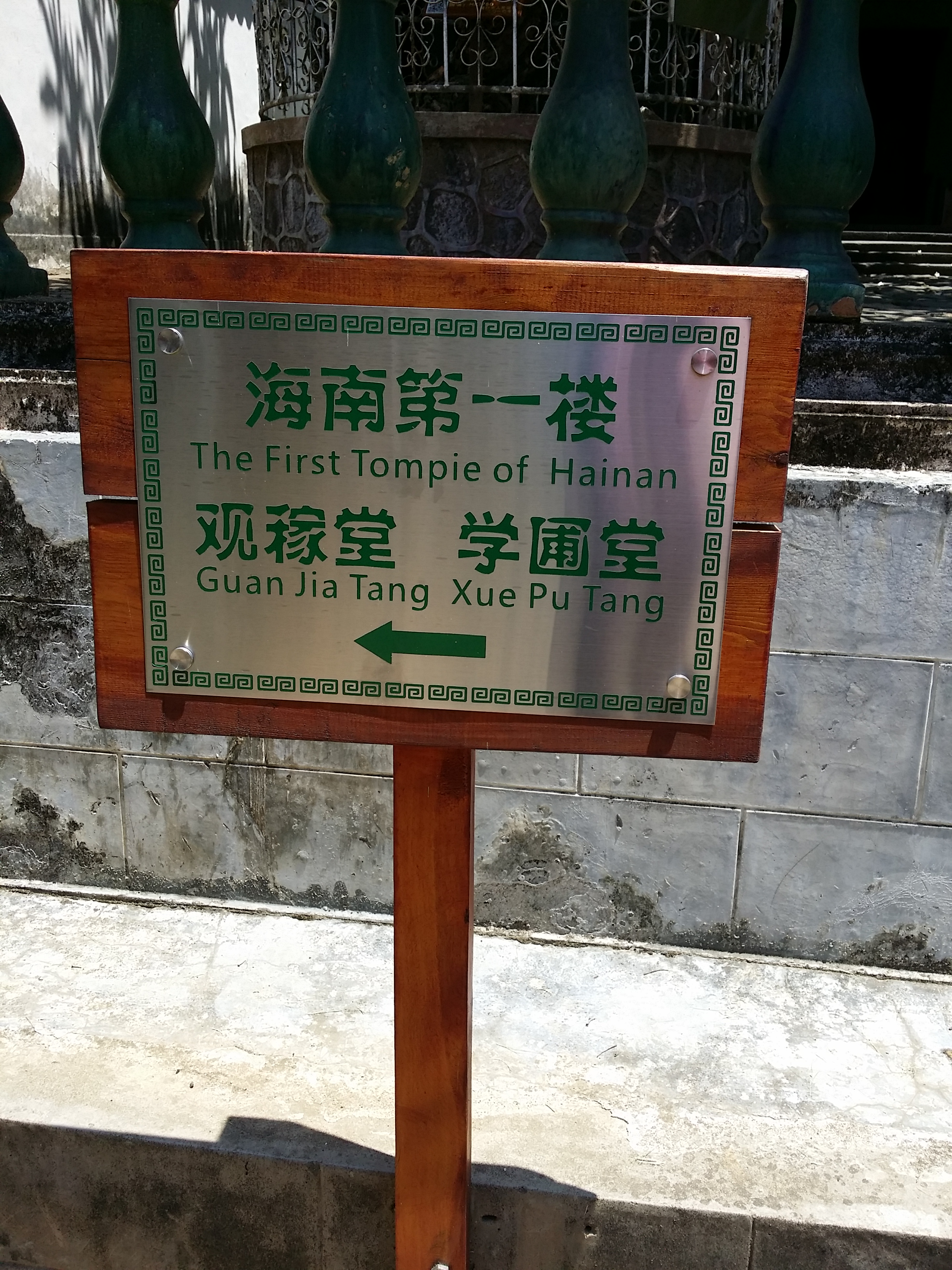
On my recent trip to the tropical Hainan island/province, specifically the cities of Haikou and Wenchang, I came across this T-shirt for sale:

wpid-20150702_160029.jpg


Which is the only particularly funny part.


Here’s a Tompie sign misspelled:

wpid-20150630_114848.jpg


And the other day back in Shenzhen a guy with a shirt that loudly states: FUCK among other illegibles. Gotta love those shirts.

wpid-20150708_172132.jpg


Fallow your heart, readers!

An interview with Jocelyn Wong

Today I have an interview with Hong Kong-based food blogger and journalist. Jocelyn Wong.

She writes at the aptly named http://jocelynwrites.com, do check it out for some delicious posts…


IMG-20150602-WA0001


When did you first decide that being a writer was for you?

I pretty much got the bug after winning my first writing competition that I entered for fun because I liked the topic. It was something along the lines of Hair Disasters. I shared my experience of getting a bad haircut which ended in tears and getting the back of my head shaved. After that I entered an SCMP writing competition and won. The next step that really solidified my passion for writing was getting a two-week internship with Young Post which got extended to the end of the summer. Afterwards, I got hired as a freelancer for them and everything else is history.


Do you find being a journalist to be rewarding work?

Absolutely. Working for Young Post is one of the most inspiring experiences for me. Getting to work so closely with the talented youth in Hong Kong and being a part of their lives — helping them improve their English bit by bit, day by day.


Are you inspired by any writers, Hong Kong-based or otherwise?

There are some pretty big names out there that I’m inspired by but for now my aspirations lie in tangent with those of Jason Ng – the SCMP columnist who wrote the best-selling Hong Kong State of Mind and Pete Spurrier – who owns Blacksmith Books. Someday I want to have my own publishing house and discover new writing talent.

(In the interest of full disclosure, Ray Hecht would like to note that his forthcoming novel South China Morning Blues will be published by Blacksmith Books)


Being that you have a food-based blog, are you interested in cooking as well as being a foodie?

I have always been interested in baking — so it’s more likely that I’ll end up as a pastry chef rather than a cook. I love just working up a storm in the kitchen with the blender, mixer and flour. Copious amounts of flour and brown sugar decorate the kitchen floor by the time I’m done baking some treat or another; also, I just love the smell that fills up my apartment after I’m done baking. The smell of molten chocolate is absolutely heavenly.

That being said, I do love getting my hands dirty in the kitchen. Instead of making ramen noodles in college, I remember spending the bulk of my free time googling recipes of healthy food, because I couldn’t bear to gain that “freshmen fifteen” if I could help it.

Now that I’m back in Hong Kong, I’ve really enjoyed having a full kitchen with proper counter space and international ingredients and spices to work with. Back in my college days, I’d have to do prep in my living room because my kitchen was so small. I think I whip up some pretty good scallop medallions, and I devised my own perfect pesto sauce in my college days.


What kind of food did you grow up eating?

I was lucky enough to grow up in a multicultural environment and my parents are foodies as well. Even at home, my mother would try to cook as many different types of cuisine as possible, even if most of it was Chinese. China has a diverse food culture and I feel like I really got to know it as I grew up (since at one point, my father couldn’t bear the thought of not having at least three Chinese meals a week. This is how my mother got creative – by having those restraints).

In terms of eating out, we were regulars at the now defunct Japanese restaurant in the old Ritz Carlton in Central, Tenjaku in Lantern St, as well as Brasserie on the Eighth, Ming Yuen in Parkview and the McDonalds by Repulse Bay just to name a few. I still maintain that Hong Kong has the best McD’s in the world.

When I went to university, that’s when I got serious about cooking. I was also really conscious about staying healthy. That being said, I had my fair share of 2 a.m. pizzas and Timmy’s (surely you’ve heard of our famous Canadian Tim Horton’s doughnuts), but generally I’d say I kept a healthy diet. Within months of settling into college, I really quickly learned how to make healthy and delicious foods like grilled ahi tuna with green and white peppercorns, turkey burgers and bake gluten free cookies (that don’t taste like cardboard).


Do you enjoy the Hong Kong restaurant scene because of authentic Cantonese cuisine, or because of the diverse international range of tastes in the city?

Continue reading

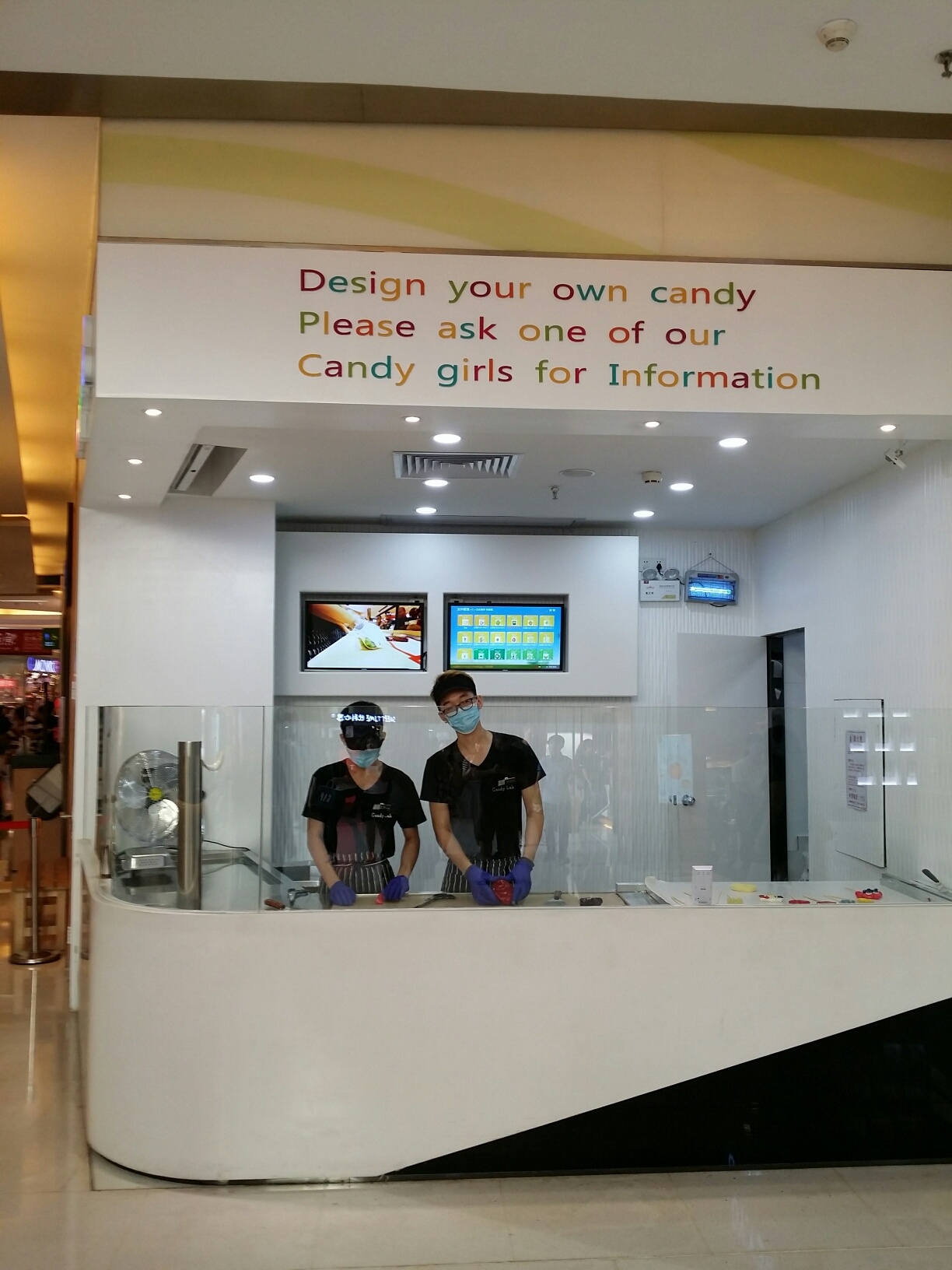
Candy girls

wpid-20150626_174352.jpg


The poor “candy girls”

#CocoPark

Interview with Travis Lee

Today’s interview is with up-and-coming author Travis Lee, who writes about expats and China. Topics to be discussed will include the nature of living abroad as well as meditations upon the act of writing.


More from Travis Lee can be found at these links:

http://www.travis-lee.org

https://www.facebook.com/travislee19

https://www.smashwords.com/profile/view/travislee


44


Firstly, can you tell us about how you came to China?

My how I came to China story is nowhere near as interesting as yours, I’m afraid. I was a French major in college, and as graduation loomed like a fall into a deep pit, I applied to teach English at a French high school, in the assistant d’anglais program. I wasn’t selected.

To this day, I’m not sure why. I had a high GPA, good recommendations, good French and previous in-country experience, so I had all the right checks in the right boxes. It could have been the sheer number of applicants; the professors who assured me that everyone gets in had done the program in the seventies and eighties.

Whatever the reason, that changed everything. Had I gone to France, I wouldn’t have my wife, my daughter, the books I’ve written. We wouldn’t be doing this interview. Right now, I’d be finishing my PhD, praying for tenure.

So instead of preparing for a summer in France, I moved back home and worked on plan B: volunteering in France. While I looked for positions, I received an email through my university’s career services distro: a Tennessee alumnus who worked in Wuhan was looking for English teachers. I read through the email. Free apartment, travel money, chance to see a dynamic country in a real Chinese city. Plus, a Western toilet. Don’t you love how he used Western toilet as a selling point?

I did all the paperwork, and on August 26, 2008 I touched down at Tianhe Airport in Wuhan, China.


What your life was like here?

Like most experiences, it looks better in hindsight. The earlier times are not better, just earlier, but it can hard to acknowledge that.

So, my life, in a word? Free. I felt like I had a lot of opportunity. I had enough time to pursue any hobby I wanted. I studied a lot of Mandarin, kept up with my French, taught myself some Calculus, and I wrote. This was the time in my life when I began to take writing very seriously. I “turned pro”, as Steven Pressfield would put it.

Although I was poor and twenty pounds overweight, I look back on my two and a half years fondly. My life changed completely. My first year and a half or so wasn’t easy — a lot of ESL teacher politics, personal issues — but once I moved past that, things got better. One thing that helped was Wuhan University. There I had only one co-worker, a normal guy, and I never saw him anyways. I taught great students in the afternoons, freeing up my mornings to study and write. I made friends with some great classmates. Wuhan University has a sizable international student population; a very cosmopolitan atmosphere.

I read a lot of expat blogs too. There was a certain buzz in the air. I found some great writers, who unknowingly helped me a lot, just because I read what they wrote.


What do you miss about China? What do you not miss at all?

I miss the free time I had. I miss how even the simple act of going to the store and buying a soda could turn into a story. And travel. I saw some nice places; wish I’d seen more.

What do I not miss? Respiratory infections, one. Internet censorship, the typical stuff that can make life in China hard.

At Wuhan University we were letting my brother-in-law stay over sometimes. The guy who worked the front desk noticed him coming in and out, and he asked us for 200 RMB a month. I said no, and the Foreign Affairs Officer came over and told me to either pay more or my brother-in-law couldn’t spend the night. Their excuse was the electric bill.


Can you describe your writing process?

I’m very much a cover-the-canvas guy. I can’t do outlines; I’ve tried it before, and I ended up either deviating from the outline or not writing the actual story. Outlines work well for class, not so much for writing. I prefer the spontaneity; I can’t write if I know exactly what’s going to happen. It kills all the fun.

So I write and write and write until I have something, and after some time has passed, I revise it. I go through about three drafts. I used to retype my drafts, I stopped doing that. I don’t have the time. I work and right now go to school full-time; I write new stuff in the mornings, revise at night unless I have a big test coming up.

I listen to Final Fantasy music when I write, either Final Fantasy Radio or my own playlist. It helps lock me in my own little world.


Which books and authors have inspired you?

The Road, by Cormac McCarthy. Beautiful writing, very emotional. Child of God is good too, mainly for the prose. There’s a line in Child of God where Cormac McCarthy describes a woman’s widening pupils as a “breaking brimstone galaxy”.

The Alchemist, by Paulo Coehlo. This book captures what it’s like to chase your dream against many obstacles.

The War of Art, by Steven Pressfield. It has the best writing advice I’ve ever seen. But it’s not limited there; you can apply it to any calling.


What are you working on now?

The Pale Ancient & the House of Mirrors, about a missing foreign journalist and his friends’ efforts to find him. I want to publish it through a China-based publisher.

Richard, an amateur foreign journalist, goes missing while investigating a blood cult in Hubei province. Four people are affected: Mary, a newbie China writer who dreams of cementing her name alongside the expat greats; Ying Li, a small-town police sergeant; Chris, a freelance translator whose own experience with the cult has left him scarred; and Daniel, an expat media mogul with drug problems and a failing marriage.


Why did you choose to write this particular story? Continue reading

Interview: Darcy Shillingford

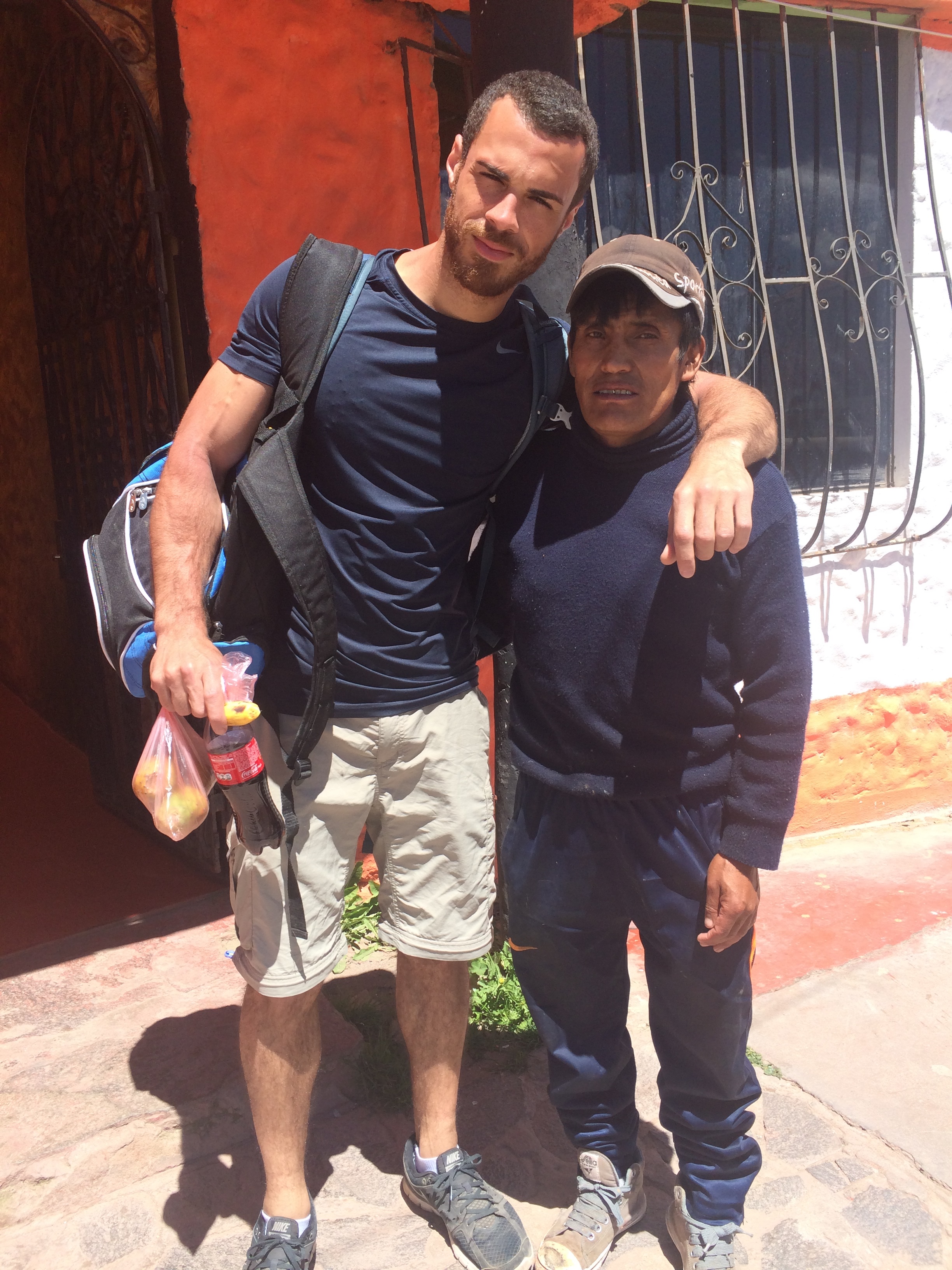
Interview with the amazingly well-traveled Darcy Shillingford, Canadian novelist and blogger for the travel site travelingspaceopera.com


IMG_4026

Pic info: “just as I was about to hop on a bus, leaving Cabanaconde to head to Arequipa, then eventually Cuzco. Caesar, who I’m pictured with, was our host in Cabanaconde.”


What is your writing process like?

It varies depending on the kind of writing I’m doing. With my travel blog posts, I try to put myself in a relaxed, informal state of mind. I give myself freedom to let my stream of consciousness flow, while trying to maintain some kind of structure and thematic consistency. Imagery is important to me, and despite the fact that I can throw in as many pictures as I want, my goal is for my writing to be able to evoke colourful detail with or without them. I want the reader to feel like they’re walking alongside with me.

As far as fiction goes, I can’t force creativity. I can sit there looking at a blank page or computer screen for a long time and nothing comes to mind. Other times, I’ve been lying in bed at two in the morning and suddenly think of an idea concept that I have to write down and develop a little bit before I can go to sleep. When I’m on a role, though, I try to let it snowball and see how far I can take it. The only fiction I’ve put a lot of effort into is in the sci-fi genre, and I try to write what I would want to read if I were to pick it up myself.


How do you compare travel writing with fiction writing?

For me, fiction writing has been far more time consuming. In addition to creating a plot, out-of-this-world (literally) settings, characters, and so forth, there is a great deal of research involved due to the genre choice. I’m no scientist, but I do take advantage of the relatively unlimited academic resources at my disposal and have put in countless hours researching elements of astrophysics, the gathering and employment of military intelligence, planetary and solar physics, religious and political history at a global level, various elements of the social sciences, philosophy, and so forth.


What gives you inspiration for fiction?

It depends on what aspect. I get inspiration for characters from my daily interactions with all kinds of people. I work at a restaurant and meet dozens of people a day. Also, the people I’ve met traveling are so varied and interesting that I can’t help but be inspired by them. When it comes to plot, I’m inspired by my education, particularly in the realm of history and politics. I like grand, I like big, I like epic, but I also like obscure. Random bits of military or colonial history that were glossed over in school, or missed altogether, fascinate me.


What are your favorite books?

Use of Weapons and Feersum Enjinn, both by the late Scottish author Iain M. Banks are certainly in my top five. I also appreciate classic or golden-era sci-fi, but I also think some of the classics haven’t aged well, particularly in regards to their social commentary. I also grew up loving the Harry Potter series. Stephen King is awesome as well; very psychologically immersive and vivid.


Why did you choose to spend your time in 2013 traveling in Southeast Asia?

I simply had to. I was at a point in my life where I’d recently graduated from university and didn’t quite know what I wanted to do with my life. My girlfriend and I had done some all-inclusives, but had also discussed doing some “real” travel. What began as an idea for a month or two in South America turned into half a year in Southeast Asia. When I look at a picture of the two of us at a wedding a couple days before we left for this trip, I get jealous of that guy. He has the best adventure of life just on the horizon.


Is it difficult to write about your experiences going back two years? Did you keep journals at the time or anything like that to help you to write about it now?

I did keep journals, but I rarely need to refer to them. I usually only look at them to remember the name of a person I met along the way. Having taken a couple thousand pictures makes it fairly easy to track everything we did, but every so often, a detail or nuance will creep into my memory that I hadn’t thought of since it happened.


You most recently traveled in South America, correct? What cultural differences have you come across that contrast with the Southeast Asian experience?

I actually wrapped up the Peru trip in mid-April. We were there for 18 days. The first thing I took into account were the similarities with Asia: the scorching heat, the abundance of cheap stall food, the hokey tourist areas where local merchants spout silly lines to travelers in order to charm them into overpaying for whatever product or service. All great stuff, in my opinion. The thing with Southeast Asia is that I visited seven countries so there are dozens of differences even between those countries. I found, though, that the food in Peru is a lot heavier and starchier. Also, the weather was far more erratic, perhaps because we spent much of the journey either in the Andes or the Amazon Jungle.


Which country or countries (Southeast Asian and/or South American) gives you the most inspiration?

Vietnam may have been the most inspiring, but as I’ve written in the past, I have a heavy bias. My girlfriend, Teresa, was born in Canada but her parents are from Vietnam and she speaks, reads, and writes it fluently. This had a vast impact on our experience there when it came to interacting with the locals and we really got to know people there more than anywhere else we’ve ever traveled. Also, Vietnam has a great deal of variety (accents, landscapes, cuisine) and its geographical makeup made it really easy to travel in a fairly straight line without missing too much along the way.


Do you prefer the bustle of developing cities or the splendor of natural, untouched-by-man places? Continue reading

Carries off trash to stay behind beautifully…

Image

wpid-20150622_105214.jpg