ASSEMBLING 貳 +叁 = 伍: Shenzhen-based artists exhibit in Hong Kong

Been a while since I published something from Shenzhen Daily, but I do have something in today’s edition. Basically I copy-pasted the press release and rewrote some quick bios, and they gave me the credit!

Also, please do check out the exhibition opening release party in Hong Kong, Friday July 22 to meet the talented artists…


res07_attpic_brief

“Expand” by Bronwen Shelwell

http://szdaily.sznews.com/html/2016-07/14/content_3571221.htm

Four artists who reside in Shenzhen — three expatriates and one Chinese — will showcase their art at Sin Sin Fine Art in Hong Kong from July 22 to Aug. 21.

Entitled “Assembling,” the exhibition will include ceramic, glass, installation, multimedia and painting, all assembled to connect with one another. Each artist has a unique perspective while sharing the same thread of chance that brought them together, with the content of “Assembling” all collaborating and complementing one another.

The opening reception will be held July 22 at 6:30 p.m. and will feature a performance by Spanish dancer Beatriz Abad Latorre. On Saturday, July 23 at 3 p.m. the artists will meet to discuss how the city of Shenzhen has impacted their work, life and creativity.

Bronwen Shelwell, who is from South Africa and works primarily with glass, is the curator as well as an artist and has a series of glass sculptures. Marco Flagg, a multimedia artist from the United States, will present a video art piece. Tom Hayes from Britain specializes in ceramics, and has produced a “living” sculpture that will grow during the exhibition dates. Zhang Kaiqin is a Chinese artist from Yunnan Province and she will exhibit a contemporary watercolor painting.

Dates: July 22-Aug. 21 (closed Sundays)
Opening reception: 6:30-8:30 p.m., July 22
Discussion panel: 3-5 p.m., July 23
Admission: Free
Venue: Sin Sin Fine Art, G/F, 52 Sai Street, Central, Hong Kong
MTR: Sheung Wan Station, Exit A1


http://sinsinfineart.com/2016/assembling/assembling-eInvitation.html

End of the Tour: Shenzhen Writers Night

Discover AndExperiencE ASIA


Last weekend I hosted the “Shenzhen Writers Night.” It was something I was thinking about for a while, as a sort of ending to my book tour of the past year. And I wanted to create a special reading atmosphere, so I broadened the event to include other talented authors I know in Shenzhen and South China.

If I do say so myself, I think it went very well. I found a good space at the youth hostel in the OCT area, which is Shenzhen’s own answer to a hipster neighborhood. Me first, I tried out at reading from the last chapter of my novel in order to signify the end. A spoiler if you may, but I had never read that aloud before. The array of talent and creativity from the other authors was amazing; the stories and the poetry and the performances. It went by faster than I realized…

Although this was supposed to be the end of my tour, now everyone keeps asking me when there will be another reading. So, guess I’ll have to do it again! After learning a lot about how to organize and promote such events, and thinking about more writers to showcase from Guangzhou to Hong Kong, I certainly have some ideas.


By the way, the event was even reviewed on the site BASEDtraveler and That’s PRD magazine — here are the two pieces complete with appropriate links from all the participants, so please do check out more from these great writers:


http://www.basedtravelershenzhen.com/shenzhen-writers-night

Shenzhen Writers Night

by Rachel Dillon

Friday 3rd June saw the first ever Shenzhen Writers Night, and I was lucky enough to be a part of it. It was held in the community room of the YHA Youth Hostel in OCT Loft, a lovely area full of arts events and exhibitions, cafes, restaurants, shops and bars, and was an eclectic mix of writers from all over the world with all different styles and genres of writing.

Organised by Ray Hecht, an American who has lived in Shenzhen for about seven years, he opened the event with a reading from his novel South China Morning Blues. Unusually, he read the final chapter, giving us a flavour of the whole book and a taste for more. Luckily he had a few copies for sale. My copy is on my nightstand, waiting to be read.

Next was Amada Roberts of Crazy Dumpling fame. You can read my review of her first cookbook here and she has just published the sequel, aptly titled Crazy Dumplings 2: Even Dumplinger. However, she decided that cookbooks weren’t exactly riveting listening for an audience so she read an excerpt from her debut novel, published under her pseudonym Leigh Anderson. The Vampire’s Daughter, a gothic fantasy romance, was quite a contrast from South China Morning Bluesespecially considering the part she read – a touch on the erotic side with a dramatic cliff hanger to keep the audience gasping for more. Read my review of The Vampire’s Daughter here.

Lom Harshni Chauhan’s novel Visa, Stickers and Other Matters of the Soul is all about raising her daughter with Indian spiritual values while living in Shenzhen, where she has lived for the past 13 years. She read a humorous excerpt about how the name of the book came about during a conversation with her daughter where she declared that, “The body is the visa for the soul.” Very profound for a six-year-old.

The next person on stage was Adrian Blackstock, a musician who has lived in Shenzhen since 2012. He is currently working on an album due to be released in July this year. Called VaChina, it is a musical celebration of China, Africa, Virginia (where Adrian is from originally) and where all humans began. Adrian chose to recite the lyrics of two of the songs from his upcoming album, and gave a riveting performance.

After a great introduction from Adrian, it was my turn. I read some of my travel writing – a piece about travelling on the Trans-Mongolian railway last summer which I wrote as a guest post for Clara from expatpartnersurvival.com and you can find on my blog here; followed by a bit about my experience visiting Chernobyl, which was the absolute highlight of my trip.

I then had the pleasure of introducing my friend Senzeni, whose writing I love. She was one of the finalists of the That’s PRD writing competition last month, along with myself and another friend; Senzeni won third prize with her piece which is published in this month’s That’s PRD magazine. (There’s also a small picture of me!) Senzeni read a short story from her upcoming anthology of short stories, due to be published later this year. Humorous and thought-provoking, Senzeni’s writing is full of emotion and captures snapshots of different people’s lives from a whole new perspective.

The final writer was Aaron Styza, who had come all the way from Guangzhou to share some of his beautiful poetry with us, including The Science of Speech, which has been published on HeronTree.com. Again, a completely different style of writing and genre, Aaron’s poetry was an excellent ending to a very eclectic and enjoyable evening.

As many people are going away for the summer (including me), we are hoping to do another Shenzhen Writers Night in September. Check back here after the summer for more information on future events.

Resources
If you missed the event but would like to find out more about the authors and their writing, here are a few links:
Ray Hecht’s South China Morning Blues and his site www.rayhecht.com.
Amanda Robert’s Crazy Dumplings and Crazy Dumplings 2: Even Dumplinger, along with The Vampire’s Daughter under her pseudonym Leigh Anderson, and her blog www.twoamericansinchina.com
Lom Harshni Chauhan’s Visa, Stickers and Other Matters of the Soul
Adrian Blackstock’s album site vachina.bandcamp.com
My blog www.persephone2015.wordpress.com, which is more about travels outside of Shenzhen
Senzeni Mpofu’s competition article in this month’s That’s PRD magazine
Aaron Styza’s poems on TwoCitiesReview and Sediments Literary-Arts Journal, plus an interview with Ray Hecht here.


http://www.thatsmags.com/shenzhen/post/13952/photos-shenzhen-writers-night-recap

PHOTOS: Shenzhen Writers Night Recap

by Bailey Hu

Last Friday night, June 3, was the premiere of Shenzhen Writers Night, a new event local author Ray Hecht organized in order to showcase the voices of talented writers in the area.

The event was held in the community room of a youth hostel in OCT-Loft, as advertised earlier on That’s PRD.

Seven talented writers spanning a wide range of voices and styles gathered to share their work. Each read an excerpt of what they’d written, sometimes prefacing it with an explanation, before introducing the next author.

shenzhen-writers-night-8.jpg

As the host, Ray started off the night by reading from his latest book, South China Morning Blues, a novel about modern life in the Pearl River Delta.

Two other writers, Amanda Roberts and Lom Harshni Chauhan, also read parts of books they’d published. Amanda, who also runs a local women writers’ group, shared a steamy scene from her gothic-inspired The Vampire’s Daughter (published under the pen name Leigh Andersen).

shenzhen-writers-night-5.jpg

Lom’s chosen excerpt from Visa, Stickers, and Other Matters of the Soul, on the other hand, was a sweet, spiritual contemplation on the author’s close relationship with her daughter.

Two of the writers at the reading were also finalists in the That’s PRD writing contest last month. Rachel Dillon, who also wrote about the reading, shared a couple travel pieces while Senzeni Mpofu, who won third place for her short story, read another piece that will be part of her upcoming anthology.

shenzhen-writers-night-1.jpg

Breaking up the mostly prose lineup, Adrian Blackstock and Aaron Styza made a strong showing with their samplings of song lyrics and poems, respectively.

Adrian turned his reading into a true performance as he used expressions and movements to accompany his musical compositions. Aaron, while opting for a more traditional reading, ended the night on a strong note with his deeply reflective work.

shenzhen-writers-night.jpg

Fittingly, the atmosphere in the hostel felt communal, even casual, with audience members occasionally laughing or asking the writers questions.

Organizer Ray Hecht commented he was “happy with talented writers sharing their stories in Shenzhen,” and that he was strongly considering holding follow-up events in the future.

Senzeni Mpofu agreed. “It was great,” she said, and she was “hoping to see more.”

shenzhen-writers-night-4.jpg

Adrian Blackstock added that he “enjoyed the diversity” of writers and their work on display during the reading.

Amanda Roberts saw the reading as a venue “for authors to get themselves out locally,” and had been pleasantly surprised by some of her fellow writers. When asked if she’d attend future events, she responded: “definitely.”

Art and the City panel

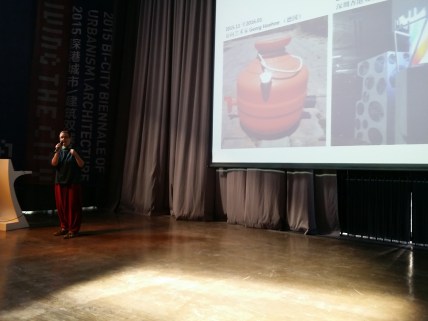
Went to the Art and the City panel at 812 Design Center in Shenzhen last week.

Here is Bronwen Shelwell’s speech on microspaces, about working in South Africa. Artists mentioned include Steven Hobbs, Hedwig Hoben, Nina Barnett, and Theaster Gates.

Forgive the many cuts in my edit, because there were lots pauses for the Chinese translator to speak which I took out of the video.

Very interesting, and inspiring!

Asian Book Blog: 500 Words

500 words from Ray Hecht

http://www.asianbooksblog.com/2016/04/500-words-from-ray-hecht.html

500 words from…is a series of guest posts from authors writing about Asia, or published by Asia-based, or Asia-focused, publishing houses, in which they talk about their latest books. Here Shenzhen-based American Ray Hecht talks about his new novel South China Morning Blues, published by Blacksmith Books based in Hong Kong. Ray’s earlier books were The Ghost of Lotus Mountain Brothel and Loser Parade. He currently writes for Shenzhen Daily, the only daily English-language newspaper in the south of mainland China.

South China is like a giant test tube where ideas and people from all over the world meet. Expats and locals alike must try to make sense of the crazy present, if they are ever going to forge the brilliant future that is China’s ambition. That is precisely what the characters in South China Morning Blues are trying to do. There’s Marco, a crooked businessman with a penchant for call girls; Danny, a culture-shocked young traveller; Sheila, a local club girl caught up in family politics; Amber, a drug-fuelled aspiring model; Terry, an alcoholic journalist; and Ting Ting, an artist with a chip on her shoulder. Their lives intertwine in unexpected ways as they delve deeper into their surroundings and in the process learn more about themselves.

So: over to Ray…

I have always been fascinated by China. So when I was invited to move to Shenzhen I jumped at the opportunity. I wanted to learn all I could about this fascinating and strange place.

Shenzhen, famed for supposedly having no culture, was a small fishing village until the post-Mao economic reforms. Now, it’s a city with a population that outnumbers New York. And I realised upon arrival that the future of China can be as fascinating as the past; the Special Economic Zone of Shenzhen became an inspiring place to me.

I wanted to write about the expat scene, about all those weird people who drop everything in their lives back in the home country in order to try to make it big abroad. I wanted to write about the local people, about the youth navigating their way through the 21st century while being pushed by their parents in what must be the biggest generation gap ever. I wanted to write about international traders, party girls, English teachers, drug dealers, courtesans, models, artists, people from all over the world who participate in the new global experiment that is South China.

Meanwhile, Shenzhen borders Hong Kong, a city that defies definition. In one sense it is under the heel of the mainland People’s Republic, yet in other ways it is sovereign, more like a free Western city. Certainly, it is one of the most international places in the world. For me, whenever Shenzhen got to be too much, I could always hop the border and find English bookstores and uncensored films. Hong Kong was like an alternate reality just across the river. I wanted to write about outsiders visiting this compelling place.

Then again, there was the city of Guangzhou. I moved there for a year, to research and better understand this whole Pearl River Delta thing. Guangzhou is even more massive than the other two cities, yet it has an ancient culture which gives it a unique flavour. I went to old temples, and I studied the history of revolutions and uprisings. I think I did some of my best writing while living in Guangzhou.

Eventually I had to return to Shenzhen, where I completed my novel South China Morning Blues, which is told through the perspective of 12 characters that each correspond to an animal in the Chinese zodiac. I filtered my various experiences and research and hearsay into stories meant to capture the essence of what modern China represents. It is a confusing place indeed, but a place where people can learn about themselves as well as the city, and China.

Writing and publishing this novel has been an amazing journey. I am still as overwhelmed and confused as ever by South China, but I’ve been very happy that the book has enabled me to share my humble feelings and observations with interested readers from around the world.

Details: South China Morning Blues is published in paperback by Blacksmith Books, priced in local currencies.

Cha: Asian literary journal review of South China Morning Blues – Different Shades of Blue

From the March 2016 edition of Cha: An Asian Literary Journal

http://www.asiancha.com/content/view/2349/541/


Different Shades of Blue: Ray Hecht’s South China Morning Blues

  by Kathy Wong

Image

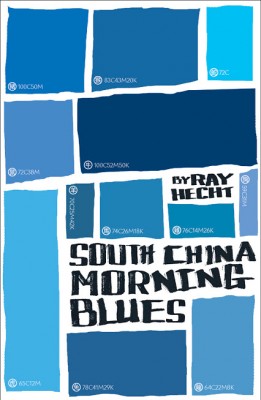
Ray Hecht, South China Morning Blues, Blacksmith Books, 2015. 352 pgs.

South China Morning Blues is Ray Hecht’s debut novel and revolves around expatriates living in the Pearl River Delta region where Hong Kong, Shenzhen and Guangzhou are situated. Compared to Shanghai and Beijing, Guangzhou and Shenzhen have been less written about in literary works in English. Even when the Pearl River Delta region has been featured, it often serves as a historical backdrop for the political vicissitudes of the early 20th century. Yet, Hecht’s novel shines a spotlight on contemporary Guangzhou and Shenzhen, together with Hong Kong, which are becoming more popular for expatriates looking for a piece of the Chinese Dream. Hecht avoids the clichéd portrayal of the challenges and difficulties faced by expats abroad; instead, with carefully crafted storytelling featuring multiple voices, he leads us through interlocking narratives which depict what life is really like when foreigners are immersed in the Southern Chinese world of the 21st century.

Hecht, who has lived in China for several years, makes use of personal experiences, hearsay, research and his own imagination to create a novel about young expatriates and local Chinese as they struggle and find their way through hardship and temptation. The novel is divided into three sections, Shenzhen, Guangzhou and Hong Kong. Each of the three cities depicted by Hecht exudes its own unique idiosyncratic features—Shenzhen, the fast-changing and westernising metropolis; Guangzhou, the traditional capital striving for rejuvenation and globalisation; Hong Kong, the hedonistic and frustrated modern gateway between East and West. But the differences between the cities lie not only in the textures of their cityscapes and geopolitical positions, but also in how social relations between locals and foreigners are interwoven.

As hinted at by the title of the novel, South China Morning Blues is filled with the different sorts of ‘blues’ faced by expatriates in the three cities, such as language barriers, cultural shocks and biases, as well as dark moments to do with casual hook-ups, prostitution and alcohol and drug abuse. Hecht strategically sheds light on life in the region by adopting a multifaceted narrative mode: he creates a chain of interlocking stories told by a dozen narrators. Twelve sets of subjective experiences related to expatriate communities are represented—not only foreigners from different cultural backgrounds are given a voice, but local Chinese residents, including those who do not speak much English, are also heard. Interestingly, each of these characters is assigned one of the twelve Chinese zodiac signs at the beginning of the novel, and as the story progresses, each is signified by his or her zodiac sign rather than their real name. This intriguing conceit creates a sense that twelve anonymous and universal archetypes are interwoven to form a coherent narrative.

The novel starts with a nightclub encounter, followed by a one-night stand between Marco, an American expatriate businessman, and Sheila, a local Chinese woman, in Shenzhen. In this episode, rather than giving detailed sensual descriptions from the foreigner’s perspective, Hecht switches between the two characters’ viewpoints. There is not much actual dialogue between them; instead, Marco and Sheila each reveal their own unspoken thoughts:

  兔 [Hare, representing Sheila]

  The sex feels okay. I like the style of his home. It’s very big and neat. I suppose that a cleaning lady must come here every day. What did he say his job is? I didn’t understand.

  虎 [Tiger, representing Marco]

  The sex feels awesome. I’m so turned on that I’m going to cum any second. She’s skinny, no ounce of fat on her. I love that flat stomach. She didn’t put up any resistance. Totally into it! Goddamn, I still have the charm!

Switching perspectives in this fashion not only creates a swift and breathless rhythm for the erotic encounter, but also functions as a tool to juxtapose two sets of competing opinions. Indeed, this experimental narrative mode is what makes the novel so original. Through this storytelling technique, Hecht invents alternative spaces in which individuals’ candid judgments, if not biases, are revealed.

Continue reading

My experience being rounded up by the Chinese police at the big Shenzhen drug raid

[In the early hours of February 21, 2016, there was a major drug raid at a Shenzhen rave party. It has since become international news, reported on by The Guardian and Vice. I was rounded up along with hundreds of other people, and this is my story.]


One of the surprising things I discovered upon moving to China all those years ago was that illegal drugs are remarkably easy to come by.  Before arriving, one would assume that wouldn’t be the case in a pseudo-Communist country. Yet, the party scene introduced itself to me almost immediately and I saw that often times drugs among expats were no big deal. Perhaps it’s the chaos that comes with rapid economic expansion, but for whatever reason that’s the way it’s generally been.

To be specific, expat stoners I know seem to usually find a source and easily keep up their stoner lifestyle. It’s only marijuana, and it’s becoming legal in America nowadays anyway, so what’s the big deal?

Besides that, there’s MDMA in the club scene. From what I’ve observed, psychedelics such as LSD are almost unheard of unless one has a very good source –  as that kind of psyche-spirituality vibe is not apparent here. Opiates rarer still. I have heard tales of cocaine and ketamine, and newspapers do report that methamphetamine is a growing problem in China.

Based upon my admittedly anecdotal evidence, among foreigners in big cities at least, it’s mostly a bit of MDMA at clubs and the usual marijuana hit if you are into that kind of thing.

Not to mention, like almost everywhere else in the world, the main drug of choice is a certain legal narcotic which is definitely the most destructive of all: alcohol.

Personally, I am not into most that. I think I’ve done the normal amount of experimentation in my life, and politically I am quite against prohibition. But marijuana doesn’t do it for me. It’s not to say that I am morally opposed, the THC chemical reaction simply makes me feel extremely anxious and uncomfortable and I’m not a fan. I don’t particularly like alcohol either, to be honest.

The unfair thing about the world is that the random chemical reactions specific to my brain and genetics more or less keep me clean. It’s not like I’m making any major effort to “just say no.” There is nothing at all fair about functional people who enjoy smoking being punished so harshly in society, while I am not. It’s nothing but luck. And when the police came to drug test me that night, I got to go home, while some of my friends weren’t so lucky…


mmexport1456324418135.jpg

The Real Deal is a group of partygoers in Shenzhen who organize underground outdoor parties with electronic music – raves, if you will. I’ve been going to their parties for years. In fact, the big party that got raided was their 4th year anniversary. They advertise openly, book famous Hong Kong DJs, and have been a fixture on the community for quite some time. It never felt subversive to enjoy their events. I for one appreciate the efforts of the organizers to create a fun place for people to listen to music and find something different to do in Shenzhen. Certainly beats overpriced drinks at pretentious nightclubs.

On the night of February 20th, I decided to go to the tunnel party with my girlfriend. It happened to be near the Ikea, in walking distance from my home in the Baishizhou neighborhood. Several of my friends were there, and I expected we would all enjoy ourselves. Me and my girlfriend arrived at about midnight, met up with some buddies, had some drinks, danced, and so on. I did note that the anniversary party was quite crowded. Still, it seemed legit to me.
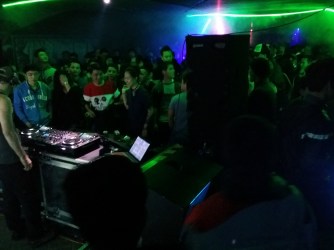
20160221_004842.jpg

Don’t get me wrong. The Real Deal organizers, from my understanding, don’t go farther than make deals with local security guards.  Being that it’s outdoors and unlicensed, it’s still pretty much a “rave,” isn’t it? Yet the worst that ever happened in the past is that there’d be noise complaints and some police came to shut down the party. Normal risk, right? Or so one would think.

Without naming names, I did notice LSD and nitrous oxide around. (Are those chemicals even illegal in China?) Pills appeared to be harder to come by, ever since the two unfortunate overdoses back in December most people had been avoiding that sort of thing. No, as usual, the normal culprit was the noticeable smell of marijuana.

I don’t know what made this time so special, why there had to be a crackdown that day. I have no doubt the police knew about these parties for years but never cared. Why now? Was it because of those two overdose deaths that they felt they needed to protect us from ourselves? Was it that the crowds were getting too big and China doesn’t like big, potentially protest-y, crowds? Was it, as currently noticeable from Beijing to Hong Kong, the general atmosphere of authoritarianism which has been growing of late under Xi Jinping…?

In any case, at about 3:45 a.m. a whole lot of shit went down. I remember it clearly because my girlfriend and I had previously discussed that we should leave at 3:30 in order to not to stay out too late. When the time came, she suggested we dance a little more, and I said okay. We tried really hard to not wallow over that decision after the shit went down.

It was totally surreal. I was sitting on a curb catching up with a few pals, and suddenly saw a few police officers run down the hill. I took my girlfriend’s arm and everybody walked away at a brisk pace. Then, the abrupt end to the music caused a weird shift in scenery. The silence came with a sense of panic, and everyone started dashing toward and exit. There was a serious danger of trampling at that point. My first thought was that people were overreacting and it couldn’t be such a big deal, but I soon noticed there was something different about the closure of this party.

We got to an exit and a line of riot police with shields and batons had completely blocked the way. I have never experienced anything like that before. I couldn’t even see behind me because of the crowds, but nobody could move and it must have been blocked on every side. A bilingual, senior looking cop started yelling in English and Mandarin. “Turn off your phones! Sit down! Stay still!” It was a very confusing moment.
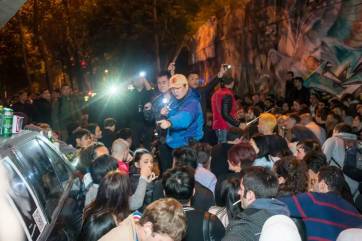
mmexport1456120953563.jpg

The weirdest thing was not knowing what to do next. Although this was an extremely coordinated attack — Shenzhen Daily reported “the Nanshan District Public Security Sub-bureau confirmed the raids had happened and that they had been planned for ‘quite a bit of time.’” — all those hundreds of officers working through the night seemed to be out of their element. We sat around for about an hour. People stood up, and were told to sit down. There wasn’t much room to sit. I saw my friends in various piles, and we tried to keep each other’s spirits up.  I had my arm around my girlfriend. On another side, I saw some expat guys getting rowdy and then handcuffed.  I saw cops with streams of plastic cable tie handcuffs, yet thankfully they were never used. All in all, in retrospect, it was pretty peaceful. At the time there was just so much speculation; we didn’t know what was going to happen.

Finally, small groups were formed and were told to walk to the nearby parked police buses. We lined up and put our hands on each other’s shoulders like a cheesy conga line.  Mine was the second or third group and I was glad to get it over with. I wanted the next step to be done with already.

Once piled into the police bus, we driven around for a while. I had no idea what kind of route they took, but I later learned that it wasn’t even that far; still walking-distance from my home. All different police stations in Nanshan District were working in tandem, and luckily the Taoyuan station was nearby. Along with my girlfriend, two other American friends also joined me in that police station. Along with about fifty people in total. I know that because we were given numbers drawn in sharpies on our hands. I was number 43, and I’ll never forget it.
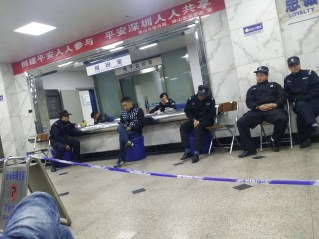
20160221_073523.jpg

I had to pee so badly! That was the most painful part of the process. There would be more urine-related activity to go around, and they gave us plenty of water. After things were eventually organized and settled down, the station waiting room was full of chairs and we weren’t allowed to leave and then the real waiting began. The boredom was the absolute worst. No music or anything.

As the sun came up, one-by-one we had to take urine tests. I heard that women had to be watched by a female officer, which is rather humiliating. Men could turn their back while being watched, though I did notice the toilet had a camera positioned above.

Somehow, it occurred to me that it would be appropriate to joke as much as possible. What else could I do but try to laugh it off? I tried to make my friends laugh, and said ganbei! (“cheers”) to the cops as I held my own steaming cup of urine. That got some smiles. I asked if they had Wi-Fi, I declared that I would pee sitting down in solidarity with the women, I sang Taylor Swift songs, I told bad jokes about horses in bars with long faces, and I suggested that I ought to call the police after such treatment. Lastly, when they put the testing device in my cup I asked if it showed I’m pregnant. Get it?

mmexport1456114924925.jpg

Although I tried to be on everyone’s good side, deep down I felt a lot of animosity for being treated this way. Obviously, the police officers I met are only cogs in a greater machine. Yet they are willing cogs, and cannot approve. Early in the morning they brought some steamed buns for people to eat – struck me as a good cop/bad cop ploy – and I refused to eat any.

Actually, to be fair, our station wasn’t bad compared to what I heard about others. People were made to sit outside on the floor in the cold. Victims were told that the Chinese government has a right to detain anyone innocent for 24-hours without any arrest. Some weren’t allowed to talk. Many weren’t allowed to leave until many hours later than my group.

mmexport1456051147978.jpg

Of the four of us in my own personal set, only three were to leave that morning. Sadly, one of my friends, of the stoner sort, was sent somewhere else after the drug test. Briefly, I had witnessed some people in a cell in the back; sad scenes of men crying and couples cradling each other. It was very worrying that a friend could be hanging out with us one minute, and then taken somewhere else the next.

After all this grueling time, just before 10:00 a.m., they started letting people out. First a Spanish woman complained until they processed her information and she was allowed to leave. Then a Chinese woman left. I crossed the barricade a few times to complain and plead and just learn what the situation was. Turned out, when I didn’t give them my passport number before (I feigned that I had forgot), they wouldn’t let us leave until everyone gave their numbers so the authorities could check our visa status. Fine. I gave in and gave my number. Then waited another hour or two. How long could it take to look up? I had even crossed the border from Hong Kong the day before. What was the big holdup?

There was one drunk, half-passed out gentleman who couldn’t be bothered to give a real passport number. People were getting angrier and angrier, turning on each other. Interesting to see how easily sleep deprivation can affect people, and on the other side to see how freedom can have the opposite effect. At last, when they had called out numbers and one-by-one we were allowed to leave, we clapped and cheered in joyous relief. “44.” “43.” “42.” Even the cops smiled as us newly freed detainees applauded.

20160221_073453.jpg

My phone was out of power. My stomach was empty. In minimalist attire, without sunglasses to protect from the morning light, we all went home. That Sunday was a write-off day, like jet-lagged with sleep patterns all askew, and I didn’t get much done. I am getting too old for all-nighters.

In a sense, I was relieved after the experience. A part of me always wondered what would happen if I was got in trouble with the police in China. I feel vindicated now. They didn’t interrogate me or anything, they simply checked my visa status and after a long while let me on my way.

According to a translated press release, the numbers were surprising. 491 people were detained that night. 118 had tested positive for drug use, majority marijuana of course, and 93 held. (It’s not clear why 25 people weren’t held. Connections, corruption?) Of those 93, 50 of them being foreigners. Perhaps they caught like two drug dealers, but most were released after 4 or 5 days. It was called “administrative detention” or “violation.” Not arrest.

“They were after the dealers…” my detained friend later reported back to me. “Everyone else is a pawn to them.”

Those limbo days were rather terrifying. Rumors abounded, and those of us left free all scrambled to figure out what was going to happen to our friends. Moreover, there was the great question of what was happening to the community within China. Simply put, is it worth it to live here anymore?

It has now been confirmed to me that nobody (at least not the vast majority of non-drug dealers) is getting deported. Chinese and foreigners alike, they don’t even have to pay fines. All that fear, and what was the point? The city of Shenzhen undertook this massive operation, apparently all in the legal grey zone haze that is the China system, and just what was the real purpose?

With 80 percent of the detainees drug-free, and only half foreigners: The question remains, what possibly could have been the point of all that?

Whatever the point is, some kind of message has been received. Shenzhen is no longer what it once was. The expat and party scene will get past this, but something has changed. A threatening cloud of authorities now hovers over the community, and somehow China doesn’t seem as welcoming as it used to be.

The party is over.
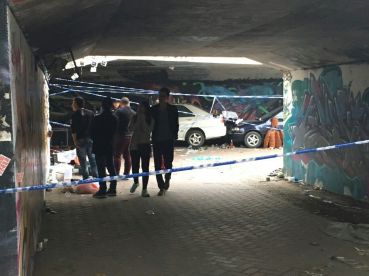
 

mmexport1456051015487.jpg

Excerpt: South China Morning Blues

Now that New Year celebrations are over with, I’d like to share an excerpt of my novel South China Morning Blues published by Blacksmith Books.

You can read the embedded piece below, or download the PDF via this attachment:

South China Morning Blues – Shenzhen: Prologue


It is the very beginning of the story, a prologue to Book I’s setting of Shenzhen. Opening in media res with one character represented by the Chinese Zodiac animal 虎 (Tiger), the story then jumps back and forth with the point-of-view of 兔 (Hare), and finally gets to the introductory character 牛 (Ox). I hope it isn’t too difficult to keep track, hope it’s worth the effort.

These tales represent my attempt at capturing the jagged essence of the modern cityscape experience, as expats and locals try to make sense of this rapidly-changing setting. These people are flawed, don’t always do the right thing, but maybe just maybe they come across as somewhat realistic humans. There are all kinds out there. At least, there are 12 knds out there…


If you’d like to read more, feel free to order on Amazon or directly from the publisher

http://www.amazon.com/South-China-Morning-Blues-Hecht/dp/9881376459

http://www.blacksmithbooks.com/books/south-china-morning-blues

unnamed


Reflections on a Chinese New Year

20160207_232119.jpg

My own humble attempt at adding to the festivities

The city of Shenzhen is nearly emptied-out. Like a major metropolitan ghost town. Not quite postapocalyptic, but slightly eerie.

All the migrants are back in their hometowns, crowded in record-breakingly awful train stations. And most of my expat friends are posting pictures of paradisesque beaches in Southeast Asia. I’m saving up for a trip later this year.

It is the Year of the Monkey, and cartoon monkeys are everywhere.

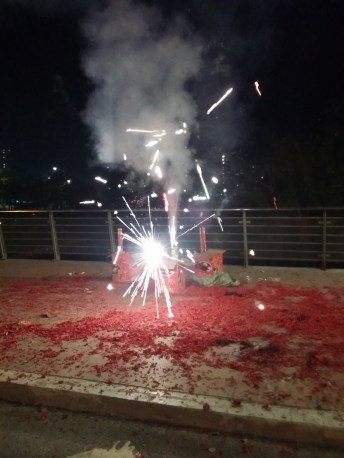
Even with Shenzhen at a fraction of its normal population, Lunar New Year’s Eve sounds like a war zone. Bang! Pow! Ka-BOOOOOM!!!! Fireworks — mostly procured illegally — are for sale everywhere. The ancient Chinese traditions.

Many firecracker stands have popped up, selling dangerous flammable items in an unregulated market and it is so much fun.

An odd thing about living in China/Asia is that you get an extra month to reflect upon the new year. There’s the Gregorian calendar to celebrate and I like it. Then there’s several weeks to break resolutions and mull over how your life is progressing. And then you get a second chance to celebrate the new year all over again and embrace the future! The intervening time may be sort of a limbo, but I still like it.

I’d like to wish a particularly happy new year to all you twenty-four and thirty-six year-olds (even though it’s bad luck to have your birthday on your own animal year, right?), as the twelve year cycle begins anew.

新年快乐!

恭喜发财!

2015 Bi-City Biennale of Urbanism/Architecture

20151219_135721

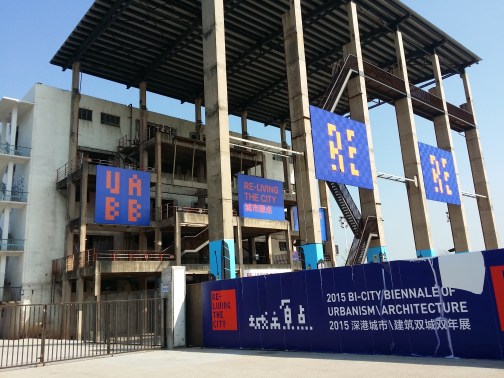
I recently went to see an exhibition at the 2015 Bi-City Biennale of Urbanism/Architecture in Shenzhen. Formerly a flour factory, the reapproriated factory space (which is often a thing in China) was amazing. Who knew the Shekou Ferry area, ala 蛇口客运码头 Exit D1, could host such brilliant works?

Mary Ann O’Donnell of Shenzhen Noted and Handshake 302 Art Space (located in my neighborhood of Baishizhou) introduced the “n=distortion” exhibit — produced by  several young artists around the Pearl River Delta who came together for an ensemble piece to represent the region…

20151219_142104


It was very interesting to see how artists from Hong Kong, Dong’guan, Zhuhai, Foshan, and other nearby cities took their budgets to create unique representations of their respective locales. From Shenzhen’s shallow barber pole — all about money — to Macau’s small but flashy attempt to seek attention, each came together to form a whole which one artist could never come up with his or herself. I particualrly enjoyed Guangzhou’s bamboo construction made out of chopsticks. In the end they were presented upon a boat in the main hall.

20151219_153923


The main building hall was massive in scale, multiple floors, dynamic installations, and herein it’s difficult to express in pictures. The theme being “Re-living the City,” many of these pieces are meant to be interactive, with audience members walking through and even adding to the experience by way of turning musical knobs or drawing in chalk. Do put aside a lot of time to absorb the full experience when you come on by.

I hope the following slideshow inspires further interest:

This slideshow requires JavaScript.


The exhibition will continue until February 28th, full of many workshops and talks scheduled. I will make the time to visit again, and if you’re in the area I highly recommend that you do too!

See official link for more details – http://en.szhkbiennale.org/


(Related: n=distortion web page)

(Shenzhen Daily article)

theNanfang.com: SCMB a Glimpse Into Expat Life in a Fast-Changing PRD

South China Morning Blues a Glimpse Into Expat Life in a Fast-Changing Pearl River Delta

https://thenanfang.com/south-china-morning-blues-a-glimpse-into-expat-life-in-a-fast-changing-pearl-river-delta/

Luigi Mondino , December 21, 2015

Luigi Mondino


Ray Hecht’s debut novel is a detailed and sincere depiction of what life is like in the Pearl River area. Divided into three main sections (one for each major city: Shenzhen, Guangzhou and Hong Kong), the book follows the life of several characters, both foreigners and locals, as they try (or struggle) to find their way without losing touch with reality. Rather than being a simple collection of short stories (very loosely entwined), Hecht chooses to shape his book into a canvas where the expat lifestyle is the effective trait d’union.

unnamed-3

Hecht obviously knows what he’s talking about as, being himself a long-term expat in the area, he has drawn from his own personal experience (as it can be inferred from his own personal blog) ideas and stories that lay the foundations of his book, and it shows well: characters look real and relatable, grounded in reality, vivid and rich in their motivations and background. Characters are teachers, journalists, young artists, businessmen, all people that populate bars and clubs in the downtown of each city. Ray Hecht has collected and transformed some of the stories he heard (who knows how much autobiography might be in the book?) into a constellation of small existences that, although bordering on the stereotypical sometimes, often emerge as true in their own need of self affirmation.

Whoever experienced life in the Pearl River Delta can understand or relate to the urgency to be heard or to stand out that everyone in the book seems to display: life is too fast-paced and often people focus on their careers, while everything else slips into the background. If the 12 main characters all have something in common, it is a sense of isolation that compels them to question their own choices and fast-forward life to the next, hopefully safer, stage.

The three sections the book consist of several mini-chapters, each following a different character (some of them recurring from section to section, thus closing the circle and giving the idea of a mini universe where people can’t stop running into the same faces again and again). All stories are narrated in the first person and they read as confessions that break the fourth wall and ask the reader to participate in something private and meaningful that otherwise would be lost.

Each section of the book has its own different nuance that reflects the three different cities in which everything takes place:  Shenzhen is a new and fast city, Guangzhou is the old capital, Hong Kong is a hybrid city looking for a balance in its own internal differences. “Shenzhen” opens the book and throws us in the middle of the action: two foreigners, newcomers to Shenzhen, try and mostly fail to integrate in a city with no identity and history. Looking forward with no regrets is the key, even if something gets lost along the way. Marco, the businessman, and Danny, the English teacher, whether they are looking for instant gratification or for some meaningful experience, are constantly semi-detached from reality as they can’t help to feel their presence in the city is temporary, a sensation shared by all the characters in this first section. Life is so fast and opportunities so rich, there is no need or time to look back or to make detailed plans about the future.

“Guangzhou” offers a new take on the expat life in China. Guangzhou, the city, is the old Guangdong capital, an established city with its very own rhythm and style. Whereas Shenzhen’s no identity is reflected in its individualism and fast pace, Guangzhou’s somewhat quieter pace is mirrored by a sense of isolation that is sometimes difficult, or almost impossible, to break. Amber, the Canadian English teacher, Ting Ting, the aspiring artist, and Terry, the Asian American journalist, represent the struggle to find themselves in a vast and disperse city: whether you are looking for a professional achievement or to find people to hang out with, Guangzhou is a giant maze that needs to be crossed.

“Hong Kong” is the last section, the shorter and the most crowded: most of action occurs at a rave party on Lamma island, where we re-encounter many of the characters from “Guangzhou”. The party is where individual stories come to an apex and some of the loose ends are tied up (but not completely, we just manage to say goodbye to the characters we have been following so far). Chapters are shorter and there is more interaction than before between characters, so rather than focusing on individual stories, Hecht chooses to let all the tension explode at a party that can be read as a turning point in everybody’s life.

Hecht writes his characters in need of sexual gratification and infuses them with a need for drugs of any type. I admit this sounds like a stretch sometimes, since the high recurrence of such behaviors flattens out diversities rather than creates an invisible bond between characters. This detail represents one of the flaws of the book, flaws that don’t hinder its effectiveness, but reveal Hecht’s somewhat beginner’s naivete: characters seem to all convey the same emotional range, as well as same ambitions and doubts. That is a forgivable since their backgrounds and environments help in giving each character his or her own flavor, but Hecht doesn’t seem totally in control of his own voice (but 12 different characters, one for each sign of the Chinese Zodiac, is a huge challenge for a novice).

As one of the first attempts to describe the expat life of common people, both foreigners and locals, SCMB succeeds in capturing a particular moment in time and space in which we are allowed to peek in. Hecht’s prose flows smoothly (style is simple, but not bland) and although the reading experience is always rich in details and facts, less characters and more plot would have given the book a more solid texture. Looking forward to Hecht’s sophomore effort is from now on something worth doing.

South China Morning Blues is published by Blacksmith Books. It can be purchased from Amazon or at select bookstores.

The Chinglish of Meilin

Sometimes I like to the Meilin neighborhood of Shenzhen. It’s a bit of a halfway point between downtown and the suburban districts, and the vibe is just nice enough outside of the central urban areas. Check it out if you ever visit.

Anyway, recently I happened upon a trove of glorious Chinglish signs in an apartment complex within the area. There were more than these, but I had to stop taking pictures at a certain point. The themes of law-abiding were heavy in this scene…

(And do note my Instagram.) Enjoy:


Wall Street Journal: That Time He ‘Dropped’ the Vegetarian Bun – An American Expat Shows His Dad Around China

Please check out my first piece for the Wall Street Journal expat blog! A simple story that us abroad may be able to relate to, and I think it turned out well: It’s about that time my dad came to visit me and how that parents-visiting thing goes as an expat…


http://blogs.wsj.com/expat/2015/12/03/that-time-he-dropped-the-vegetarian-bun-an-american-expat-shows-his-dad-around-china/

BN-LN884_hechtp_G_20151203103638


And that’s my face when a bun is wasted.

The thing about Shenzhen city bike cards…

wpid-20151110_183611.jpgFunny story the other day. But a long story…

I happen to enjoy using my Shenzhen city bike card to get around (especially after my old bike was stolen, a story for another day). In very green fashion, the city has some bike rental stations set up around parks and tourists spots and some metro stations etc. It wasn’t easy going through the language barrier to set up my card and account in the first place, but for the past year I happily get around with the green bicycles.

Sometimes I am absent-minded however, and this happens.

Several weeks ago I parked the bike at a building at which I had business to attend. In a rush on the way out, I then took the bus home as I often did. Something didn’t stick in the back of my head.

One day, about two weeks later, my card didn’t work. How annoying. And when I went to the office in Nanshan District to inquire on my problem, they said I never returned a bike!

OH CRAP. The wheels in my head turned. I realized I really had ‘stolen’ a bike! What now? Could I actually get it back? Most likely I would lose the deposit. Would they even let me redo a new bike card? It was a disaster.

My girlfriend let me borrow her card to get around when I needed to, which helped ease my mind. Eventually, in replacing my steps within my memory, I passed by that building and decided to check.

Whoa, there was the bike. With a lock on it. Someone in the area had the gall to steal the bike, and just put their own lock on it, and then park it in the same place.

Well, what could I do? I picked up the bike and ran, that’s what I did! I carried it — couldn’t ride it because of the lock although the front wheel could roll — and took it like two blocks away to park it in the bike station and scan my card to show I had returned it. It was a real workout for my arms, especially in the sweaty South China sun.

The card worked. I felt a little bad though in taking someone’s bike, although they did steal it first. Wonder what happened when the guy found it missing. And from now on that bike will be parked at a station with a lock on the back wheel and nobody can even use it.

My card still doesn’t work. I imagine all the money is used up and I’ll need to recharge it. It will be embarrassing to return to the office, but beats losing the deposit.

And that’s the story.

SZ Daily: Eat, Pray, Love: local expat authors share their books

http://szdaily.sznews.com/html/2015-11/19/content_3392210.htm

res03_attpic_brief


THREE local expat authors recently shared their books with readers in Shenzhen at an event sponsored by the Shenzhen Women’s International Club (SWIC) and the SWIC Book Club. Amanda Roberts, author of “Crazy Dumplings Cookbook,” Lom Harshni Chauhan, author of “Visa, Stickers and Other Matters of the Soul,” and Ray Hecht, author of “South China Morning Blues,” shared their experiences in China and the stories behind their books.

All of the books are available on Amazon.


Eat — ‘The Crazy Dumplings Cookbook’

Roberts moved to China from the United States in 2010 and ended up in northern rural Hunan. “Life there was so much different than life here in Shenzhen,” she explained. “I had to completely relearn how to cook.” Her book “Crazy Dumplings” is a food fusion cookbook, one that uses a traditional Chinese dumpling wrapper on the outside, but the filling recipes mimic cuisines from all over the world.

“You can make any food you love and miss by using local ingredients, you just have to be flexible and adaptable and not afraid of trying new things,” Roberts said.

About the book

Dumplings. Wontons. Jiaozi. This remarkably simple food is found throughout Asia and in Chinese restaurants and kitchens around the world, but have you ever filled a dumpling wrapper with chicken? Lobster? North American Plains Bison? Hardly anyone has! “The Crazy Dumplings Cookbook” features over 100 recipes with some of the craziest and most delicious dumpling filling recipes you will ever see. From Chicken Taquito Dumplings to Timey-Wimey Dumplings to a dumpling for your dog, “Crazy Dumplings” will show you all the crazy things you can stuff into a dumpling wrapper for an easy meal or snack.


Pray — ‘Visa, Stickers and Other Matters of the Soul’

Chauhan moved to China from northern India in 2002. In 2005, her daughter was born, and Chauhan was faced with the question all parents abroad face — how do you parent your child with a connection to their homeland and encourage them to embrace their adoptive country?

Chauhan explained that she grew up in a proud Rajput family and often remembered her life growing up in the Himalayas. However, her daughter does not have the luxury of knowing her place in the world. “I wondered, how much reinforcement of her cultural identity is adequate for a child who is growing up far from any of those concepts?” Chauhan explained.

Chauhan focuses a lot on the spiritual rearing of her daughter, something that is not easy to do in a place with such a small Hindu population. All parents of “third culture kids” can relate to Chauhan’s book.

About the book

One of the major concerns of Indian parents is how best to pass on to their children the time-honored traditions of Indian culture and spirituality, even as they try to raise global citizens.

“Visa, Stickers and Other Matters of the Soul” is a delightful and endearing account of a young mother’s experiments with raising her daughter in the Indian spiritual way while living in atheist China. As she begins to educate her daughter, she is surprised by her daughter’s sense of understanding and realizes that parenting is her biggest life lesson, with her daughter as her teacher.


Love – ‘South China Morning Blues’

Continue reading

More Updates: HK Literary Fest, SZ, GZ, Instagram…

Been busy lately.

Firstly, thanks to everyone who came to the excellent panel at the Hong Kong International Literary Festival! I was honored to be a part of the event, and add to the conversation on ‘Cross-Cultural Love’.

Anyway, I dare say I think it went well. The audience seemed to enjoy hearing what we had to say, and I actually think it was a success. It was an interesting talk, most of all due to all those other excellent writers to meet.

As well as the moderator David Nunan, it was great to meet the very intelligent Marshall Moore. Nice to see Shannon Young and Susan Blumberg-Kason once again.

The event was at the intriguing building known as the Hong Kong Museum of Medical Sciences, and I shall share via Shannon’s Instagram account here:


While at it, here’s Susan’s Instagram. Feel free to like and follow!

https://www.instagram.com/p/96aiyLlGMy


https://www.instagram.com/p/98jdIPFGIV


There I am. And now, back to my new pic-sharing blogging strategy of just sharing previous uploads from the app. Readers rest assured you are enjoying the best of these…


Continue reading