DATING IN CHINA – MEGAPOST 1

And now for your reading enjoyment. In case you missed it before. Allow me to lay it all out.

Megapost of my personal dating memoirs, covering the time span of August, 2008 to February, 2011

Links, from the beginning:

Prologue: How I came to China

Part 1: Burning Man
I go to a big trippy festival

Part 2: Doing LSD at Burning Man
I expand my mind and receive an invite abroad

Introductions

Intro to Dating in China
First things first, let me explain how this thing will work

I arrive in China
The story officially begins, I get here

Girls

Mona
My first China-based girlfriend, and how that didn’t work out

Julia
The next level… Sigh, was it love?

Mary
A summer romance, a brief flight, all too innocent

Annie – Sky – Lulu – more
Singlehood, bachelor life, the learning process, playing the field…

Zoey

The Beginning
Long-term relationship begins, a defining point in my life

An American intermission
You can’t go ‘home’, and I try and I fail and I drift

The End
Finally, and sadly, nothing lasts forever


Continue reading

Dating – visitors and friends, others

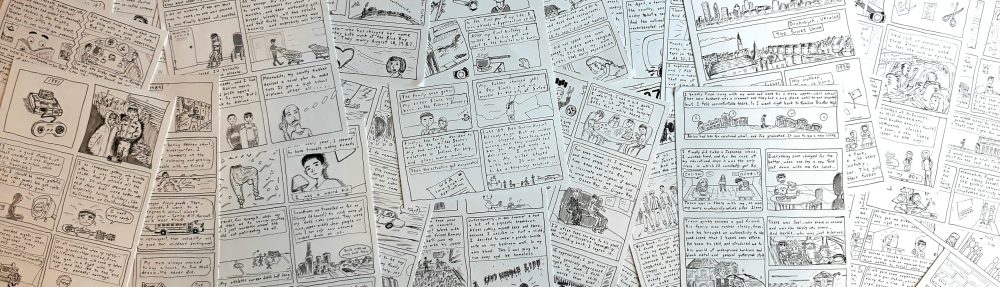
Dating in China, this blog series, is basically a personal memoir. My writing inspiration of late consists of sifting through my memories, see if there was anything I was supposed to learn, and share it all for your infotainment.

Today I would like to do something different. On today’s post I would like to write about other people’s drama. A certain episode comes to mind. No action for me at this juncture, yet I was in the middle of it and have all the gossipy details.

My good friend from the States had decided to visit me, back I was living in Guangzhou in the second half of 2011. Having recently traveled myself, I welcomed him with open arms. But it’s not like we were going to go to the Great Wall or anything, I was too traveled out. We just keep it down South, Guangdong Province. He was cool with that.

I picked him up at the Hong Kong airport, and we went to see some sights in HK together. It was glorious. Then we crossed the border to my town of Shenzhen. It was a hectic night; full of old friends and drinking. I had planned to just come upon a hotel room like I usually do backpacking in China, but everything was filled up for some reason. Partying with luggage isn’t ideal. We ended up crashing at a DJ friend’s place after his gig. It always works out.

So. Before my buddy came down, I had to get him excited to visit with the obligatory “you can totally get laid in China” bro sell. In keeping with this, I had introduced him to some girls online. He particularly got along with Hailey.

If you will remember, there was another episode with Hailey. She was my open-minded platonic female friend in Shenzhen who climbed into my bed one night and thoroughly confused me, and we never ever did do anything of that sort.

My friend and her seemed to get along well. It usually doesn’t succeed when I play the matchmaker, but when it does I find it so fun to scheme. Have you ever tried?

For the next week-and-a-half I had to spend almost all my free time tour guiding all over the place. Clubs in Shenzhen, clubs in Guangzhou. It was mostly clubs. However, for one day he went to Shenzhen by himself to spend a night at a hotel on his own. With her. Sexy fun times were had, I assume. Good for them.

It was a crazy time, a very fun trip for him. I do believe he was left with a positive impression of modern China indeed. At last, the the final day was approaching… We needed to plan around a morning flight out of Hong Kong, which meant spending previous night in Shenzhen. Guangzhou wouldn’t have worked, too far.

“Look,” I sad. “I want to see you off, man. But if it’s all the same…”

“Fine,” he agreed.

I called Hailey, since they were obviously going to spend the night together anyway, and simply asked if she could take him to the nearby Huang’gang border and direct him to one of those direct shuttles to the airport.

“No way!” she yelled. “I’m not his babysitter.”

Continue reading

Backpacking with a library

I said it before and I shall say it again, the hardest part of moving is having too many books. My rate of buying new books is exceeding my rate of getting rid of old books (the latter something I don’t like to do but must at times…)

Know what else is hard? Backpacking across the globe and picking up endless amounts of books. It is not easy on the shoulders. But, I mean, I’m in an English-speaking country and there are used bookstores and I can use Amazon in America at my friends place and I need all this stuff.

Here is what I speak of:

WP_20140614_015

Not going to be easy to transport on my LAX to HKG flight tomorrow…

Continue reading

Dating in China – My Guangzhou Year

Zhujiang_new_townGZ

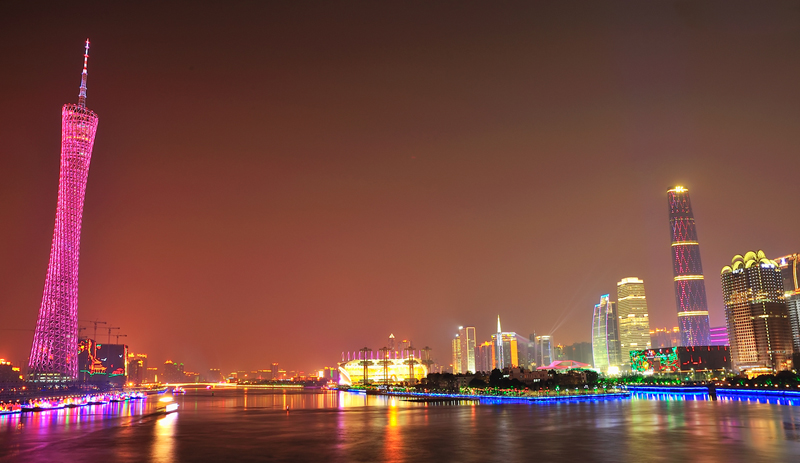
In early 2011 I broke up with Zoey and I was depressed and I thought I should start Dating in China yet again. It didn’t go well. A full year with one person, despite the trying and failing at improprieties, and I was a tad out of practice.

A very significant chapter of my life had ended, and I knew it would take a lot of work to reach the next chapter of my life. I realized I needed a new start.

What did I really have in Shenzhen? Frankly, a bunch of shallow friendships and little job security. I liked my apartment and my general setup but I wasn’t tied down. If I wasn’t tied down, shouldn’t I take advantage and go somewhere new?

Many expats simply live out of their suitcases, but not me. The heaviest things I own are my books. I sell them, I give them away, but I always get new ones and I’m left with a big stack. That and my clothes and various knickknacks and toys, and it’s not as easy for to move to, say, Shanghai or Seoul or Bangkok as it is for that other kind of expat.

I made the decision to move to Guangzhou — also known as Canton — that third major city of China (a distant third, but third nonetheless). Why did I choose GZ? Several reasons. I liked the city. I planned to do more research of Guangdong Province for my writing projects. I even wanted to study Cantonese. Most of all, I wanted to get a van to pack up all my stuff and move somewhere only a few hours away because it’s easier.

I went there on a research trip and looked around and found a stable thing going, and I committed. Next there was the hassle of putting all my things in boxes, had a going-away bar-hopping party night with friends at the local lesbian bar, and 500 yuan later I moved. My Guangzhou year had begun.

Continue reading

Casual Gamer

Like many kids of my generation, I grew up with Nintendo. Sega was a competitor for a while there, but I was always a loyal fan of Mario. Then real life happened and I didn’t have much time for video games anymore. Meanwhile, hardcore gamers became more and more intense over the last decade(s), with mega time-consuming complex gaming reaching a levels every year. And I have since become a cranky old man lamenting that games aren’t what they used to be.

More power to the modern gamers; I am very much a geek in my own ways and they can do what they want. There are various criticisms which can be lobbed at the gaming subculture, but I don’t intend to get into that here. I just want to share what games I like.

Few years ago I got my NDS, and quite enjoyed it. I require a lot of entertainment and stimulation, so when I’m bored on the bus or waiting in line at the airport I will take my paperbacks and audiobooks and text everybody as well as play video games. I likened the NDS to having a Super Nintendo in my pocket, but even better because I can start and stop anytime I want to. Play for ten minutes, save, go do something else, then play again for five minutes to several hours. Worked very well for a casual gamer like me.

Dare I admit that the NDS was very hackable and I live in a land where people pirate everything? I downloaded the whole catalog, sorry, but then when I was over it I simply had to get the 3DS and get the new games. Which meant I had to buy the real ones, American editions, during my frequent trips to Hong Kong.

My current collection:

Image


Continue reading

Book Review: No City for Slow Men

http://szdaily.sznews.com/html/2014-03/25/content_2819411.htm

Image

Despite Hong Kong’s reputation for being very welcoming to foreigners, it’s not always that easy for expats to deeply understand the city. Hong Kong is famous for its international style, and people from all over the world enjoy the city’s comforts, yet there remains a barrier between the locals and those who hail from other places.

To share the truth about Hong Kong culture with the English-speaking world, Jason Y. Ng — resident blogger and columnist for Hong Kong-based newspaper South China Morning Post — has written “No City for Slow Men,” covering every subject an HK-phile could ask for.

Published by Blacksmith Books, the book contains 36 essays and covers a broad range of topics. For some writers, it might be a struggle to have so many chapters and keep the quality high, yet every line of Ng’s prose is well-written and full of crucial information for piecing together the puzzle of Hong Kong’s identity.

Split into three parts, the first section “Our Way of Life” concerns corrupt property tycoons, the culture of taking out loans for expensive watches, and the rise of Taobao. The title piece “No City for Slow Men” is about one of the very first impressions a visitor of the city will have — the high speed of life. Ng laments about the lack of relaxation when he writes, “Hong Kong is charming when it is bustling, but loveliest when it is tranquil.”

The second part, “Our Culture,” contains such topics as Chinese New Year and includes many interesting childhood anecdotes. The autobiographical element starts to seep in, which shows off some of Ng’s best writing. There is more on restaurants and cooking, which is, of course, very important to Chinese culture worldwide, as well as an overview of the history of the city and the famous sites that rapidly changed through generations and development.

Finally, “Our Identity” has some of the most compelling pieces of all. “HKID” says it best: Hong Kong is stuck somewhere between the Chinese mainland and the rest of the world, and that causes a bit of an identity crisis. The tense relationship with the mainland is an important point, reaching new lows with the labeling of mainland tourists as “locusts,” which Ng points out is an undeserved reputation. A letter from a mainland student best expresses the argument against prejudice. Another major theme is the contrast between the lives of expats and locals — with their gambling by way of cards instead of mahjong, the strange sport of rugby and lack of Cantonese fluency.

The plight of the domestic worker is an especially important topic, written about with great heart. The personal stories of abuse and tragedy of Indonesian and Filipino maids are very moving. Ng is certainly a compassionate writer and should be commended for bringing these issues to the public’s attention.

As the book concludes, the final essays cement the autobiographical element. After a piece detailing Ng’s struggles with stuttering in his early life, the penultimate “My Father the Artist” goes over the very man whose illustrations pepper the book. It all ends with a touching interview of the author’s mother.

As an emigrant from Guangdong Province who struggled through years of tumultuous change, from poverty to a happy retirement abroad, she best exemplifies the contradictions that make up the history and identity of Hong Kong. “All these years, mother and son have been swept up in a complicated dance of love and reticence,” Ng writes. “Each aching to reassure the other of their happy existence.”

“No City for Slow Men” is available at bookstores in Hong Kong and on Amazon.

Film Review: The Wind Rises

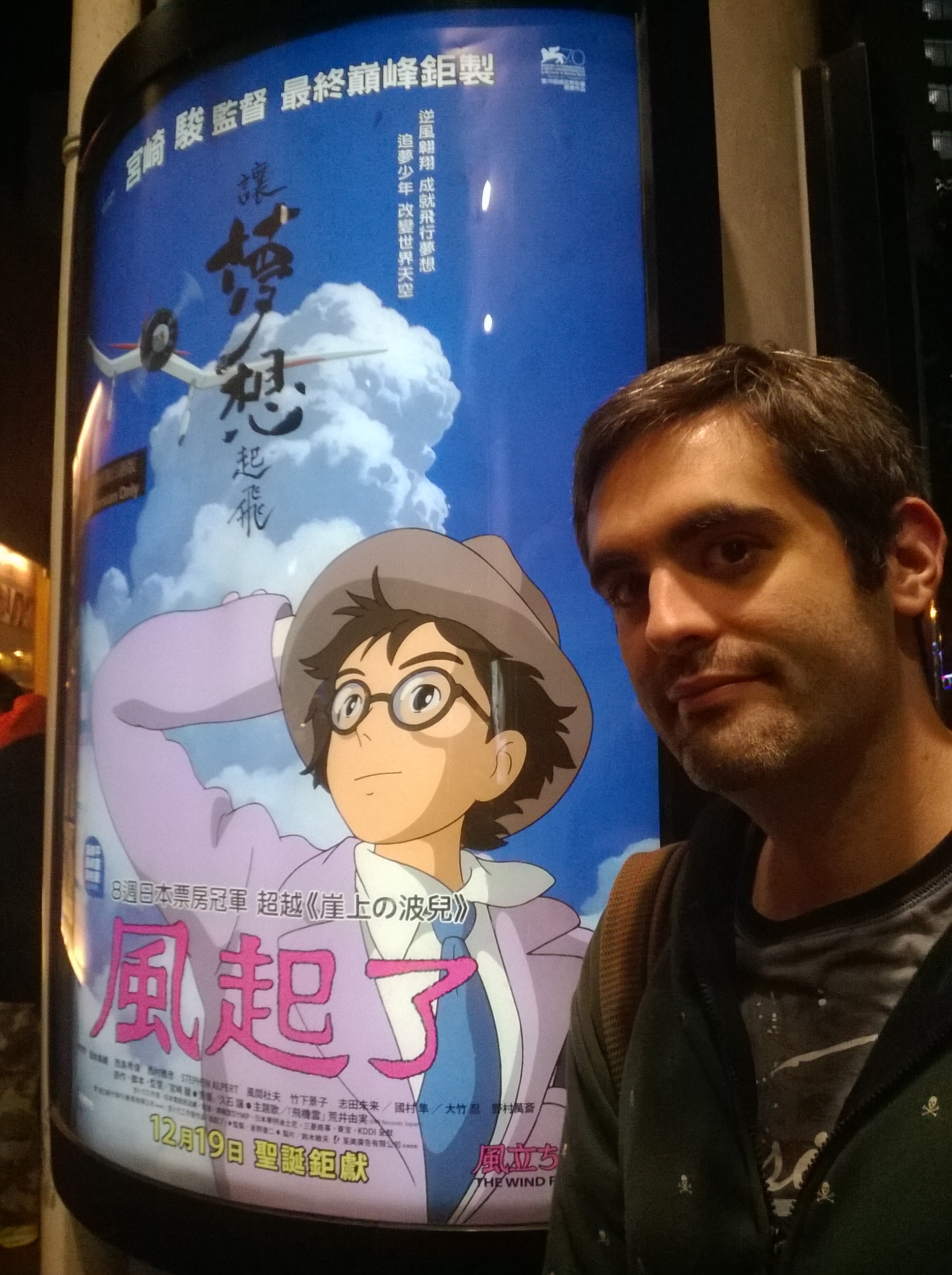
My review of Hayao Miyazaki’s final film, the Wind Rises

Written for Shenzhen Daily, screening in Hong Kong

http://szdaily.sznews.com/html/2014-01/03/content_2743272.htm

Image

WHEN legendary Japanese animation director Hayao Miyazaki announced his retirement earlier this year, his latest film “The Wind Rises” took on a new meaning and received scrutiny as his swan song.

It’s a beautiful, almost flawless film. But the realistic style is a bit of a departure for the director. Unlike the more fantastical films for which he is most famous, such as “Spirited Away,” there are no mythical creatures in “The Wind Rises.” It lacks the environmental messages of “Princess Mononoke” and “Nausicaä of the Valley of the Wind,” and it’s very much a film geared towards adults, without the childish wonder of “My Neighbor Totoro” and “Kiki’s Delivery Service.”

On its own merits, it is an excellent film. A biopic of early Japanese airplane engineer Jiro Horikoshi, “The Wind Rises” may not always be historically accurate but never fails to make the audience care deeply about the lead character. If it was live-action it would surely be taken seriously by all critics. But as a Miyazaki film, it must be compared to his other masterpieces, and even if it’s not his best, it’s still a quality story with far more heart than the vast majority of animation coming out of Japan or America or anywhere else.

The tale opens within the childhood dreams of the young engineer, and the various dream sequences are among the loveliest animation visuals ever seen — and noticeably without the use of computer-generated effects. Dreams play an important role throughout the story, as Jiro Horikoshi repeatedly goes back to the same mystical land of not-yet-possible flying machines and even meets his idol, Italian engineer Giovanni Caproni. It is left unclear as to whether there is something supernatural going on or if it’s only in his imagination. The greater point is that everyone should embrace their dreams.

The boy soon becomes a man, and on a train ride to his university in Tokyo he experiences the devastating violence of the Great Kanto Earthquake of 1923. The scene is powerful, sometimes beautiful and sometimes terrifying, as the landscape bends and curves into impossible shapes. The sound effects are all done by human voices and it’s very jarring to hear such a unique style rarely heard in film.

Eventually Horikoshi rises to the top of his engineering firm, falls into a tragic love as his wife slowly dies of tuberculosis, and designs planes for the military. The film has courted controversy in certain ways; there is ample smoking, which some critics have said is not appropriate for child viewers. More importantly, others question why Miyazaki has apparently made a film that seems to promote the era of Japanese militarism.

But it’s not that simple. Miyazaki is known to have a pacifist stance and has repeatedly promoted peace and cultural exchange with his Japan’s neighbors. In July, on the topic of the Abe Administration and nationalist politics, he was quoted as saying: “Changing the constitution is completely unthinkable.”

In fact, his entire film expresses a great sense of inner conflict over his nation’s evolving identity. There was a rush for development at the time as the recently opened-up country tried to catch up with the Western powers, by means of advancing their military technology. The engineers in the film constantly take note of this unfortunate state of affairs. Yet Horikoshi’s character is a peaceful man who stands up to bullying and always takes care of the weak.

In one scene, he meets a kind German man who insists that Hitler’s Germany is run by thugs and will “blow up,” and then Japan itself will “blow up.” In another scene, the main character must hide from the secret police as they arbitrarily arrest innocent citizens. Most poignant of all, during one meaningful dream sequence Caproni specifically states: “Airplanes are not tools for war. They are not for making money. Airplanes are beautiful dreams.”

“The Wind Rises” is not a story about a simpler time. Japanese fascism is an inescapable backdrop to the period and the horrors of World War II in the Pacific region are always looming. While the central character’s arc is most important, the setting cannot be forgotten. “The Wind Rises” is ultimately a complex story about tough choices, and about a man who has a dream but must make sacrifices, as he makes compromise after compromise with his ethics, his country and his loving wife.

Miyazaki has said he was inspired to make this film after reading a quote from the real-life Horikoshi: “All I wanted to do was to make something beautiful.”

As for the acting, Hideaki Anno — a much esteemed animator in his own right, mainly noted for the “Evangelion” franchise — voices the lead character. It’s an odd choice. Anno is not particularly known for his voice-acting. But Horikoshi is meant to be an awkward man and stands apart from the people around him, and Anno expresses that well.

Hayao Miyazaki has now retired. His own legacy will live on via Studio Ghibli, which will continue to produce the finest in animated storytelling. Some films will even be directed by Miyazaki’s own son, Gorõ. But Miyazaki himself will never be replaced, and fans shall always miss this master director, who has taken a memorable bow with this final film.

“The Wind Rises” is screening in Hong Kong with Chinese and English subtitles.