Ray-Comics

Drawings and Writings

Ray-Comics
Unknown's avatar

About Ray

Raised in America, from the Midwest to the West Coast on a starchy diet of movies and comics and science fiction paperbacks. There's a Mid-East connection in there too. I write about such states as California and Ohio, and such provinces as Guangdong. Now in Taiwan.

Why I Write

http://www.whyiwrite.net/2016/01/ray-hecht/


Ray Hecht

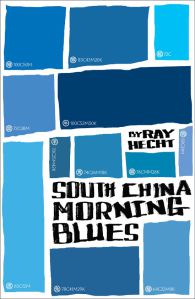
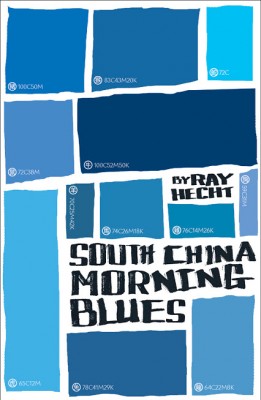
South China Morning Blues 

Ray Hecht is an American author based in Shenzhen, and blogs at rayhecht.com. Raised in the American Midwest, he studied film in Long Beach, California before moving to China in 2008 where he divides his time between fiction writing and freelance journalism. South China Morning Blues (Blacksmith Books, 2015), a story of depraved expats within the hypermodern southern Chinese sprawl, is his debut novel.


Why I write

That is the ultimate question, isn’t it? I don’t truly know the answer. Perhaps because I am a lonely person and I got into certain habits and now after years of this I am compelled. I want to express myself, I have enough ego to believe that others should read what I write, and it’s just a part of what I do and who I am. I have these things in my head and this compulsion to write it down and I hope beyond hope that people would like to read.


How do you go about writing?

I try to write every day. When a long-term project is going, I write about four days a week on a decent week. Good weeks more, bad weeks less. To me, it’s not about hours so much as word count. Five hundred works at least, or a thousand words on a very productive night. That may take hours or it may take 30 minutes.

I like to stay up late, because that’s the time when everyone leaves me alone. That magic time from midnight to about 2 a.m. I used to write later, but it’s getting harder and harder to keep up with a night owl lifestyle these days. That’s when all the original words come to me, and the next afternoon I tend to do rewrites.


Where do you write?

I like to lay down in my bed in my underwear with the laptop. I remember the old days when I had a big PC, it was much harder to motivate myself. The laptop is the most perfect invention ever…


Worst distraction?

…excepting, of course, that the Internet is the absolute worst distraction ever. If left to my own devices I tend to constantly check my email, Facebook, news sites etc. Porn isn’t even as bad as social media. Sometimes though you just have to unplug and force yourself to finish a deadline. Unless there’s research to be done.


Best inspiration?

I suppose I’m inspired by various things. A good song can inspire. A book, a show. A crazy life experience can especially inspire. Most of all, combing through my own memories of complex life issues and mix and match it into new combinations; somehow that give me ideas about what to write.


How often do you get writers’ block? Do you ever doubt your own ability?

I don’t really believe in writer’s block. However, I doubt my own ability all the time. When I compare myself to the major authors whom I respect, I am not in the same league at all. But I’ve chosen to write and even if it’s shit I have vowed to finish what I started.

The thing about writer’s block is that I always have more ideas than I have time to write them down. It should always be that way. Instead of being choked by the blank page, I suffer more from sheer laziness. Writing can be mentally exhaustive, and although endless ideas are swirling around in my mind, sometimes I don’t have enough energy to record and tinker with those ideas.


Contemporary writer you always read?

I always read new Haruki Murakami and Neal Stephenson. Murakami isn’t as good as he used to be, frankly, in my humble opinion. Stephenson is such an insanely prolific writer that it takes me longer to catch up with his latest thousand-plus tome then it does for him to write, yet I always do try to catch up.


Favorite book on China?

Speaking of which, Reamde by Neal Stephenson is a great book that takes place in China, full of hackers and gold-farming. He really gets it right.


Favorite Chinese author?

My favorite may be Su Tong, and especially his novel My Life as Emperor. Written very matter-of-factly and full of cruelty, it rather haunted me.


Favorite book?

There are several books that have supremely influenced me. I’m going to keep it in the realm of fiction: Snow Crash by Neal Stephenson is the ultimate irreverent yet smart novel, with so much energy. I know I’m not smart enough to write science fiction, and cyberpunk in particular, I am purely a fan with no desire to emulate.

I have to mention The Illuminatus! Trilogy by Robert Anton Wilson and Robert Shea which sent me on a lifelong journey to figure out what the hell is going on in the world.

As for literary inspiration, Irvine Welsh’s Trainspotting and Bret Easton Ellis’ Glamorama are works that have directly influenced how I string words together…


Favourite writer?

As for other mediums, I would like to say that comic book writer Grant Morrison is one of my absolute favorites. Able to write mindfuck profound postmodern comics, as well as fun superheroes, and I am very envious of his abilities.


The book you should have read but haven’t?

I am currently trying to find the time to start Gravity’s Rainbow by Thomas Pynchon. I have a feeling it’s going to be a tough one.


You look back at the first thing you had published and think…

Wow I was lucky!


How did you get started writing?

I scribbled on occasion when I was a kid, more interested in drawing than writing. When I was in school I decided to study film on a lark, and I didn’t really finish, but I decided I like prose more than screenplays because you can be alone. I decided to write novels when I was twenty-three years old, wrote several, and then almost 10 years later it worked out.


Does writing change anything?

I suppose it changes your social life, because friends and loved ones can’t understand why you are always avoiding the outside world. It’s worth it though, I hope.


What are you working on now and when is it out?

Well, I’m still working on promoting South China Morning Blues which is currently out in Hong Kong and beyond.

I have another novel in the works, a full draft is finished, and it’s not about China. It’s about how technology effects relationships and I got the idea from last time I visited America and observed as an outsider the whole Tinder dating thing. If I’m incredibly lucky it will be published in less than a year. A lot has to fall into place. I believe it will be published eventually. Wish me luck!
 

Continue reading

EBooks

amazon.com/author/rayhecht


Please do check out my Amazon author page this week…

It’s that time again. To celebrate the proper, Amazon-approved release of my novel South China Morning Blues (finally), I’d like to share several of my eBooks which are free for the Kindle & Kindle app this week.


There’s my old horror short story 411:

411

http://www.amazon.com/411-Ray-Hecht-ebook/dp/B00EUBZRL2


There is my first novel Loser Parade:

Loser Parade cover

http://www.amazon.com/Loser-Parade-Ray-Hecht-ebook/dp/B00ETYSS5W


Stay tuned, and soon the historical eNovella The Ghost of Lotus Mountain Brothel will be free as well (which serves as a sort of prequel to my current novel). Lastly, my slightly infamous memoiresque Pearl River Drama will be up for only 0.99 cents. Hope you take a look.


Again, wish you a great 2016. It’s proving to be a productive year already, and I can’t wait to share future projects with all you readers. Keep on reading and writing, everyone. And as always, feel free to share reviews! 

Happy 2016 as South China Morning Blues is live on Amazon

unnamed

Hello all, wish you a happy 2016!

As the new year comes, I would like to announce that my novel South China Morning Blues is *finally* distributing on Amazon in the States, and hence now available for readers to write reviews on the web page:

http://www.amazon.com/South-China-Morning-Blues-Hecht/dp/9881376459


Amazon isn’t perfect of course, but it is nice for me to get reviews on the ubiquitous bookselling website. I have been very humbled by the positive reviews on Goodreads.com, as well as by various articles and blogs I’ve linked to here before (check out ‘Reviews’ and ‘SCMB’ at the menu above), and am now looking forward to seeing some of those reviews and more on Amazon. Feel free to share what you think of my novel therein…


And while I’m at it, don’t forget to check my other eBooks from the past which are still as readable as ever 🙂

http://www.amazon.com/author/RayHecht


Happy well-read new year!

2015 in review

The WordPress.com stats helper monkeys prepared a 2015 annual report for this blog.

Here’s an excerpt:

The concert hall at the Sydney Opera House holds 2,700 people. This blog was viewed about 16,000 times in 2015. If it were a concert at Sydney Opera House, it would take about 6 sold-out performances for that many people to see it.

Click here to see the complete report.

2015 Bi-City Biennale of Urbanism/Architecture

20151219_135721

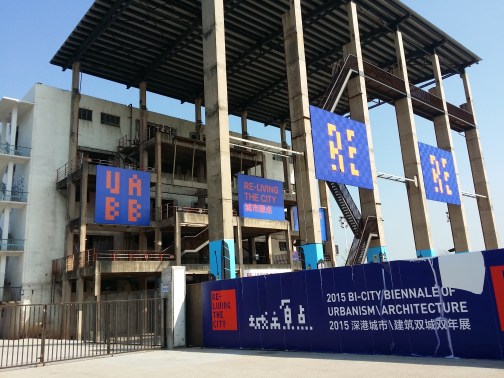
I recently went to see an exhibition at the 2015 Bi-City Biennale of Urbanism/Architecture in Shenzhen. Formerly a flour factory, the reapproriated factory space (which is often a thing in China) was amazing. Who knew the Shekou Ferry area, ala 蛇口客运码头 Exit D1, could host such brilliant works?

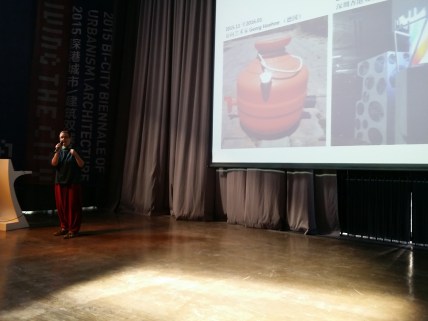
Mary Ann O’Donnell of Shenzhen Noted and Handshake 302 Art Space (located in my neighborhood of Baishizhou) introduced the “n=distortion” exhibit — produced by  several young artists around the Pearl River Delta who came together for an ensemble piece to represent the region…

20151219_142104


It was very interesting to see how artists from Hong Kong, Dong’guan, Zhuhai, Foshan, and other nearby cities took their budgets to create unique representations of their respective locales. From Shenzhen’s shallow barber pole — all about money — to Macau’s small but flashy attempt to seek attention, each came together to form a whole which one artist could never come up with his or herself. I particualrly enjoyed Guangzhou’s bamboo construction made out of chopsticks. In the end they were presented upon a boat in the main hall.

20151219_153923


The main building hall was massive in scale, multiple floors, dynamic installations, and herein it’s difficult to express in pictures. The theme being “Re-living the City,” many of these pieces are meant to be interactive, with audience members walking through and even adding to the experience by way of turning musical knobs or drawing in chalk. Do put aside a lot of time to absorb the full experience when you come on by.

I hope the following slideshow inspires further interest:

This slideshow requires JavaScript.


The exhibition will continue until February 28th, full of many workshops and talks scheduled. I will make the time to visit again, and if you’re in the area I highly recommend that you do too!

See official link for more details – http://en.szhkbiennale.org/


(Related: n=distortion web page)

(Shenzhen Daily article)

theNanfang.com: SCMB a Glimpse Into Expat Life in a Fast-Changing PRD

South China Morning Blues a Glimpse Into Expat Life in a Fast-Changing Pearl River Delta

https://thenanfang.com/south-china-morning-blues-a-glimpse-into-expat-life-in-a-fast-changing-pearl-river-delta/

Luigi Mondino , December 21, 2015

Luigi Mondino


Ray Hecht’s debut novel is a detailed and sincere depiction of what life is like in the Pearl River area. Divided into three main sections (one for each major city: Shenzhen, Guangzhou and Hong Kong), the book follows the life of several characters, both foreigners and locals, as they try (or struggle) to find their way without losing touch with reality. Rather than being a simple collection of short stories (very loosely entwined), Hecht chooses to shape his book into a canvas where the expat lifestyle is the effective trait d’union.

unnamed-3

Hecht obviously knows what he’s talking about as, being himself a long-term expat in the area, he has drawn from his own personal experience (as it can be inferred from his own personal blog) ideas and stories that lay the foundations of his book, and it shows well: characters look real and relatable, grounded in reality, vivid and rich in their motivations and background. Characters are teachers, journalists, young artists, businessmen, all people that populate bars and clubs in the downtown of each city. Ray Hecht has collected and transformed some of the stories he heard (who knows how much autobiography might be in the book?) into a constellation of small existences that, although bordering on the stereotypical sometimes, often emerge as true in their own need of self affirmation.

Whoever experienced life in the Pearl River Delta can understand or relate to the urgency to be heard or to stand out that everyone in the book seems to display: life is too fast-paced and often people focus on their careers, while everything else slips into the background. If the 12 main characters all have something in common, it is a sense of isolation that compels them to question their own choices and fast-forward life to the next, hopefully safer, stage.

The three sections the book consist of several mini-chapters, each following a different character (some of them recurring from section to section, thus closing the circle and giving the idea of a mini universe where people can’t stop running into the same faces again and again). All stories are narrated in the first person and they read as confessions that break the fourth wall and ask the reader to participate in something private and meaningful that otherwise would be lost.

Each section of the book has its own different nuance that reflects the three different cities in which everything takes place:  Shenzhen is a new and fast city, Guangzhou is the old capital, Hong Kong is a hybrid city looking for a balance in its own internal differences. “Shenzhen” opens the book and throws us in the middle of the action: two foreigners, newcomers to Shenzhen, try and mostly fail to integrate in a city with no identity and history. Looking forward with no regrets is the key, even if something gets lost along the way. Marco, the businessman, and Danny, the English teacher, whether they are looking for instant gratification or for some meaningful experience, are constantly semi-detached from reality as they can’t help to feel their presence in the city is temporary, a sensation shared by all the characters in this first section. Life is so fast and opportunities so rich, there is no need or time to look back or to make detailed plans about the future.

“Guangzhou” offers a new take on the expat life in China. Guangzhou, the city, is the old Guangdong capital, an established city with its very own rhythm and style. Whereas Shenzhen’s no identity is reflected in its individualism and fast pace, Guangzhou’s somewhat quieter pace is mirrored by a sense of isolation that is sometimes difficult, or almost impossible, to break. Amber, the Canadian English teacher, Ting Ting, the aspiring artist, and Terry, the Asian American journalist, represent the struggle to find themselves in a vast and disperse city: whether you are looking for a professional achievement or to find people to hang out with, Guangzhou is a giant maze that needs to be crossed.

“Hong Kong” is the last section, the shorter and the most crowded: most of action occurs at a rave party on Lamma island, where we re-encounter many of the characters from “Guangzhou”. The party is where individual stories come to an apex and some of the loose ends are tied up (but not completely, we just manage to say goodbye to the characters we have been following so far). Chapters are shorter and there is more interaction than before between characters, so rather than focusing on individual stories, Hecht chooses to let all the tension explode at a party that can be read as a turning point in everybody’s life.

Hecht writes his characters in need of sexual gratification and infuses them with a need for drugs of any type. I admit this sounds like a stretch sometimes, since the high recurrence of such behaviors flattens out diversities rather than creates an invisible bond between characters. This detail represents one of the flaws of the book, flaws that don’t hinder its effectiveness, but reveal Hecht’s somewhat beginner’s naivete: characters seem to all convey the same emotional range, as well as same ambitions and doubts. That is a forgivable since their backgrounds and environments help in giving each character his or her own flavor, but Hecht doesn’t seem totally in control of his own voice (but 12 different characters, one for each sign of the Chinese Zodiac, is a huge challenge for a novice).

As one of the first attempts to describe the expat life of common people, both foreigners and locals, SCMB succeeds in capturing a particular moment in time and space in which we are allowed to peek in. Hecht’s prose flows smoothly (style is simple, but not bland) and although the reading experience is always rich in details and facts, less characters and more plot would have given the book a more solid texture. Looking forward to Hecht’s sophomore effort is from now on something worth doing.

South China Morning Blues is published by Blacksmith Books. It can be purchased from Amazon or at select bookstores.

Guangzhou – Reading & Chinglish

In light of so much interesting content last week, I have decided to combine an update of my book promotions with Chinglish, as well as a video below. Hope this makes for a doubly entertaining read.

Last weekend we went to Guangzhou, and enjoyed Yuexiu Park. Though there was lots of uphill walking, it’s nice to see pagodas and the beautiful nature settings. Paddleboating was most fun indeed.

And so many Chinglish signs. Glad to see that they haven’t changed the place in years 🙂


Later, it was a treat to discover this awesomely named dim sum restaurant. Delicious and PRO!!!


Finally, Saturday night I came to read ma’ book at the awesome Open Mic event at one dimly-lit hip art bar Loft345…


Always nervous to do these sorts of things, it’s even worse to record and hear myself. Do I really sound like that? Well, I did my best and that’s all that can be done; seems to work out most of the time.

South China Morning Blues- book review

hcyip's avatarMy Take

Ray Hecht is an American writer based in Shenzhen who I know through his personal blog about his varied experience in China’s metropolis of the moment (and perhaps future). He’s lived in both Guangzhou and Shenzhen actually, and he’s put his abundant Cantonese experience into use in a recently released novel South China Morning Blues, for which I gladly put aside my China cynicism and dug into to review.

SCMB (as I’ll call the novel from this point) takes place in Shenzhen, Guangzhou and Hong Kong, the 3 giants of the Pearl River Delta. While it is China’s manufacturing powerhouse and the world’s factory, this region is rarely featured in China literature, which often are set in Beijing or Shanghai. It can be easy to forget that South China, specifically Guangdong, was among the first Chinese regions to come into contact with Europeans through trade starting from the 17th century.

Location…

View original post 457 more words

Bookish.Asia Review: South China Morning Blues

South China Morning Blues • Ray Hecht

http://bookish.asia/south-china-morning-blues-ray-hecht/

The Pearl River Delta is home to Guangzhou, Hong Kong, Macau, Shenzhen, and cities of millions – such as gritty workshops to the world Dongguan and Zhongshan – that you’ve never heard of. Despite being the powerhouse of the country’s decades-long economic boom, China’s southern cities have been largely ignored by English-language novelists for the more glamorous settings of Shanghai and Beijing. When stories are set in the south, they are usually period pieces taking advantage of the region’s rich historical backdrops of war, revolution, and the treaty port clash of cultures. It was a welcome change to come across a novel set in modern-day Guangdong.

South China Morning Blues is divided into three sections, each named after a city in the region. The multiple storylines begin in Shenzhen, move to Guangzhou, and end on Lamma Island in Hong Kong. The novel provides a kaleidoscopic view of urban China as seen through the eyes of a dozen mostly twenty-something Chinese and foreign characters. There’s Marco, a macho American businessman looking to get laid at every opportunity; Danny, an English teacher finding his feet; intellectual stoner Eric; artist Ting Ting; American-Chinese journalist Terry; and… I’ll stop there. Twelve is too many to run through, which raises the question of whether that number of characters makes for an overcrowded cast.

Although there’s no consensus on the maximum number of main characters a novel should contain, it’s generally thought that eight or nine is the upper limit for a medium-length work. Irvine Welsh’s Trainspotting, for example — which, with its multiple narrator structure, was one of Hecht’s inspirations — has perhaps seven main characters. When I opened SCMB, and realized that Hecht had chosen twelve because he wanted one character for each animal sign of the Chinese zodiac, the approach seemed like a recipe for disaster.

Surprisingly the big cast works. Credit goes to the author for how he does this by adding a couple of characters at a time, building up layers, and coming back to earlier people as some of storylines are threaded together. The effect is an unusual but engrossing reading experience, an immersive feel of varying waves of engagement. The number and range of characters, subplots, and places gives the novel an epic flavour; it’s a big canvas which contrasts with the mundane considerations of daily life that the characters describe.

South China Morning Blues is written in a stream-of-consciousness, first-person narration. Unavoidably, this is sometimes inane and slow moving; but it’s also often funny and, above all, honest. The novel is painfully true to life: how we actually were when young and finding our way, rather than how we would like to remember ourselves. I laughed aloud in numerous places, perhaps most often for Danny, the non-descript English teacher andlaowai newbie who is soon playing the veteran. In one such scene, a fellow English teacher – young, fresh off the boat, and completely clueless – asks Danny how long he has been in China.

“Well,” I say. “I’ve been in Shenzhen for a year now, but in China almost two years. Before here I lived in a town you’ve never heard of up north.”

“Wow,” he says, easily impressed. I feel cool, sophisticated.

One of the pleasures of SCMB is seeing how characters grow up (or don’t) over the two-year period of the novel. Eager to know how things worked out for them, I raced through the book in three days, pleased with the ending and yet sad the story had come to a close.

SCMB contains a lot of drinking, drug-taking, and sex, but not unrealistically so. Alcohol and drugs are a social lubricant and stress-relief for people in a new place. Likewise, business entertaining in China involves heavy drinking and frequently a side-dish of whoring, so it’s not unnatural that when Marco, the self-styled Casanova, is on a business trip to Dongguan, he should partake of the city’s infamous delights. Marco takes two hookers back to his hotel and is working his magic while the women watch television:

In front of me, I have two bare asses. They cost me only a grand each. That’s in RMB.

Enthusiastically, I slap the one on the left and pound away against the other one. She insisted that I wear a rubber. That part never gets lost in translation. This experience would have felt better without, but whatever….

I wish that I could persuade these girls to perform some lesbian shit. I push their heads together. They kind of kiss for a second, but then smirk and turn away. Don’t these bitches watch porn, or what?

My cock feels ready to explode out from under me, almost like I should call in a bomb threat to the hotel or something.

At times SCMB can be a bit depressing in portraying the shallowness of many Chinese–foreign interactions, but once again it rings true. In fact, I’ve met people like all twelve of the story’s characters. Much of the realism comes from author Ray Hecht writing about what he has himself experienced or seen, having lived in the novel’s two main locations, Shenzhen and Guangzhou. Hecht, who was born in Israel but grew up in the American Midwest, arrived in China in 2008 at the age of twenty-six. He works in Shenzhen as a writer and teacher, and has written two previous novels: The Ghost of Lotus Mountain Brothel and Loser Parade.

South China Morning Blues deserves to sell well. It’s easy to see the novel becoming a big hit among the expat population in China, but it should also appeal to general readers. Hecht’s Pearl River Delta tapestry is at heart a racy drama exploring universal themes, so no knowledge of China is required to enjoy it.

* * *

South China Morning Blues is published by Blacksmith Books. It’s available from the publisher’s website, Amazon, and bookstores in Hong Kong.

Author Ray Hecht has a website chronicling aspects of his writing and life in Shenzhen.


By  December 11th, 2015

South China Morning Blues book review by Nicki Chen

http://nickichenwrites.com/wordpress/china/south-china-morning-blues/

Book Review of South China Morning Blues

When I look back on my twenties, I’m amazed at how much I crammed into that decade—and also at how far-reaching the consequences of my decisions were. I shouldn’t be amazed. We’re meant to choose our path in life during those years. And even though we can reinvent ourselves to some extent later, there’s no getting around it, it’s usually during our twenties that we at least make a good start in figuring out who we are and where we’re going.

The characters in Ray Hecht’s new book, South China Morning Blues, are all in their twenties. And to make matters even more challenging, they live in what may be the fastest changing region of the fastest changing country in the world, the Pearl River Delta region in southeastern China, a megalopolis that the World Bank Group considers the largest urban area in the world in both size and population. Hecht, an American, has lived there, mostly in the city of Shenzhen, since 2008. He knows the area well.

The twelve young men and women who tell their stories in South China Morning Blues, live and work in Shenzhen, Guangzhou, and Hong Kong. They’re Chinese, American, Canadian, and African. None of them are quite clear on what they want or how to get it.

The first character we meet, Marco, is a sleazy American businessman who likes to show off and pick up girls. Since he can’t be bothered to learn Chinese, his Chinese protégé, Jackie, takes advantage of him and steals his clients. After losing his job, Marco starts a new business, a club that caters to expats. When he falls in love with and marries a Chinese woman, he’s challenged to become his better self.

Sheila’s parents are from another generation. They don’t understand a modern Chinese career woman like her. Eventually Sheila will realize that even though she’s modern in some ways, the Chinese duty to sacrifice for family obligations is still deep inside her.

Terry is an American-born Chinese, a writer, and an alcoholic. To impress his Chinese girlfriend, Ting Ting, he finally cleans up his disgusting apartment. We can only hope that Ting Ting will inspire him to clean up his act too.

These are only five of the twelve characters in South China Morning Blues. They speak in their own voices about their longing, loneliness, and confusion. They tell us about their hunger for adventure, money, love, and sex, and their desire for success and meaning.

Each of them represents an animal in the Chinese zodiac. Marco, for example, is the tiger; Jackie is the rat; Sheila is the hare; Terry is the monkey; and Ting Ting is the Dragon. The author uses the Chinese character for each animal to indicate a change in point of view. If you don’t read Chinese and you want to be sure who is speaking, you might want to make a cheat sheet.

Ray HechtHecht doesn’t sugar coat the seamier side of life, and some of his scenes are sexually explicit. As he said in an interview with Jocelyn Eikenburg, “I want to show all sides of real life. Using illegal substances, having irresponsible sex, pushing the boundaries, and making mistakes; these are all things that human beings actually do. And they are interesting things. I believe they are things worth writing about.”

Whether you’ve ever traveled to or lived in China, I think you’ll find something new and interesting in South China Morning Blues.

Available for pre-order on Amazon.

The Chinglish of Meilin

Sometimes I like to the Meilin neighborhood of Shenzhen. It’s a bit of a halfway point between downtown and the suburban districts, and the vibe is just nice enough outside of the central urban areas. Check it out if you ever visit.

Anyway, recently I happened upon a trove of glorious Chinglish signs in an apartment complex within the area. There were more than these, but I had to stop taking pictures at a certain point. The themes of law-abiding were heavy in this scene…

(And do note my Instagram.) Enjoy:


Radio Interview on Morning Brew in Hong Kong

20151204_113303.jpg

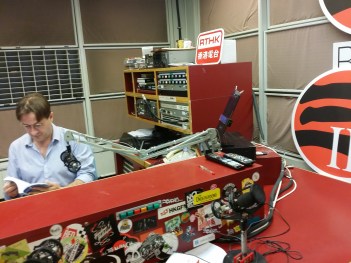
Last Friday, I was honored to be invited to Phil Whelan’s Morning Brew show on Radio 3 in Hong Kong.

I was a bit nervous, but after doing a half-dozen odd promotional events for my novel South China Morning Blues I have indeed been getting better at this public speaking thing.

It was only less than a half-hour, and we talked fast. That’s how radio goes. Just hope I could keep up! Phil was nice, and spurred on a very interesting conversation. The topics were varied, as we delved into people-watching then censorship then about what can be gotten away with on television. Finally we went back to the topic of my book and I read a short excerpt.

I think it actually went well! I would love to do more shows like this in the future, if anyone will have me…

But I’m still not ready for a podcast.


Please check out the link below and click on the listening portion that says Ray Hecht – South China Morning Blues:

http://programme.rthk.hk/channel/radio/programme.php?name=radio3/morning_brew&d=2015-12-04&p=2505&e=335512&m=episode

Wall Street Journal: That Time He ‘Dropped’ the Vegetarian Bun – An American Expat Shows His Dad Around China

Please check out my first piece for the Wall Street Journal expat blog! A simple story that us abroad may be able to relate to, and I think it turned out well: It’s about that time my dad came to visit me and how that parents-visiting thing goes as an expat…


http://blogs.wsj.com/expat/2015/12/03/that-time-he-dropped-the-vegetarian-bun-an-american-expat-shows-his-dad-around-china/

BN-LN884_hechtp_G_20151203103638


And that’s my face when a bun is wasted.

Interview with Timo of CrazyChineseFamily.com

It’s been a while since I had any interviews with bloggers, but I have a great one for you now! Presenting Timo, of the blog Crazy Chinese Family. I recommend you check it out, one of the best for East meets West stories about the wife and cute kid and of course the crazy Chinese mother-in-law…


interview1

interview2


What inspired you to be a blogger?

I am actually not really sure what inspired me. I tried out blogging about ten years ago for a while but never really stuck with it and gave up after few months. Probably this was due to the non-existing focus. I was blogging about all kinds of things from art over economics to sports…

It took me a long time until I started with CrazyChineseFamily in 2013. Back then I had been together with my wife for over three years and somehow stories about my crazy Chinese mother-in-law just piled up. Then after my in-laws had been at our home in Finland for nearly a month I just couldn’t hold back any longer, I needed to share those stories and thus this blog was born.


What kind of blogs do you enjoy reading? 

I love reading all kinds of blogs but the majority is about interracial relationships especially between Westerners and Asians. Other blogs are about travels, food (I just love food!) and also personal blogs by authors. Why authors you might think… Well, I actually started to write a novel some years ago but never even finished the first draft. Because of this I am really interested what tips sometimes authors share on their blogs, what hardships they go through, what they like to read and so on.


What kind of books do you like, and who are your favorite authors?

It is all about fantasy for me. I can’t say why but I just love the fantasy genre, nearly my entire book collection is about that topic. As any Fantasy geek my favorite author is Tolkien but there are so many other talented authors that I will just throw in a few of them randomly like Patrick Rothfuss, Steven Erikson, Robert Jordan, Brandon Sanderson and so on.

Besides fantasy books I also got a small manga collection. I guess I have roughly 300 manga in my shelves though I haven’t bought any new one for at least eight years. I have read mostly Shōnen and Seinen manga. Examples are Akira Toriyama’s Dragonball series, Rumiko Takahashi’s Ranma 1/2 and Inu Yasha, then of course Kouta Hirano’s Hellsing, and Kentaro Miura’s Berserk. Besides these manga which are much about fighting, I also read all kinds of other genres such as some cooking manga, or many about sports such as by Mitsuru Adachi. Now that I moved back to Germany I already took some notes on what manga are still missing in certain series, so I guess there is still hope that I will get back into this whole thing again.


You get personal in your blog at times. Have you ever gotten in trouble with your wife or mother-in-law by sharing too much? 

My wife has no troubles about what I write about and truth to be told, my mother-in-law has no clue about this blog. I can’t even imagine what her reaction might be. It could be anything from being pissed at me, forcing her daughter to divorce me, or feeling honored and what not all else. She is a very unpredictable person so anything is possible.

However I have no doubt that she has her own micro blog on Weibo writing about her crazy son-in-law. As I never really write anything about myself my readers actually don’t know what kind of wacko I am myself but I have some blog posts planned to give more insights about that weird guy who writes about his crazy Chinese mother-in-law, but this is still work in progress soon.


Some of the situations your MIL gets into seem very stressful! Is there an element of therapy when it comes to sharing by blogging?

Definitely! I started to blog because there was just so much crazy stuff going on with my MIL. When she was for the first time with us in Finland weird things just happened on a daily basis. Not only that she did weird things but also her behavior such as that she never ever does anything wrong, it is always someone’s else’s fault…

So when I started to write these things down it help me to relax a bit even with her around. The hard part back in Finland was also that our apartment was tiny so there was no way to avoid her except by clearing my head through blogging about her and the rest of the family.


Any good crazy MIL story stands out that you’d like to share, as an introduction?

You know the feeling when you go with a little child to the Zoo and the little one got troubles getting animal names, right? It is pretty cute as you know that everything is still so new to them and that they have enough time to learn during their lifetime. This whole thing ain’t cute any longer when a grownup is calling a polar bear a sea lion, a seal is suddenly a big fish and a lynx transforms into a tiger. This particular grownup is my dear Chinese mother-in-law. According to herself she is the biggest animal lover in the world who knows how to treat them right. Ehm…perhaps in a sick and twisted parallel universe. She can’t tell what animal is right in front of her, she gives dogs the spiciest food she can get and she doesn’t understand why a dog should take a walk more than once a month. Anything else I should add to help you understand why I am so amazed by her animal love? I think not!


What originally brought you to China in the first place?

Continue reading

Chinglish’agram

Here are some more Chinglish pics, previously seen on Instagram. Among others we have various signs, a lonely road, fries, a funny hat, and at the end a mythical guy I have always searched for and finally found: A Chinese gentleman with a cheesy English tattoo. The irony, get it?