Ray-Comics

Drawings and Writings

Ray-Comics

Reflections on the year 2016

otuynui0mjbfmjqxnzcwmki5muq6yzjimddjzdm1zwm5zju3mmm1ztliodrlngu0zjm3odi6ojo6oja

2016 was, to say the least, a tumultuous year.

It’s already something of a meme to say that 2016 sucks so much. And yeah, that’s largely true specifically in the political sense anyway.

However, in my personal life I can definitely declare that though it’s been hard I can claim lot of positive growth over the past year. I traveled the world, I promoted some writing, I published here and there, wrote another book, and I even moved in with my girlfriend!

There has been a lot on this very blog worth share. I reviewed, I interviewed. And although at this stage it’s hard to say if it will lead anywhere, one of my personal productive favorites of the year was starting anew on my hobby of drawing silly little comics.

In thinking over this arbitrary marking of the Earth going around the sun that we all mark on our calendars, I have thought about it most nostalgically and created a list of links below. Here, a few posts that stand out to me to sum up the crazy intensities of this most epically year:


In February, right after Chinese New Year, I was lucky enough to be detained by the Chinese police after attending an unlicensed rave party. I tested negative for drugs and was soon released, while sadly others I knew tested positive, leaving me with the opportunity to write what proved to be my most popular piece of writing ever. The guys over at Reddit China were somewhat opinionated. But I had my say.

Hey it even led to a piece I wrote for the Wall Street Journal.


With my novel South China Morning Blues published — from Blacksmith Books, Hong Kong — in late 2015, I was very focused on promoting the book all over Shenzhen (and Guangzhou, and Hong Kong) over the beginning of the following year and on. It was a big part of my job for months on end. The highlight was definitely in March when I went to both Beijing and Chengdu for a little get-together known as the Bookworm Literary Festival.


The travel it did continue. I visited the great country/not country of Taiwan as part of my girlfriend Bronwen’s art residency in May. Absolutely wonderful place. There will be more on Taiwan come the next new year.

And in June it was time to go to Israel for the bi-annual visiting of the family. What a trip I met some little nieces and nephews, saw my parents, had emotions, all the while some legal complications came up and had to be dealt with.


One event that really stood out in the summer was the art exhibition by Bronwen and some other locally sourced artists over at Sin Sin Fine Art in Hong Kong. Great work. I happened to write an article about it.


At last, the dreaded subject of American politics. Over the second half of 2016, I carried on with my life and moved and wrote and promoted, meanwhile in America (totally affecting the rest of the world) it all went well and truly insane. I became rather consumed in following the politics of the horrible election cycle. Finally, of all things, I was forced to start writing political columns. The anxieties of the day before, then November’s horrific results, and a touch of conspiracy theory commentary.

Sadly, at this rate I will probably have yet more to say in 2017. A lot more. Despite the apocalyptic scenarios at hand, I’ll try to be optimistic about the new year. What’s certainly true is that nobody knows what will happen next.


Thus was the year. I and you survived. Thanks for paying attention to me and my humble perspective. On a concluding note, let us mourn the actual concept of truth and facts with this cartoon by Tom Tomorrow… RIP truth~

Good luck to 2017, we’ll need it!

tmw2016-12-21color

THIS MODERN LOVE: a novel

bookcover-epub

https://www.amazon.com/THIS-MODERN-LOVE-Ray-Hecht-ebook/dp/B01MA54L4I


I am pleased to announce the release of my latest novel, This Modern Love.

Unlike my previous writings about China, this story is primarily concerned with America. It is about the way that technology has skewed modern relationships, and explores various themes of youth and immigration, sex and emptiness and the whole soul-of-my-homeland thing.

Please check it out on Amazon. It is available as a Kindle eBook as well as a paperback edition. I believe it works well as a digital read.

If you would like to review, please contact me and I’d be happy to send it to you.

Thanks for reading!


Synopsis:

American love isn’t what it used to be.

Roommates Jack and Ben are complete opposites when it comes to romance. For Jack, a mere waiter, it’s easy to use to the latest to app meet a new girl every weekend. But Ben, even though he’s a programmer, can’t seem to figure out how to maneuver online dating.

On the other side of town, sisters Andrea and Carla have their own issues. Andrea is a bit of a wreck, stumbling from one dramatic episode to the next. Carla is more concerned with blogging than dating, though she does get lonely at times. In an age of narcissism and alienation, it’s just so hard to meet someone.

Over the course of one day, these thoroughly modern men and women keep passing each other by. From yoga class to the club – all in a haze of drugs, sex, and selfies – opportunities for true love come and go, and no one notices because they were too busy staring at their phones.

Welcome to the 21st century.

End of the month…

… and I don’t have any big blog planned. Whatever to write about~

I try to post something at least once a week. I’m afraid I don’t have enough to say this time.

It’s been a hell of a month. I secured a very busy and slightly lucrative freelance editing job. When it’s all out there perhaps I’ll share. Suffice to say, rewriting an entire book over the course of September wasn’t easy. But very good work to do.

In keeping busy, I’ve been very antisocial lately. Which works for me. Most of the time I’d rather stay in and read and watch movies and occasionally play video games, to be honest. Could it be I’m getting boring?!

I have plans to release some of my own writing. In due time. And some book reviews coming up, perhaps interviews. There’s always Chinglish. What else should I share? I have an idea for a short blog series about literature under a medium I haven’t explored as yet.

So stay tuned…

Would you like a sneak preview to read?

Dear readers (and writers),

The time has come for the announce that I am about ready to share something new. If you happen to be one to enjoy my humble writings, here it is.

At a mere 50,000 words, it’s more a novella and not too much commitment to read. Took me the greater part of 2015 and the working title is “Modern Love Story” and yes I know that needs work. Or possibly “This Modern Love” as in the Bloc Party song — see below. “Modern Love” as in the song by the late great David Bowie would be a nice reference as well but seems too similar to Aziz Ansari’s recent recommended book Modern Romance.

Similar in structure to that novel about the twelve animals of the Chinese Zodiac, this new story only focuses on four people: Two men and two women. Half are modern and the others more traditional, and the point is each pair would be perfect for each other but they keep getting distracted and miss their chance.

Also, it’s about the soul of America.

See, I was inspired after the last time I visited the United States, and after being away for so long I now feel I have the outsider’s perspective. Mostly it was from observing some friends using the Tinder app in order to hook up. I never got the chance to use it, but I thought about all that online dating stuff from a literary point-of-view, and thus..


Well, if you would like to read more about my take on how modern technology has skewed sexual relationships between men and women, then please email me via rayhecht@gmail.com

Any input at all would be appreciated, from catching typos to scathing critiques and expertise on technological language.

And as always, if you would like to share anything you are writing I’d be happy to help edit as well!

Keep reading and writing, everybody


Here’s that song ~


Why I Write

http://www.whyiwrite.net/2016/01/ray-hecht/


Ray Hecht

South China Morning Blues 

Ray Hecht is an American author based in Shenzhen, and blogs at rayhecht.com. Raised in the American Midwest, he studied film in Long Beach, California before moving to China in 2008 where he divides his time between fiction writing and freelance journalism. South China Morning Blues (Blacksmith Books, 2015), a story of depraved expats within the hypermodern southern Chinese sprawl, is his debut novel.


Why I write

That is the ultimate question, isn’t it? I don’t truly know the answer. Perhaps because I am a lonely person and I got into certain habits and now after years of this I am compelled. I want to express myself, I have enough ego to believe that others should read what I write, and it’s just a part of what I do and who I am. I have these things in my head and this compulsion to write it down and I hope beyond hope that people would like to read.


How do you go about writing?

I try to write every day. When a long-term project is going, I write about four days a week on a decent week. Good weeks more, bad weeks less. To me, it’s not about hours so much as word count. Five hundred works at least, or a thousand words on a very productive night. That may take hours or it may take 30 minutes.

I like to stay up late, because that’s the time when everyone leaves me alone. That magic time from midnight to about 2 a.m. I used to write later, but it’s getting harder and harder to keep up with a night owl lifestyle these days. That’s when all the original words come to me, and the next afternoon I tend to do rewrites.


Where do you write?

I like to lay down in my bed in my underwear with the laptop. I remember the old days when I had a big PC, it was much harder to motivate myself. The laptop is the most perfect invention ever…


Worst distraction?

…excepting, of course, that the Internet is the absolute worst distraction ever. If left to my own devices I tend to constantly check my email, Facebook, news sites etc. Porn isn’t even as bad as social media. Sometimes though you just have to unplug and force yourself to finish a deadline. Unless there’s research to be done.


Best inspiration?

I suppose I’m inspired by various things. A good song can inspire. A book, a show. A crazy life experience can especially inspire. Most of all, combing through my own memories of complex life issues and mix and match it into new combinations; somehow that give me ideas about what to write.


How often do you get writers’ block? Do you ever doubt your own ability?

I don’t really believe in writer’s block. However, I doubt my own ability all the time. When I compare myself to the major authors whom I respect, I am not in the same league at all. But I’ve chosen to write and even if it’s shit I have vowed to finish what I started.

The thing about writer’s block is that I always have more ideas than I have time to write them down. It should always be that way. Instead of being choked by the blank page, I suffer more from sheer laziness. Writing can be mentally exhaustive, and although endless ideas are swirling around in my mind, sometimes I don’t have enough energy to record and tinker with those ideas.


Contemporary writer you always read?

I always read new Haruki Murakami and Neal Stephenson. Murakami isn’t as good as he used to be, frankly, in my humble opinion. Stephenson is such an insanely prolific writer that it takes me longer to catch up with his latest thousand-plus tome then it does for him to write, yet I always do try to catch up.


Favorite book on China?

Speaking of which, Reamde by Neal Stephenson is a great book that takes place in China, full of hackers and gold-farming. He really gets it right.


Favorite Chinese author?

My favorite may be Su Tong, and especially his novel My Life as Emperor. Written very matter-of-factly and full of cruelty, it rather haunted me.


Favorite book?

There are several books that have supremely influenced me. I’m going to keep it in the realm of fiction: Snow Crash by Neal Stephenson is the ultimate irreverent yet smart novel, with so much energy. I know I’m not smart enough to write science fiction, and cyberpunk in particular, I am purely a fan with no desire to emulate.

I have to mention The Illuminatus! Trilogy by Robert Anton Wilson and Robert Shea which sent me on a lifelong journey to figure out what the hell is going on in the world.

As for literary inspiration, Irvine Welsh’s Trainspotting and Bret Easton Ellis’ Glamorama are works that have directly influenced how I string words together…


Favourite writer?

As for other mediums, I would like to say that comic book writer Grant Morrison is one of my absolute favorites. Able to write mindfuck profound postmodern comics, as well as fun superheroes, and I am very envious of his abilities.


The book you should have read but haven’t?

I am currently trying to find the time to start Gravity’s Rainbow by Thomas Pynchon. I have a feeling it’s going to be a tough one.


You look back at the first thing you had published and think…

Wow I was lucky!


How did you get started writing?

I scribbled on occasion when I was a kid, more interested in drawing than writing. When I was in school I decided to study film on a lark, and I didn’t really finish, but I decided I like prose more than screenplays because you can be alone. I decided to write novels when I was twenty-three years old, wrote several, and then almost 10 years later it worked out.


Does writing change anything?

I suppose it changes your social life, because friends and loved ones can’t understand why you are always avoiding the outside world. It’s worth it though, I hope.


What are you working on now and when is it out?

Well, I’m still working on promoting South China Morning Blues which is currently out in Hong Kong and beyond.

I have another novel in the works, a full draft is finished, and it’s not about China. It’s about how technology effects relationships and I got the idea from last time I visited America and observed as an outsider the whole Tinder dating thing. If I’m incredibly lucky it will be published in less than a year. A lot has to fall into place. I believe it will be published eventually. Wish me luck!


Continue reading

Bookish.Asia Review: South China Morning Blues

South China Morning Blues • Ray Hecht

http://bookish.asia/south-china-morning-blues-ray-hecht/

The Pearl River Delta is home to Guangzhou, Hong Kong, Macau, Shenzhen, and cities of millions – such as gritty workshops to the world Dongguan and Zhongshan – that you’ve never heard of. Despite being the powerhouse of the country’s decades-long economic boom, China’s southern cities have been largely ignored by English-language novelists for the more glamorous settings of Shanghai and Beijing. When stories are set in the south, they are usually period pieces taking advantage of the region’s rich historical backdrops of war, revolution, and the treaty port clash of cultures. It was a welcome change to come across a novel set in modern-day Guangdong.

South China Morning Blues is divided into three sections, each named after a city in the region. The multiple storylines begin in Shenzhen, move to Guangzhou, and end on Lamma Island in Hong Kong. The novel provides a kaleidoscopic view of urban China as seen through the eyes of a dozen mostly twenty-something Chinese and foreign characters. There’s Marco, a macho American businessman looking to get laid at every opportunity; Danny, an English teacher finding his feet; intellectual stoner Eric; artist Ting Ting; American-Chinese journalist Terry; and… I’ll stop there. Twelve is too many to run through, which raises the question of whether that number of characters makes for an overcrowded cast.

Although there’s no consensus on the maximum number of main characters a novel should contain, it’s generally thought that eight or nine is the upper limit for a medium-length work. Irvine Welsh’s Trainspotting, for example — which, with its multiple narrator structure, was one of Hecht’s inspirations — has perhaps seven main characters. When I opened SCMB, and realized that Hecht had chosen twelve because he wanted one character for each animal sign of the Chinese zodiac, the approach seemed like a recipe for disaster.

Surprisingly the big cast works. Credit goes to the author for how he does this by adding a couple of characters at a time, building up layers, and coming back to earlier people as some of storylines are threaded together. The effect is an unusual but engrossing reading experience, an immersive feel of varying waves of engagement. The number and range of characters, subplots, and places gives the novel an epic flavour; it’s a big canvas which contrasts with the mundane considerations of daily life that the characters describe.

South China Morning Blues is written in a stream-of-consciousness, first-person narration. Unavoidably, this is sometimes inane and slow moving; but it’s also often funny and, above all, honest. The novel is painfully true to life: how we actually were when young and finding our way, rather than how we would like to remember ourselves. I laughed aloud in numerous places, perhaps most often for Danny, the non-descript English teacher andlaowai newbie who is soon playing the veteran. In one such scene, a fellow English teacher – young, fresh off the boat, and completely clueless – asks Danny how long he has been in China.

“Well,” I say. “I’ve been in Shenzhen for a year now, but in China almost two years. Before here I lived in a town you’ve never heard of up north.”

“Wow,” he says, easily impressed. I feel cool, sophisticated.

One of the pleasures of SCMB is seeing how characters grow up (or don’t) over the two-year period of the novel. Eager to know how things worked out for them, I raced through the book in three days, pleased with the ending and yet sad the story had come to a close.

SCMB contains a lot of drinking, drug-taking, and sex, but not unrealistically so. Alcohol and drugs are a social lubricant and stress-relief for people in a new place. Likewise, business entertaining in China involves heavy drinking and frequently a side-dish of whoring, so it’s not unnatural that when Marco, the self-styled Casanova, is on a business trip to Dongguan, he should partake of the city’s infamous delights. Marco takes two hookers back to his hotel and is working his magic while the women watch television:

In front of me, I have two bare asses. They cost me only a grand each. That’s in RMB.

Enthusiastically, I slap the one on the left and pound away against the other one. She insisted that I wear a rubber. That part never gets lost in translation. This experience would have felt better without, but whatever….

I wish that I could persuade these girls to perform some lesbian shit. I push their heads together. They kind of kiss for a second, but then smirk and turn away. Don’t these bitches watch porn, or what?

My cock feels ready to explode out from under me, almost like I should call in a bomb threat to the hotel or something.

At times SCMB can be a bit depressing in portraying the shallowness of many Chinese–foreign interactions, but once again it rings true. In fact, I’ve met people like all twelve of the story’s characters. Much of the realism comes from author Ray Hecht writing about what he has himself experienced or seen, having lived in the novel’s two main locations, Shenzhen and Guangzhou. Hecht, who was born in Israel but grew up in the American Midwest, arrived in China in 2008 at the age of twenty-six. He works in Shenzhen as a writer and teacher, and has written two previous novels: The Ghost of Lotus Mountain Brothel and Loser Parade.

South China Morning Blues deserves to sell well. It’s easy to see the novel becoming a big hit among the expat population in China, but it should also appeal to general readers. Hecht’s Pearl River Delta tapestry is at heart a racy drama exploring universal themes, so no knowledge of China is required to enjoy it.

* * *

South China Morning Blues is published by Blacksmith Books. It’s available from the publisher’s website, Amazon, and bookstores in Hong Kong.

Author Ray Hecht has a website chronicling aspects of his writing and life in Shenzhen.


By  December 11th, 2015

Interview with Ray Hecht on His New Novel “South China Morning Blues”

(Originally posted on: http://www.speakingofchina.com/bookreviews/interview-with-ray-hecht-on-his-new-novel-south-china-morning-blues/)


People have called China endlessly fascinating. But you could say the same about the expat scene here. In the seven-plus years that I’ve lived in this country, I’ve come across some real characters here – people I could have sworn were straight out of a novel.

I’m reminded of many of them after reading Ray Hecht’s new book South China Morning Blues, which features a motley cast of young expats and Chinese locals living across Shenzhen, Guangzhou and Hong Kong, including:

…Marco, a crooked businessman with a penchant for call girls; Danny, a culture-shocked young traveler; Sheila, a local club girl caught up in family politics; Amber, a drug-fueled aspiring model; Terry, an alcoholic journalist; and Ting Ting, a lovable artist with a chip on her shoulder.


SouthChinaMorningBlues_800

Through 12 distinct viewpoints, South China Morning Blues takes readers on a tour of the dark underside of the expat scene in China, culminating in a dramatic life-and-death situation that brings everyone together. It’s a fresh take on life in 21st century China and definitely worth a read.

I’m happy to once again feature Ray Hecht on the blog and introduce South China Morning Blues to you through this interview.


wpid-20151014_092815 SQ

Here’s Ray’s bio from his website:

Long story short, raised in America from the Midwest to the West Coast on a starchy diet of movies and comics and science fiction paperbacks. There’s a Mid-East connection in there too. I like to write fiction about such states as California and Ohio, and such provinces as Guangdong. Japan being an interesting topic as well. Lived in Shenzhen, China since 2008 (has it really been that long?), a lovely Special Economic Zone Hong Kong-bordering chaotic city that has given me so much. I occasionally partake of some freelance journalism for various local publications.

You can learn more about Ray Hecht and South China Morning Blues at his websiteand buy a copy at Amazon.com, where your purchase helps support this blog.

—–


What inspired you to write this novel?

Good question to start out with. A few things come to mind: After living in China in those earlier years, I found the country to be absolutely fascinating, and I wanted to share the experience of the land by telling stories.

Also, I’d long been a fan of Irvine Welsh’s Trainspotting and had a lot of respect for his system of multiple narrators that all have distinctive versions of experiences,and being more interlocking short stories than one big narrative. I think one of the philosophies that fiction can teach us is the subjective nature of reality. The way some people, say, move to Guangzhou and complain how they hate it while other people see it totally differently and love it.

Another inspiration, I must say at the risk of sounding pretentious, was James Joyce’s Ulysses. Not that I’m smart enough to write something like that — or even smart enough to truly understand the famously-dense book. But the way the novel utilized mythological metaphors, as per the Odyssey resonating in early 20th Century Dublin. I wanted to try something like that. The ancient mythologies of the world will forever be able to inspire modern stories.

Well, for me, characters are most important. A character needs unique personality traits, archetypes that make them stand out, something interesting about their histories and personas. After that’s established, a plot begins to form… And so the idea evolved to use the Chinese Zodiac to structure the characters of a novel…


Your novel is told through the perspective of 12 main characters as they live in or visit three major cities in South China — Shenzhen, Guangzhou and Hong Kong. How did you decide to structure your novel like this?

As said, I had the idea to base characters off the Chinese Zodiac in order to tell stories about modern China. Seemed to make sense at the time.

I’d already ended up living in Shenzhen, which is a major city most people around the world have never heard of. The city is next to Hong Kong, and I spend a lot of time there. For the sake of literary research (also because I wanted to research a historical novel about Canton circa revolutionary 1911) I moved to Guangzhou for an off year in 2011. I find all these cities fascinating in their own unique ways. I mean, Beijing and Shanghai are great, but I ended up in the southern Pearl River Delta region and I am glad I did. No place on Earth has more stories.

It seemed obvious that my novel about the soul of present China would have to incorporate those three cities.


Like your memoir, South China Morning Blues features quite a bit of sex and recreational drug use. How much did your personal experiences influence your writing in this book?

Ah, an embarrassing question. Hmm, how can I put this…?

First of all, my biographical writings may have some sex but I don’t think there’s much to brag about. Outside of a handful of tell-all dramatic episodes, by far it mostly concerned online dating and several serious relationships. Not too crazy, right?

The sex scenes in SCMB are, shall we say, meant to be more literary. At least more literary in the sense of literature I like to read. Being more extreme than real life in most cases. Many of those scenes were inspired by way of hearsay of other people I know, my own imagination, and a bit of research online. Not really based off my own personal experiences very much.

(Hey, I did say that Trainspotting was an inspiration.)

As for recreational drugs, I experimented a bit in my youth — and by youth I mean my mid-to-late twenties, I was very boring as a teen — and I think I was always responsible about it. To be honest, I’m often shocked when I observe how extreme drugs and alcohol are in the China party scene. It is something that needs to be depicted, whether glamorized or not. No outright spoilers here, but if you read to the end there are consequences for the characters who abuse themselves and I think it’s important to showcase that side.

All in all though, I want to show all sides of real life. Using illegal substances, having irresponsible sex, pushing the boundaries, and making mistakes; these are all things that human beings actually do. And they are interesting things. I believe they are things worth writing about. Worth portraying, without too much judgment. More or less, presented as is. That’s writing.


Tell us about one of your favorite characters from the novel and why you like him or her. Continue reading

Interview with Ray Hecht on writing and his new book, “South China Morning Blues”

http://www.travis-lee.org/2015/10/30/interview-with-ray-hecht-on-writing-and-his-new-book-south-china-morning-blues/

12072550_10153370910948411_1039026707900739524_n


Interview with Ray Hecht on writing and his new book, “South China Morning Blues”

For author Ray Hecht, the answer is a psychedelic experience at Burning Man.

Author of Loser Parade411, The Ghost of the Lotus Mountain Brothel (which I reviewed here), and Pearl River Drama, his most recent book is South China Morning Blues. available now at the publisher’s website and for pre-order on Amazon.

I asked Ray his thoughts on writing, his inspiration for South China Morning Blues and much more:


Can you recall a single instance that inspired you to be a writer or is it something that you’ve always had an attraction to?

I can’t recall a specific incident, it’s something that developed slowly. I originally wanted to be an artist before I wanted to be a writer. I felt like writing would be a good thing superfluously in my teens, and tried some stories. It was in college – late years in college in my twenties – I decided to study film screenwriting. I remember at 23 for some reason I vowed to write a novel a year. I didn’t follow up on that particular pace, but I have been writing seriously ever since.


Do you work on a specific schedule, where you write every day?

I mainly like to write in the middle of the night, but life doesn’t always let me. Usually I do first drafts after midnight. Then, next day at noon to the afternoon I might slowly do rewrites. It would probably be a good idea to get a consistent schedule, wouldn’t it!


Do you have a preferred writing program? (Word, text editor, etc.?)

Microsoft Word of course. I’ve even been studying some of the more intricate ways to edit and use the software to the best of my ability. Got a lot of typing shortcuts memorized. If it’s not too obvious to say, isn’t Word basically a must in this day and age?


You’ve mentioned that your love for ‘Trainspotting’ and ‘Snow Crash’. Could you tell us more about why you like these novels?

I love the danger and the outlaw attitude and the intelligence and the punk rock aesthetics and just how damn sexy it is. The novels are quite different, although they are both written in present-tense first-person narration. They are also both novels that exploded their respective writers on the scene.

‘Trainspotting’ by Irvine Welsh is magnificent literary achievement. The phonetic dialectic in writing, the grittiness of the drug culture, the power of each separate narrator’s unique voice. And yet, it is a free-flowing art work that explores all over without sticking to the rigidity of a narrow plot. Plus, it can even be darkly funny.

‘Snow Crash’ by Neal Stephenson is incredibly smart, a complex cyberpunk postmodern science fiction epic, and yet it doesn’t take itself too seriously and is often hilarious. I wish I was smart enough to write science fiction, but I’m not. I do highly admire Stephenson’s ability to be brilliant and at the same time be that cool.


What do your friends and family back in America think of you being a writer? Are they supportive? Do you ever find that some people just don’t understand what being a writer actually is?

I’ve been very surprised how supportive most of my old friends have been. Although, due to the nature of my writing topics I tend to keep family at arm’s length. Hopefully though, I impress everyone back home and most are proud of me.

However, I tend to think most people don’t understand what being a writer is at all. Rather, they imagine that being a writer is this thing to be. Especially people who want to be writers. Nobody seems to imagine what it is to write. Writing is a thing to do. Lots of people want to be writers; most people do not at all want to do any of the writing. That’s the part people always get so particularly wrong.


What was the impetus for writing South China Morning Blues?

To put it bluntly, I feel compelled to spend endless lonely hours writing. I needed subject matter to write about. I ended up in China, studied a bit, observed here and there, and the stories had to be told. That’s the short version.


While reading your book I saw a lot of familiar people and situations. Was it much the same for you, in that you were drawing from personal experience?

Some of it was personal. Much of it was hearsay. A whole lot never happened to anyone I know (that I know of) but things I only learned of online.

I’ll go ahead and reveal this right now: The drug stuff was based on personal experience. The sex stuff was not.


Were there any big scenes / characters cut at the editing stage?

Not too much. Perhaps there should have been. I rewrote and rewrote and polished, and perhaps this is bad writing advice, but I don’t like to cut out too much.


The presence of Chinese zodiacs. Did you know about that when you started or did it happen naturally?

I knew the basics of the Chinese animals, even when in America – though never a believer – I knew I was dog year and so on. When I set out to write this novel, I further researched. The acknowledgments gives a shout out to the book I mainly used.

Can’t say it happened naturally; it was a conscious choice from the beginning to structure the characters that way in the foundation and then see which way their stories would go…


In the book we see people struggle with identity and ambition. Danny says, “Back home, my old college classmates are surpassing me”, a feeling I can relate to. Do you think the ambition that many foreigners in China have — opening the business, becoming the great writer, etc. — is a way for them to keep up with their contemporaries?

Sure. But not only for expats, many people often feel anxious that the people from their past are surpassing them. With expats in particular, the contrast between one’s own weird life and those left in the home country can be stark. It’s a positive thing to healthily compete and start a business or forge a craft. At least expats in China tend to be interesting people (even if weird) and that can make for good goals. Being motivated by old cohorts surpassing, whatever works.


Going with the previous question, do you think there is something about China that attracts these kinds of people?

Good question. There is something about the expat phenomenon that attracts odd people. Odd in good ways and bad. Adventurous, or the dreaded loser stereotype, I don’t know. But there’s something there.

And why China of all places? I suppose it’s a big place, and it’s blowing up right now in world history. I’ve always liked that the economic growth puts it in this sort of limbo between undeveloped and developed, full of cheap outdoor restaurants and expensive shopping malls, and somehow that can suit certain people.


To close it out, do you have any advice for new writers who are reading this?

Going back to perceptions of the writer versus writing, I can only say to write. You’d think it would be obvious. Don’t fantasize about being this mythical creature called the writer. Be a person who writes. Then, when the writing gets good, whatever your niche may be, go out there and network and best of luck to you in getting published.

That is all.


Big thanks to Ray Hecht for doing this interview. To learn more about Ray, visit his website. You can also follow him on Facebook and Twitter.

South China Morning Blues is available now on the Blacksmith Books website and for pre-order on Amazon.
Continue reading

Author Interview With Ray Hecht

Lilmountain's avatar Accidental Bohemian

FB Author
unnamed
pearlrivercover

Hello Readers,
I am very excited for my latest author interview with China-based writer, Ray Hecht whom I was introduced to here on wordpress. Besides his impressive talent, I am delighted to interview him.

1. When did you start putting pen to paper?
I started writing a few short stories for fun in high school, although at that time I was far more interested in drawing and comics. I remember the age of 23 I officially told myself I want to start writing novels and haven’t looked back since.

2. What’s your literary poison – prose, poetry, etc.?
As in producing or consuming? I am primarily a fan of comics and novels. No offense to short stories and poetry. I read all manner of comics from superhero to indie to Vertigo-esque fantasy to manga. With novels I highly respect the sort of “neo-Beat” aesthetic epitomized by Irvine Welsh and Bret…

View original post 1,293 more words

Premiere of my novel: South China Morning Blues… Order now!

Here I go. My first (real) novel is about to be published, thanks to the good people at Blacksmith Books.

South China Morning Blues

http://www.amazon.com/South-China-Morning-Blues-Hecht/dp/9881376459

Not talking about an eBook here, but a physical novel. Not to mention professionally edited.

Of course, if you like eBooks please feel free to download at your leisure.

If you however prefer physical books to hold in your hand: Expect to see the novel soon available at bookstores everywhere in Hong Kong, and beyond. Don’t be hasty, feel free to pre-order it today!

My ensemble tale of modern China, full of expats and locals criss-crossing their lives through the cityscape. Twelve voices. Gaze within.

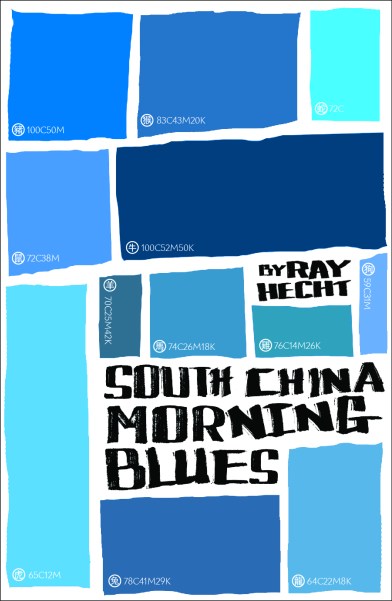
And check out this beautiful cover…

SouthChinaMorningBlues_cover

From Canton to Hong Kong, the booming megalopolis of the Pearl River Delta has endless stories to tell. Who finds themselves in rapidly changing 21st-century China? There’s Marco, a businessman with a penchant for call girls; Danny, a culture-shocked young traveler; Sheila, a local club girl caught up in family politics; Terry, an alcoholic journalist; and Ting Ting, an artist with a chip on her shoulder. Their lives intertwine in unexpected ways.

#Free #eBooks by Ray Hecht

51SLY6fgvWL._UY250_

With my new novel South China Morning Blues coming out thanks to the good people at Blacksmith Books, I’d like to celebrate by freely sharing all my previous eBooks for this week only!

Remember, the Amazon Kindle app is free as well. Please don’t forget to write a review.

Go to http://amazon.com/author/rayhecht and check out the following:

41fgNJ9XdtL._UY250_

http://www.amazon.com/411-Ray-Hecht-ebook/dp/B00EUBZRL2

411 is a horrifying short story loosely based on my time as an operator in the early 2000s. Intended to disturb, the tale concerns a deranged disgruntled employee utilizing technology to enact revenge upon the world. Read if you dare.

51SS1oQD8uL._UY250_

http://www.amazon.com/Loser-Parade-Ray-Hecht-ebook/dp/B00ETYSS5W

Loser Parade is my first novel, written in my mid-20s, which juxtaposes Los Angeles culture against my hometown of Cincinnati, Ohio. Although dated, I hope that the story does well express the themes of lost love. Loser Fenton Ota comes home a failure, and decides to write and produce a play in order to impress a girl. Inevitably, a romance ensues and the relationship is entirely based on lies. Things take a turn for the strange when his play-within-a-play starts to get to his head…

41SQi-6Z5nL._UY250_

http://www.amazon.com/Ghost-Lotus-Mountain-Brothel-ebook/dp/B00JJUXZFE

The Ghost of Lotus Mountain Brothel serves as sort of a prelude to the contemporary China novel. Set in Canton in the year 1911, the setting oddly reflects the present era of foreigner exploitation and political uncertainty. This historical novella presents the story of a lowly girl in times of great change. Revolution may be just around the corner, but she’s only trying to survive.

5167VtYaQFL._UY250_

http://www.amazon.com/Pearl-River-Drama-Dating-Memoir-ebook/dp/B00RQQIA26

Pearl River Drama is by far my most popular eBook, and perhaps with good reason. My expat memoir is, of course, focuses on dating. Through it all, I hope my heart made it through these experiences intact. “Sex, drugs, and Mandarin lessons” indeed.

Writing, dumplings, and the expat life with Amanda Roberts

Last week’s interview with Jocelyn Wong about food was surprisingly popular, and I hope you all enjoy this interview with writer Amanda Roberts of TwoAmericansinChina.com.

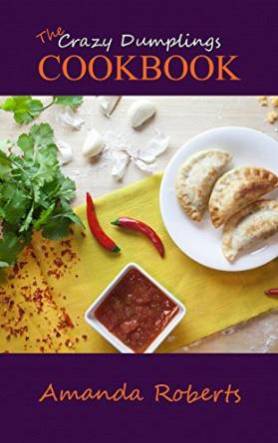
She has a cookbook available that you just may find interesting…

Crazy Dumplings

download


First of all – as the typical question goes – what brought you to China?

It was a dream of mine for a long time to teach in China. I graduated with my master’s degree in English in 2009, right about the time as the economic crash, so full-time teaching jobs in the U.S. just weren’t available. By the time my husband and I started looking for jobs nationwide, we decided “if we’re gonna move, let’s move big!” So we packed up and moved to China.


Have you found the expat scene to be welcoming and positive? What challenges have you overcome?

China is a big place, so the expat communities can vary widely. In the first town we lived in, we were only two of four expats in a little rural town in Hunan Province, so that was hard. We really got along with the others, but it was still isolating. Then we moved to Changsha. While Changsha had a bigger scene, there wasn’t much to do in the town, so it was very boring and hard to find people with similar interests. Moving to Shenzhen was a huge change. There are so many expats here for such a (relatively) small town. They are also very well connected via social media, so they’re easier to find. We have made many great friends here and are members of several hobby groups, so life here is pretty good.


What are your top complaints about living abroad? (This one optional)

I miss having a clothes drier! I have a cat and a dog and their fur gets everywhere so my clothes are constantly covered in pet fur. Shenzhen is also very damp, so sometimes it can take days for clothes to dry.

I also miss having a vehicle. Not a car, but at least a motorbike or something. We had motorbikes in Hunan, but they are banned here in Shenzhen. It can make going places very difficult and makes me feel almost debilitated at times.


What’s your favorite thing about living in China?

I love my job. It’s nice to be working in the writing and editing field and I also have a lot of freedom to work on my own writing projects.

I also just like living abroad. I like the people, the atmosphere, the ability to travel and save money. I don’t know if we will stay in China forever, but I don’t think we will ever move back to the U.S.


How did you decide to become a writer?

I’ve always been a writer. I was on the school newspaper in elementary school and was a reporter and anchor for a weekly televised teen news program when I was in high school. I published quite a few things in college. I’ve taught writing at American universities since 2007. Writing is who I am. But I had never pursued “writing” as a career until after I moved to China – I had always considered myself a writing teacher. Now, I identify as a writer and editor. I think living here has given me much more of a voice, something important say. I also have the time and financial independence to write, which are the two big hindrances for most aspiring writers.


What’s the story on the creation of your cookbook?

The first place we lived in China was a county town in the middle of nowhere. We were two hours by bus from the nearest town with a McDonalds or Walmart and four hours away from the nearest city. So we used to take lots of long bus rides in the countryside. But I can’t read in a moving vehicle – I get nauseous. So I spent those trips just thinking. I came up with lots of book ideas while on those trips. One of which was Crazy Dumplings. I had just spent the week in the countryside with my goddaughter’s family for Chinese New Year surrounded with so much good Chinese food and, of course, lots of dumplings! I had the itch to write a cookbook for a long time, but I thought a Chinese cookbook or an expat cookbook would be too much work for my first foray, so the idea of focusing just on dumplings came to mind. I had a dozen recipes in mind by the end of the day.


How have you found online-promotional platforms such as Kickstarter to be helpful? Continue reading

An interview with Jocelyn Wong

Today I have an interview with Hong Kong-based food blogger and journalist. Jocelyn Wong.

She writes at the aptly named http://jocelynwrites.com, do check it out for some delicious posts…


IMG-20150602-WA0001


When did you first decide that being a writer was for you?

I pretty much got the bug after winning my first writing competition that I entered for fun because I liked the topic. It was something along the lines of Hair Disasters. I shared my experience of getting a bad haircut which ended in tears and getting the back of my head shaved. After that I entered an SCMP writing competition and won. The next step that really solidified my passion for writing was getting a two-week internship with Young Post which got extended to the end of the summer. Afterwards, I got hired as a freelancer for them and everything else is history.


Do you find being a journalist to be rewarding work?

Absolutely. Working for Young Post is one of the most inspiring experiences for me. Getting to work so closely with the talented youth in Hong Kong and being a part of their lives — helping them improve their English bit by bit, day by day.


Are you inspired by any writers, Hong Kong-based or otherwise?

There are some pretty big names out there that I’m inspired by but for now my aspirations lie in tangent with those of Jason Ng – the SCMP columnist who wrote the best-selling Hong Kong State of Mind and Pete Spurrier – who owns Blacksmith Books. Someday I want to have my own publishing house and discover new writing talent.

(In the interest of full disclosure, Ray Hecht would like to note that his forthcoming novel South China Morning Blues will be published by Blacksmith Books)


Being that you have a food-based blog, are you interested in cooking as well as being a foodie?

I have always been interested in baking — so it’s more likely that I’ll end up as a pastry chef rather than a cook. I love just working up a storm in the kitchen with the blender, mixer and flour. Copious amounts of flour and brown sugar decorate the kitchen floor by the time I’m done baking some treat or another; also, I just love the smell that fills up my apartment after I’m done baking. The smell of molten chocolate is absolutely heavenly.

That being said, I do love getting my hands dirty in the kitchen. Instead of making ramen noodles in college, I remember spending the bulk of my free time googling recipes of healthy food, because I couldn’t bear to gain that “freshmen fifteen” if I could help it.

Now that I’m back in Hong Kong, I’ve really enjoyed having a full kitchen with proper counter space and international ingredients and spices to work with. Back in my college days, I’d have to do prep in my living room because my kitchen was so small. I think I whip up some pretty good scallop medallions, and I devised my own perfect pesto sauce in my college days.


What kind of food did you grow up eating?

I was lucky enough to grow up in a multicultural environment and my parents are foodies as well. Even at home, my mother would try to cook as many different types of cuisine as possible, even if most of it was Chinese. China has a diverse food culture and I feel like I really got to know it as I grew up (since at one point, my father couldn’t bear the thought of not having at least three Chinese meals a week. This is how my mother got creative – by having those restraints).

In terms of eating out, we were regulars at the now defunct Japanese restaurant in the old Ritz Carlton in Central, Tenjaku in Lantern St, as well as Brasserie on the Eighth, Ming Yuen in Parkview and the McDonalds by Repulse Bay just to name a few. I still maintain that Hong Kong has the best McD’s in the world.

When I went to university, that’s when I got serious about cooking. I was also really conscious about staying healthy. That being said, I had my fair share of 2 a.m. pizzas and Timmy’s (surely you’ve heard of our famous Canadian Tim Horton’s doughnuts), but generally I’d say I kept a healthy diet. Within months of settling into college, I really quickly learned how to make healthy and delicious foods like grilled ahi tuna with green and white peppercorns, turkey burgers and bake gluten free cookies (that don’t taste like cardboard).


Do you enjoy the Hong Kong restaurant scene because of authentic Cantonese cuisine, or because of the diverse international range of tastes in the city?

Continue reading

Interview with Travis Lee

Today’s interview is with up-and-coming author Travis Lee, who writes about expats and China. Topics to be discussed will include the nature of living abroad as well as meditations upon the act of writing.


More from Travis Lee can be found at these links:

http://www.travis-lee.org

https://www.facebook.com/travislee19

https://www.smashwords.com/profile/view/travislee


44


Firstly, can you tell us about how you came to China?

My how I came to China story is nowhere near as interesting as yours, I’m afraid. I was a French major in college, and as graduation loomed like a fall into a deep pit, I applied to teach English at a French high school, in the assistant d’anglais program. I wasn’t selected.

To this day, I’m not sure why. I had a high GPA, good recommendations, good French and previous in-country experience, so I had all the right checks in the right boxes. It could have been the sheer number of applicants; the professors who assured me that everyone gets in had done the program in the seventies and eighties.

Whatever the reason, that changed everything. Had I gone to France, I wouldn’t have my wife, my daughter, the books I’ve written. We wouldn’t be doing this interview. Right now, I’d be finishing my PhD, praying for tenure.

So instead of preparing for a summer in France, I moved back home and worked on plan B: volunteering in France. While I looked for positions, I received an email through my university’s career services distro: a Tennessee alumnus who worked in Wuhan was looking for English teachers. I read through the email. Free apartment, travel money, chance to see a dynamic country in a real Chinese city. Plus, a Western toilet. Don’t you love how he used Western toilet as a selling point?

I did all the paperwork, and on August 26, 2008 I touched down at Tianhe Airport in Wuhan, China.


What your life was like here?

Like most experiences, it looks better in hindsight. The earlier times are not better, just earlier, but it can hard to acknowledge that.

So, my life, in a word? Free. I felt like I had a lot of opportunity. I had enough time to pursue any hobby I wanted. I studied a lot of Mandarin, kept up with my French, taught myself some Calculus, and I wrote. This was the time in my life when I began to take writing very seriously. I “turned pro”, as Steven Pressfield would put it.

Although I was poor and twenty pounds overweight, I look back on my two and a half years fondly. My life changed completely. My first year and a half or so wasn’t easy — a lot of ESL teacher politics, personal issues — but once I moved past that, things got better. One thing that helped was Wuhan University. There I had only one co-worker, a normal guy, and I never saw him anyways. I taught great students in the afternoons, freeing up my mornings to study and write. I made friends with some great classmates. Wuhan University has a sizable international student population; a very cosmopolitan atmosphere.

I read a lot of expat blogs too. There was a certain buzz in the air. I found some great writers, who unknowingly helped me a lot, just because I read what they wrote.


What do you miss about China? What do you not miss at all?

I miss the free time I had. I miss how even the simple act of going to the store and buying a soda could turn into a story. And travel. I saw some nice places; wish I’d seen more.

What do I not miss? Respiratory infections, one. Internet censorship, the typical stuff that can make life in China hard.

At Wuhan University we were letting my brother-in-law stay over sometimes. The guy who worked the front desk noticed him coming in and out, and he asked us for 200 RMB a month. I said no, and the Foreign Affairs Officer came over and told me to either pay more or my brother-in-law couldn’t spend the night. Their excuse was the electric bill.


Can you describe your writing process?

I’m very much a cover-the-canvas guy. I can’t do outlines; I’ve tried it before, and I ended up either deviating from the outline or not writing the actual story. Outlines work well for class, not so much for writing. I prefer the spontaneity; I can’t write if I know exactly what’s going to happen. It kills all the fun.

So I write and write and write until I have something, and after some time has passed, I revise it. I go through about three drafts. I used to retype my drafts, I stopped doing that. I don’t have the time. I work and right now go to school full-time; I write new stuff in the mornings, revise at night unless I have a big test coming up.

I listen to Final Fantasy music when I write, either Final Fantasy Radio or my own playlist. It helps lock me in my own little world.


Which books and authors have inspired you?

The Road, by Cormac McCarthy. Beautiful writing, very emotional. Child of God is good too, mainly for the prose. There’s a line in Child of God where Cormac McCarthy describes a woman’s widening pupils as a “breaking brimstone galaxy”.

The Alchemist, by Paulo Coehlo. This book captures what it’s like to chase your dream against many obstacles.

The War of Art, by Steven Pressfield. It has the best writing advice I’ve ever seen. But it’s not limited there; you can apply it to any calling.


What are you working on now?

The Pale Ancient & the House of Mirrors, about a missing foreign journalist and his friends’ efforts to find him. I want to publish it through a China-based publisher.

Richard, an amateur foreign journalist, goes missing while investigating a blood cult in Hubei province. Four people are affected: Mary, a newbie China writer who dreams of cementing her name alongside the expat greats; Ying Li, a small-town police sergeant; Chris, a freelance translator whose own experience with the cult has left him scarred; and Daniel, an expat media mogul with drug problems and a failing marriage.


Why did you choose to write this particular story? Continue reading

Interview: Darcy Shillingford

Interview with the amazingly well-traveled Darcy Shillingford, Canadian novelist and blogger for the travel site travelingspaceopera.com


IMG_4026

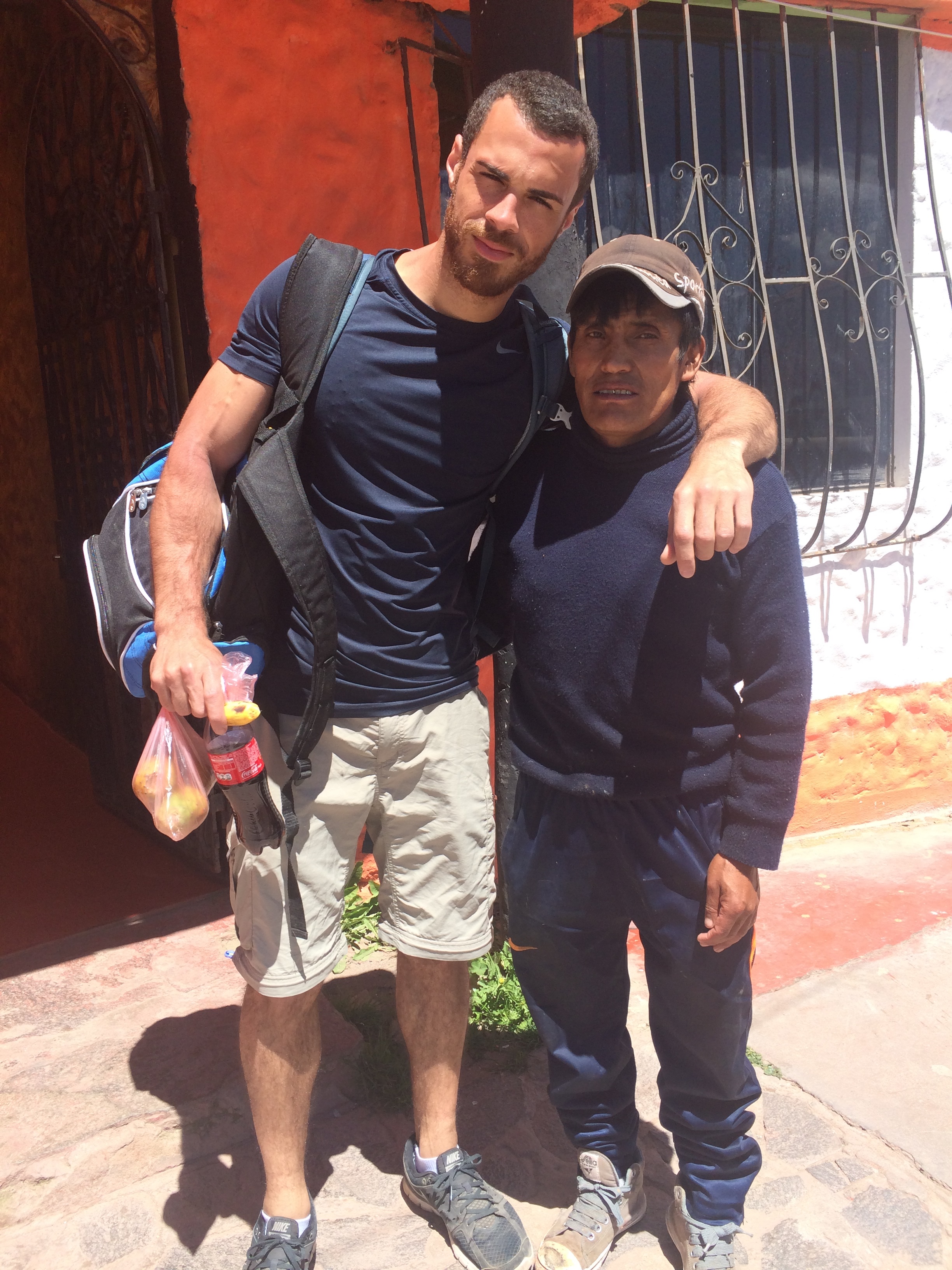
Pic info: “just as I was about to hop on a bus, leaving Cabanaconde to head to Arequipa, then eventually Cuzco. Caesar, who I’m pictured with, was our host in Cabanaconde.”


What is your writing process like?

It varies depending on the kind of writing I’m doing. With my travel blog posts, I try to put myself in a relaxed, informal state of mind. I give myself freedom to let my stream of consciousness flow, while trying to maintain some kind of structure and thematic consistency. Imagery is important to me, and despite the fact that I can throw in as many pictures as I want, my goal is for my writing to be able to evoke colourful detail with or without them. I want the reader to feel like they’re walking alongside with me.

As far as fiction goes, I can’t force creativity. I can sit there looking at a blank page or computer screen for a long time and nothing comes to mind. Other times, I’ve been lying in bed at two in the morning and suddenly think of an idea concept that I have to write down and develop a little bit before I can go to sleep. When I’m on a role, though, I try to let it snowball and see how far I can take it. The only fiction I’ve put a lot of effort into is in the sci-fi genre, and I try to write what I would want to read if I were to pick it up myself.


How do you compare travel writing with fiction writing?

For me, fiction writing has been far more time consuming. In addition to creating a plot, out-of-this-world (literally) settings, characters, and so forth, there is a great deal of research involved due to the genre choice. I’m no scientist, but I do take advantage of the relatively unlimited academic resources at my disposal and have put in countless hours researching elements of astrophysics, the gathering and employment of military intelligence, planetary and solar physics, religious and political history at a global level, various elements of the social sciences, philosophy, and so forth.


What gives you inspiration for fiction?

It depends on what aspect. I get inspiration for characters from my daily interactions with all kinds of people. I work at a restaurant and meet dozens of people a day. Also, the people I’ve met traveling are so varied and interesting that I can’t help but be inspired by them. When it comes to plot, I’m inspired by my education, particularly in the realm of history and politics. I like grand, I like big, I like epic, but I also like obscure. Random bits of military or colonial history that were glossed over in school, or missed altogether, fascinate me.


What are your favorite books?

Use of Weapons and Feersum Enjinn, both by the late Scottish author Iain M. Banks are certainly in my top five. I also appreciate classic or golden-era sci-fi, but I also think some of the classics haven’t aged well, particularly in regards to their social commentary. I also grew up loving the Harry Potter series. Stephen King is awesome as well; very psychologically immersive and vivid.


Why did you choose to spend your time in 2013 traveling in Southeast Asia?

I simply had to. I was at a point in my life where I’d recently graduated from university and didn’t quite know what I wanted to do with my life. My girlfriend and I had done some all-inclusives, but had also discussed doing some “real” travel. What began as an idea for a month or two in South America turned into half a year in Southeast Asia. When I look at a picture of the two of us at a wedding a couple days before we left for this trip, I get jealous of that guy. He has the best adventure of life just on the horizon.


Is it difficult to write about your experiences going back two years? Did you keep journals at the time or anything like that to help you to write about it now?

I did keep journals, but I rarely need to refer to them. I usually only look at them to remember the name of a person I met along the way. Having taken a couple thousand pictures makes it fairly easy to track everything we did, but every so often, a detail or nuance will creep into my memory that I hadn’t thought of since it happened.


You most recently traveled in South America, correct? What cultural differences have you come across that contrast with the Southeast Asian experience?

I actually wrapped up the Peru trip in mid-April. We were there for 18 days. The first thing I took into account were the similarities with Asia: the scorching heat, the abundance of cheap stall food, the hokey tourist areas where local merchants spout silly lines to travelers in order to charm them into overpaying for whatever product or service. All great stuff, in my opinion. The thing with Southeast Asia is that I visited seven countries so there are dozens of differences even between those countries. I found, though, that the food in Peru is a lot heavier and starchier. Also, the weather was far more erratic, perhaps because we spent much of the journey either in the Andes or the Amazon Jungle.


Which country or countries (Southeast Asian and/or South American) gives you the most inspiration?

Vietnam may have been the most inspiring, but as I’ve written in the past, I have a heavy bias. My girlfriend, Teresa, was born in Canada but her parents are from Vietnam and she speaks, reads, and writes it fluently. This had a vast impact on our experience there when it came to interacting with the locals and we really got to know people there more than anywhere else we’ve ever traveled. Also, Vietnam has a great deal of variety (accents, landscapes, cuisine) and its geographical makeup made it really easy to travel in a fairly straight line without missing too much along the way.


Do you prefer the bustle of developing cities or the splendor of natural, untouched-by-man places? Continue reading