SZ Daily: Eat, Pray, Love: local expat authors share their books

http://szdaily.sznews.com/html/2015-11/19/content_3392210.htm

res03_attpic_brief


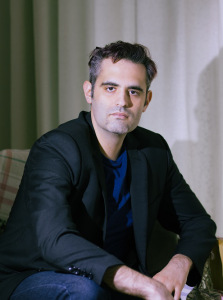
THREE local expat authors recently shared their books with readers in Shenzhen at an event sponsored by the Shenzhen Women’s International Club (SWIC) and the SWIC Book Club. Amanda Roberts, author of “Crazy Dumplings Cookbook,” Lom Harshni Chauhan, author of “Visa, Stickers and Other Matters of the Soul,” and Ray Hecht, author of “South China Morning Blues,” shared their experiences in China and the stories behind their books.

All of the books are available on Amazon.


Eat — ‘The Crazy Dumplings Cookbook’

Roberts moved to China from the United States in 2010 and ended up in northern rural Hunan. “Life there was so much different than life here in Shenzhen,” she explained. “I had to completely relearn how to cook.” Her book “Crazy Dumplings” is a food fusion cookbook, one that uses a traditional Chinese dumpling wrapper on the outside, but the filling recipes mimic cuisines from all over the world.

“You can make any food you love and miss by using local ingredients, you just have to be flexible and adaptable and not afraid of trying new things,” Roberts said.

About the book

Dumplings. Wontons. Jiaozi. This remarkably simple food is found throughout Asia and in Chinese restaurants and kitchens around the world, but have you ever filled a dumpling wrapper with chicken? Lobster? North American Plains Bison? Hardly anyone has! “The Crazy Dumplings Cookbook” features over 100 recipes with some of the craziest and most delicious dumpling filling recipes you will ever see. From Chicken Taquito Dumplings to Timey-Wimey Dumplings to a dumpling for your dog, “Crazy Dumplings” will show you all the crazy things you can stuff into a dumpling wrapper for an easy meal or snack.


Pray — ‘Visa, Stickers and Other Matters of the Soul’

Chauhan moved to China from northern India in 2002. In 2005, her daughter was born, and Chauhan was faced with the question all parents abroad face — how do you parent your child with a connection to their homeland and encourage them to embrace their adoptive country?

Chauhan explained that she grew up in a proud Rajput family and often remembered her life growing up in the Himalayas. However, her daughter does not have the luxury of knowing her place in the world. “I wondered, how much reinforcement of her cultural identity is adequate for a child who is growing up far from any of those concepts?” Chauhan explained.

Chauhan focuses a lot on the spiritual rearing of her daughter, something that is not easy to do in a place with such a small Hindu population. All parents of “third culture kids” can relate to Chauhan’s book.

About the book

One of the major concerns of Indian parents is how best to pass on to their children the time-honored traditions of Indian culture and spirituality, even as they try to raise global citizens.

“Visa, Stickers and Other Matters of the Soul” is a delightful and endearing account of a young mother’s experiments with raising her daughter in the Indian spiritual way while living in atheist China. As she begins to educate her daughter, she is surprised by her daughter’s sense of understanding and realizes that parenting is her biggest life lesson, with her daughter as her teacher.


Love – ‘South China Morning Blues’

Continue reading

More Updates: HK Literary Fest, SZ, GZ, Instagram…

Been busy lately.

Firstly, thanks to everyone who came to the excellent panel at the Hong Kong International Literary Festival! I was honored to be a part of the event, and add to the conversation on ‘Cross-Cultural Love’.

Anyway, I dare say I think it went well. The audience seemed to enjoy hearing what we had to say, and I actually think it was a success. It was an interesting talk, most of all due to all those other excellent writers to meet.

As well as the moderator David Nunan, it was great to meet the very intelligent Marshall Moore. Nice to see Shannon Young and Susan Blumberg-Kason once again.

The event was at the intriguing building known as the Hong Kong Museum of Medical Sciences, and I shall share via Shannon’s Instagram account here:


While at it, here’s Susan’s Instagram. Feel free to like and follow!

https://www.instagram.com/p/96aiyLlGMy


https://www.instagram.com/p/98jdIPFGIV


There I am. And now, back to my new pic-sharing blogging strategy of just sharing previous uploads from the app. Readers rest assured you are enjoying the best of these…


Continue reading

Interview with Ray Hecht on His New Novel “South China Morning Blues”

(Originally posted on: http://www.speakingofchina.com/bookreviews/interview-with-ray-hecht-on-his-new-novel-south-china-morning-blues/)


People have called China endlessly fascinating. But you could say the same about the expat scene here. In the seven-plus years that I’ve lived in this country, I’ve come across some real characters here – people I could have sworn were straight out of a novel.

I’m reminded of many of them after reading Ray Hecht’s new book South China Morning Blues, which features a motley cast of young expats and Chinese locals living across Shenzhen, Guangzhou and Hong Kong, including:

…Marco, a crooked businessman with a penchant for call girls; Danny, a culture-shocked young traveler; Sheila, a local club girl caught up in family politics; Amber, a drug-fueled aspiring model; Terry, an alcoholic journalist; and Ting Ting, a lovable artist with a chip on her shoulder.


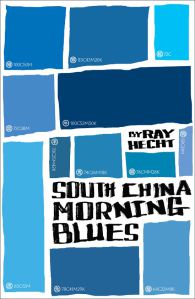
SouthChinaMorningBlues_800

Through 12 distinct viewpoints, South China Morning Blues takes readers on a tour of the dark underside of the expat scene in China, culminating in a dramatic life-and-death situation that brings everyone together. It’s a fresh take on life in 21st century China and definitely worth a read.

I’m happy to once again feature Ray Hecht on the blog and introduce South China Morning Blues to you through this interview.


wpid-20151014_092815 SQ

Here’s Ray’s bio from his website:

Long story short, raised in America from the Midwest to the West Coast on a starchy diet of movies and comics and science fiction paperbacks. There’s a Mid-East connection in there too. I like to write fiction about such states as California and Ohio, and such provinces as Guangdong. Japan being an interesting topic as well. Lived in Shenzhen, China since 2008 (has it really been that long?), a lovely Special Economic Zone Hong Kong-bordering chaotic city that has given me so much. I occasionally partake of some freelance journalism for various local publications.

You can learn more about Ray Hecht and South China Morning Blues at his websiteand buy a copy at Amazon.com, where your purchase helps support this blog.

—–


What inspired you to write this novel?

Good question to start out with. A few things come to mind: After living in China in those earlier years, I found the country to be absolutely fascinating, and I wanted to share the experience of the land by telling stories.

Also, I’d long been a fan of Irvine Welsh’s Trainspotting and had a lot of respect for his system of multiple narrators that all have distinctive versions of experiences,and being more interlocking short stories than one big narrative. I think one of the philosophies that fiction can teach us is the subjective nature of reality. The way some people, say, move to Guangzhou and complain how they hate it while other people see it totally differently and love it.

Another inspiration, I must say at the risk of sounding pretentious, was James Joyce’s Ulysses. Not that I’m smart enough to write something like that — or even smart enough to truly understand the famously-dense book. But the way the novel utilized mythological metaphors, as per the Odyssey resonating in early 20th Century Dublin. I wanted to try something like that. The ancient mythologies of the world will forever be able to inspire modern stories.

Well, for me, characters are most important. A character needs unique personality traits, archetypes that make them stand out, something interesting about their histories and personas. After that’s established, a plot begins to form… And so the idea evolved to use the Chinese Zodiac to structure the characters of a novel…


Your novel is told through the perspective of 12 main characters as they live in or visit three major cities in South China — Shenzhen, Guangzhou and Hong Kong. How did you decide to structure your novel like this?

As said, I had the idea to base characters off the Chinese Zodiac in order to tell stories about modern China. Seemed to make sense at the time.

I’d already ended up living in Shenzhen, which is a major city most people around the world have never heard of. The city is next to Hong Kong, and I spend a lot of time there. For the sake of literary research (also because I wanted to research a historical novel about Canton circa revolutionary 1911) I moved to Guangzhou for an off year in 2011. I find all these cities fascinating in their own unique ways. I mean, Beijing and Shanghai are great, but I ended up in the southern Pearl River Delta region and I am glad I did. No place on Earth has more stories.

It seemed obvious that my novel about the soul of present China would have to incorporate those three cities.


Like your memoir, South China Morning Blues features quite a bit of sex and recreational drug use. How much did your personal experiences influence your writing in this book?

Ah, an embarrassing question. Hmm, how can I put this…?

First of all, my biographical writings may have some sex but I don’t think there’s much to brag about. Outside of a handful of tell-all dramatic episodes, by far it mostly concerned online dating and several serious relationships. Not too crazy, right?

The sex scenes in SCMB are, shall we say, meant to be more literary. At least more literary in the sense of literature I like to read. Being more extreme than real life in most cases. Many of those scenes were inspired by way of hearsay of other people I know, my own imagination, and a bit of research online. Not really based off my own personal experiences very much.

(Hey, I did say that Trainspotting was an inspiration.)

As for recreational drugs, I experimented a bit in my youth — and by youth I mean my mid-to-late twenties, I was very boring as a teen — and I think I was always responsible about it. To be honest, I’m often shocked when I observe how extreme drugs and alcohol are in the China party scene. It is something that needs to be depicted, whether glamorized or not. No outright spoilers here, but if you read to the end there are consequences for the characters who abuse themselves and I think it’s important to showcase that side.

All in all though, I want to show all sides of real life. Using illegal substances, having irresponsible sex, pushing the boundaries, and making mistakes; these are all things that human beings actually do. And they are interesting things. I believe they are things worth writing about. Worth portraying, without too much judgment. More or less, presented as is. That’s writing.


Tell us about one of your favorite characters from the novel and why you like him or her. Continue reading

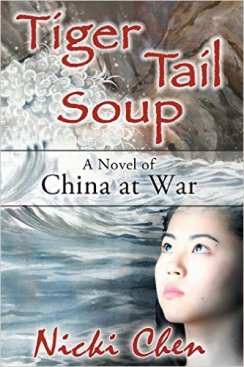
Book Review: Tiger Tail Soup

51AVOPZ5vRL._SX331_BO1,204,203,200_

Tiger Tail Soup by Nicki Chen is a historical novel of the Pacific War, from the point of view of a Chinese woman. Author Nicki Chen is an American who gained a Chinese surname by way of marriage, and any reader will fully sense her fascination with China. She has done the proper research for such a novel. She takes the voice of An Lee, a strong-willed woman who gets left behind to raise children and live with her mother-in-law when her husband goes off to war.

The novel opens in 1946, then jumps back to 1938 and slowly goes through the war years until the epilogue rounds out back to the original year. Full of fanciful language and observations on gender roles in traditional societies – from the Qing Dynasty to the Republic era – and conflicts start off with simple things like getting a perm to look modern and soon grow to horrifying proportions.

Basically, the narrative takes place within the mind of the introspective narrator. Early on, darkness looms from afar. She carries a son in the Year of the Tiger, and is given fortunes of greatness. Then her engineer husband Yu-ming is conscripted as an officer, and most of the novel is about what happens to the war-weary women who are left behind.

At times, the narrator gets too lost in her own thoughts, endlessly reflecting and repeating herself as she dwells on her family and lot in life. The flow suffers for it, but that is the nature of this kind of story.

When the bombs begin to drop, the tone changes dramatically. The violence becomes very real, and that is of course the nature of war.

The chapters of the book are divided into seasons and year, and tales of pregnancy and childbirths and contrasted against the distant war. Themes of life and death. A son is born, a father seldom seen. There are attempts to let life go on, as schools remain open. An Lee’s husband’s letters are very important, describing being in the midst of the war. Yet overall it’s still a tale of women. And the emotions always outweigh any action. Time moves on and children age, with snippets of tragedy throughout. Some of the most powerful imagery in the novel concerns simply going to the beach and seeing Japanese battleships. And the suffering grows.

Tiger Tail Soup is not an objective overview of the war, but simply one deep character’s perspective. The hatred against the Japanese even seems one-sided, although in this context it is certainly well-deserved. The reader must remember that it is first-person narrated novel, not a textbook.

The historical aspect stays interesting as the book goes on, with references that range from the Gone With the Wind film to the attack on Pearl Harbor in 1941. Halfway through the plot does thicken, and An Lee joins a resistance league which engages in street theater performances. There are arguments, politics, more conflict. When she does finally meet her husband again, and one son meets for the first time, war has changed and hardened the man. Hardened everyone.

Bringing another child into this war-torn world proves to be the greatest tragedy of all in the end. When the worst most possible violence happens near the end of the novel, it is very jarring.

The theme above all is survival, and is best summed up this quote: “It was my fate to live in a time of war, and I bloody well was going to be one of the survivors.”

Tiger Tail Soup comes recommended for readers interested in this period of China, and for anyone who might wish to learn about the human cost of war. Available on Amazon.

South China Morning Blues: Promotional Update(s)

Hello readers and prospective readers, time for an update.

(Because it went so well in my last Chinglish post, I have decided to just link to my Instagram instead of reuploading pictures. Feel free to heart!)

I have been through a lot since my book was finally published for reals. It’s been quite the busy time, organizing event after event, hoping that people will be interested in said events, and generally promoting myself. Self-promotion often being as shameless as possible.

The first weekend after the book I had a launch party and signing here in Shenzhen, and the Book Exchange group in which expats meet up to exchange hard-to-find English language books.

I think the flyer turned out very well, if I do say so myself 🙂

1

I had a reading, and even sold a few.


Let me state, that my book is officially published in Hong Kong and future Western outlets to come. You know all the Hong Kong bookstores that carry it.

The mainland, however, is a different story. Legit publishers tend not to deal with undeveloped countries like so. Therefore, if I want distribution in cities like Shenzhen and Guangzhou, I need to do it myself. Treat it as an import, if your wondering about censors, and it is doable. Obviously, this is not an English-speaking country — unlike Hong Kong — but I think it’s worth doing.

Hence, I arranged a meeting with the bosses at Old Heaven Books in the hip OCT neighborhood of Shenzhen and they bought a good number of copies. My first for sale in China. More to come.

Felt good to see it on a bookshelf.


Then came the big time.

This very week begins the Hong Kong International Literary Festival, and on Sunday @ 3:30 yours truly will be in a panel on the topic of cross-cultural love with several other great writers…


http://www.festival.org.hk/program/cross-cultural-love/

Over the last decade, there has been an explosion of expat memoirs set in China, however many of these fail to depict romantic relationships.

But when foreigners arrive in China and Hong Kong, these amorous connections are often a central part of setting down new roots– and they are becoming more and more common. Susan Blumberg-Kason, Ray HechtShannon Young and Marshall Moore address writing about cross-cultural relationships from all angles.


Last Friday I was invited to an opening party for writers affiliated with the festival, and had an excellent time! Although a bit intimidating to be around such well-regarded authors, I made the best of it and hopefully left a good impression. I met Shannon Young in person, author of Year of the Fire Dragons. Susan Blumberg-Kason, of Good Chinese Wife fame, wasn’t in town yet but I look forward to seeing her at the panel next week. Please check out the link above and I hope you can make it.

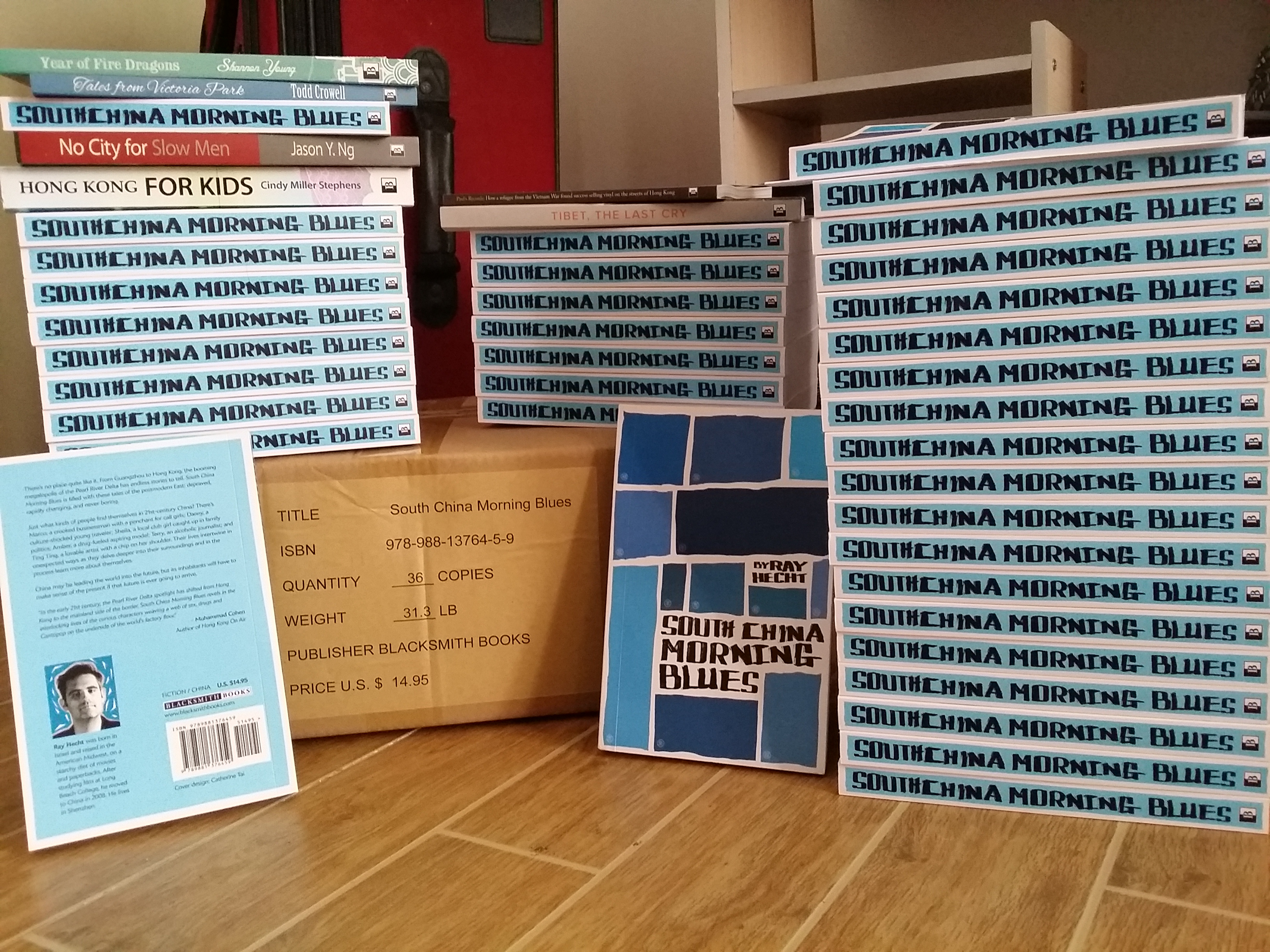
And it was great to see my humble book stacked up against these great works in such an official capacity:

Continue reading

Interview with Ray Hecht on writing and his new book, “South China Morning Blues”

http://www.travis-lee.org/2015/10/30/interview-with-ray-hecht-on-writing-and-his-new-book-south-china-morning-blues/

12072550_10153370910948411_1039026707900739524_n


Interview with Ray Hecht on writing and his new book, “South China Morning Blues”

For author Ray Hecht, the answer is a psychedelic experience at Burning Man.

Author of Loser Parade411, The Ghost of the Lotus Mountain Brothel (which I reviewed here), and Pearl River Drama, his most recent book is South China Morning Blues. available now at the publisher’s website and for pre-order on Amazon.

I asked Ray his thoughts on writing, his inspiration for South China Morning Blues and much more:


Can you recall a single instance that inspired you to be a writer or is it something that you’ve always had an attraction to?

I can’t recall a specific incident, it’s something that developed slowly. I originally wanted to be an artist before I wanted to be a writer. I felt like writing would be a good thing superfluously in my teens, and tried some stories. It was in college – late years in college in my twenties – I decided to study film screenwriting. I remember at 23 for some reason I vowed to write a novel a year. I didn’t follow up on that particular pace, but I have been writing seriously ever since.


Do you work on a specific schedule, where you write every day?

I mainly like to write in the middle of the night, but life doesn’t always let me. Usually I do first drafts after midnight. Then, next day at noon to the afternoon I might slowly do rewrites. It would probably be a good idea to get a consistent schedule, wouldn’t it!


Do you have a preferred writing program? (Word, text editor, etc.?)

Microsoft Word of course. I’ve even been studying some of the more intricate ways to edit and use the software to the best of my ability. Got a lot of typing shortcuts memorized. If it’s not too obvious to say, isn’t Word basically a must in this day and age?


You’ve mentioned that your love for ‘Trainspotting’ and ‘Snow Crash’. Could you tell us more about why you like these novels?

I love the danger and the outlaw attitude and the intelligence and the punk rock aesthetics and just how damn sexy it is. The novels are quite different, although they are both written in present-tense first-person narration. They are also both novels that exploded their respective writers on the scene.

‘Trainspotting’ by Irvine Welsh is magnificent literary achievement. The phonetic dialectic in writing, the grittiness of the drug culture, the power of each separate narrator’s unique voice. And yet, it is a free-flowing art work that explores all over without sticking to the rigidity of a narrow plot. Plus, it can even be darkly funny.

‘Snow Crash’ by Neal Stephenson is incredibly smart, a complex cyberpunk postmodern science fiction epic, and yet it doesn’t take itself too seriously and is often hilarious. I wish I was smart enough to write science fiction, but I’m not. I do highly admire Stephenson’s ability to be brilliant and at the same time be that cool.


What do your friends and family back in America think of you being a writer? Are they supportive? Do you ever find that some people just don’t understand what being a writer actually is?

I’ve been very surprised how supportive most of my old friends have been. Although, due to the nature of my writing topics I tend to keep family at arm’s length. Hopefully though, I impress everyone back home and most are proud of me.

However, I tend to think most people don’t understand what being a writer is at all. Rather, they imagine that being a writer is this thing to be. Especially people who want to be writers. Nobody seems to imagine what it is to write. Writing is a thing to do. Lots of people want to be writers; most people do not at all want to do any of the writing. That’s the part people always get so particularly wrong.


What was the impetus for writing South China Morning Blues?

To put it bluntly, I feel compelled to spend endless lonely hours writing. I needed subject matter to write about. I ended up in China, studied a bit, observed here and there, and the stories had to be told. That’s the short version.


While reading your book I saw a lot of familiar people and situations. Was it much the same for you, in that you were drawing from personal experience?

Some of it was personal. Much of it was hearsay. A whole lot never happened to anyone I know (that I know of) but things I only learned of online.

I’ll go ahead and reveal this right now: The drug stuff was based on personal experience. The sex stuff was not.


Were there any big scenes / characters cut at the editing stage?

Not too much. Perhaps there should have been. I rewrote and rewrote and polished, and perhaps this is bad writing advice, but I don’t like to cut out too much.


The presence of Chinese zodiacs. Did you know about that when you started or did it happen naturally?

I knew the basics of the Chinese animals, even when in America – though never a believer – I knew I was dog year and so on. When I set out to write this novel, I further researched. The acknowledgments gives a shout out to the book I mainly used.

Can’t say it happened naturally; it was a conscious choice from the beginning to structure the characters that way in the foundation and then see which way their stories would go…


In the book we see people struggle with identity and ambition. Danny says, “Back home, my old college classmates are surpassing me”, a feeling I can relate to. Do you think the ambition that many foreigners in China have — opening the business, becoming the great writer, etc. — is a way for them to keep up with their contemporaries?

Sure. But not only for expats, many people often feel anxious that the people from their past are surpassing them. With expats in particular, the contrast between one’s own weird life and those left in the home country can be stark. It’s a positive thing to healthily compete and start a business or forge a craft. At least expats in China tend to be interesting people (even if weird) and that can make for good goals. Being motivated by old cohorts surpassing, whatever works.


Going with the previous question, do you think there is something about China that attracts these kinds of people?

Good question. There is something about the expat phenomenon that attracts odd people. Odd in good ways and bad. Adventurous, or the dreaded loser stereotype, I don’t know. But there’s something there.

And why China of all places? I suppose it’s a big place, and it’s blowing up right now in world history. I’ve always liked that the economic growth puts it in this sort of limbo between undeveloped and developed, full of cheap outdoor restaurants and expensive shopping malls, and somehow that can suit certain people.


To close it out, do you have any advice for new writers who are reading this?

Going back to perceptions of the writer versus writing, I can only say to write. You’d think it would be obvious. Don’t fantasize about being this mythical creature called the writer. Be a person who writes. Then, when the writing gets good, whatever your niche may be, go out there and network and best of luck to you in getting published.

That is all.


Big thanks to Ray Hecht for doing this interview. To learn more about Ray, visit his website. You can also follow him on Facebook and Twitter.

South China Morning Blues is available now on the Blacksmith Books website and for pre-order on Amazon.
Continue reading

Instagram – Chinglish

In order to make posting easier, I’m simply going to share some Chinglish and random China pics from my Instagram account. Hey, now that I think about it, that’s not a bad idea.

I’m not that big on Instagram, but feel free to add me to see what pictures I feel like sharing next…


Review: South China Morning Blues

South Africa Part II: Kruger Park and Cape Town

In the last installment, I arrive in South Africa which is the home nation of my lovely girlfriend. I explore Joburg, meet her dad, and experience the chill South African lifestyle of braais.

Now, the real part of the trip was to begin.

All the while, I should mention, Trevor Noah loomed in the background. Yes, by coincidence it was the same week that Trevor started at the Daily Show! I’ve always been a big fan of Jon Stewart and I was really looking forward to it. It was a big deal, his face was everywhere. South Africa seems to be pretty proud of their native son taking over my countries best political comedy show. His face was on every newspaper. Especially after the now legendary Trump-as-African-dictator bit.

(Although the place we mostly stayed at had cable, soon I would be without it, without even Wi-Fi on my laptop to catch up with TV. I’d eventually catch up, I always do, but to tell the truth being off the grid was hard on me. More on that in a moment. )

Also, people paid attention to the Rugby World Cup. Not only am I an American, I am an American who doesn’t follow sports. I didn’t really care. People seem to care a lot still. Something or other happened, Japan, Samoa, Wales, New Zealand. I don’t know.

Okay, on with the story.


Days Five to Nine

Day Five was a busy day. In the morning we went to downtown Pretoria and saw the capital Union Buildings. Then, transferred to another parent and in the evening we were to spend time with the mother. Again, I was anxious. Again, it was no big deal and everyone was totally welcoming.

I suppose being in one’s thirties, parents would have to accept whomever their daughter chooses to be with. Even me.

An uneventful evening, and then the next day the trip to the Kruger Park began!

20150930_095915

Oh no, I knew it would partake of some driving, I knew it would be a challenge, but I didn’t know it would be that much driving.

My girlfriend’s mother’s husband drove, and we sat in the back. For days on end, we were driven around sitting in the back. Felt as if I was twelve-years old again.

Luckily I had my iPod. Got a lot of audiobook listening done: Gun Machine by Warren Ellis. I recommend it, a good listen.

First day out, a slow drive north with many stops at sleepy little towns where there’s nothing to do but buy postcards and trinkets from locals. Finally we arrived at Grasskop to stay at log cabin guesthouses on the night before the Kruger Park camping started. A nice town, an interesting art hotel nearby, and we ate decent Portuguese food.

Another thing about these old people I was hanging out with, they are serious morning people. Nice people, absolutely generous people who are kind enough to support and show me around their country on this tour. But seriously morning people. And I happen to be not. Had to get used to that.

At dawn left for the Kruger Park. Finally made it!

20150929_095800

The way the Kruger Park conservation park works, is that it’s not some zoo with animals on display for you. It’s an enormous area the size of a city or province. The animals simply go about their life. There is a fence around the edges, and I’m sure the rangers control the animal populations to some degree. Yet for the most part the animals are living exactly as they would in the wild, and any visitor can certainly get the sense that this is no zoo. No zoo pretensions here, it’s totally authentic nature, the way South Africans like it.

20151001_104712

One just drives around, on dirt roads, following a map if one likes or only wandering, and see what animals turn up. If there’s a lion, roll up the window. If an elephant is standing on the road, no choice but to wait until he decides to walk on (please don’t antagonize the elephants).

20150929_113544

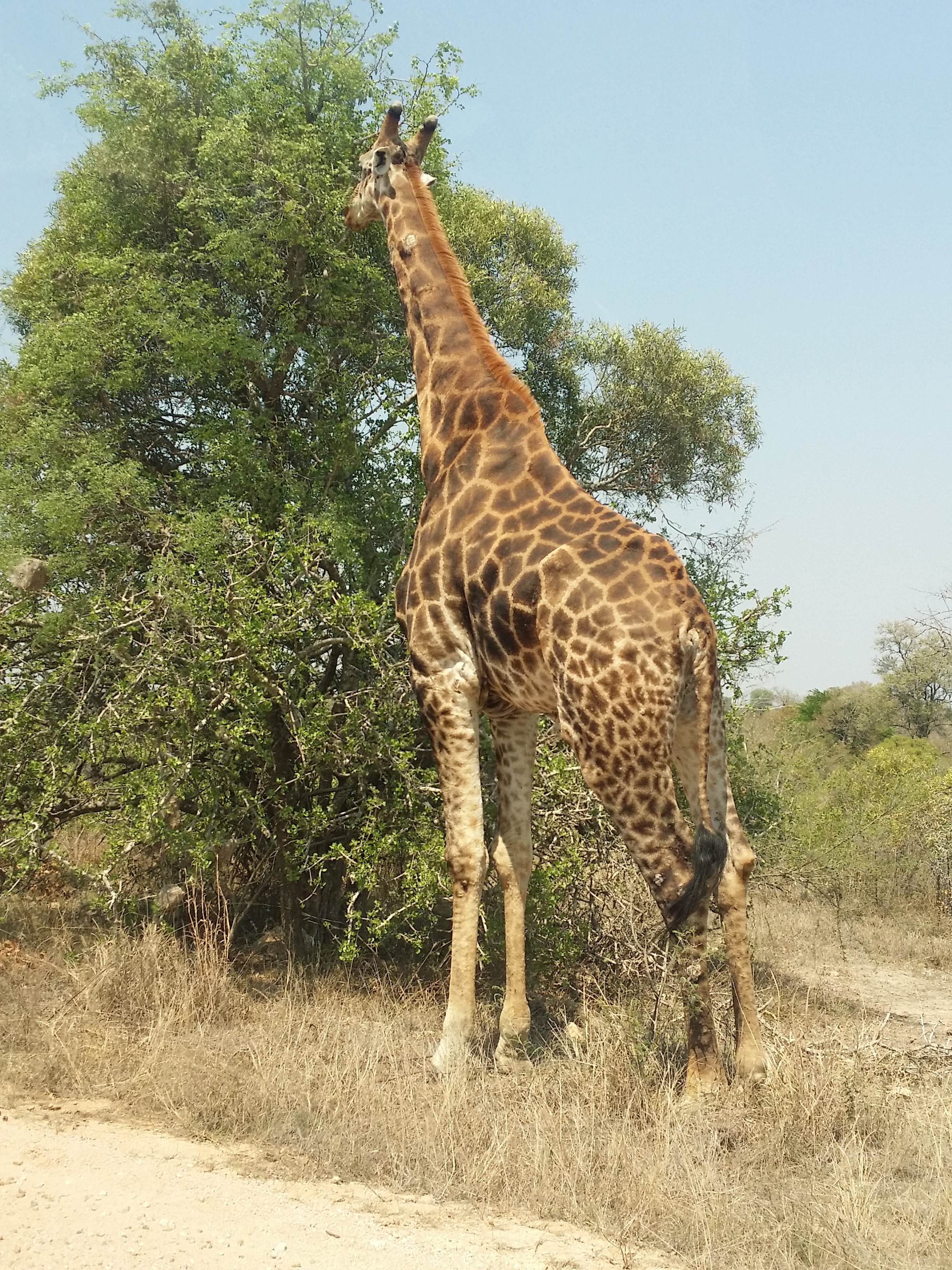
Right off the bat I saw a lot. Giraffes chewing on the leaves of trees. Zebras hanging around. Families of elephants enjoying the day and spraying themselves with water to cool down. Endless herds of impala. With my binoculars, I sat in the backseat and we parked around various locations and took it all in. I got some good pictures.

20150929_120301

20150930_105810

The campsites don’t open until the afternoon, so we really took it easy. Like, hours and hours of taking it easy. After a certain point, I was listening to my iPod and reading my thick George R.R. Martin (Storm of Swords, best book of the song).

The campsite parts of the day were more chill. You aren’t even allowed to go for a drive when it gets dark, unless it’s a guided tour, so we stayed in. Read in the cabin, relaxed. Swam if there’s a pool. Listened to the noisy frogs at the nighttime pool. Read some comic files on my computer, unitizing my laptop best I could though there wasn’t even any Wi-Fi! Used up the airtime on my phone fast.

20151001_090520

Every day we went to a different campsite, each with its own stylized bungalows. “Round hovel” or something it’s called in Dutch/Afrikaans. The first had these silly-looking blue-headed guineafowl birds that walked about.

20150930_082447

The second included a rhinoceros exhibit with a fenced trail, and we happened to even see a rhino walk right up (sadly no camera on me so no rhino selfie). Poor endangered creatures, least they have their horns here.

20150930_123326

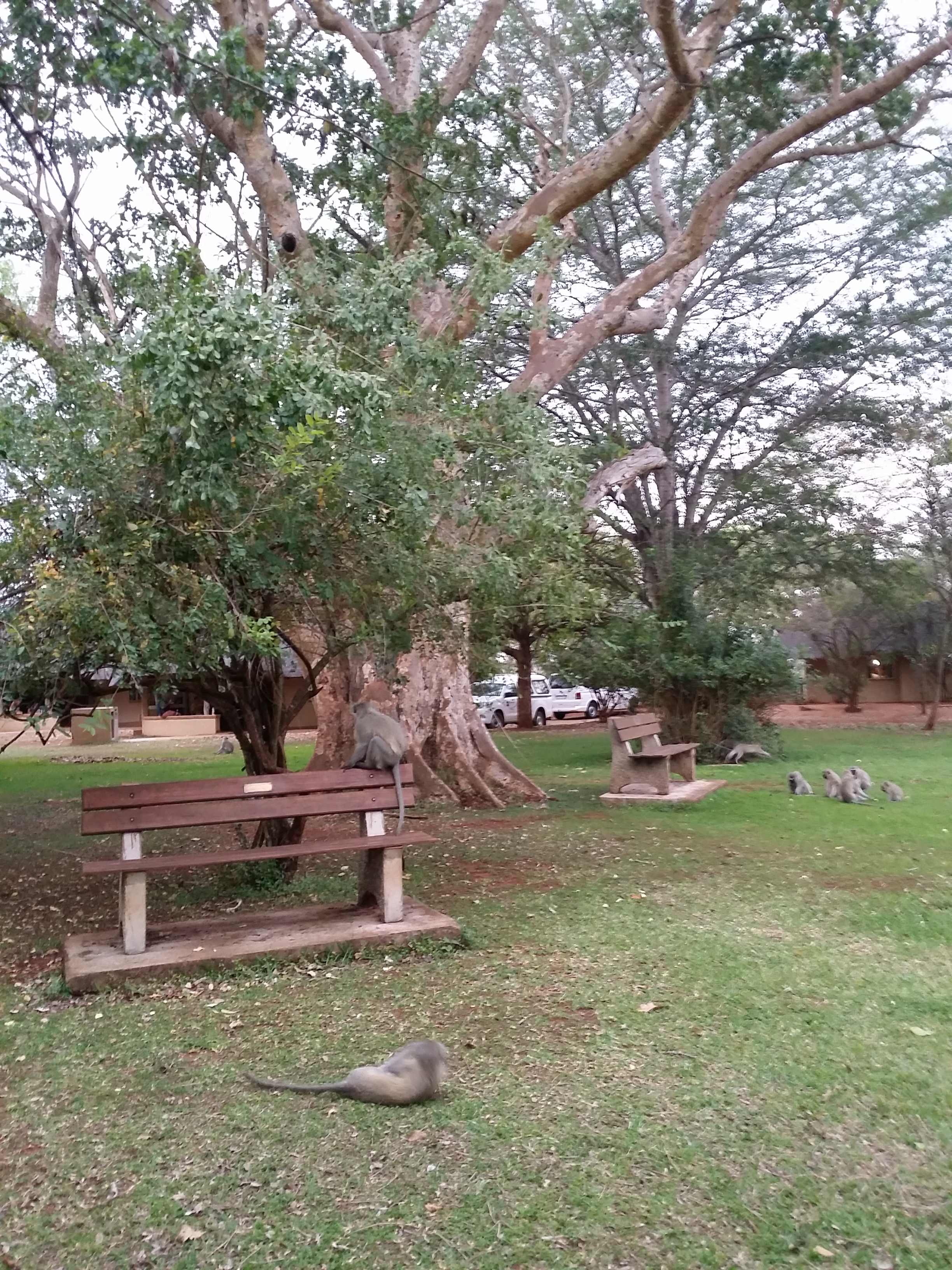
The final was near Crocodile Bridge and filled with baboons and vervet monkeys walking around the site chill as can be – do not ever feed the monkeys.

20151001_173322

Every night, of course this being South Africa, we drank wine and had a braai. I’m sorry, I’m so sorry, but it’s not my scene to be so into nature. I could have used a little bit more technology to pass the time. I mean, the stars were beautiful. The animals were indeed beautiful. Like that scary late part of the night when the leaves were rustling and the flashlight revealed a baby elephant came right up to edge of the camp to munch on greens. I was so nervous upon approaching. That was some moment. Even the hyena was beautiful.

Yet, I sometimes feel worried that there is something wrong with me. I cannot appreciate it the way other people can appreciate. I need something to read. I need some interactive media to comfortably remind me that the rest of the world exists, some distractions. I like that. Unlike locals that are ever content listening to the winds on a slight buzz. All the while, I partly felt like there was this underlying conflict because I wasn’t having some spiritual epiphany out there in the African wilderness.

Continue reading

South Africa Part I

Being an expat living in a major Chinese city of millions – with thousands of Westerners within the English-speaking foreigner scene – you never know who you will meet and what part of the world they may introduce you to… particularly when it comes to romance!

As I’ve written about extensively, it just never seemed to work out with me and Chinese girls. I haven’t followed up on those old blogs in a while, but know this of my present situation: I have not been lonely over the past year.

In the summer of ’14, I happened to fall for an artsy South African girl. Without getting into too much detail, let’s just say there were some interesting stories along the way. I’m not going to share all those personal stories at this time. Suffice to say it’s been serious, intense, and loving.

I am however happy to share the fact that last holiday (Moon Festival coinciding with National Day) she took me on a tour of her home country. An entire new continent I’ve never been to, a whole other land. I am still in awe of all I had seen.

I must admit, it was a challenge at times. Sad though it may be, at this late stage in my life this was actually the first time I had ever met a girlfriend’s parents! Wow. Really? Well, that’s me.

I was rather nervous. There was, in actuality, the issue of class. White South Africans tend to live in the suburbs, in gated communities, walled off by electric fences. I grew up a step below, and over the past half-decade gotten comfortable living in the lesser developed end of a developed city in developing country.

South Africa in actuality may be one of the most unequal countries in the world, but I’m not saying that my girlfriend’s family are that rich. Just normal middle class. Yet even that is tricky for me to be comfortable with. I liken myself to a starving artist-writer in China mind you, not some trader-businessman.

Really, it wasn’t that bad.

All that said, the country is full of beauty like no other… I can see what people love so much about Africa.

My lovely did an incredible job of planning this trip. (How could I plan? I followed her. And it worked out very well that I did.) Everyday, off to a new place. New sights to see. New wonders to behold.

Off we went.

11014971_10153339049103411_5425164024534543704_n


Day One

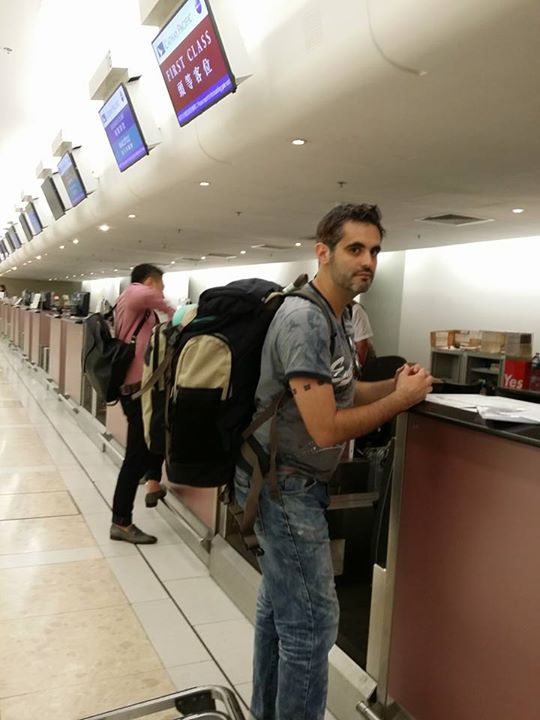
We flew in from Hong Kong. Transferred at Addis Ababa in Ethiopia, to the view from the aircraft of exquisite waterfalls and Mt. Kilimanjaro. My first time entering the Southern Hemisphere. Wish I could have explored Ethiopia more. Next time.

11143502_10153339050138411_4998441688758643546_n

Though we were tired, I was determined to start exploring right after landing. Being picked up from the Johannesberg airport was almost a disappointment; I’d wanted to learn about trains right off the bat. But it was tiring after the second flight being over ten hours.

The driver took us to the guest house in Melville, the hip part of town. On the drive over I stared out the window and took pictures. The highway only showed what looked like middle-American suburbs. In fact, much of what I would see of the middle-class homes and shopping malls pretty much reminded me of American suburbs.

Melville was awesome. Full of vegetarian restaurants (we ate Mexican food the first night, yum!), used bookstores (I spent way too much money), and most importantly of all a comic book shop. Outer Limits: I got an old Understanding Comics by Scott McCloud I’d been wanting to reread and share for ages.

11059682_10153341727793411_7692140205735217807_n

They didn’t have the latest One Piece manga volume, but later I did find it at a shop in Pretoria.

And Gaiman’s Sandman: Overture still hadn’t come out yet, always late.

12038376_10153341726683411_6396810902346563031_n


Day Two

By the second day my ears no longer popped and jetlag not too bad, we hung out some more in Melville and bought vintage clothes at this cool place made out of trucker containers called 27 Blocks. After some errands at the bank, I got a Sim card for my phone. Another highlight was simply going to a grocery store. Again, due to the western context, it was nice to simply be in a supermarket.

12038471_10153341725278411_1487998947249301040_n

We checked out and took a tuk-tuk driver to downtown Pretoria, at the City Bowl area near the Gautrain station. There, although heavy with all the luggage, we went to yet another bookstore (found a used Warren Ellis graphic novel) to meet up with Eleni –  blogger of Greek Meets Taiwan – who lives in the area. It was tricky to find the time, but small world that it is one might as well take advantage, and had coffee with her boyfriend and talked about education.

A lot of interesting talks showing me how it really is in South Africa…

Running a bit late, we took the Gautrain to Pretoria. This was the moment. My girlfriend’s dad, first time ever in my life to meet him. Although I did talk to him on Skype the week before. It was cool, no big deal at all. Nice man.

The dad and his wife – I would meet the mother later (now that I think about, perhaps divorced parents is one of the things that brings us together) – drove us out for dinner. We stopped by at a hoity-toity golf club where I did not feel comfortable at all. But it was interesting to see their scene. I was treated to an endless array of delicious meals, put on weight, and I’m very grateful he invited me into his home and was so kind.

The house in the suburbs was as suburban as ever. Except as said in South Africa they have electric fences. Stayed in our own guest bedrooms, watched cable TV, and caught up with my online life.


Day Three

Already my third day in this land, and then sadly it started to get boring.

Continue reading

Author Interview With Ray Hecht

Lilmountain's avatar Accidental Bohemian

FB Author
unnamed
pearlrivercover

Hello Readers,
I am very excited for my latest author interview with China-based writer, Ray Hecht whom I was introduced to here on wordpress. Besides his impressive talent, I am delighted to interview him.

1. When did you start putting pen to paper?
I started writing a few short stories for fun in high school, although at that time I was far more interested in drawing and comics. I remember the age of 23 I officially told myself I want to start writing novels and haven’t looked back since.

2. What’s your literary poison – prose, poetry, etc.?
As in producing or consuming? I am primarily a fan of comics and novels. No offense to short stories and poetry. I read all manner of comics from superhero to indie to Vertigo-esque fantasy to manga. With novels I highly respect the sort of “neo-Beat” aesthetic epitomized by Irvine Welsh and Bret…

View original post 1,293 more words

Book Release!

Last night was a big night for me. After all this time, my novel South China Morning Blues has finally been published!

So I crossed the border to go the offices of Blacksmith Books in Hong Kong to get some books. Always enjoy visiting there. I now have dozens and dozens of hard copies, which I took with me across the border to Shenzhen in the mainland (so heavy that the wheels on my suitcase broke!) and a new era of promotion begins.

There’s a sort of book tour in the PRD on, with books to be available at various events in Shenzhen, as well as Guangzhou. You kind of have to do it all yourself in China. Eventually I’ll make it up to Shanghai and Beijing. Down in Hong Kong, it’s more official at proper bookstores…

With my dream coming true, and it is rather surreal, just thought I’d share some pictures:

wpid-20151014_092759.jpg


wpid-20151013_200010.jpgwpid-20151014_092815.jpg


And that’s that. Now on to encouraging people to actually read it and get something literary out of these stories!

Monkey Vid

Hi all. I’ve been back from South Africa for several days, and busy with getting my China life back on track.

There are also some great new developments with the book and I will happily share soon enough…

Please be patient on my South Africa blog post updates. I have a lot to write about. (Coming up in two parts.) Currently drafting!


For now, enjoy this very short video I made about seeing monkeys at the Kruger Park campsite:

South China Morning Blues

Marina's avatarI lost my heart in Japan

Next week on October 15th the new book from author Ray Hecht will be published by Blacksmith Books and I was lucky enough to get an early copy.

Ray Hecht has been living in Shenzen, China, since 2008 and has written several books about life in China – including “Pearl River Drama: Dating in China – A Memoir” – in which he writes about his own life and dating experiences. His newest book “South China Morning Blues” is seperated into three parts, that are named after three chinese cities; Shenzen, Guangzhou and Hongkong.

South China Morning Blues Ray Hecht

What I found most unusal about the book, is, that the reader learns the names of all the protagonists from the beginning, just like in a play. Even more interesting is the assignment of the 12 chinese signs, one for each character. Throughout the book the characters are identified by their…

View original post 233 more words

Book of the week – South China Morning Blues

(The following review was posted on Susan Bloomberg-Kason’s website, author of the engaging tell-all memoir Good Chinese Wife. I am honored that she appreciated my novel, and in several weeks we will be participating in a panel at the Hong Kong literary festival. Please see her website and the links below for more.)


http://www.susanbkason.com/2015/10/04/book-of-the-week-south-china-morning-blues/

26512801

For almost a year, I’d been hearing about Ray Hecht’s forthcoming novel, South China Morning Blues (Blacksmith Books, 2015), which comes out from the publisher on October 15 and on Amazon later this year. When the author sent me a review copy, I found myself pausing at every break during the day and evening to get in more reading. This is not one to miss!

Most China novels and memoirs take place in other regions besides the Pearl River Delta. Hecht’s book is different in that it’s separated into three sections named after cities: Shenzhen, Guangzhou, and Hong Kong. I haven’t been to Shenzhen in 17 years and Guangzhou in 19, but felt like I was being transported back to a place I once knew well and one I’d visited a couple times, respectively. And I think I know Hong Kong well, so was excited he kept that one for the end.

Through his writing, Hecht shows he’s an adept observer of life in southern China and Hong Kong, capturing the spirit of each place he writes about and the issues that define these places. His twelve characters appear throughout the book and each brings a different perspective. There are English teachers, a journalist, artist, businessman, and a young woman who marries an old Taiwanese sugar daddy, to name some.

The format of the book is quite clever. As I mentioned above, it’s broken into three sections according to locale. But within each section, the chapters are arranged according to one of the twelve characters. Hecht doesn’t label the chapters with the characters’ names, but rather by the Chinese character of their zodiac animal. My short-term memory is not the greatest, but I found I had no trouble keeping up with which character was which.

It was fascinating for me to read about dating in Shenzhen and Guangzhou since I had heard some stories from my ex-husband’s friends who moved south to Shenzhen for better working opportunities. But I never knew foreigners who lived in Guangzhou back then, so that part was new to me. And the Hong Kong section was fun and completely realistic with many of the characters ending up at a rave on Lamma Island.

This is a dense book, yet a quick read. If you have trouble keeping the characters straight–which you shouldn’t have since I seemed to manage all right–you can always flip back to the list of characters and their zodiac animal at the front of the book. The stories are not always happy (in fact, more often than not they are pretty depressing), but they are realistic and tackle issues that many young people–expats, locals, and those who relocate from other parts of China–face every day.

The book is available for a GoodReads raffle until October 14. Click here to enter. I’ll be appearing with Ray at the Hong Kong International Literary Festival on Sunday, November 8 at 3:30pm. For more tickets and more information, click here.