[Review] Hong Kong in the Fifties: John Saeki’s The Tiger Hunters of Tai O

t's avatarCha

{Written by Ray Hecht, this review is part of the “Writing Hong Kong” Issue (December 2017) of Cha.} {Return to Cha Review of Books and Films}

John Saeki, The Tiger Hunters of Tai O, Blacksmith Books, 2017. 304 pgs.

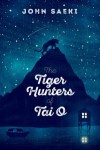
tiger-hunters-of-tai-o_800The Tiger Hunters of Tai O is a new historical novel with a unique perspective. Author John Saeki paints a colourful portrait of Hong Kong in the 1950s, capturing the spirit of the times in this page-turning police thriller. Sometimes hilarious, and sometimes deadly serious, most readers should be fascinated by the intrigue and politics of the era. Though Hong Kong—especially Tai O—has certainly changed over the past half century, locals will find this world a familiar place even while discovering new surprises and secrets uncovered about the region.

The plot ostensibly revolves around a Eurasian police officer named Simon Lee who is investigating suspicious tiger attacks. The…

View original post 786 more words

Eating Smoke: review of memoir, and audio


Chris Thrall’s memoir Eating Smoke (sensationally subtitled One Man’s Descent Into Drug Psychosis In Hong Kong’s Triad Heartland) was published in 2011 but resparked buzz last year when the book was adapted into a radio dramatization for Hong Kong’s RTHK station.

The memoir is about Thrall’s time in Hong Kong in the 90s when he found himself addicted to ice—that is, methamphetamine—and indeed written in the style one would expect while on speed.

It is a dazzling ride, full of flowing neon and inebriation. First, the British Royal Marine suddenly quits his military position and moves abroad with dreams of making it big in the business world. Before he knows it, his business fails and he has to start hustling. The bulk of the story consists of jumping from one sketchy employment opportunity to the next, constantly maneuvering through new scams which grow increasingly desperate. He stays in the infamous Chungking Mansions, then hangs out among the hippie scene on Lamma Island where it starts out innocently enough with some strong weed, and ends up in the seediest parts of Wan Chai addicted to crystal.

“Quiss” Thrall meets a seemingly never-ending parade of colorful characters who live on the very edge of Hong Kong society, the caliber getting lower and lower as he is dragged down to the dregs. But there are so many he meets that it becomes difficult for the reader to follow what’s going on after a while.

The subtitle of the book declares his descent into the “Triad Heartland”, but the part when he becomes a doorman for a Triad-connected club is just one section among many, which comes rather late in the book. The stakes do get higher as threats of violence and death race towards the climax.

The radio drama, an audiobook really, overall can be quite superior to the book because as an edited abridged version it can get to the point quickly and highlight the best sections. Many odd jobs are skipped over in order to focus on the Triad and drug-crazed scenes. I did miss some, such as the English-teaching episode, although that is a story that has been told before. The unique nature of Thrall’s perspective is worth focusing on, though my personal favorite was the weekend-long DJing gig in China which unfortunately didn’t make it to the radio for some reason.

The narration from RTHK is excellent, with acting that can be funny when necessary as well as solemn, and always powerful. One noted part details the time a woman passed out due to a possible overdose at the club, Thrall calls an ambulance but the boss coldly stated he just wanted her thrown out. Stories like these are best listened to and not only read, so be sure to download the free podcasts…

For the most part, Thrall remains likable through it all until perhaps the finale of the memoir when he descends deeper into madness. His greatest talent is his ability to get by in Cantonese, which grants him a window into an authentic world which most foreigners never get to see. Eating Smoke is a fascinating insight into 1990s Hong Kong that readers and listeners from all over the world would do well to appreciate.


The radio drama is available free as a downloadable podcast on the RTHK website here: http://podcast.rthk.hk/podcast/item_all.php?pid=1130

Eating Smoke is published by Blacksmith Books, and available at Hong Kong bookstores and Amazon.

Expat Jimmy

Expat Jimmy is the latest by noted China-expat author Travis Lee. This quick read of an eBook is more of an eNovella, or even eNovellete, and the brevity of the piece is in fact one of its greatest strengths.

Expat Jimmy takes place over the course of one day in Wuhan in the summer of 2008. Basically, it’s about the impressions of a young graduate named James as he is introduced to second-tier China. In some ways the narrative is not particularly original—many expat authors (yours truly included) have covered the angle of an ESL westerner intrigued and shocked by the modern East. However, in condensing this rather archetypal story into one day, Lee succeeds at capturing the essence of this sort of story. Wasting no time, his tour of Wuhan in the mid-aughts covers everything a reader could want: all full of wonder, disgust, fear, and hope.

The main character can be passive, as he is led around town by Adam who is certainly a stereotypical ESL teacher with issues. Yet neither James nor Adam are the true stars of the show. It’s the city of Wuhan that steals the limelight, and that is the point.

Then there is the one-page epilogue which maps out Jimmy’s character arc in more long-term fashion for a good sense of closure and leaving the reader wanting more, but overall it’s just about that one normal day…

It does strain credulity a bit that so much fills up one jet-lagged day. But it works, and I wouldn’t want to read it any other way. Even as the day progresses into bouts of drinking (yes, there is Baijiu), with all the harshness of sex and drugs and cynical interpretations of Chinese family dynamics, climaxing even to near-death experiences as Jimmy witnesses one progressively seedier scene after another; even including all this, the overall feeling of the story is enthusiasm. The initial enthusiasm still outweighs all else.

This quote says it best:  “I want you to take it all in. Every sight, every smell, everything. Because this is a once in a lifetime event. You will never again feel t his optimistic, the sense of wonder you’re going to feel at being in China the first time. Nothing compares to it and nothing ever will.”

There is just nothing like the first time moving to a new country.

So read Expat Jimmy, and learn much about Wuhan and explore that elusive concept of the so-called “real China.” Being such a pithy read, there’s no reason not to.


Expat Jimmy is available at Amazon.

Author Travis Lee blogs at www.travis-lee.org

Watching Ghost in the Shell, in Asia


While I do like to write reviews on occasion, I usually go for lesser-known books and movies particularly if there is a focus on China or Asia. Generally speaking, while I do have my fanboy side, I think enough has already been written about big Hollywood blockbusters and my point of view won’t add much.

However, with all the recent controversy surrounding the now-bombing remake of Ghost in the Shell, I feel it may be worth sharing my perspective as an American abroad in Asia. Hope I’m not too late to the game.

First of all, I am a longtime fan of the original manga and anime. I wrote about my manga habit here, about the brilliant mangaka Masamune Shirow creator of Ghost in the Shell. I find the source material even better than the acclaimed 1995 anime film directed by the great Mamoru Oshii, but suffice to say that is one perfect film. The explorations into the nature of sentience, cyberpunk critiques of tech in society, and the philosophical themes about identity are all amazingly ahead of their time. (Actually,  just rewatched the original film for old time’s sake… And that only makes me loathe the remake more.)

Directed by Rupert Sanders, the new film is certainly interesting in the visual sense but so extremely dumbed down that it there is just no reason for the movie to exist. There’s already an excellent adaptation of the manga, not to mention plenty of episodes of the spinoff series and concurrent animations. Why do we need this live-action film?

I suppose that could start a discussion about the nature of any adaptations. Even if we were to go down that road and I’d grant that it’s worth rebooting these things for the sake of finding a new audience, I still feel the one currently out in theaters fails on its own merits.

The film doesn’t work. The streets of Hong Kong–or some ambiguous setting–full of holographic advertisement bombardment seems to be the only thing Sanders cares to add with any interest. There’s not even any nudity. The acting is stiff, pretentious, and not believable. Scarlett Johansson does not come across as well a reserved cyborg warrior with deeper notions of trying to understand herself. Batou, played by Pilou Asbæk, is inconsistent with his accent and not in the same league as the anime character whatsoever. Overall, it’s just like that other recent remake that was such a big deal, Disney’s Beauty and the Beast. Because ultimately the only thing these nostalgic movies succeed at is that they make you want to go watch the original classic animated versions.

But just being another lame Hollywood scifi action blockbuster isn’t the real reason why this film has been so controversial, and is failing so badly. Let us address the elephant. The whitewashing.

First of all, I was quite willing to give this universe’s version of the Major a chance. Fine, Scarlett Johansson is playing a character inspired by a Japanese character but named Mira Killian. She wouldn’t literally playing a person of another race in this version’s world, right? She even said so in interviews. I mean, after all the awareness of whitewashing the producers couldn’t be stupid enough to actually have her play an Asian?

I’d announce a spoiler alert, but in fact the trailer gave it away a long time ago. In more of the film’s stupid choices for originality, instead of the fascinating cybernetic lifeform Puppet Master as villain it turns out that the Hollywood plot is of course a complete Robocop ripoff. The evil corporation experimented on her and she has to try to get back her memories. The Section 9 team doesn’t do anything but get manipulated, and bring nothing constructive to the world of the film. So why root for them?

In any case, the trailer gave that away and it wasn’t a good storyline. But what’s worse, if you finally watch the movie the only surprise left s that the Major’s true self turns out to be.. wait for it… a Japanese girl named Motoko Kusanagi.

Oh, come on. Who on earth thought that would be a good idea? So there you have it, in your face whitewashing. Scarlett in yellowface. White privilege casting through and through, full of supremacist implications considering that cybernetic engineers “perfect” their experiments by turning them white, and with assumptions of whiteness as default thrown in.

That was just so much worse than it needed to be. Why Hollywood, why?


As a disclaimer I should probably say that I am a white person myself. Yet I do recognize the fact Hollywood clearly marginalizes minorities and that the idea of ‘white’ as the default is a supremacist trope which must be challenged. The media has a responsibility to be fair, and empathetic humans should care about these issues no matter what we look like or where we come from.

Continue reading

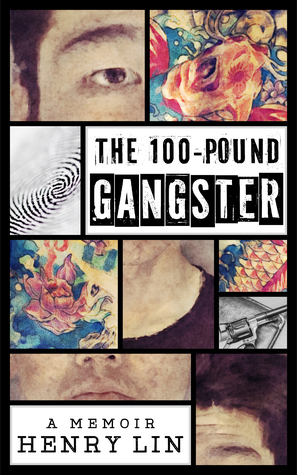
Review: The 100-Pound Gangster – a crime story memoir

Well, I have mixed feelings on this.

Published by Signal 8 Press, The 100-Pound Gangster is a remarkable memoir by former gangbanger Henry Lin. Throughout this quick read, the author details his unique Chinese-American experiences growing up in the streets of Chinatown in San Francisco, which were surprisingly rough.

Most are familiar with Chinatown as a touristy place, but specifically back in the 1990s there was serious criminal activity going on at night after all the tourists left.

This book is not your typical Chinese memoir.

The tale is very personal, written informally, and starts out with Lin’s bitter memories about his home family life aside his unstable mother and hateful older brother. Meanwhile, he had to fight against Asian stereotypes and learned right from the start to be tough as the way to survive.

The best parts of the book tell the lesser-know stories and histories of Chinese organized crime, the Triads. From the Jackson Boys to Wo Hop To, it is certainly fascinating. However, even if one starts out emphasizing with the plights of the author the book later suffers due to his increasingly unlikeable nature. True, the narrator grew up around fighting and can’t entire help that violence is always around. It starts with selling fireworks as a child, and then gets far worse… But the way Lin embraces violence—particularly against women—makes it difficult to care for him even when he apparently repents by the end. There is the disturbing focus on guns, for example, and his proximity to murder. Overall, it’s still very much worth the read to learn about this underworld.

Lin’s story gets more interesting as he rises higher and discovers family connections. There always seems to be an Uncle around to give him the leg up, and he eventually ends up in Hong Kong where he meets a Grandfather who is both high-level Triad and possibly a spy.

The story jumps around in time, then going backwards to describe his time locked up in juvie, a place with more violence where he befriends convicted killers. At sixteen, he is locked up for a stint that lasts years. During his longest time behind bars, the young Lin finally starts to reform as he finds hope by writing for prison magazine, and later he’s lucky enough to be selected for a troubled youth school. When he is let out, older and wiser but still quite young, he gets a new start and there are lessons learned which does improve his character.

Yet there is always hustling, or a “one last big heist” crazy story–it seems he can’t get away from money-making schemes. The marijuana game at least is relatively tame compared to the more hardcore gang activities of his peers, and Lin knows this. A large portion of his writing is devoted to how he feels for his former comrades-in-arms caught up in bigger messes, but that may not be something most readers will get. Even if considering The 100-Pound Gangster to be a true crime nonfiction book, it lacks the objectivity for that genre. And so the reader is left conflicted about the quality of the book.

Another issue is that there is a brief mention of romantic elements but only barely glossed over. I would have liked to read more about Lin’s private life which would make him more well-rounded, since this is supposed to be a memoir. But Lin priorities in his writing are clear.

In the final chapter, there is much moralizing as he reflects and wraps it all up. To be honest, the moralizing doesn’t ring true after all reading all that he previously went through. One never gets the sense, despite his intelligence and potential for good, that he truly is that much of a decent person.

That said, Henry Lin is certainly has an incredible story to tell and he does so with brutal honesty. It wouldn’t be an interesting crime tell-all if he wasn’t who he was.

In any case, this is some memoir.


The 100-Pound Gangster is available on Amazon

Movie Review: The Great Wall 长城

061320202jg1

The Great Wall was recently released in China with much hype. Directed by the Zhang Yimou (director of Raise the Red Lantern, among many other critically-acclaimed films as well as the famed opening ceremony of the 2008 Beijing Olympics), and starring Matt Damon, it is bilingual and the first truly American and Chinese coproduction. Suffice to say, expectations were high.

Unfortunately, perhaps due to the high expectations, the film has already been poorly received and critically panned in China. However, for a causal audience member not steeped in fifth-generation Chinese cinema film buff lore, it can still make for an enjoyable romp. If one just forgets to consider the tide of Hollywood pandering to China, not to mention ignoring problematic ‘white savior’ tropes, it is possible to see The Great Wall as a decent and fun film.

Taken for what it is, Zhang’s latest does succeed at being an exciting fantasy adventure about Western explorers fighting monsters in an ancient Chinese setting. Suspension of disbelief always required, the story opens with a couple of horse-riding mercenaries seeking mysterious explosive black powder. Eventually they make it to the Great Wall, where they meet Damon’s love interest Commander Lin played by Jing Tian.

Matt Damon more or less pulls off the medieval accent passably, and his costar Game of Thrones’ Pedro Pascal is excellent and usually outshines Damon in scenes featuring both of them. The pair of warriors have good chemistry as buddy action films go, although with a somewhat predictable character arc as they break up and get back together. Pascal’s Hispanic heritage is used for corny effect (although the actor is from Chile, he plays a Spaniard), complete with a completely unnecessary “bullfighting” scene.

Willem Dafoe is also utilized well as a sniveling fellow Westerner. Andy Lau’s grizzled military officer rounds out the cast as the requisite token Chinese star, but he is often left behind by the star power of the rest of the cast.

The plot moves quickly and doesn’t wait long to jump into Peter Jackson-style tower sieges. The monsters are called Taotie and the special effects are indeed Hollywood level, although at this point in cinema history it’s long since past groundbreaking to see mass hordes of demons in epically intricate battles. When the scenes go smaller scale into warriors battle monsters individually, the carefully honed craft of Chinese wushu-style film proves to be more engaging than the indulgences of high-end Hollywood CGI war.

As the plot goes, there are some logistics that make little sense. The moral lessons of trust and loyalty are heavy handed. The origin story of the monsters didn’t seem to have much thought at all behind it, although one does suppose that it’s a fantasy universe so why not. And in particular, the color-coded uniforms for the Chinese army is especially cheesey and reminiscent of those childish superheroes the Power Rangers. The climatic final battle in the capital city does make up for much of the flaws of the film, but overall The Great Wall is not meant to be taken so seriously in the first place.

Whether or not Zhang Yimou has “sold out” as some accuse, The Great Wall was never meant to be his finest work. It probably won’t succeed as a breakout introduction of Chinese cinema for Western audiences, but of those who do watch the film it’s definitely worth taking the time to see what all the fuss has been about.

This reviewer recommends low expectations. Don’t think too much, and just enjoy it for what it is: A fun, dumb Hollywood fantasy movie which just happens to take place in China.

The Great Wall will be released in America on February 17th.


Party Members: a gruesome China book review

51vnnhtcaul

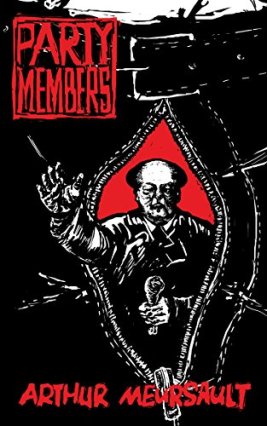
Party Members by Arthur Meursault is an intense, ugly, gruesome work of fiction that will leave most feeling nauseous. It’s also a page-turner that is kind of essential reading for China observers. Reader discretion is advised, be aware that this one may offend many if not all…

Basically, the novel is a satire which viciously critiques the excesses of contemporary post-economic reform China. As titled Party Members, it stars a low-level Communist party member who lives in a third-rate polluted city and decides to indulge in the very worst of corruption. It is incredible how far it goes, which is a testament to author Meursault’s mind in both imagination and depravity.

The protagonist, who is certainly no hero of the story, is Yang Wei. He starts out as a very unremarkable Chinese man. “Not one in a billion, but one of a billion,” exceptional in his mediocrity. The story starts out critiquing how dull and quaint the average Chinese citizen can be in their complacency, but soon Yang Wei stands out indeed as being a particularly shameless party member.

To be specific, one day Yang Wei’s penis starts talking to him and pushes him to literally act like a dick in order to get what he wants. So begins an series of progressively worse moral failings, from familiar disrespect to copious descriptions of prostitution and shallow consumerism. The literary critic in me ponders whether hearing of voices represents schizophrenia, or if an unreliable narrator device is at play. Although later scenes seem to indicate that it is ‘true’ in the world of the story, for reasons unknown his penis seems to gain the ability to speak and thereafter instructs him to be a terrible person.

Comparisons of Irvine Welsh’s Filth come to mind, which was about a corrupt police officer who had a tapeworm that could talk. Somehow, Meursault is even able to outdo the famed Welsh in writing vulgarities.

Despite whether or not the particulars of the story will appeal to all readers, Party Members is mostly well-written by technical standards and stays interesting one way or another. However, the descriptions can get too dense, and there are far too many adjectives. Even several long-winded speeches, satirical as they are, can come across as whiney nihilistic teenage rants. “The only way to be successful is to be a complete and utter dick… Just shit all over it!” More often than not the novel descends into telling not showing, with plenty of words such as “scumbag” thrown around in the narrative, unnecessarily reminding the reader how to judge the various scenarios.

Subtle, Party Members is not. Crass and disgusting, it still can’t be denied that it reads fast. It’s also hilarious at times, with ridiculous situations one can’t help but laugh at. In a sick sort of way. From toilet humor (there is actual drinking of piss as part of a scam marketing campaign), to the recurring theme of copiously describing greasy KFC food.

Yet, as the plot goes on it gets uncomfortably worse. Once the chapter about the child named Shanshan comes—which is about a terrible urban legend in China concerning car accidents and homicides—it becomes very hard to read.

The ending is legitimately horrifying. The question remains though, is this strange China tale supposed to be classified as horror?

Most unlikable protagonist ever. Which is of course the point.

It must be said that China is an enormous and complex country, with major problems but it may not be fair to look at it through the lens that Party Members embraces. The most cynical possible interpretation of Chinese society is a point-of-view worth exploring through this book, but there is a bigger picture and hopefully this isn’t the last word when it comes to China fiction. Meursault is certainly very knowledgeable about China issues and a talented wordsmith, but it just doesn’t seem healthy to focus that intently on the worst of the worst with no solutions whatsoever. Perhaps the genre is dystopia, in that case? Dystopia which takes place in the present.

All in all, reading this will leave a bad taste in one’s mouth. And being able to do that is something of a literary feat, in a way.


Party Members is available on Amazon.com and the ever-offensive Arthur Meursault blogs at arthurmeursault.com.


Of Gods and Mobsters by the Hong Kong Writers Circle

51jxj39kttl

Of Gods and Mobsters is a 2013 anthology of short stories published by the Hong Kong Writers Circle (you may recall that I participated in a podcast for the HK-based literary society). The Writers Circle publishes anthologies on an annual basis, and this volume in particular was recommended to me. I am pleased to report that the stories are excellent and the quality of writing coming out of Hong Kong is very high indeed.

The stories are grouped together into three parts: Of Gods, Of Tales, and Of Mobsters. Broadly speaking, the stories are split between the genres of magical realism and crime. The pervading theme throughout all are unique examinations of modern cosmopolitan experience—specifically within the strange land of contradictions that is Hong Kong.

The first and longest part tells stories of Western mythology in this Eastern-yet-international setting, which range from James Joyce-esque references to Neil Gaiman-style stories of ancient gods in the contemporary era. Several stories star the Mount Olympus pantheon, starting with Reena Bhojwani’s Hidden in the Night, an entertaining romp about Apollo and Zeus and Hera interacting in the city. Makes for very interesting juxtaposition.

The middle section, Of Tales, still fits with the style of the rest of the book. Aber Revisited by Joy Al-Sofi is a fable in the style of Kipling full of talking tigers, yet the tiger is represents Chinese symbolism. One of the best stories is The Standard by the anthology’s editor SCC Overton, a tragic science fiction romance about the fascinating concept of ethnic minority DNA becoming the future currency standard. It is a genre-bending story, very literary and very poignant. A futuristic banker of all people falls in love with a woman who is a Hakka specimen carrying her people’s genome for the sake of the economy. What a way to capture the essence of Hong Kong.

The final part Of Mobsters exemplifies the spirit of such themes by taking a myriad of story-telling directions. Some mystery, some even satire. Midlife Triad by James Tam is about gangsters in jail who are fans of ‘wuxia’ pulp stories. Guanxi by Edmund Price contrasts the rich (literately) high-life on the Peak, with corrupt Filipinos who break into the world of one wealthy man. I found The Curious Resemblance to the Case of the Speckled Band by Kim Grant very charming, an amusing postmodern take on Sherlock Holmes about a fan who happens to named Holmes who bumbles and strives to be a detective, and actually has a wife named Watson. And The House by Melanie Ho references the board game Clue (known as Cluedo in some countries).

Perhaps the best is saved for last with Ian Greenfield’s story Mr Tse and the Pied Piper of Homantin, which ties the entire anthology together well. The story is both a crime story, and an homage to fairy tales of old. A great satire full of quips on Hong Kongers complex relationship with mainlanders, the shallowness of pop stars, and the prevalence of parent’s dependence on tutors. Ostensibly a retelling of the Pied Piper (also with Snow White, Miss Muffet, and even vampires therein), Mr Tse finds a way to use its structure lambaste nearly everyone in Hong Kong.

Like any anthology, Of Gods and Mobsters has many different short stories of various styles and each may not suit all readers. However, no matter a reader’s preference it cannot be denied that the quality is always high. Not to mention, there are also poems of depth sprinkled within for yet more diversity if one isn’t just into prose. The only major criticism, as it goes with expat literature, is that much of it might only make sense if the audience is familiar with the area. One frequent phrase is “Fragrant Harbour”, which of course is a literal translation of the characters for Hong Kong, but that wouldn’t necessarily be known to most around the world. Nonetheless, for fans of the region the book is sure to have many stories exemplifying the spirit of 香港…

Available in Hong Kong bookstores and on Amazon.com.


Book Review: Threads of Silk

51FJU7iz7EL

Threads of Silk is a new historical novel written by Amanda Roberts — blogger at TwoAmericansinChina.com — and published by Red Empress Publishing, which is sure to fascinate fans of Chinese history. The novel is about one woman’s perspective in the twilight of the Qing Dynasty (which ended in 1911), and is full of historical details. The author certainly did her research; the world of Threads of Silk is grand and exotic and rings true.

The story opens in rural Hunan and is told through the character of Yaqian, a poor girl who raises silkworms and enjoys her simple life in the countryside. After being taken up by upper class mentors, she learns embroidery and is eventually taken to Peking where she stays for the bulk of the novel. The capital city is full of politics, treachery, funerals, the aging dowager empresses, the final child emperor, and there’s even a prince. Yet this is no fairy tale by any means.

The start is somewhat on the slower side, focusing on the atmosphere of the time, and the narrative pace eventually picks up. The bulk of the tales take place within the Forbidden City, a most fascinating setting, although there is a sense that all what goes on in all of China is crucial.

Year by year Yaqian survives and grows. It’s the details that makes the stories feel truthful. Roberts paints an era of intrigue with Han Chinese versus Manchu. Much of the book is also focused on cruelty towards women, and there is ample material full of foot-binding and all the minor crimes that were part of society at the time. Ultimately, the strength of the main character shines through. Especially when it comes to the overlap of politics and family…

The country of China irrevocably changes in the course of these pages, but overall it is a human story about the people who are caught up in history. Right up until the end.

The novel covers such a grand and ambitious scope that it occasionally feels like there is a checklist of historical events to go through. It does work, and it is somewhat the point of the novel to show how a woman of humble origins would have witnessed all that occurred. For the most part the flow works with Yaqian’s life, and the exposition is part of the interest in reading Threads of Silk.

Available on Amazon

Book review: PET. a memoir of love and sex and domination

30517755

When I came across “The Lesbian Pickup Artist” Flye Hudson’s guest post on SpeakingofChina.com which included an excerpt from the book PET., I was surprised to see the worlds of AMWF blogging (Asian Male White Female) overlap with the PUA scene (Pickup Artists). I’m not terribly familiar with pickup artists, but like many males I read Neil Strauss’s famous book The Game and tried to incorporate some of the advice without putting in too much effort embracing it. As a student of human nature, it’s certainly an interesting phenomenon. And that’s without even getting into misogynistic controversies.

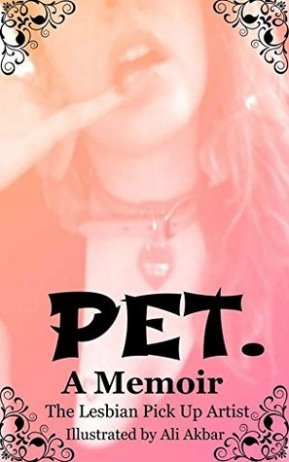
PET. is a memoir by Flye Hudson about her experiences loving a professional pickup artist who happens to be a Taiwanese-American. It is definitely not a how-to guidebook, but simply an avenue for Hudson to express all that she went through in this tumultuous romance – some of which gets quite dark. It is intensely honest, even while names and locations are renamed, but feelings are the point and the honesty gets brutal.

The story begins by detailing the perils of online dating. Hudson, a bisexual woman of college age, posts on a fetish site that she prefers Asian men and only one guy stands out. Called Ryder Chan in the book, he soon explains that he wants a dominant-submissive relationship. Much of the memoir is about that as much as pickup. The Taiwanese/Chinese cultural side is minimal, with some scenes about the family but many people in America have an immigrant background and it’s not the central theme. The true focus is its about a submissive woman who falls in love with a hardcore dominant man, and all the conflict that enfolds from that dynamic.

Her lover is a rather unique individual, and makes her his “pet.” They engage in many sexual adventures which make for a good read. Lots of drama concerning multiple threesomes, hooking up with exes, cheating, his pickup artist history, and trying to work out a sort of open relationship on his terms. Hudson’s narration is often more about feelings than about detailed descriptions, and those feelings tend to range from intense love to intense self-loathing. The invisible “Borderline” is even a character of sorts, not a bad literary technique.

The biggest criticism in my view is that Ryder Chan is not much of a likable person at all. Hudson goes on and on about how much she loves him and the power of his love and being accepted, but judging from the stories shared he is usually rather cruel to her. There is so much talk of loyalty, again and again he gives orders and demands loyalty, and it’s hard to understand what the great appeal is. Basically, the love angle is an example of when writing is telling not showing, as so much of the text talks about love without showing stories that prove it. Even in the worst moment – without giving away spoilers – Chan basically drives the narrator to her worst point in her life and then saves her from it after the fact.

Although, it could be that as a more vanilla reader myself I just don’t understand the whole dom thing. PET. Is also about the author’s journey to be accepted for who she is, darkness and all, and her lovelife is her choice. Perhaps the point is that Flye Hudson loves him, not the readers.

One other disconcerting aspect that must be said is the PUA tendency to rate women by looks. It is a sexual memoir and I do admit I enjoy reading descriptions of beautiful women in intimate scenes.And there’s nothing wrong with having tastes and preferences. But on the other hand, berating women for not being hot in certain parts seems unnecessarily cruel and feels somewhat disappointing coming from a woman author.

All in all, PET. is a self-published memoir which is a vehicle for the author to express herself. It seems to be totally successful at that. The writing is casually and amateur and melodramatic sometimes, it could use some editing, but ultimately the subject matter is so damn interesting that the book is totally worth the read. For anyone curious about alternative lifestyles, whether or not readers themselves would necessarily embrace that sort of thing, it comes quite recommended.

Available on Amazon.

Book Review: Umbrellas in Bloom

umbrellas-in-bloom_800


https://thenanfang.com/book-review-umbrellas-bloom/


Jason Y. Ng is the author of HONG KONG State of Mind and No City for Slow Men, and has now rounded out a trilogy with Umbrellas in Bloom: Hong Kong’s Occupy Movement Uncovered (all published by Blacksmith Books).

While his previous books simply described modern Hong Kong social dynamics, the latest is explicitly political and an altogether different style than the others. Now that he has written book-length political commentary, Ng has become a crucial player by being first to record the 2014 “Occupy Central” protest movement in any English-language book. It is certainly a must-read.

Umbrellas in Bloom covers a lot of ground. The complex political system of Hong Kong is detailed in very readable fashion, with all the grievances spelled out. Various charts explain how the economy has left the majority of citizens behind, and why so many were upset enough to camp out in protest for all those months. Most of all, the mainland Chinese government is shown to blame for suppressing universal suffrage for the former colony under the so-called “one country, two systems.” Indeed, observers of Beijing and Asia as a whole would do well to read this book and understand the climate of Beijing in relation to Hong Kong.

The language of the book does reflect a specific point of view; do not mistake it as a scholarly, objective report. Ng delves deeply into his unique experiences and certainly takes sides. It makes for a good read, and it’s refreshing that he does not censor himself and expresses his informed opinion with confidence. Perhaps there is an element of preaching to the choir, even getting repetitive at times—“blue ribbon” supporters probably won’t change their minds after reading—but for international readers seeking to understand, the writing style works.

The book is very personal as well. It begins on September 28th, 2014, the day tear gas was fired into crowds as the whole world watched in horror. Then, the tone jumps around as it looks back on the history of Hong Kong politics. The central villain is Chief Executive C.Y. Leung, known as a corrupt stooge of the mainland Chinese government, although the entirety of the Legco system in Hong Kong is highly unrepresentative. As 2017 approached—the promised time for universal suffrage, the Occupy Central movement grew. There was also the Scholarism student movement, led by famous student Joshua Wong (Wong wrote one of the book’s forwards). Then the tale of three villages: the occupied areas of Admiralty, Mongkok, and Causeway Bay. Different ideologies and challenges are showcased, from the police to thugs and internal struggles between different factions and nativists. Some of the most heartwarming sections are about the young people he met, such as Kent and Renee and Hinson, engaging characters all.

In the end, due to a court order of all things, the Admiralty occupation fell. Four days later, on December 15th, the police cleared out the other encampments and the Umbrella Revolution was left to ponder its own legacy. Ng is quite optimistic; surprising considering nothing on paper seemed to get enacted yet, but he does point out that other famous social justice movements throughout history took decades to achieve their goals. His conclusion is definitely that it was worth a try. “The 11 weeks I spent in Umbrellaville were the happiest in all my years in Hong Kong,” he writes. Perhaps the soul of Hong Kong has been changed in subtle ways that are not clear yet, but in the long run history will prove that things did change…

There is so much to learn from Umbrellas in Bloom. However subjective, it is definitely required reading for expats and Sinologists. Whether you were there or only watched on the news from afar, the fallout is still occurring today and enlightened observers should learn what they can.

Highly recommended for all China watchers.

Umbrellas in Bloom is available in Hong Kong bookstores, and can be ordered from Blacksmith Books.

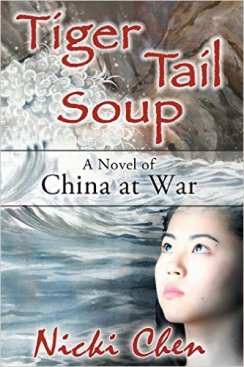
Book Review: Tiger Tail Soup

51AVOPZ5vRL._SX331_BO1,204,203,200_

Tiger Tail Soup by Nicki Chen is a historical novel of the Pacific War, from the point of view of a Chinese woman. Author Nicki Chen is an American who gained a Chinese surname by way of marriage, and any reader will fully sense her fascination with China. She has done the proper research for such a novel. She takes the voice of An Lee, a strong-willed woman who gets left behind to raise children and live with her mother-in-law when her husband goes off to war.

The novel opens in 1946, then jumps back to 1938 and slowly goes through the war years until the epilogue rounds out back to the original year. Full of fanciful language and observations on gender roles in traditional societies – from the Qing Dynasty to the Republic era – and conflicts start off with simple things like getting a perm to look modern and soon grow to horrifying proportions.

Basically, the narrative takes place within the mind of the introspective narrator. Early on, darkness looms from afar. She carries a son in the Year of the Tiger, and is given fortunes of greatness. Then her engineer husband Yu-ming is conscripted as an officer, and most of the novel is about what happens to the war-weary women who are left behind.

At times, the narrator gets too lost in her own thoughts, endlessly reflecting and repeating herself as she dwells on her family and lot in life. The flow suffers for it, but that is the nature of this kind of story.

When the bombs begin to drop, the tone changes dramatically. The violence becomes very real, and that is of course the nature of war.

The chapters of the book are divided into seasons and year, and tales of pregnancy and childbirths and contrasted against the distant war. Themes of life and death. A son is born, a father seldom seen. There are attempts to let life go on, as schools remain open. An Lee’s husband’s letters are very important, describing being in the midst of the war. Yet overall it’s still a tale of women. And the emotions always outweigh any action. Time moves on and children age, with snippets of tragedy throughout. Some of the most powerful imagery in the novel concerns simply going to the beach and seeing Japanese battleships. And the suffering grows.

Tiger Tail Soup is not an objective overview of the war, but simply one deep character’s perspective. The hatred against the Japanese even seems one-sided, although in this context it is certainly well-deserved. The reader must remember that it is first-person narrated novel, not a textbook.

The historical aspect stays interesting as the book goes on, with references that range from the Gone With the Wind film to the attack on Pearl Harbor in 1941. Halfway through the plot does thicken, and An Lee joins a resistance league which engages in street theater performances. There are arguments, politics, more conflict. When she does finally meet her husband again, and one son meets for the first time, war has changed and hardened the man. Hardened everyone.

Bringing another child into this war-torn world proves to be the greatest tragedy of all in the end. When the worst most possible violence happens near the end of the novel, it is very jarring.

The theme above all is survival, and is best summed up this quote: “It was my fate to live in a time of war, and I bloody well was going to be one of the survivors.”

Tiger Tail Soup comes recommended for readers interested in this period of China, and for anyone who might wish to learn about the human cost of war. Available on Amazon.

Chinese Film Review: Monster Hunt 捉妖记

“Monster Hunt” An Enjoyable CGI Romp Impressive for China

But beware of the Disney-esque song and dance numbers


https://thenanfang.com/monster-hunt-enjoyable-cgi-romp-impressive-china/

Monster Hunt


If you happen to live in China, unless you’ve been hiding under a rock, you must have seen some of those endless advertisements showcasing adorable monsters. That would be the phenomena of Monster Hunt (捉妖记), the now highest-grossing domestic Chinese film of all time. Directed by HongKonger and animator Ramon Hui, who also co-directed Shrek the Third, the film has captured the hearts of millions and paved the way for new Hollywood-style budgets in Chinese film.

Better late than never, I decided to finally see it. With English subtitles. Monster Hunt is an enjoyable adventure that utilizes the Hong Kong-style of action comedies, and mixes it with a mainland’s aesthetic for ancient China settings. Mostly family friendly, the film does include a few racy jokes including a male pregnancy and “birth” scene.

While the plot is fairly predictable if you think about it too much, there are enough surprises to entertain. Baihe Bai plays well as an up-and-coming monster hunter, although of course it turns out that the monsters aren’t all evil and new sides must be chosen. Boran Jing is adequate enough as the comic relief partner.

Warning, there are a few Disney-esque song-and-dance numbers which strain credulity even for this film, and gives it more of a childish tone than audiences might expect.

He only comes in halfway through, but the cute monster Huba is the true star of the film. The plot revolves around the monster being rescued and his royal lineage bringing new peace to human-monster relations. And, obviously, he makes a great mascot to sell toys. The CGI special effects portraying this character work well, especially impressive considering it’s a mainland China film.

On a more interesting and deeper note, the film does seem to have a valid message in all that. Specifically, it critiques the unethical Chinese practice in which the wealthy eat endangered species. When the villains make dubious claims that eating monster meat will bring youthfulness and vigor to shallow snobs, one can definitely see the same thing as relating to the cruel poaching of tigers and rhinoceroses and so on. Questioning and mocking such pseudo-medicinal practices is a very positive message to teach the Chinese youth.

Overall, it’s a good thing for Chinese cinema that they are able to make these kinds of films. It will remain to be seen how they’ll do competing with the West in the future, but it is a good start if nothing else. And, the story was left open for a sequel…

Monster Hunt/捉妖记 is now playing in Chinese theaters with English subtitles.

Book Review: Year of the Fire Dragons

Fire-Dragons_A-259x400

https://thenanfang.com/year-fire-dragons-memoir-documents-expat-life-hong-kong/


Year of Fire Dragons: An American Woman’s Story of Coming of Age in Hong Kong is a new memoir by Hong Kong-based American writer Shannon Young, who is also editor of the anthology How Does One Dress to Buy Dragonfruit?

In Year of the Fire Dragons, Young gets very personal, and begins with the romantic story of meeting a Hong Konger named Ben in London. The long distance relationship continues while she intimately explores the Special Administrative Region.

The book details Young’s time as a NET teacher (Native English Teacher) in her first year in Hong Kong as she figures out how to maneuver the city. With an outsider’s perspective, she gives vivid descriptions of shopping markets, embraces the glamour of Central, learns about tensions with the mainland, discovers cultural differences in teaching, and travels the world.

The prose is often fanciful, with lines such as, “The humidity surrounded me like steam pouring out of a broken dumpling,” and, “As the sun dipped toward the horizon, we fell silent, watching the way it reflected through the quiet ripples marking our passage.”

Young is a talented writer. Her knowledge of food in particular truly gets to the core of Hong Kong culture. However, she can get lost in details at times, with scattered chapters ranging from Cantonese classes to clubbing in Lan Kwai Fong. She repeatedly introduces various friends over drinks and then we never see them again in the course of the book. Of course, it is a memoir and real life often doesn’t translate into novel-style story structure. Still, one of the most intriguing and consistent subplots is about her sister’s expat romance and wedding, which contrasts with Young’s own relationship.

The main bulk of the narrative concerns the challenges of having a long-distance partner, focusing on the tragic irony that her boyfriend Ben is from Hong Kong yet she lives there and he doesn’t. As the book progresses, Young finds it harder and harder to defend the two-year plus relationship to her coworkers and friends. No spoilers how it all turns out, but rest assured Young’s perspective is always optimistic despite tough times.

One of the most interesting parts comes in the midpoint when Young reveals her roots: her father was born in Hong Kong (though not raised there). Quotes from the letters of her Asia-traveling grandparents are included.

From 1955: Actually, Hong Kong is a wonderful place to live—we think. Of course there are many things one could complain about, as there are wherever you go, but we think there are far more things to enjoy and be thankful for.

Truly an amazing find, to see the similarities between expats of that era and those of today!

The book as a whole may not be particularly interesting for old China hands. Experienced expats and English teachers probably won’t learn many new things. But for readers less familiar with Hong Kong and life abroad, this memoir can make the perfect introduction.

Recommended both for Hong Kong newcomers and as a good gift for China-based readers to share with friends back home in order to explain what life is like for expats.

Year of Fire Dragons is published by Blacksmith Books, available in Hong Kong and on Amazon.


Shannon-Young-Writer-267x400

Author Shannon Young

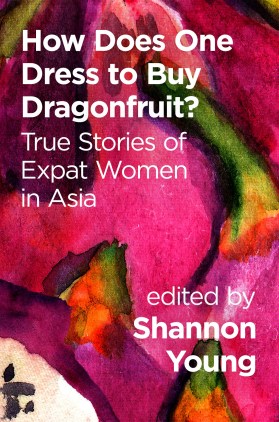
Book Review: How Does One Dress to Buy Dragonfruit?

Dragonfruit

https://thenanfang.com/book-review-one-dress-buy-dragonfruit/

How Does One Dress to Buy Dragonfruit? True Stories of Expat Women in Asia is a new book that explores the feminine side of expat life. Edited by Shannon Young, the anthology covers the stories of 26 women, mostly split between Hong Kong and Japan (from Tokyo to Fukushima), and differs from most travel memoirs by giving new perspectives to Westerners in Asia.

The first, “Forwarding Addresses,” concerns shopping for tropical fruit and coins the title of the entire book. Written in letters, Shannon Dunlap describes her time in Cambodia and the difficulties in learning to speak rudimentary Khmer. The author even recognizes her own privilege in being able to already speak English, and at least she tries to adapt to local customs.

“The Weight of Beauty” by Dorcas Cheng-Tozun takes place in Shenzhen. Again about language, but this time concerning the plight of being a Chinese-American fluent in Cantonese but not Mandarin. It’s not easy to look like everyone else and be judged for not speaking the common tongue, something white expats don’t have to deal with. Cheng-Tozun decides to take a language class, and finds an empathetic connection by discussing life’s tragedies with her teacher.

Stephanie Han is another displaced Asian (ethnically Korean) and authors “Happy Anniversary.” Taking place in the important year of 1997 in Hong Kong, Han is able to eavesdrop on racist rants from the British. A romance in the second-person, she eventually grows past the anxieties of being a nationless expatriate.

“Jewish in China” by Eva Cohen also explores various ethnic combinations. Jews in China are often told they are “so smart and so good at business”, as this writer can attest to. During a Passover sedar, Cohen meets a Chinese professor of Jewish studies with an incredible background. The professor has even published works about the Jews of Kaifeng.

“Huangshan Honeymoon” by blogger Jocelyn Eikenburg concerns interracial marriage and her disappointing honeymoon in Anhui, with a father-in-law and rainy weather interrupting the expected majestic scenery. Chinese husbands are big on filial piety. It’s a challenge, as Eikenburg reflects on the early days of the relationship back when her to-be husband’s father was against their dating, but in the end she feels closer than ever to her new family.

Susan Blumberg-Kason, author of the memoir Good Chinese Wife, lived in Hong Kong in the 90s, and recently returns in “Ninety Minutes in Tsim Sha Tsui” to reflect over some very personal memories, such as receiving news that her Chinese husband at the time had given her an STD. It continues with a one-time meeting of her then-husband’s ex-wife. Don’t we all all wish we could go back and give our younger selves advice?

“Cross” by Safron Marchant shows a deeper side to the themes of pregnancy and motherhood. Marchant tries to start her own family by way of fertility treatment in Hong Kong. The trials are very tough; hormones and clinic visits can be devastating. “Here Comes the Sun” by Leza Lowitz rounds out the theme of motherhood. It’s never easy, as Lowitz fails at pregnancy and goes through the complex process of adopting in Japan. It is heartwarming at the conclusion, with the new mother’s efforts finally rewarded.

Some stories are not as strong as others, which is part of the deal when it comes to anthologies. From getting pregnant in Vietnam to retiring in Malaysia, busing in Bangkok, and vacationing in Mongolia, the range of writing styles and scenes are very diverse.

How Does One Dress to Buy Dragonfruit? is recommended for both men and women. Anyone interested in travel, immigration, women’s issues, and simply human stories will easily find something interesting within this anthology.

Now available at bookstores in Hong Kong and on Amazon.