Shenzhen Daily

SZ Daily
Occasionally I write (and edit) for the local English-language newspaper of Shenzhen, the Shenzhen Daily. All very official. The only English daily in South China…

It’s not much in the realm of hardcore investigative journalism, but some fun lite reads herein. Here are a few humble lite posts worth resharing:

Hong Kong ASSEMBLING Art Exhibition Features Shenzhen-based Artists

Shenzhen-Based Artist Wins Award in Hong Kong

Interview/Restaurant Review: Canadian Opens Vegan Restaurant

Book Review: Good Chinese Wife

Book Review: No City for Slow Men

Film Review: The Wind Rises

Futian District: A Holiday at Lianhua Hill

Interview: American Expat to Run Marathon in Australia

Interview: Expat Cycles to India for Good Cause

Interview: American Starting Local Volunteer Group

Editorial: Kimmel’s Apology Merits Acceptance

Restaurant Review: Vegetarian Oasis

Book Review: Good Chinese Wife

 Cover

szdaily.sznews.com/html/2014-09/16/content_3005971.htm

“GOOD Chinese Wife” is a new memoir published by Sourcebooks, and is a poignant tale expats should enjoy about the overlap of China and the West. Susan Blumberg-Kason details her unfortunate marriage to a Chinese music scholar, as they meet while studying in Hong Kong and then travel to his hometown in Hubei Province before eventually settling in San Francisco, California.

The central question posed by their troubled relationship is whether their differences were due to culture or personality. Interracial marriages may have some problems, but are certain individual defects masked by the excuse of culture?

As their relationship begins, Blumberg-Kason appreciates her future husband’s background. She studies Mandarin as a postgraduate in Hong Kong in the early 1990s, and stays there through the time of the handover in 1997, and for a reader familiar with South China it can be very interesting to compare that time with the current era.

The shy student falls in love with Cai, a handsome divorcee and ethnomusicology major, and the fact that he quickly escalates into topics of marriage on early dates seems to be a source of attraction for her. In that sense, the cultural difference was an advantage.

The book goes over her travels to the Hidden River village in Hunan and subsequent meetings with Cai’s family, and serves as a good introduction to Chinese culture for readers new to the subject of China. Blumberg-Kason is very knowledgeable, and the book is also peppered with quotes from Ban Zhao’s traditional “Instruction for Chinese Women and Girls” which contrasts well with the narrative.

The memoir deals with many hard truths, and Blumberg-Kason can be very frank with personal matters. The first sex scene comes as a shock to the reader, not because of graphic depictions, but because of the realization that the couple is engaged to be married yet they have not even reached that intimate stage. When she does get married, at the young age of 24, their passionless first night together during a honeymoon in a Hong Kong hotel further foreshadows more troubles.

Time and time again, as the book progresses, Blumberg-Kason questions herself and accommodates Cai’s behavior, yet he doesn’t seem to care about his wife’s concerns. From the isolating vacations in his home town, to skipping out on going to an import foreign-language bookstore in Shanghai and an interest in “yellow films” over his own wife, the reader wonders why she comes across so weak and why she puts up with him.

Pregnant, they move to America and the situation worsens. He does not adapt well to living abroad, and constantly complains to her. Though Blumberg-Kason claims he is a good husband during her pregnancy, he grows more distant after their son is born and the book darkens in tone. In particular, when he gives her a STD and then denies it, the situation couldn’t be worse. Always trying to keep the peace, she repeatedly states that she didn’t want to know the truth about his private life.

It soon becomes obvious that their marriage will not work, and yet it takes a long time for the book to finally reach the point when Blumberg-Kason stands up for herself and leaves him. Cai even says to her: “You’re lucky I don’t hit you.” After she gives birth to their son, he tells her “Women are dirty.”

It is a sad state that this is a nonfiction memoir, and so many real women stay in such relationships for far too long. Perhaps there is a lesson there about not rushing into marriage.

“Good Chinese Wife” is well-written and reads like a page-turner novel, although it does get stuck in details at times. If it were a novel, the passages about student dances and descriptions of clothes and food might be cut due to not being relevant to the plot. But the book is a memoir, which is dense with everything Blumberg-Kason has chosen to share.

This book is recommended for readers interested in contemporary Chinese culture, as well as for anyone who has ever experienced problems stemming from cultural differences.

“Good Chinese Wife” is available at bookstores in Hong Kong and on Amazon.

For more from this author, see Susan Blumberg-Kason’s blog at susanbkason.com.

Susan Blumberg-Kason photo

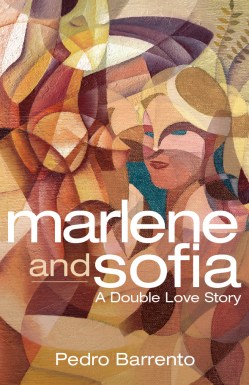
Review: Marlene and Sofia – A Double Love Story

marlene-foramazon

http://www.amazon.com/dp/B00LGXESSA

(Free eBook edition available, today only!)

“Marlene and Sofia – A Double Love Story,” the latest from Portuguese author Pedro Barrento (author of the whimsical-yet-deep Prince and the Singularity) is an ambitious novel.

Complex and thought-provoking, it can be hard to follow the various plots and diaries and takes a while to understand how this would considered be a love story. Characters introduced in separate storylines are slowly developed and then interact with each other, as the reader discovers their connections – be it by relatives or online interaction. The title characters Marlene and Sofia themselves take a while to appear. Then there is Joaquim, Manual who is father to Sofia, and the fling with Tiago. Some chapters are flashbacks to an earlier time as well. Pasts, from the sordid to the innocent, are revealed.

Right from the beginning, there is a clever metatextual section about how best-selling authors the world over secretly being assigned settings and characters by a mysterious imposing body. It is satirical and amusing, and oddly enough it rather fits with regards to Hollywood-style rules in the Writer’s Guild.

But this is no Hollywood formulaic story. It has more depth than that. There are treatises and quips on freedom, sexuality, family, and youth. Observations on the advantages of a simpler authoritarian past versus a bureaucratic modern democracy. Conversations about Marxism. Cynical takes on how men and women treat each other. Tragic short stories that are harsh critiques on sexist conservative 1940s culture, contrasted with the burgeoning sexuality of other character’s histories. Hints of supernatural forces at play. Digital futurism, and more.

In one early scene, an old man walks a dog and the narration describes the differing sensory perception of each species, and then states “they walked along together, but in two distinct universes.” It’s a nice line, and upon reflection it’s also just might explain more to what this story really means…

Halfway through the story becomes extremely intriguing, and gets into more science-fiction cyberpunk elements. Profound questions on the nature of experience and reality arise. Re: worldfromyoursofa.com (Not a real site, yet.)

And, inevitably, as we all know, the uses of the latest digital technology tend to immediately be co-opted by humanity’s baser sexual instincts. As even the most proper old lady users end up paying an online service to see the world through another’s eyes, it quickly escalates to something explicit. And what of those providing the online services, how do they process what they have done?

There are many surprises as the story goes on, and you’ll have to read for yourself to understand the rest. It’s always charming, always makes you think, this double love story. “Marlene and Sofia” is a unique novel unlike anything else out there.

Book Review: The Tibetan Affair

tibetan affair book cover

http://www.amazon.com/The-Tibetan-Affair-Three-stories-ebook/dp/B00JTI91WM

The Tibetan Affair by Wang Xiao Hui is a novella which also includes two short stories. An interesting look into the world of Chinese journalists and the conflicts in Tibet, the main novella offers a readers an opportunity a window to observe this little-known scene.

The introduction comes slowly at first, opening with the personal lives and drama of the Beijing TV crew before they head to Tibet. There are interesting anecdotes along the way, such as the issue of altitude sicknesses and various vices.

Mainly the story centers around Mickey, who is bored of his wife and loves a younger coworker. Trouble comes when they do get to Tibet, from rocks thrown at trains to sexual tension in the hotel room.

Largely a critique of both the reactionary Chinese government and the hypocritical, submissive media, the journalists interview the police who expound on their obviously ridiculous views about foreigners the CIA and the Dalai Lama… Then conversations start to get more cynical, with takes on selling out your own country. The truth comes out and there is a bit of real journalism, but in a certain self-serving way.

But that’s just a backdrop to the romantic plot, which is the meat of the story. The sex scenes are quite steamy. Dreams are a constant theme as well; sexual dreams, dreams of jealousy, and strange nightmares. The plot patiently develops until the romantic plot overlaps with the journalism plot, and then they literally *climax* into a tragic ending.

It’s all too brief, and sometimes the story could have used more action and more character development. There are interesting vignettes and intriguing descriptions, but just not enough going on. The Tibetan Affair is very much worth a read, but it would have been a stronger story with simply more going on.

Continue reading

Book Review: The Exact Unknown

Pageflex Persona [document: PRS0000037_00023]

Isham Cook is quite the blogger. The mysterious Beijing-based writer has completed a new book of blogs reformatted as literary short tales entitled “The Exact Unknown and Other Tales of Modern China,” a follow-up to 2012’s novel “Lust & Philosophy.” Full of grotesque universal truths, strange depictions of Eastern modernity, and the proverbial expats caught in the middle, the book can be flawed in sections but is always a compelling read.

In the introduction Cook explains to readers that he doesn’t want to write about the exotic, tragic China so popularized by fifth generation art films of the 80s and 90s. But rather, as the title states, it’s about modern China. He also clarifies why he uses the term ‘tale’ instead of short story, in order to have a broader outlook covering all aspects of writing from the semi-autobiographical to straight fiction.

The book is erotic, funny, and sometimes profound. Sexuality is a central theme, but doesn’t always take itself too seriously. Even the most philosophical elements are never dry or academic, but with just the right amount of absurdity to entertain as well as enlighten.

“The Persistent” is first, jumping us right into the subject of dating in China. The tale concerns an obsessive woman who won’t go away, and the narrator describes more than a few of his own experiences with Chinese women. The stalkers, the 30-somethings, the virgins. The line “foreign men in this country do tend to attract the psychos of the female population” sums up well what much of these tales are about.  As does a subsequent sentence, issuing no judgments: “This is not necessarily a bad thing.” That’s a bit of the point, wild things happen in China and that’s the reason to be there.

The namesake “The Exact Unknown” concerns seduction via vodka massage, the Surveillance State, a plot about blackmailing over a video which may or may not exist, and in a literally-anticlimactic ending it concludes with no sex. It could almost enter the realm of Philip K. Dick over the speculations upon reality, but ends too prematurely for that kind of depth.

“iProstitution” is one of the funniest pieces, ostensibly about the selling of one’s body for Apple products but really more about sexual frustration in general. “A Little Accident” is refreshingly not about foreigners at all, an original short story just concerning Chinese characters. Again portraying reality as ambiguous, it concerns an elderly man who may or may not be cheating a young woman (and/or doctors cheating her) and the subject of Chinese Medicine which may or may not work at all.

“Good Teacher, Bad Teacher” takes the oft-used campus setting as far as it can go, with an intense Western teacher expounding upon philosophy and culminates in mysterious naked yoga massage advanced courses. There is the unresolved mystery of “Paradox,” whereas an interesting premise is set up with mysterious nude pictures of students emerging yet in the end there is never is a true explanation, no resolution.

“The Curious Benefits of Neurosis” is about various massages, some of which get quite graphic. And hilarious at the same time! The first-person narratives are often the strongest, and (so one assumes) the closest to autobiography.

Some tales like not much of narratives at all. “The Mean and the Angry” is not so much a story as a description of various Beijing subway archetypes. At times it seems as insider knowledge of Beijing is required, and if a reader is not familiar with greater Middle Kingdom tropes then the whole thing may be hard to follow. Still, the audience is sure to mostly consist of expats.

“Let the Sunshine In” is among the best, a truly engaging work of drug literature about a naïve Chinese student’s first LSD experience. Very vivid descriptions of a bathroom setting, which tends to be a terrifying and confusing place when having a bad psychedelic trip. Not to mention the chronological distortions at play.

Two tales are written in play script formats are used, with “The Hickey” and the penultimate “Reset.” They read well as prose in of themselves. It’s hard to expect that anyone will ever act out the plays in real life, with the copious nudity and sex scenes and all; but it’s nice to imagine. “Reset” is the longest piece in the book, about sentient robotic sex toys. The tale is extremely philosophical, hard science fiction, and well-written social commentary/speculation on the future of China and all humanity’s sexual relationships.

The final story, “Injaculation” is written in the second person and mixes Taoist sexuality with hard scientific biological-psychedelic principles. There is a diverse range of writing styles, but same themes keep coming up…

The author clearly has a vivid imagination, and is talented at the craft of writing. Still, whether semi-autobiographical or not, it would be nice to not lean so often on the cliché of expat teacher in China. There are expats doing other things, and maybe more Chinese protagonists would be nice. While the setting is something that Cook is truly an expert on, and he really writes about it compellingly, it can get repetitive. Let’s hope Cook’s next book takes up more original territory. I for one am extremely anxious to read more.

Isham Cook’s blog can be seen at Ishamcook.com and the Exact Unknown is available on Amazon.com.

Book Review: No City for Slow Men

http://szdaily.sznews.com/html/2014-03/25/content_2819411.htm

Image

Despite Hong Kong’s reputation for being very welcoming to foreigners, it’s not always that easy for expats to deeply understand the city. Hong Kong is famous for its international style, and people from all over the world enjoy the city’s comforts, yet there remains a barrier between the locals and those who hail from other places.

To share the truth about Hong Kong culture with the English-speaking world, Jason Y. Ng — resident blogger and columnist for Hong Kong-based newspaper South China Morning Post — has written “No City for Slow Men,” covering every subject an HK-phile could ask for.

Published by Blacksmith Books, the book contains 36 essays and covers a broad range of topics. For some writers, it might be a struggle to have so many chapters and keep the quality high, yet every line of Ng’s prose is well-written and full of crucial information for piecing together the puzzle of Hong Kong’s identity.

Split into three parts, the first section “Our Way of Life” concerns corrupt property tycoons, the culture of taking out loans for expensive watches, and the rise of Taobao. The title piece “No City for Slow Men” is about one of the very first impressions a visitor of the city will have — the high speed of life. Ng laments about the lack of relaxation when he writes, “Hong Kong is charming when it is bustling, but loveliest when it is tranquil.”

The second part, “Our Culture,” contains such topics as Chinese New Year and includes many interesting childhood anecdotes. The autobiographical element starts to seep in, which shows off some of Ng’s best writing. There is more on restaurants and cooking, which is, of course, very important to Chinese culture worldwide, as well as an overview of the history of the city and the famous sites that rapidly changed through generations and development.

Finally, “Our Identity” has some of the most compelling pieces of all. “HKID” says it best: Hong Kong is stuck somewhere between the Chinese mainland and the rest of the world, and that causes a bit of an identity crisis. The tense relationship with the mainland is an important point, reaching new lows with the labeling of mainland tourists as “locusts,” which Ng points out is an undeserved reputation. A letter from a mainland student best expresses the argument against prejudice. Another major theme is the contrast between the lives of expats and locals — with their gambling by way of cards instead of mahjong, the strange sport of rugby and lack of Cantonese fluency.

The plight of the domestic worker is an especially important topic, written about with great heart. The personal stories of abuse and tragedy of Indonesian and Filipino maids are very moving. Ng is certainly a compassionate writer and should be commended for bringing these issues to the public’s attention.

As the book concludes, the final essays cement the autobiographical element. After a piece detailing Ng’s struggles with stuttering in his early life, the penultimate “My Father the Artist” goes over the very man whose illustrations pepper the book. It all ends with a touching interview of the author’s mother.

As an emigrant from Guangdong Province who struggled through years of tumultuous change, from poverty to a happy retirement abroad, she best exemplifies the contradictions that make up the history and identity of Hong Kong. “All these years, mother and son have been swept up in a complicated dance of love and reticence,” Ng writes. “Each aching to reassure the other of their happy existence.”

“No City for Slow Men” is available at bookstores in Hong Kong and on Amazon.

Film Review: The Wind Rises

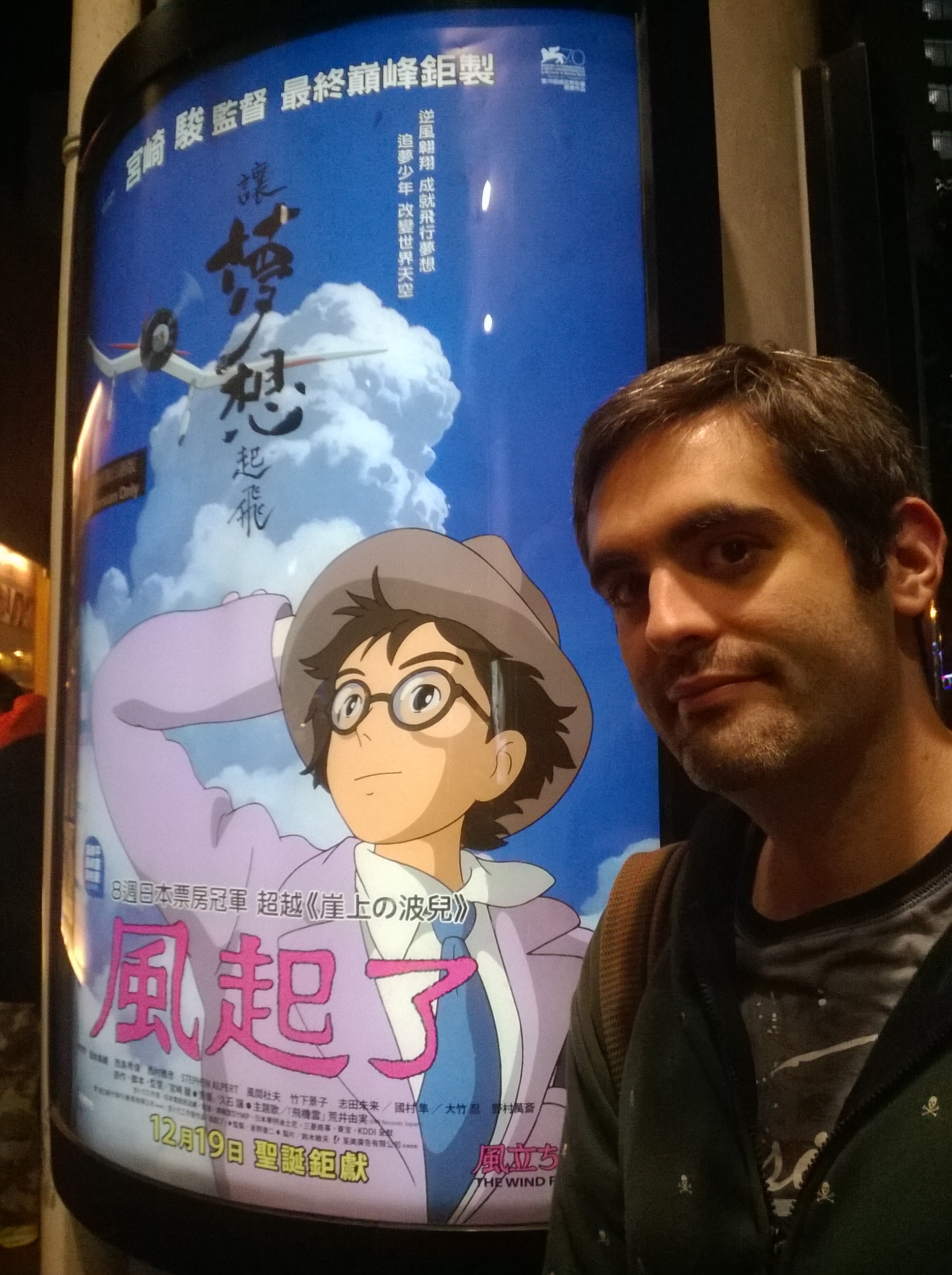
My review of Hayao Miyazaki’s final film, the Wind Rises

Written for Shenzhen Daily, screening in Hong Kong

http://szdaily.sznews.com/html/2014-01/03/content_2743272.htm

Image

WHEN legendary Japanese animation director Hayao Miyazaki announced his retirement earlier this year, his latest film “The Wind Rises” took on a new meaning and received scrutiny as his swan song.

It’s a beautiful, almost flawless film. But the realistic style is a bit of a departure for the director. Unlike the more fantastical films for which he is most famous, such as “Spirited Away,” there are no mythical creatures in “The Wind Rises.” It lacks the environmental messages of “Princess Mononoke” and “Nausicaä of the Valley of the Wind,” and it’s very much a film geared towards adults, without the childish wonder of “My Neighbor Totoro” and “Kiki’s Delivery Service.”

On its own merits, it is an excellent film. A biopic of early Japanese airplane engineer Jiro Horikoshi, “The Wind Rises” may not always be historically accurate but never fails to make the audience care deeply about the lead character. If it was live-action it would surely be taken seriously by all critics. But as a Miyazaki film, it must be compared to his other masterpieces, and even if it’s not his best, it’s still a quality story with far more heart than the vast majority of animation coming out of Japan or America or anywhere else.

The tale opens within the childhood dreams of the young engineer, and the various dream sequences are among the loveliest animation visuals ever seen — and noticeably without the use of computer-generated effects. Dreams play an important role throughout the story, as Jiro Horikoshi repeatedly goes back to the same mystical land of not-yet-possible flying machines and even meets his idol, Italian engineer Giovanni Caproni. It is left unclear as to whether there is something supernatural going on or if it’s only in his imagination. The greater point is that everyone should embrace their dreams.

The boy soon becomes a man, and on a train ride to his university in Tokyo he experiences the devastating violence of the Great Kanto Earthquake of 1923. The scene is powerful, sometimes beautiful and sometimes terrifying, as the landscape bends and curves into impossible shapes. The sound effects are all done by human voices and it’s very jarring to hear such a unique style rarely heard in film.

Eventually Horikoshi rises to the top of his engineering firm, falls into a tragic love as his wife slowly dies of tuberculosis, and designs planes for the military. The film has courted controversy in certain ways; there is ample smoking, which some critics have said is not appropriate for child viewers. More importantly, others question why Miyazaki has apparently made a film that seems to promote the era of Japanese militarism.

But it’s not that simple. Miyazaki is known to have a pacifist stance and has repeatedly promoted peace and cultural exchange with his Japan’s neighbors. In July, on the topic of the Abe Administration and nationalist politics, he was quoted as saying: “Changing the constitution is completely unthinkable.”

In fact, his entire film expresses a great sense of inner conflict over his nation’s evolving identity. There was a rush for development at the time as the recently opened-up country tried to catch up with the Western powers, by means of advancing their military technology. The engineers in the film constantly take note of this unfortunate state of affairs. Yet Horikoshi’s character is a peaceful man who stands up to bullying and always takes care of the weak.

In one scene, he meets a kind German man who insists that Hitler’s Germany is run by thugs and will “blow up,” and then Japan itself will “blow up.” In another scene, the main character must hide from the secret police as they arbitrarily arrest innocent citizens. Most poignant of all, during one meaningful dream sequence Caproni specifically states: “Airplanes are not tools for war. They are not for making money. Airplanes are beautiful dreams.”

“The Wind Rises” is not a story about a simpler time. Japanese fascism is an inescapable backdrop to the period and the horrors of World War II in the Pacific region are always looming. While the central character’s arc is most important, the setting cannot be forgotten. “The Wind Rises” is ultimately a complex story about tough choices, and about a man who has a dream but must make sacrifices, as he makes compromise after compromise with his ethics, his country and his loving wife.

Miyazaki has said he was inspired to make this film after reading a quote from the real-life Horikoshi: “All I wanted to do was to make something beautiful.”

As for the acting, Hideaki Anno — a much esteemed animator in his own right, mainly noted for the “Evangelion” franchise — voices the lead character. It’s an odd choice. Anno is not particularly known for his voice-acting. But Horikoshi is meant to be an awkward man and stands apart from the people around him, and Anno expresses that well.

Hayao Miyazaki has now retired. His own legacy will live on via Studio Ghibli, which will continue to produce the finest in animated storytelling. Some films will even be directed by Miyazaki’s own son, Gorõ. But Miyazaki himself will never be replaced, and fans shall always miss this master director, who has taken a memorable bow with this final film.

“The Wind Rises” is screening in Hong Kong with Chinese and English subtitles.
Book review: Unsavory Elements

http://www.amazon.com/Unsavory-Elements-Stories-Foreigners-Loose/dp/9881616409

If you happen to be a China expat, no doubt you have a crazy story to tell. I may feel like an old China hand myself at this point, but I came in 2008 just as the last of the real wildness was getting homogenized. I have my own stories, but nothing like the best of these. Somehow editor Tom Carter has captured the cream of the crazy China experiences, and what a read it is.

Like any anthology, it can be hit or miss. However, there are no great misses, only adequate stories lost among the truly memorable. From famed “Oracle Bones” author Peter Hessler’s story of refugee thieves at the North Korean border in “View from the Bridge”, to Michael Levy’s opening “Selling Hope” about crooked English teachers (a theme very familiar to anyone living here), every account is solid and interesting and the consistent quality is impressive. But it seems to get darker as the book reaches its conclusion, and I for one appreciated that. Charming expat family stories – such as Aminta Arington’s “Communal Parenting” and Susan Conley’s “Where There Are Crowds” – give way to tales of extremely illegal activity detailing the underbelly of Chinese society – of which I will list my favorites below. Thing about China though, is the dark underbelly is never that well-hidden and we all knew it was there the entire time… My personal favorites: “Stowaway” by Pete Spurrier, about hardcore backpacking and sneaking through trains and living on the edge of running out of money and visas; “Diplomacy on Ice” by Rudy Kong details the world of Northern hockey with a healthy does of extreme bloody violence; “You Buy Me Drink?” by Nury Vittachi details easily-impressed gangsters and scammers; “One of the People” by Bruce Humes might be the most terrifying of all, about being mugged and his time in a Shenzhen hospital almost getting his hand amputated, and yet horrifying though may be it’s always written with lighthearted humor; “Thinking Reports” by Dominic Stevenson is another downer, an excerpt from the hash-smuggling author’s time in a Shanghai prison writing propaganda reports, and as serious a situation as it is he never wants any pity only to tell his story; and “Empty from the Outside” by Susie Gordon covers more drugs and call girls all while living the highlife. Finally, the namesake story “Unsavory Elements” by the infamous Tom Carter. If you haven’t heard, he goes to a brothel. It’s really not as offensive as I was expecting, it’s one of the funniest pieces and gives an important yet irreverent insight into what’s really goes on after late nights of partying in this country. A unique book with a unique take on China, with none of the standard journalistic flair and dull economic theories. This is about real life and a real window into the emerging soul of the rising Middle Kingdom. There is something for everyone in the midst of all these talented storytellers. While it was very entertaining to me as an expat, I would recommend this book most of all to people who have never even been to China. The world should know, these are the real stories of this insanely fascinating land.