Unknown's avatar

About Ray

Raised in America, from the Midwest to the West Coast on a starchy diet of movies and comics and science fiction paperbacks. There's a Mid-East connection in there too. I write about such states as California and Ohio, and such provinces as Guangdong. Now in Taiwan.

Comic: The Train…

Image

Comic3

Novel review – South China Morning Blues

healed1337's avatarhealed1337

SouthChinaMorningBlues_800As someone hoping to get a novel published, it’s only right that I occasionally read a book from a writing friend, blogger or an otherwise beginning author who’s in a similar boat as myself. The book I’m talking about today is written by Ray Hecht, a fellow blogger who grew up in the United States but has been living in China since 2008. So it feels appropriate that his first novel is about the clash of Western and Eastern culture and how it affects different people differently.

View original post 456 more words

End of the Tour: Shenzhen Writers Night

Discover AndExperiencE ASIA


Last weekend I hosted the “Shenzhen Writers Night.” It was something I was thinking about for a while, as a sort of ending to my book tour of the past year. And I wanted to create a special reading atmosphere, so I broadened the event to include other talented authors I know in Shenzhen and South China.

If I do say so myself, I think it went very well. I found a good space at the youth hostel in the OCT area, which is Shenzhen’s own answer to a hipster neighborhood. Me first, I tried out at reading from the last chapter of my novel in order to signify the end. A spoiler if you may, but I had never read that aloud before. The array of talent and creativity from the other authors was amazing; the stories and the poetry and the performances. It went by faster than I realized…

Although this was supposed to be the end of my tour, now everyone keeps asking me when there will be another reading. So, guess I’ll have to do it again! After learning a lot about how to organize and promote such events, and thinking about more writers to showcase from Guangzhou to Hong Kong, I certainly have some ideas.


By the way, the event was even reviewed on the site BASEDtraveler and That’s PRD magazine — here are the two pieces complete with appropriate links from all the participants, so please do check out more from these great writers:


http://www.basedtravelershenzhen.com/shenzhen-writers-night

Shenzhen Writers Night

by Rachel Dillon

Friday 3rd June saw the first ever Shenzhen Writers Night, and I was lucky enough to be a part of it. It was held in the community room of the YHA Youth Hostel in OCT Loft, a lovely area full of arts events and exhibitions, cafes, restaurants, shops and bars, and was an eclectic mix of writers from all over the world with all different styles and genres of writing.

Organised by Ray Hecht, an American who has lived in Shenzhen for about seven years, he opened the event with a reading from his novel South China Morning Blues. Unusually, he read the final chapter, giving us a flavour of the whole book and a taste for more. Luckily he had a few copies for sale. My copy is on my nightstand, waiting to be read.

Next was Amada Roberts of Crazy Dumpling fame. You can read my review of her first cookbook here and she has just published the sequel, aptly titled Crazy Dumplings 2: Even Dumplinger. However, she decided that cookbooks weren’t exactly riveting listening for an audience so she read an excerpt from her debut novel, published under her pseudonym Leigh Anderson. The Vampire’s Daughter, a gothic fantasy romance, was quite a contrast from South China Morning Bluesespecially considering the part she read – a touch on the erotic side with a dramatic cliff hanger to keep the audience gasping for more. Read my review of The Vampire’s Daughter here.

Lom Harshni Chauhan’s novel Visa, Stickers and Other Matters of the Soul is all about raising her daughter with Indian spiritual values while living in Shenzhen, where she has lived for the past 13 years. She read a humorous excerpt about how the name of the book came about during a conversation with her daughter where she declared that, “The body is the visa for the soul.” Very profound for a six-year-old.

The next person on stage was Adrian Blackstock, a musician who has lived in Shenzhen since 2012. He is currently working on an album due to be released in July this year. Called VaChina, it is a musical celebration of China, Africa, Virginia (where Adrian is from originally) and where all humans began. Adrian chose to recite the lyrics of two of the songs from his upcoming album, and gave a riveting performance.

After a great introduction from Adrian, it was my turn. I read some of my travel writing – a piece about travelling on the Trans-Mongolian railway last summer which I wrote as a guest post for Clara from expatpartnersurvival.com and you can find on my blog here; followed by a bit about my experience visiting Chernobyl, which was the absolute highlight of my trip.

I then had the pleasure of introducing my friend Senzeni, whose writing I love. She was one of the finalists of the That’s PRD writing competition last month, along with myself and another friend; Senzeni won third prize with her piece which is published in this month’s That’s PRD magazine. (There’s also a small picture of me!) Senzeni read a short story from her upcoming anthology of short stories, due to be published later this year. Humorous and thought-provoking, Senzeni’s writing is full of emotion and captures snapshots of different people’s lives from a whole new perspective.

The final writer was Aaron Styza, who had come all the way from Guangzhou to share some of his beautiful poetry with us, including The Science of Speech, which has been published on HeronTree.com. Again, a completely different style of writing and genre, Aaron’s poetry was an excellent ending to a very eclectic and enjoyable evening.

As many people are going away for the summer (including me), we are hoping to do another Shenzhen Writers Night in September. Check back here after the summer for more information on future events.

Resources
If you missed the event but would like to find out more about the authors and their writing, here are a few links:
Ray Hecht’s South China Morning Blues and his site www.rayhecht.com.
Amanda Robert’s Crazy Dumplings and Crazy Dumplings 2: Even Dumplinger, along with The Vampire’s Daughter under her pseudonym Leigh Anderson, and her blog www.twoamericansinchina.com
Lom Harshni Chauhan’s Visa, Stickers and Other Matters of the Soul
Adrian Blackstock’s album site vachina.bandcamp.com
My blog www.persephone2015.wordpress.com, which is more about travels outside of Shenzhen
Senzeni Mpofu’s competition article in this month’s That’s PRD magazine
Aaron Styza’s poems on TwoCitiesReview and Sediments Literary-Arts Journal, plus an interview with Ray Hecht here.


http://www.thatsmags.com/shenzhen/post/13952/photos-shenzhen-writers-night-recap

PHOTOS: Shenzhen Writers Night Recap

by Bailey Hu

Last Friday night, June 3, was the premiere of Shenzhen Writers Night, a new event local author Ray Hecht organized in order to showcase the voices of talented writers in the area.

The event was held in the community room of a youth hostel in OCT-Loft, as advertised earlier on That’s PRD.

Seven talented writers spanning a wide range of voices and styles gathered to share their work. Each read an excerpt of what they’d written, sometimes prefacing it with an explanation, before introducing the next author.

shenzhen-writers-night-8.jpg

As the host, Ray started off the night by reading from his latest book, South China Morning Blues, a novel about modern life in the Pearl River Delta.

Two other writers, Amanda Roberts and Lom Harshni Chauhan, also read parts of books they’d published. Amanda, who also runs a local women writers’ group, shared a steamy scene from her gothic-inspired The Vampire’s Daughter (published under the pen name Leigh Andersen).

shenzhen-writers-night-5.jpg

Lom’s chosen excerpt from Visa, Stickers, and Other Matters of the Soul, on the other hand, was a sweet, spiritual contemplation on the author’s close relationship with her daughter.

Two of the writers at the reading were also finalists in the That’s PRD writing contest last month. Rachel Dillon, who also wrote about the reading, shared a couple travel pieces while Senzeni Mpofu, who won third place for her short story, read another piece that will be part of her upcoming anthology.

shenzhen-writers-night-1.jpg

Breaking up the mostly prose lineup, Adrian Blackstock and Aaron Styza made a strong showing with their samplings of song lyrics and poems, respectively.

Adrian turned his reading into a true performance as he used expressions and movements to accompany his musical compositions. Aaron, while opting for a more traditional reading, ended the night on a strong note with his deeply reflective work.

shenzhen-writers-night.jpg

Fittingly, the atmosphere in the hostel felt communal, even casual, with audience members occasionally laughing or asking the writers questions.

Organizer Ray Hecht commented he was “happy with talented writers sharing their stories in Shenzhen,” and that he was strongly considering holding follow-up events in the future.

Senzeni Mpofu agreed. “It was great,” she said, and she was “hoping to see more.”

shenzhen-writers-night-4.jpg

Adrian Blackstock added that he “enjoyed the diversity” of writers and their work on display during the reading.

Amanda Roberts saw the reading as a venue “for authors to get themselves out locally,” and had been pleasantly surprised by some of her fellow writers. When asked if she’d attend future events, she responded: “definitely.”

Book Review: South China Morning Blues

Book Review: Umbrellas in Bloom

umbrellas-in-bloom_800


https://thenanfang.com/book-review-umbrellas-bloom/


Jason Y. Ng is the author of HONG KONG State of Mind and No City for Slow Men, and has now rounded out a trilogy with Umbrellas in Bloom: Hong Kong’s Occupy Movement Uncovered (all published by Blacksmith Books).

While his previous books simply described modern Hong Kong social dynamics, the latest is explicitly political and an altogether different style than the others. Now that he has written book-length political commentary, Ng has become a crucial player by being first to record the 2014 “Occupy Central” protest movement in any English-language book. It is certainly a must-read.

Umbrellas in Bloom covers a lot of ground. The complex political system of Hong Kong is detailed in very readable fashion, with all the grievances spelled out. Various charts explain how the economy has left the majority of citizens behind, and why so many were upset enough to camp out in protest for all those months. Most of all, the mainland Chinese government is shown to blame for suppressing universal suffrage for the former colony under the so-called “one country, two systems.” Indeed, observers of Beijing and Asia as a whole would do well to read this book and understand the climate of Beijing in relation to Hong Kong.

The language of the book does reflect a specific point of view; do not mistake it as a scholarly, objective report. Ng delves deeply into his unique experiences and certainly takes sides. It makes for a good read, and it’s refreshing that he does not censor himself and expresses his informed opinion with confidence. Perhaps there is an element of preaching to the choir, even getting repetitive at times—“blue ribbon” supporters probably won’t change their minds after reading—but for international readers seeking to understand, the writing style works.

The book is very personal as well. It begins on September 28th, 2014, the day tear gas was fired into crowds as the whole world watched in horror. Then, the tone jumps around as it looks back on the history of Hong Kong politics. The central villain is Chief Executive C.Y. Leung, known as a corrupt stooge of the mainland Chinese government, although the entirety of the Legco system in Hong Kong is highly unrepresentative. As 2017 approached—the promised time for universal suffrage, the Occupy Central movement grew. There was also the Scholarism student movement, led by famous student Joshua Wong (Wong wrote one of the book’s forwards). Then the tale of three villages: the occupied areas of Admiralty, Mongkok, and Causeway Bay. Different ideologies and challenges are showcased, from the police to thugs and internal struggles between different factions and nativists. Some of the most heartwarming sections are about the young people he met, such as Kent and Renee and Hinson, engaging characters all.

In the end, due to a court order of all things, the Admiralty occupation fell. Four days later, on December 15th, the police cleared out the other encampments and the Umbrella Revolution was left to ponder its own legacy. Ng is quite optimistic; surprising considering nothing on paper seemed to get enacted yet, but he does point out that other famous social justice movements throughout history took decades to achieve their goals. His conclusion is definitely that it was worth a try. “The 11 weeks I spent in Umbrellaville were the happiest in all my years in Hong Kong,” he writes. Perhaps the soul of Hong Kong has been changed in subtle ways that are not clear yet, but in the long run history will prove that things did change…

There is so much to learn from Umbrellas in Bloom. However subjective, it is definitely required reading for expats and Sinologists. Whether you were there or only watched on the news from afar, the fallout is still occurring today and enlightened observers should learn what they can.

Highly recommended for all China watchers.

Umbrellas in Bloom is available in Hong Kong bookstores, and can be ordered from Blacksmith Books.

Hong Kong Writers Circle Podcast

A couple of weeks ago I went down to Hong Kong in order to participate in an interview with the Hong Kong Writers Circle. I met SCC Overton, editor of their anthology (latest being Of Gods and Mobsters which I look forward to reading), and we had a great discussion about my novel South China Morning Blues and the craft or writing.

(Although one never does like how one sounds when recorded…)

It is online now, and I am pleased to share. Please have a listen and check out the site as well:


http://www.hkwriterscircle.com/hkwc-podcast-16-south-china-morning-blues/


20160512_192952.jpg

Wall Street Journal: An Expat Has Time to Reflect Now That the Party’s Over

Remember that time I was detained by the Chinese police during a drug raid at a rave? My experience being rounded up by the Chinese police at the big Shenzhen drug raid.

I happened to write a piece about it for the Wall Street Journal’s expat blog. It took a while to get edited and published, but it is finally available and I’d like to share. (Also, don’t forget the last time I published with the WSJ)

Please take the time to read. It was a tumultuous time, some harsh memories, but I’m glad that something positive came out of it for me at least… Well, live and learn.


http://blogs.wsj.com/expat/2016/05/24/an-expat-has-time-to-reflect-now-that-the-partys-over/

BN-OD397_Expat__J_20160523102312


Interview with Sonia Su

My latest interview is with Sonia Su of the aptly-named SoniaSu.com (well, I have the same site-naming system). She’s an American blogger in the nearby city of Guangzhou, and works for GDTV. Her blog details the day-to-day challenges of living abroad, written with humor and an eye for details. Be sure to check it out after enjoying this interview!


unnamed


The obvious first question: What brought you to China in general and Guangzhou specifically?

I first came to China (Guangzhou) when I just around 10 years old, with my strongest memory from that trip being stepping off the plane and feeling uncomfortable with the polluted air even in the airport. And yet, after taking up Chinese in college, I ended up studying and interning abroad for a semester in Shanghai and falling in love with the city and living in a Chinese megalopolis. Then when it came time to graduate and look for jobs, I looked for opportunities in Asia. In typical Chinese fashion, through some guangxi, I ended up landing an interview at Guangdong TV and then the job I have now. Guangzhou ended up being the perfect city because many of my relatives still live here, so they have been incredibly helpful in getting me settled. Plus, it’s close to Hong Kong, which is where I inevitably want to be.


How familiar were you with China before you moved permanently?

With some family trips and the study abroad experience, I came thinking I knew at least some of what to expect. But man, soon enough, we expats realize shit happens and there will be many moments, especially in the beginning, when we’ll want to escape ASAP. As a sheltered ABC (American Born Chinese) from a suburban town, I’m realizing that I will never get used to many things about living in Guangzhou, let alone China. There are plenty of ups and plenty of downs, but it helps to try to develop a deeper understanding of China’s history and its people to get you though some of the outright unacceptable-to-foreigners aspects. Within these several months I’ve been here, I’ve already explored so much of my family’s hometown and continue to learn every day.


What has been the biggest challenge to living abroad?

While my language skills need work, I would say cultural differences are more challenging. Even if you know how to express something in Chinese or even if you’re talking with a local who speaks English fluently, at the end of the day, we have different ways of thinking, perceiving, acting, etc. It can be cool to learn about these often-vastly different points of view, but it can also be frustrating to have to explain why freedom of press, for example, is so very important while stuck in the land of the Great Firewall. Frankly, priorities vary in a country where someone with a monthly income of 10,000 RMB ($1,500 USD) in the 1995 was considered today’s version of millionaire and the poverty line was 173 RMB, compared to around 2,000 now, according to my cousin. It can be hard to keep that in mind when you see kids drop their pants and pee on the streets on your morning walk to work.


What is it like working in the media in China?

Among the many constant reminders that we are no longer in America, working in media is one of them. Propaganda, which is not a negative term here, is as rampant as one would expect. I could go on for days or even weeks about my experiences.


Do you like working on-camera doing interview and hosting shows?

I’ve been working both on and off camera, even directing, hosting, and producing my own shows. That statement alone speaks to the insane opportunity one has in China. Working for the TV station itself opens so many doors. I’m grateful.


Your blog is called “adventures abound”; do you consider yourself an adventurer?

I’m an adventurer from the perspective of someone born and raised within the bubble of American suburban life. From another, perhaps not. For the most part, these aren’t exactly the typical adrenaline-pumping adventures of a world traveler. Just recently, I had to go on a last-minute visa run. To someone else, that sounds like the worst “adventure,” but then you read my blog and find out I actually had an amazing time making the most of such scenarios. And the fact that I live on my own on the other side of the world makes anything I do an adventure I need to record.


Your blog is about the day-to-day life, and you do post rather frequently. Do you ever find it difficult to come up with new content or do you write all the time?

I rarely have trouble coming up with something to write about. Even if I were still in Maryland, I would probably write about how I have nothing to do. But I’m in China. When is there not a day when I don’t experience something crazy or at least potentially interesting to my readers?

I’ve also just always been a writer in some way. I grew up very soft spoken and would let out my thoughts via journaling. That said, my blog is far from being any literary masterpiece. I write very casually.


How would you describe your writing practice?

Now I tend to blog weekly about the experiences and observations I’ve collected. I take a look at all my photos and notes and go from there. And given how many photos I generally take, blogging ends up taking quite a bit of time but is definitely worth it. Taking notes is essential, not necessarily because I’ll forget experiences so soon, but rather those minute details that make a story better.


What do you like to read?

I’m less of a blog reader and more of a newsletter reader. I subscribe to an unhealthy number of newsletters, which include blogs, but as for going directly to blogs or websites that aren’t Facebook, Twitter or YouTube, that ironically isn’t a habit of mine.

Being in China and understanding that there’s a lot I don’t understand, I’ve been reading a lot of nonfiction on China. One of my 2016 resolutions is to read at least one book a month, so I’m currently finishing up Peter Hessler’s Country Driving. It’s my first Hessler book, and I already can’t wait to read his others. I also highly recommend the Sinica podcast for anyone interested in China.


What’s next? Do you plan on staying in China?

I’m planning on applying to grad school to get a Master’s in Chinese studies. When I first came and got the job, I had only planned on staying at most two or three years, but now I’ve realized the need to continue my studies, whereas before I would always tell my dad a Master’s isn’t necessary for what I want to do, which was just journalism at the time. Living in China as an ABC has really sparked that passion in me to delve deeper into U.S.-China relations and aspire to be a “China expert,” or at least follow those out there now, including many who appear on the Sinica podcast. So I’ll stay probably until the end of this year, but you’ll definitely find me back here eventually.


Scraping together some Chinglish

Well, here’s a few:

I honestly don’t get this ad. Is it seriously a reference to the recent anniversary of the tragic Cultural Revolution?


And, please take care…

Art and the City panel

Went to the Art and the City panel at 812 Design Center in Shenzhen last week.

Here is Bronwen Shelwell’s speech on microspaces, about working in South Africa. Artists mentioned include Steven Hobbs, Hedwig Hoben, Nina Barnett, and Theaster Gates.

Forgive the many cuts in my edit, because there were lots pauses for the Chinese translator to speak which I took out of the video.

Very interesting, and inspiring!

Vid: glass-blowing studio in Dream Community, Taiwan

As detailed in my last blog post, I recently went to the Dream Community in Taipei, Taiwan.

And here is a short video showing a bit of the process which takes places in the glass-blowing studio:


Dream Community – Art Center in Taipei, Taiwan

1

Recently, I took a trip to the Republic of China — also known as Taiwan — to visit the great city of Taipei. There comes a time when we all need a break from the mainland.

My girlfriend was invited to participate in a workshop at 夢想社區 // the Dream Community, and do check out the link. So I tagged along for the holiday weekend. She is a glass-blower, and relished the opportunity to use their studio for which to work on various creative projects. I was very lucky to be there to observe.

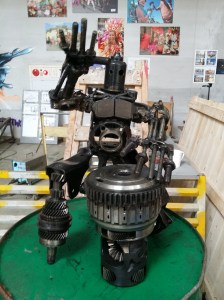
The Dream Community is a fascinating place, inspired by the aesthetics of Burning Man (recall I’ve been there) and full of amazing structures. The have a camp called Burning Mazu at the festival and it was quite cool to see how it gets built all the way on the other side of the world. The models, the building of parts, the planning and the labor. It sure takes a lot of work.

20160430_121303


The entire space was filled with glorious wonders…

20160428_151322 20160428_151148 20160428_151130 20160428_150109 20160428_150823


The space consists of several buildings with workshops inside. You can go there to explore, soak in the atmosphere, and even drop by while people working on projects.

20160428_150843 20160430_121156 20160428_145839

20160428_152125


A lot was going on. From the glass furnaces to feats of art car engineering. For one thing, here’s a tile project:

20160429_095136


Continue reading

Taiwan Chinglish?

Hello, coming at you from Taipei, Taiwan. I always love visiting here.

Unfortunately though, Taiwan is low on Chinglish. Only one I found is this and it’s even supposed to be artistic:


And here are a couple of others from back in SZ


More on Taiwan later, stay tuned…


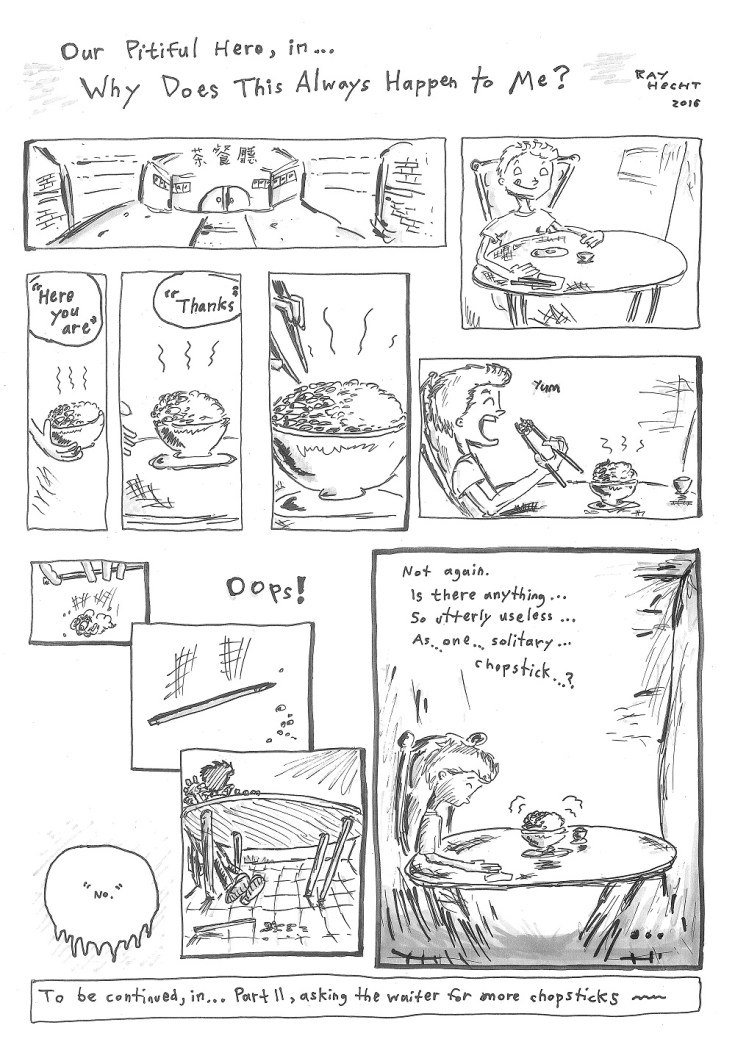
Why Does This Always Happen to Me? – another comic

Image

WhyMe

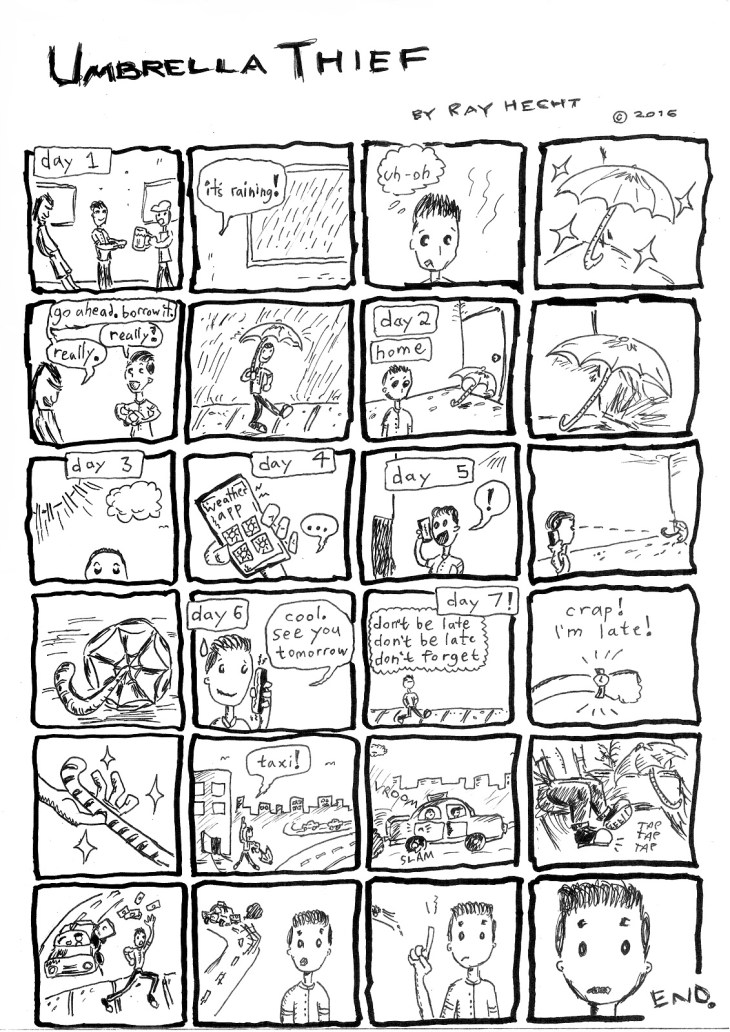
Umbrella Thief

Image

Thief1