The Wire vs. The Shield
This is not a timely post at all in the year 2026, but it happens to be currently interesting to me, so here I go:
As a young man in the 2000s, it was almost my duty to watch these two gritty cop shows about crime and corrupt authority figures. When the Shield came out on cable in ‘02, I used to watch it every week on the FX channel. In those early days of prestige TV, it was gripping television unlike anything I’d seen before.
I’ve never been one to watch regular cop shows, with their quickly solvable mysteries of the week, it just wasn’t an interesting genre to me. I’ve always preferred long-running dramas that take a lot of work for the audience to keep track of ambitious storylines over the course of months and months—perhaps that’s why I’m also such a fan of comics—so those other shows where they catch the murderer in under 45 minutes aren’t particularly interesting nor rewarding. I want stories of a higher caliber, and the Shield didn’t disappoint.
The Wire also premiered in 2002, and I had heard a lot of buzz about it over the years, but I didn’t have HBO and it wasn’t something I followed as it was coming out. Only after the entire series concluded did I finally get around to watching it on DVD in the late 2000s, and it has stuck with me ever since. Perhaps it was better to binge, anyway.
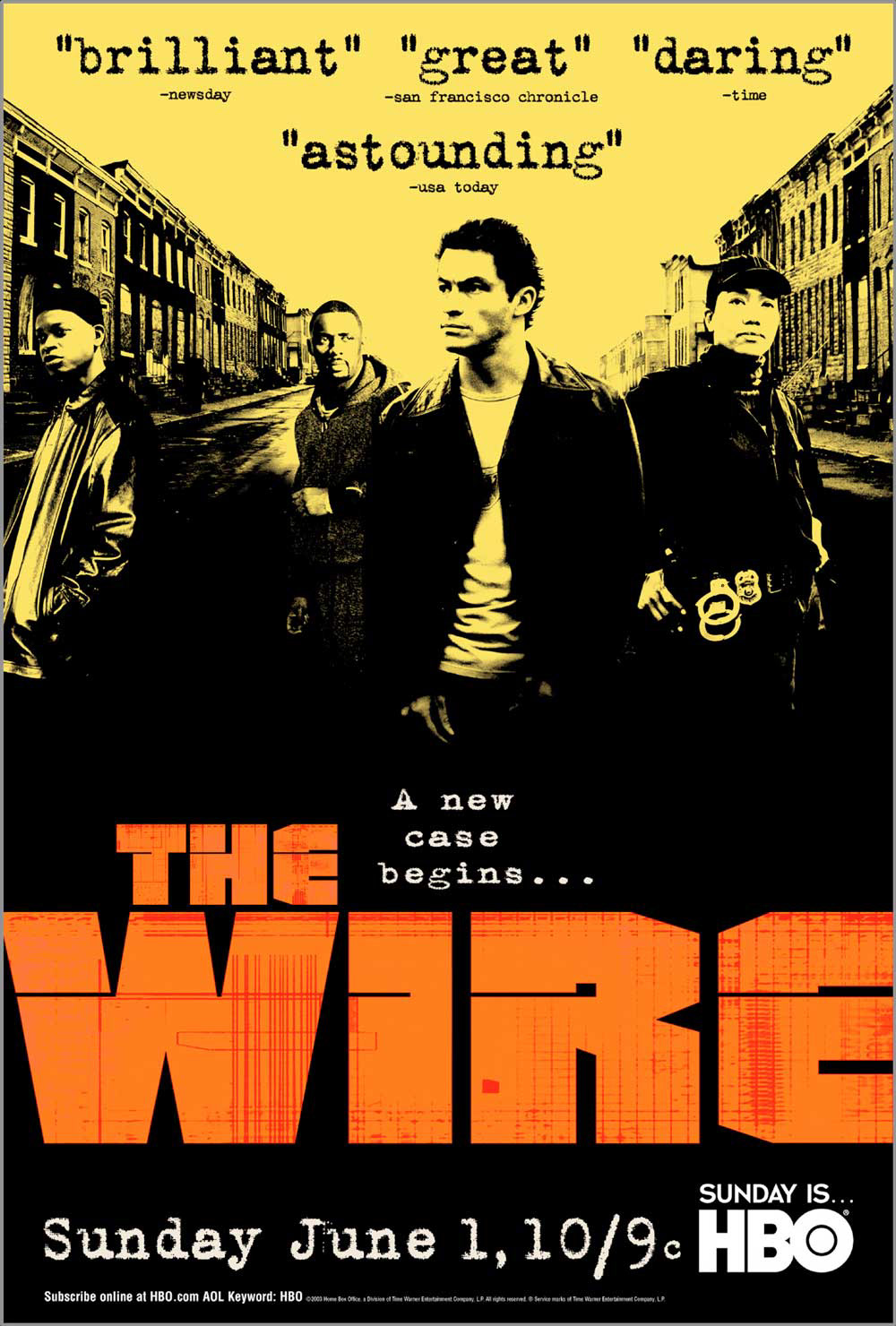
The Wire famously struggled with ratings, ever on the cusp of cancellation, and it never even won any awards. But history has been kind to creator David Simon, and now his masterpiece is regarded as one of the greatest television series of all time.
It may be apples and oranges, but I had always found the argument about which show is better to be very interesting. Some say the Wire is a deeper more complex story, a novel dissecting the degradation of an entire society. Others say the Shield has more intense drama, Shakespearian in its betrayal and moral corruption. What a fun debate, and whichever is the “winner” still leaves the other comparable to the best of the best.
When the HBO Max streaming service came to Taiwan in late 2024, I was initially most excited to re-watch the Wire with my partner and experience that world all over again. Before writing for TV, David Simon was a journalist in Baltimore for over a decade, and his experience shows. The thing about the Wire, is it was never just a cop show. It was about the entire system, from the laws of elites on high all the way down to the drug lords running those in poverty. It was about the criminals as much as the police chasing them, and that made it so fascinating. The gangbangers led by Avon Barksdale and the fan favorite Stringer Bell (played by Idris Elba before anyone had any idea he’s British) had as much screen time as Detective Jimmy McNulty and his team of wiretappers. Michael B. Jordan played a lowly drug dealer kid Wallace when he was only fifteen years old. I also loved Detectives Bunk, Freamon, Kima, and even Herc. The queer perspective was shown with stickup artist Omar. It had everything.
One of the most interesting characters, with an absolutely heartbreaking performance, was that of Bubbles the down-on-his luck junkie. Even the drug addicts where given three-dimensional humanity in this, something very rare in American media. An incredible ensemble cast, featuring the citizens of Baltimore from every class ranging from mayors to the most unfortunate of the poor.
At first, the show seemed to star McNulty—played by the also-British Dominic West—as the cynical detective who’s smarter than everyone else and gets chewed out by the bosses. A bit clichéd, admittedly. Slowly, as the ensemble cast expanded and was further developed, there was less of a focus on him until he all but disappeared. He did come back in the end, but the star was always the entire city of Baltimore as a whole more than anything one individual.
The second season was about crooked unions down at the docks, which was less centered on the Black experience, and had mixed reviews from some for that reason. The third season went back to focusing on gang warfare, then with more politics, and the fourth season was definitely the best about the institution of education and failing schools. Watching those arcs will break anyone’s hearts. And even if the fifth season wasn’t as well liked, despite Simon’s expertise on newspapers, the finale didn’t take away at all from what came before. I loved re-watching it all. The Wire is eminently timeless. It will always hold up.
Now, earlier this year I felt I finally had time to re-watch the Shield. I’m halfway through, and I have some thoughts on that old debate. I am now totally sure of the winner. In fact, in retrospect, it’s been really easy to choose.
The Shield, from it’s very first episode, was trying its best to be as outrageous as possible. Detective Vic Mackey of the Strike Team is shown to be dirty cop, who cheats on his wife because of course, and there’s always blaring music to let you know how messed up everything is. There’s a subplot about a pedo ring, Kid Rock music in the big climax, and then Vic kills another cop (who looked like he’d be a main character) for a final twist. It was a bold introduction from the get-go.
The Shield was indeed cool, but one thing it is not is timeless. It is extremely a product of its time. Specifically, a product of the 2000s, and was just trying too hard to be edgy. The shaky camera and raprock soundtrack is constantly trying to shock the audience, and it isn’t a smooth experience. Although the Wire on HBO was allowed to say “Fuck” and show nudity, it was shot in a more conventional way and sometimes showcasing society’s ills in a more understated style actually leaves one with a deeper impression.
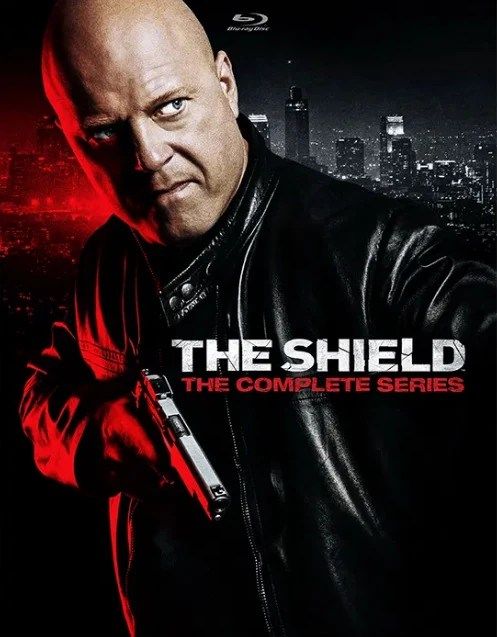
Showrunner Shawn Ryan deserves a lot of credit for his show, which started out inspired by the real-life Rampart police scandal in Los Angeles. In fact, the show was almost called Rampart but that would have gone too far. Police corruption is a serious issue, and does make for excellent drama. Michael Chiklis’s performance as Vic Mackey was award-winning, deservedly so. There was a great cast too, over at the fictional Farmington division station, with the other officers such as Dutch and CCH Pounder’s Claudette standing out. Walton Goggins as Vic’s messed up partner Shane was the breakout role, and the show’s biggest legacy might be Goggins’s eventual stardom.
But overall, the Shield was almost always about Vic. It was his relationships with the other cops that made for the strongest conflict, fighting with his captain, along with his dwindling homelife with his (ex-)wife, his disabled kids, even his prostitute-with-a-heart-of-gold friend. It’s interesting, and the grimy parts of L.A. do make for dynamic filmmaking. On every level it is a strong show. It’s just not a broad dissection of American life, not quite that level of epic. That’s still a pretty high bar.
I’ll happily watch all the way up to the seventh season, I’ll be thoroughly entertained by the Shield, for sure, but I’ll never again compare it to the Wire. It’s the latter series that truly understands a major American city from top to bottom, with all its tragic failings. And thus, to re-watch and to study the Wire, is to truly understand America.