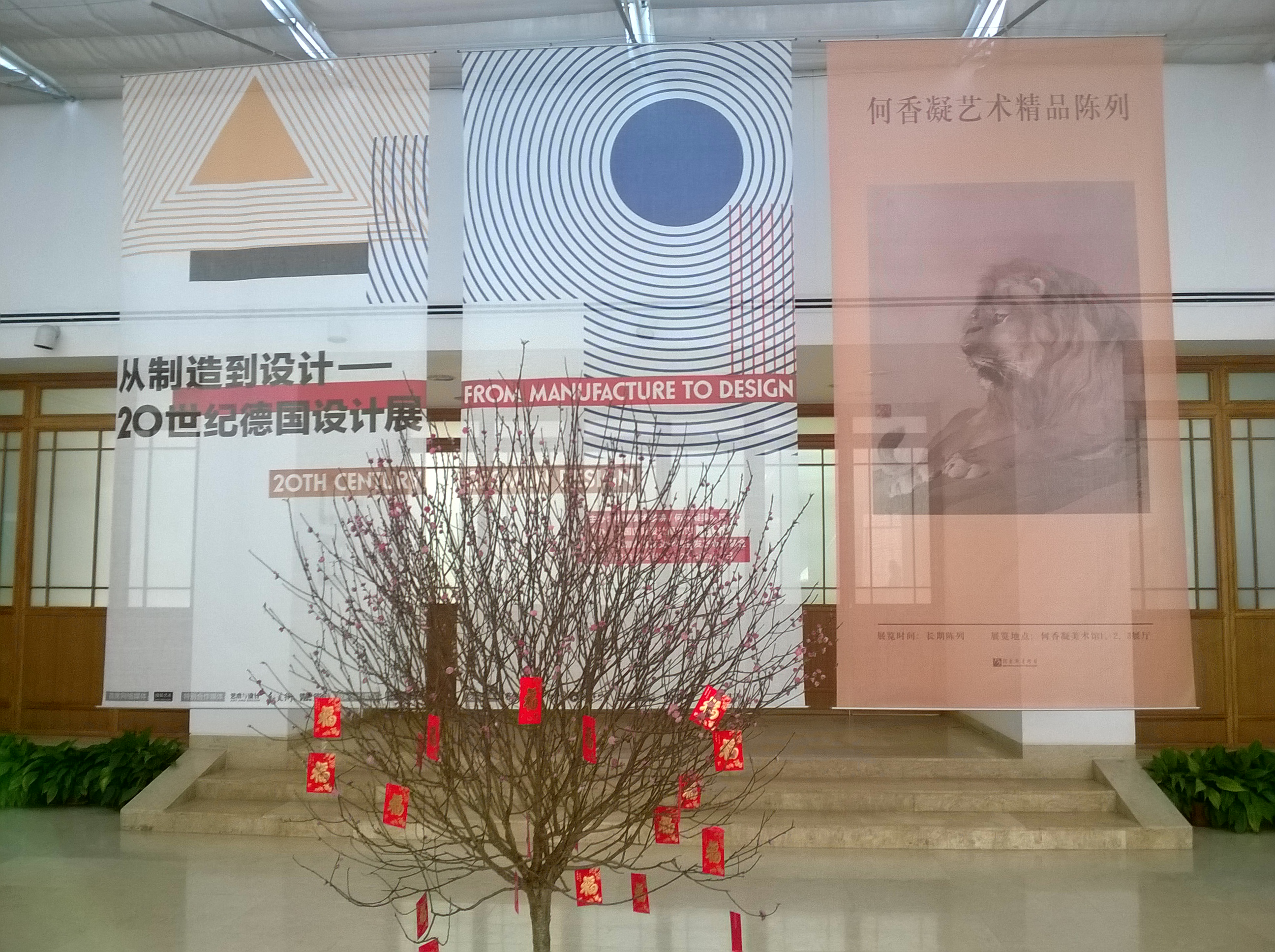
Shenzhen Art 2: He Xiangning 何香凝 “From Manufacture to Design: 20th Century German Design”

On the next installment of my holiday-in-Shenzhen, let us check out He Xiangning (何香凝) museum.

Here is an excerpt from an article I wrote in May of last year about the museum, outdated but some pertinent information: http://szdaily.sznews.com/html/2013-05/03/content_2466061.htm

Right next door and also in the OCT area is the more traditionally styled He Xiangning Art Museum devoted to the artist of the same name, who lived from 1878 to 1972. Born in Hong Kong, she later studied in Japan, and rose to prominence during tumultuous times in Chinese history. The first floor has a section devoted to her hybrid Japanese and Chinese style water paintings, full of mountainside landscapes and poems. The remaining halls are simply titled “Collection of Contemporary Art,” an eclectic mixture of mainland art from classical realism to impressionistic abstract. The second floor includes sculptures and photography, and the present exhibition will continue until this weekend. It all makes for a lovely atmosphere, but unfortunately the museum is not very English friendly and translations are lacking. Open 10 a.m. to 6 p.m. Admission is free.

Closed Mondays by the way.
Image

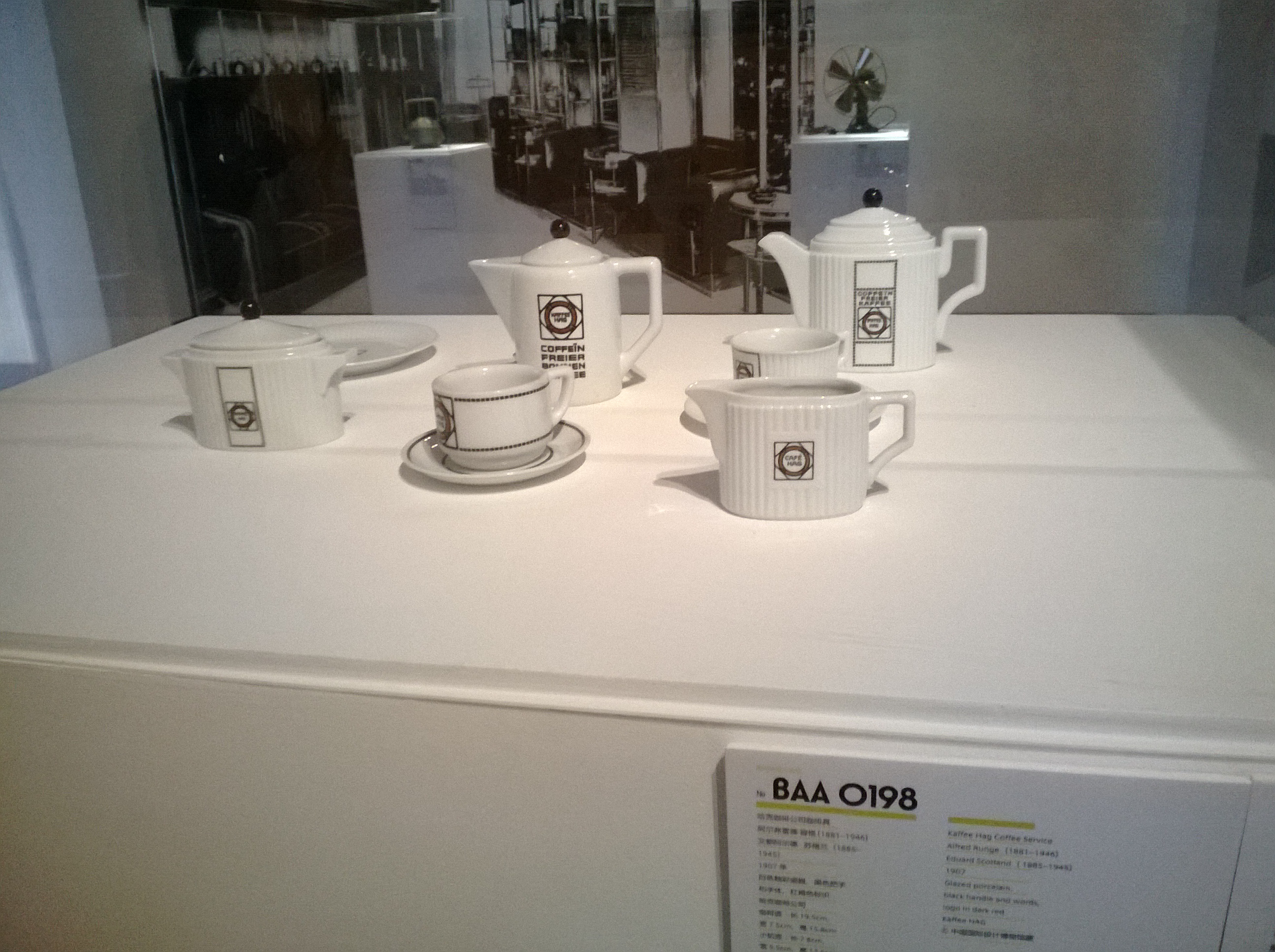
The current exhibition concerns German design through the ages and is quite interesting indeed.

Shenzhen Daily has more, as a matter of fact… http://szdaily.sznews.com/html/2013-12/10/content_2714414.htm

“From Manufacture to Design: 20th Century German Design” in He Xiangning Art Museum narrates the story of Germany’s design success, giving an inspiring overview of the past 100 years.

The exhibits are provided by China Design Museum from the prosperous coastal city of Hangzhou. In 2011, Hangzhou purchased 7,010 pieces of items from German collector Torsten Broehan, including furniture, houseware and posters, dating from the 1850s to the end of the 20th century.

Many of the pieces, which make their public debut in Shenzhen, are considered landmarks of the design industry. One of them is a prototype of the Barcelona Chair designed by Ludwig Mies van der Rohe and Lilly Reich. It was originally designed for the International Exposition of 1929, which was hosted by Barcelona, Spain. The chair’s frame was formed by steel, with a leather cushion above, giving it a smoother appearance. Since 1953, Knoll Inc. has manufactured the chair and copycats also proliferate worldwide. The prototype exhibit in Shenzhen doesn’t have a leather cushion.

“This exhibition focuses on the historical relationship between designers, manufacturers and users. Visitors will be informed about German design’s evolution from a social perspective,” said Zhang, who works for China Design Museum.

The striking feature of the exhibits is their simple and neat modernist style. Zhang said in the early days of industrial development, to meet the need of mass production, German designers had to adopt a simple style.

“Traditional crafts focused on art while industrial manufacture considered techniques. For mass production, designers needed to solve the integration of techniques and art,” said Zhang. “Although Britain was the frontier of the Industrial Revolution, English Arts and Crafts Movement and English Art Nouveau failed to integrate traditional crafts and industrial mass-production techniques, while Germans made it. Germans believed that the Industrial Revolution was basically a reconstruction of productive relations and would finally benefit the masses.”

The exhibition, with more than 100 pieces of work, covers all important periods of German design’s development, including 1899’s Darmstadt Artists’ Colony, 1907’s Deutscher Werkbund (German Association of Craftsmen) and the Bauhaus school of 1919. The two associations and the school were the driving forces in Germany’s modernism in the early 20th century. Outstanding designers included Peter Behrens, Ludwig Mies van der Rohe and Walter Gropius.

Darmstadt Artists’ Colony was the center of German Art Nouveau and the earliest group of designers to experiment the combination of crafts and techniques. The Deutscher Werkbund was meant to establish a partnership of product manufacturers with design professionals to improve the competitiveness of German companies in global markets. One example was Behrens’ pioneering industrial design works for the German electrical company AEG, which successfully integrated art and mass production on a large scale and developed a consistent corporate identity.

Bauhaus was founded amid the ideas of rational, functional and standardized manufacture. The school was famous for not only the approach to design it taught, but also its experimental workshops which focused on practice.

When Bauhaus was closed under pressure from the Nazi regime, who claimed that it was a center of communist intellectualism, some designers and manufacturers had to leave Germany and immigrated to the United States, which helped take German design concepts to the world.

Apart from showcasing products, the Shenzhen exhibition also displays German efforts in promoting a lifestyle to the world. The Deutscher Werkbund’s motto “from sofa cushions to city-building” indicates the integration of products and life, promoting a better way of living. The association also held a string of renowned industrial design exhibitions, such as the Cologne exhibition in 1914. The acceptance of modernist design into everyday life was the subject of all these publicity campaigns.

In less than 100 years, Germany used clean-lined designs, standardized manufacture and newly developed materials to put itself on a competitive footing in the world.

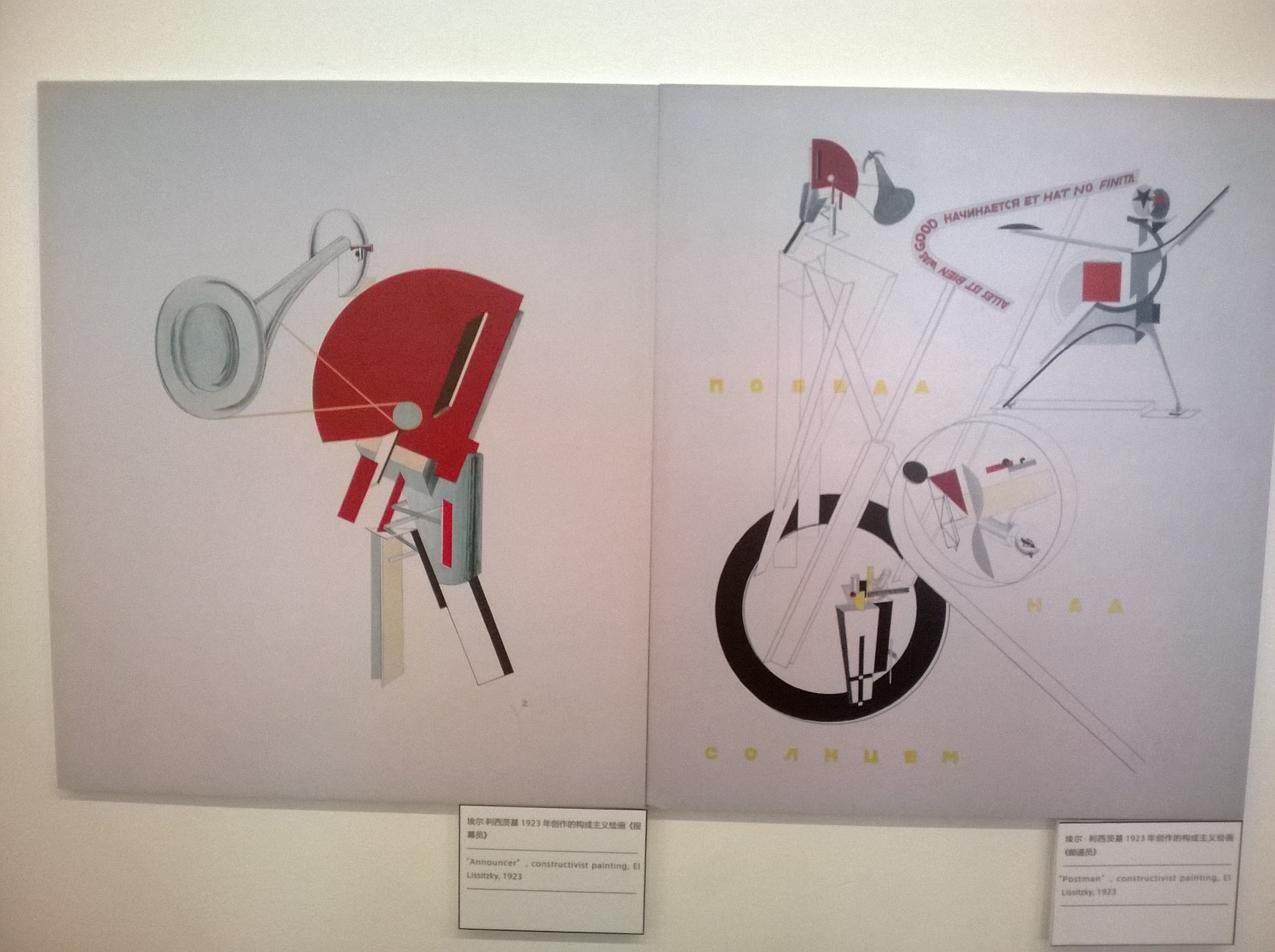
Image

Image

Image

Image

Shenzhen Art 1: OCT Art & Design

Having stayed in Shenzhen during the Spring Festival holiday, I decided to play the tourist in my own city. I went from museum to museum, getting my art on and trying to find my own creative inspiration.

It’s been said many times before that Shenzhen has no culture, but we all know that not to be true…

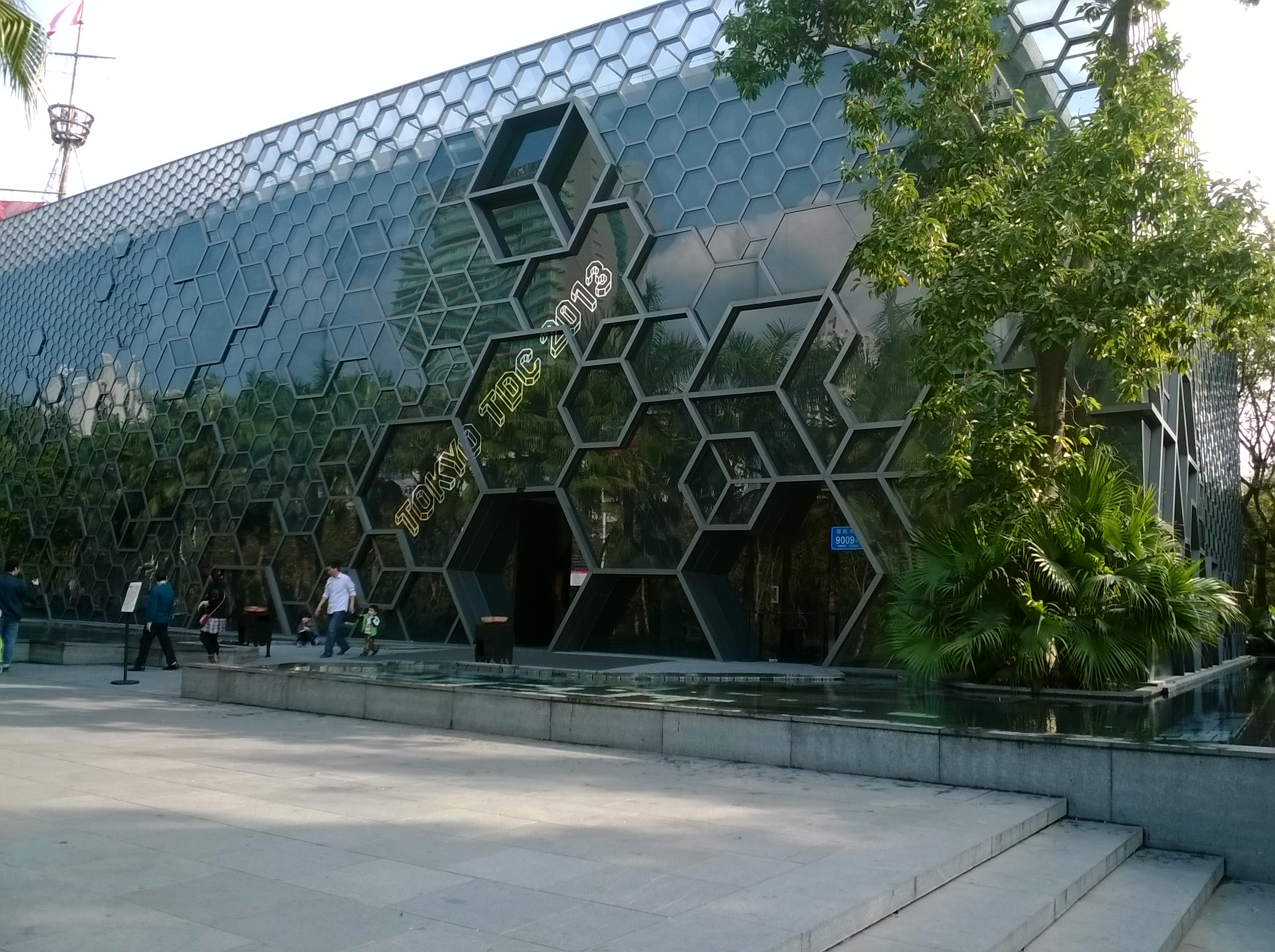
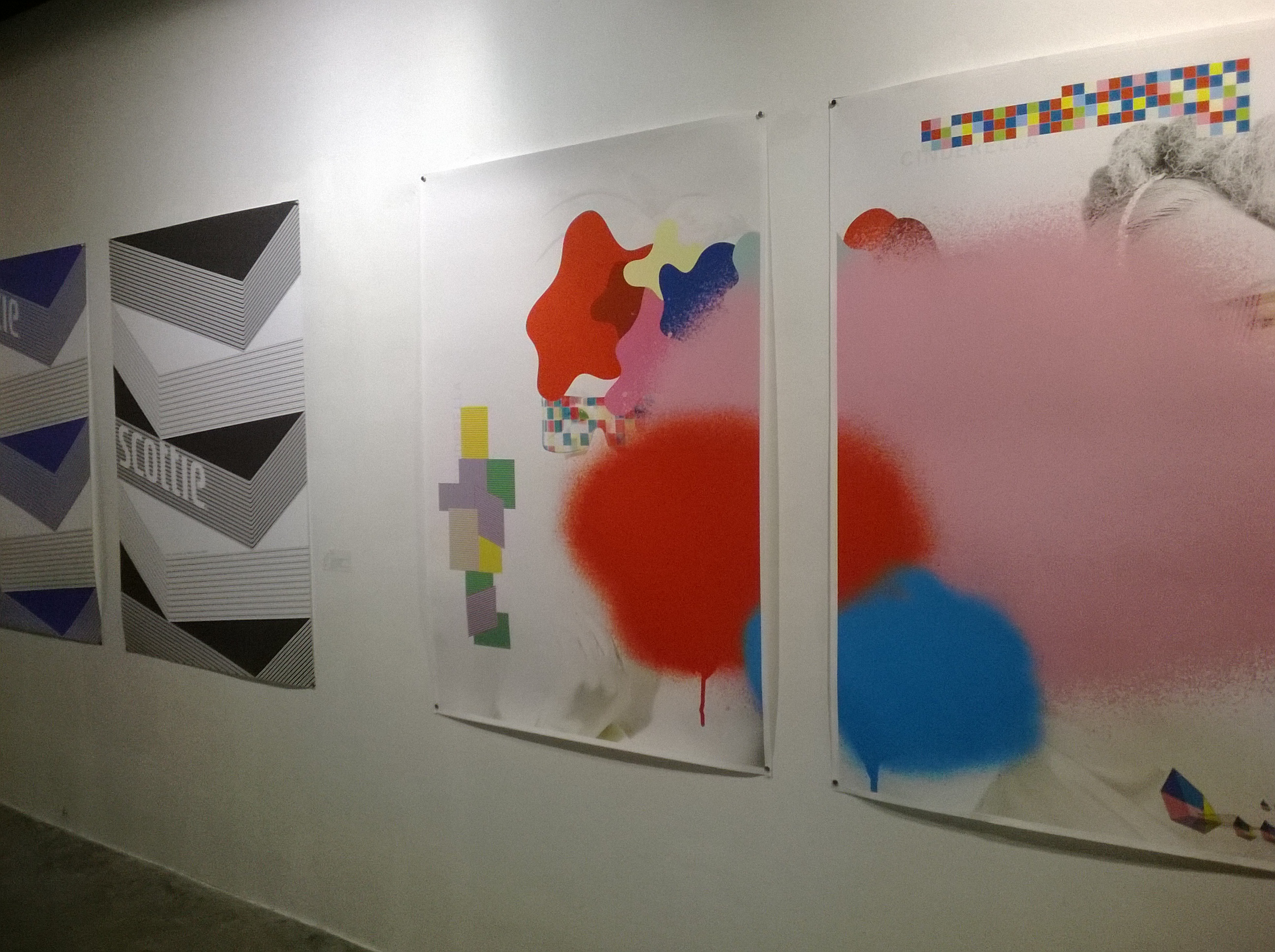
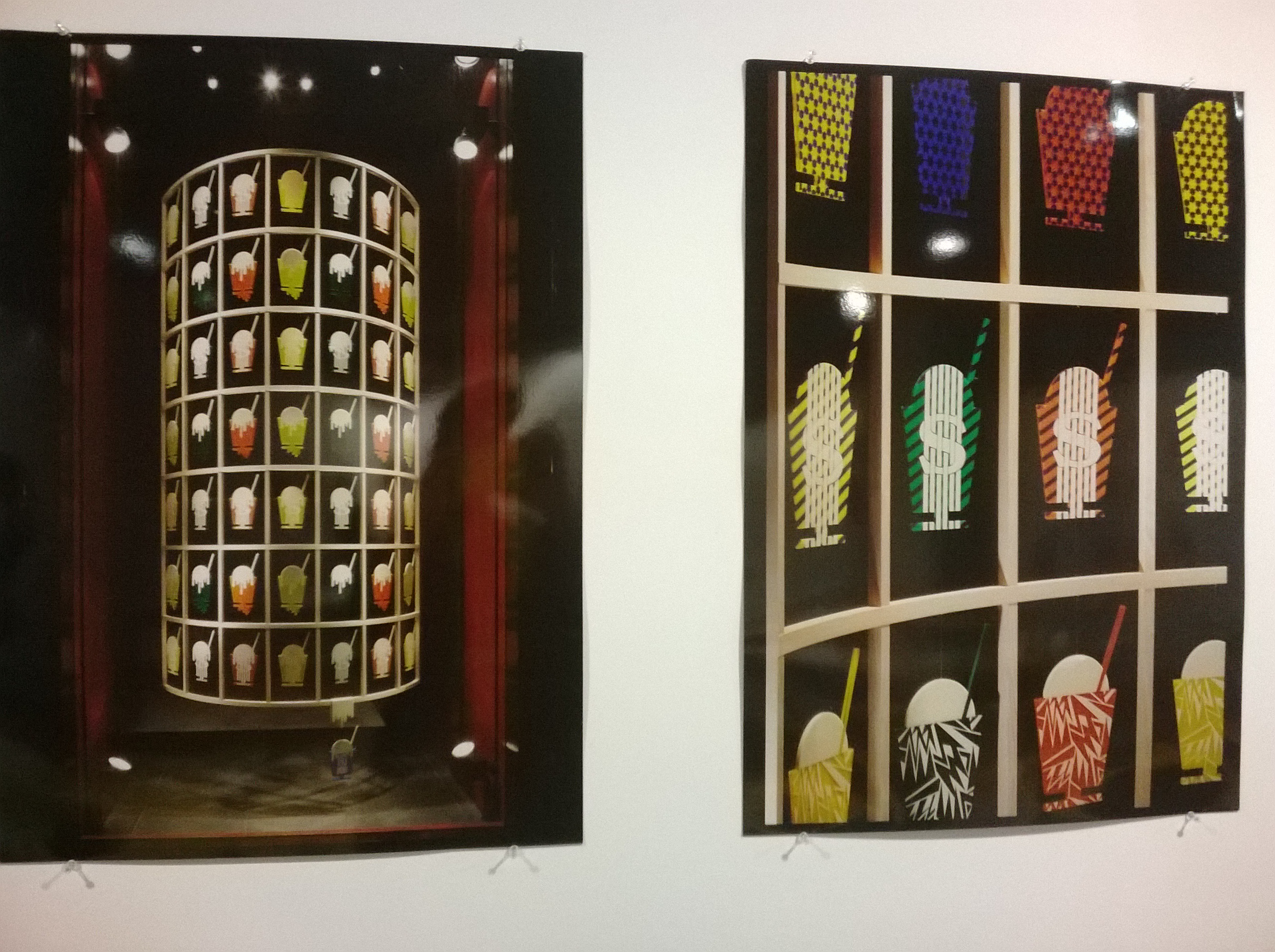
This first installment is the OCT Art & Design Gallery. Featuring various winners of Tokyo’s TDC competitions, all focusing on modern design. At a cost of only 15 to enter, it’s always worth a look!

Image

Here is an excerpt from my museum article published last year for Shenzhen Daily, concerning OCT Art & Design: http://szdaily.sznews.com/html/2013-05/03/content_2466061.htm

(However, note that it may not be up to date)

On the other side of the district, bordering Nanshan, is Overseas Chinese Town, also known as OCT. Rich in creativity and hip design studios, several art galleries are located in the area. Adjacent to Splendid China is one of the best — OCT Art & Design Gallery. The building itself is totally avant-garde, a large black glass building held up by steel hexagons. With a focus on powerful contemporary design and hosted by Tokyo Type Directors Club/TDC, the gallery is full of nominees for their annual prizes. The subject matter is very diverse, including book design, typography, catalogues, record sleeves and other products. The first floor is especially concerned with fonts, and also has video installations featuring music videos by Icelandic pop star Bjork and Japanese rock band Androp. The second floor has posters, newspaper ads, bags, logotype, stationary and packaging, with designers from such countries as Britain, Russia, and Japan. The sparse third floor showcases the winners of the TDC prizes, from 2002 to the present. Open 10 a.m. to 5:30 p.m. The price of admission is 15 yuan (US$2.4), 8 yuan for students. Admission is free for all on Tuesdays.

Image

ImageImageImageImageImageImage

Image

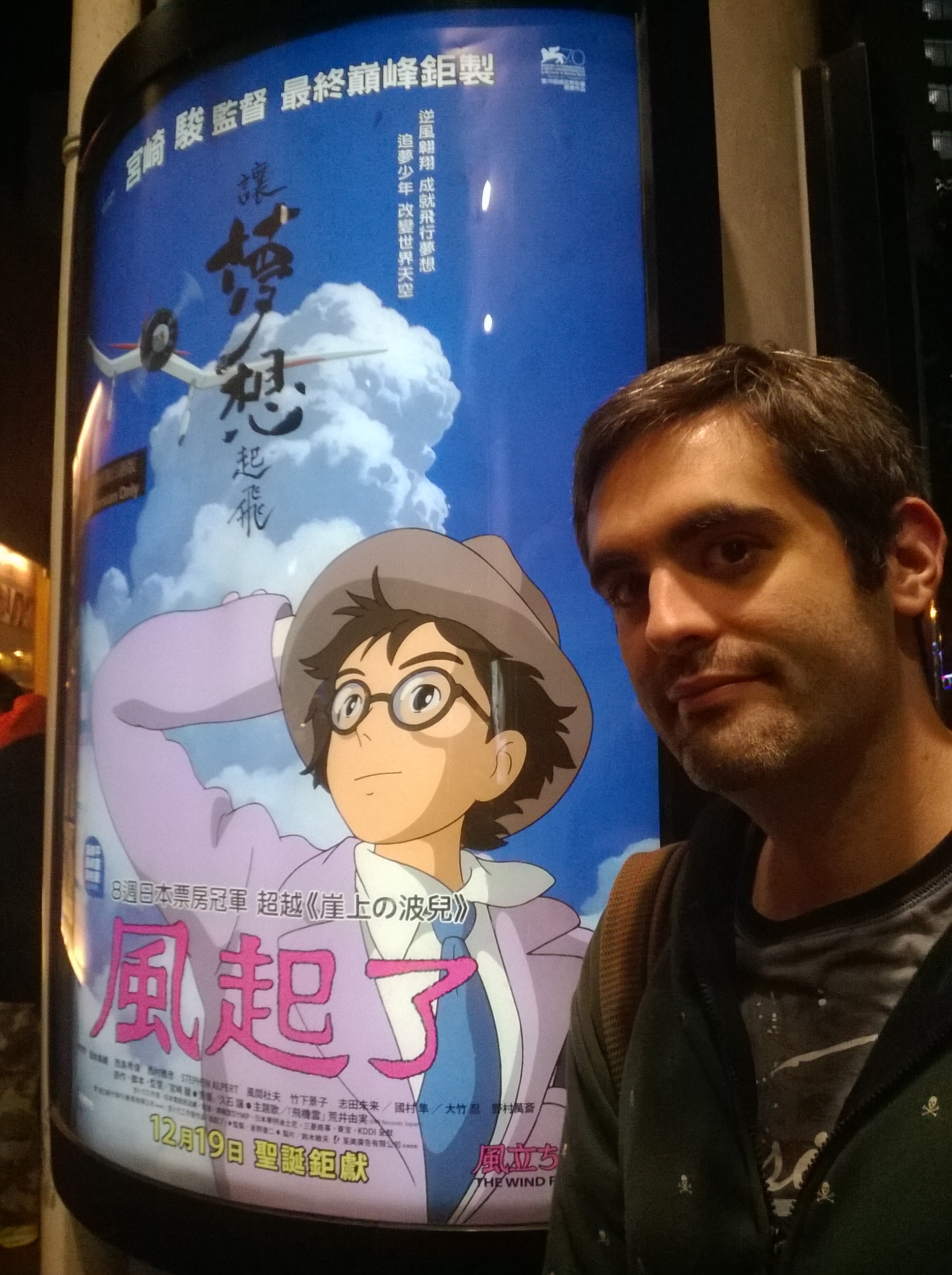
Film Review: The Wind Rises

My review of Hayao Miyazaki’s final film, the Wind Rises

Written for Shenzhen Daily, screening in Hong Kong

http://szdaily.sznews.com/html/2014-01/03/content_2743272.htm

Image

WHEN legendary Japanese animation director Hayao Miyazaki announced his retirement earlier this year, his latest film “The Wind Rises” took on a new meaning and received scrutiny as his swan song.

It’s a beautiful, almost flawless film. But the realistic style is a bit of a departure for the director. Unlike the more fantastical films for which he is most famous, such as “Spirited Away,” there are no mythical creatures in “The Wind Rises.” It lacks the environmental messages of “Princess Mononoke” and “Nausicaä of the Valley of the Wind,” and it’s very much a film geared towards adults, without the childish wonder of “My Neighbor Totoro” and “Kiki’s Delivery Service.”

On its own merits, it is an excellent film. A biopic of early Japanese airplane engineer Jiro Horikoshi, “The Wind Rises” may not always be historically accurate but never fails to make the audience care deeply about the lead character. If it was live-action it would surely be taken seriously by all critics. But as a Miyazaki film, it must be compared to his other masterpieces, and even if it’s not his best, it’s still a quality story with far more heart than the vast majority of animation coming out of Japan or America or anywhere else.

The tale opens within the childhood dreams of the young engineer, and the various dream sequences are among the loveliest animation visuals ever seen — and noticeably without the use of computer-generated effects. Dreams play an important role throughout the story, as Jiro Horikoshi repeatedly goes back to the same mystical land of not-yet-possible flying machines and even meets his idol, Italian engineer Giovanni Caproni. It is left unclear as to whether there is something supernatural going on or if it’s only in his imagination. The greater point is that everyone should embrace their dreams.

The boy soon becomes a man, and on a train ride to his university in Tokyo he experiences the devastating violence of the Great Kanto Earthquake of 1923. The scene is powerful, sometimes beautiful and sometimes terrifying, as the landscape bends and curves into impossible shapes. The sound effects are all done by human voices and it’s very jarring to hear such a unique style rarely heard in film.

Eventually Horikoshi rises to the top of his engineering firm, falls into a tragic love as his wife slowly dies of tuberculosis, and designs planes for the military. The film has courted controversy in certain ways; there is ample smoking, which some critics have said is not appropriate for child viewers. More importantly, others question why Miyazaki has apparently made a film that seems to promote the era of Japanese militarism.

But it’s not that simple. Miyazaki is known to have a pacifist stance and has repeatedly promoted peace and cultural exchange with his Japan’s neighbors. In July, on the topic of the Abe Administration and nationalist politics, he was quoted as saying: “Changing the constitution is completely unthinkable.”

In fact, his entire film expresses a great sense of inner conflict over his nation’s evolving identity. There was a rush for development at the time as the recently opened-up country tried to catch up with the Western powers, by means of advancing their military technology. The engineers in the film constantly take note of this unfortunate state of affairs. Yet Horikoshi’s character is a peaceful man who stands up to bullying and always takes care of the weak.

In one scene, he meets a kind German man who insists that Hitler’s Germany is run by thugs and will “blow up,” and then Japan itself will “blow up.” In another scene, the main character must hide from the secret police as they arbitrarily arrest innocent citizens. Most poignant of all, during one meaningful dream sequence Caproni specifically states: “Airplanes are not tools for war. They are not for making money. Airplanes are beautiful dreams.”

“The Wind Rises” is not a story about a simpler time. Japanese fascism is an inescapable backdrop to the period and the horrors of World War II in the Pacific region are always looming. While the central character’s arc is most important, the setting cannot be forgotten. “The Wind Rises” is ultimately a complex story about tough choices, and about a man who has a dream but must make sacrifices, as he makes compromise after compromise with his ethics, his country and his loving wife.

Miyazaki has said he was inspired to make this film after reading a quote from the real-life Horikoshi: “All I wanted to do was to make something beautiful.”

As for the acting, Hideaki Anno — a much esteemed animator in his own right, mainly noted for the “Evangelion” franchise — voices the lead character. It’s an odd choice. Anno is not particularly known for his voice-acting. But Horikoshi is meant to be an awkward man and stands apart from the people around him, and Anno expresses that well.

Hayao Miyazaki has now retired. His own legacy will live on via Studio Ghibli, which will continue to produce the finest in animated storytelling. Some films will even be directed by Miyazaki’s own son, Gorõ. But Miyazaki himself will never be replaced, and fans shall always miss this master director, who has taken a memorable bow with this final film.

“The Wind Rises” is screening in Hong Kong with Chinese and English subtitles.

Kimmel’s apology merits acceptance

My editorial piece, as published by Shenzhen Daily: http://szdaily.sznews.com/html/2013-11/11/content_2680363.htm

AMERICAN late-night talk show host Jimmy Kimmel caused quite a stir during a controversial comedy skit on the Oct. 16 edition of his show, “Jimmy Kimmel Live!” which airs on national U.S. television network ABC.

Satirizing the childishness of American lawmakers and television personalities, he interviewed small children and asked them about current events. When the topic of America’s debt to China came up, a 6-year-old boy infamously said: “Kill everyone in China.” In what turned out to be a big mistake, Kimmel responded by sarcastically chuckling: “That’s an interesting idea.”

Video of the skit was put online and quickly went viral, inciting outrage and demands of an apology from Chinese communities around the world. The anger has continued to simmer into this month — as recently as last Tuesday, a group of Chinese animators posted a video online demanding an apology.

Kimmel seemed to realize the comment’s danger immediately and has publicly apologized at least twice since the show aired.

At the end of the skit itself, he called it “the ‘Lord of the Flies’ edition,” referring to the tragic 1954 British novel about sadistic children. I think that statement showed his disapproval of the boy’s comment. As an American who believes in peace and friendship between the U.S. and China, I find it unfortunate that this issue strained people-to-people relationships between the two countries.

American comedy is steeped in satire and can be very crass at times. Jokes are notoriously hard to translate, both linguistically and culturally.

Some American shows, such as Comedy Central’s animated “South Park,” continually push the envelope and can make certain groups angry. “South Park” has famously lampooned almost everyone in the world, including Christians, Jews, Scientologists, Mormons, Muslims, Buddhists, Hindus, Africans, Japanese, Canadians, America itself, and, yes, the Chinese as well.

At times, this kind of comedy provokes outrage. At other times, it can have a deeper meaning — but it requires a steep, delicate learning curve to know what works as satire and what goes too far. For example, fake news website http://www.theonion.com has won the prestigious Peabody award for its journalistic satire, yet also recently made Jewish groups angry by using racial slurs in the ironically titled piece, “Redskins’ —- Owner Refuses To Change Team’s Offensive Name.” The article used hateful, derogatory terms for Jewish people to make a point about how the Jewish owner of an American football team is hesitant to change the team’s name, even though it’s widely regarded as offensive to Native Americans.

Kimmel possibly chose to air the child’s controversial comment on his show to find humor in a similar ironic fashion. Although the joke obviously didn’t work, he may have thought the comment’s absurdity would be self-evident. The comment was supposed to be taken as funny because it was so incredibly ridiculous. So much so, Kimmel may have thought, that in no way could it be perceived as an actual advocacy of murder, genocide or racism.

ABC has taken down the online video, released an apology of its own and promised not to air the skit in future rebroadcasts. Kimmel himself apologized on his show, and during a protest outside his studio in Los Angeles, he apologized in person.

“I’m very, very sorry. We should not have put it on the air, and I did not mean to upset you,” he told the crowd of protesters. “I feel bad. … I’m a comedian; I was trying to make people laugh. I’m sorry that I did this.”

I hope the Chinese communities of the world can accept his apology, which I believe to be sincere.

Link

SHenzhen Daily: A Tour of Futian District

http://szdaily.sznews.com/html/2013-09/06/content_2614441.htm

Finally, the latest of my Shenzhen Daily articles. Probably the last time I will write these, so pay attention.

On the subject of Futian district, the central region of the city where I live, I play the tour guide. Various landmarks, parks, museums, and nightlife hot spots I can recommend to you. Its a more dynamic city than you’d think. 

If you decide to visit one day, please say hi and perhaps I can show you around!

Link

My first SZ Daily article: Vegetarian Oasis

http://szdaily.sznews.com/html/2013-03/29/content_2424205.htm

My first published article, detailing the Buddhist vegetarian restaurants in Shenzhen. Its not easy to have a meat-free diet in China, but this may help. 

Link

Shenzhen Daily writings: Affordable fun at museums and art galleries

Here are some articles I wrote for the main English-language newspaper of Shenzhen. Its not much, but its nice to do the lite journalism thing every once in a while. 

More to come later.

“DESPITE reports to the contrary, Shenzhen does have a cultural side. Residents can spend educational weekends in the city as an affordable way to have fun — and maybe even learn something. In the central districts of Futian and Nanshan, there are four places to see…”

Link

Expat Pens Novel Set In PRD, Calls it “South China Morning Blues”

A blogged rehash of an old interview I did with the SZ Daily, I’m a bit embarrassed but I suppose its decent promotion…