theNanfang.com: SCMB a Glimpse Into Expat Life in a Fast-Changing PRD

South China Morning Blues a Glimpse Into Expat Life in a Fast-Changing Pearl River Delta

https://thenanfang.com/south-china-morning-blues-a-glimpse-into-expat-life-in-a-fast-changing-pearl-river-delta/

Luigi Mondino , December 21, 2015

Luigi Mondino


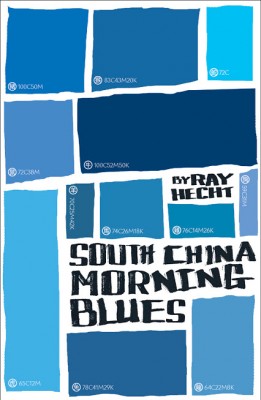
Ray Hecht’s debut novel is a detailed and sincere depiction of what life is like in the Pearl River area. Divided into three main sections (one for each major city: Shenzhen, Guangzhou and Hong Kong), the book follows the life of several characters, both foreigners and locals, as they try (or struggle) to find their way without losing touch with reality. Rather than being a simple collection of short stories (very loosely entwined), Hecht chooses to shape his book into a canvas where the expat lifestyle is the effective trait d’union.
unnamed-3

Hecht obviously knows what he’s talking about as, being himself a long-term expat in the area, he has drawn from his own personal experience (as it can be inferred from his own personal blog) ideas and stories that lay the foundations of his book, and it shows well: characters look real and relatable, grounded in reality, vivid and rich in their motivations and background. Characters are teachers, journalists, young artists, businessmen, all people that populate bars and clubs in the downtown of each city. Ray Hecht has collected and transformed some of the stories he heard (who knows how much autobiography might be in the book?) into a constellation of small existences that, although bordering on the stereotypical sometimes, often emerge as true in their own need of self affirmation.

Whoever experienced life in the Pearl River Delta can understand or relate to the urgency to be heard or to stand out that everyone in the book seems to display: life is too fast-paced and often people focus on their careers, while everything else slips into the background. If the 12 main characters all have something in common, it is a sense of isolation that compels them to question their own choices and fast-forward life to the next, hopefully safer, stage.

The three sections the book consist of several mini-chapters, each following a different character (some of them recurring from section to section, thus closing the circle and giving the idea of a mini universe where people can’t stop running into the same faces again and again). All stories are narrated in the first person and they read as confessions that break the fourth wall and ask the reader to participate in something private and meaningful that otherwise would be lost.

Each section of the book has its own different nuance that reflects the three different cities in which everything takes place:  Shenzhen is a new and fast city, Guangzhou is the old capital, Hong Kong is a hybrid city looking for a balance in its own internal differences. “Shenzhen” opens the book and throws us in the middle of the action: two foreigners, newcomers to Shenzhen, try and mostly fail to integrate in a city with no identity and history. Looking forward with no regrets is the key, even if something gets lost along the way. Marco, the businessman, and Danny, the English teacher, whether they are looking for instant gratification or for some meaningful experience, are constantly semi-detached from reality as they can’t help to feel their presence in the city is temporary, a sensation shared by all the characters in this first section. Life is so fast and opportunities so rich, there is no need or time to look back or to make detailed plans about the future.

“Guangzhou” offers a new take on the expat life in China. Guangzhou, the city, is the old Guangdong capital, an established city with its very own rhythm and style. Whereas Shenzhen’s no identity is reflected in its individualism and fast pace, Guangzhou’s somewhat quieter pace is mirrored by a sense of isolation that is sometimes difficult, or almost impossible, to break. Amber, the Canadian English teacher, Ting Ting, the aspiring artist, and Terry, the Asian American journalist, represent the struggle to find themselves in a vast and disperse city: whether you are looking for a professional achievement or to find people to hang out with, Guangzhou is a giant maze that needs to be crossed.

“Hong Kong” is the last section, the shorter and the most crowded: most of action occurs at a rave party on Lamma island, where we re-encounter many of the characters from “Guangzhou”. The party is where individual stories come to an apex and some of the loose ends are tied up (but not completely, we just manage to say goodbye to the characters we have been following so far). Chapters are shorter and there is more interaction than before between characters, so rather than focusing on individual stories, Hecht chooses to let all the tension explode at a party that can be read as a turning point in everybody’s life.

Hecht writes his characters in need of sexual gratification and infuses them with a need for drugs of any type. I admit this sounds like a stretch sometimes, since the high recurrence of such behaviors flattens out diversities rather than creates an invisible bond between characters. This detail represents one of the flaws of the book, flaws that don’t hinder its effectiveness, but reveal Hecht’s somewhat beginner’s naivete: characters seem to all convey the same emotional range, as well as same ambitions and doubts. That is a forgivable since their backgrounds and environments help in giving each character his or her own flavor, but Hecht doesn’t seem totally in control of his own voice (but 12 different characters, one for each sign of the Chinese Zodiac, is a huge challenge for a novice).

As one of the first attempts to describe the expat life of common people, both foreigners and locals, SCMB succeeds in capturing a particular moment in time and space in which we are allowed to peek in. Hecht’s prose flows smoothly (style is simple, but not bland) and although the reading experience is always rich in details and facts, less characters and more plot would have given the book a more solid texture. Looking forward to Hecht’s sophomore effort is from now on something worth doing.

South China Morning Blues is published by Blacksmith Books. It can be purchased from Amazon or at select bookstores.

South China Morning Blues book review by Nicki Chen

http://nickichenwrites.com/wordpress/china/south-china-morning-blues/

Book Review of South China Morning Blues

When I look back on my twenties, I’m amazed at how much I crammed into that decade—and also at how far-reaching the consequences of my decisions were. I shouldn’t be amazed. We’re meant to choose our path in life during those years. And even though we can reinvent ourselves to some extent later, there’s no getting around it, it’s usually during our twenties that we at least make a good start in figuring out who we are and where we’re going.

The characters in Ray Hecht’s new book, South China Morning Blues, are all in their twenties. And to make matters even more challenging, they live in what may be the fastest changing region of the fastest changing country in the world, the Pearl River Delta region in southeastern China, a megalopolis that the World Bank Group considers the largest urban area in the world in both size and population. Hecht, an American, has lived there, mostly in the city of Shenzhen, since 2008. He knows the area well.

The twelve young men and women who tell their stories in South China Morning Blues, live and work in Shenzhen, Guangzhou, and Hong Kong. They’re Chinese, American, Canadian, and African. None of them are quite clear on what they want or how to get it.

The first character we meet, Marco, is a sleazy American businessman who likes to show off and pick up girls. Since he can’t be bothered to learn Chinese, his Chinese protégé, Jackie, takes advantage of him and steals his clients. After losing his job, Marco starts a new business, a club that caters to expats. When he falls in love with and marries a Chinese woman, he’s challenged to become his better self.

Sheila’s parents are from another generation. They don’t understand a modern Chinese career woman like her. Eventually Sheila will realize that even though she’s modern in some ways, the Chinese duty to sacrifice for family obligations is still deep inside her.

Terry is an American-born Chinese, a writer, and an alcoholic. To impress his Chinese girlfriend, Ting Ting, he finally cleans up his disgusting apartment. We can only hope that Ting Ting will inspire him to clean up his act too.

These are only five of the twelve characters in South China Morning Blues. They speak in their own voices about their longing, loneliness, and confusion. They tell us about their hunger for adventure, money, love, and sex, and their desire for success and meaning.

Each of them represents an animal in the Chinese zodiac. Marco, for example, is the tiger; Jackie is the rat; Sheila is the hare; Terry is the monkey; and Ting Ting is the Dragon. The author uses the Chinese character for each animal to indicate a change in point of view. If you don’t read Chinese and you want to be sure who is speaking, you might want to make a cheat sheet.

Ray HechtHecht doesn’t sugar coat the seamier side of life, and some of his scenes are sexually explicit. As he said in an interview with Jocelyn Eikenburg, “I want to show all sides of real life. Using illegal substances, having irresponsible sex, pushing the boundaries, and making mistakes; these are all things that human beings actually do. And they are interesting things. I believe they are things worth writing about.”

Whether you’ve ever traveled to or lived in China, I think you’ll find something new and interesting in South China Morning Blues.

Available for pre-order on Amazon.

Book Review: Good Chinese Wife

 Cover

szdaily.sznews.com/html/2014-09/16/content_3005971.htm

“GOOD Chinese Wife” is a new memoir published by Sourcebooks, and is a poignant tale expats should enjoy about the overlap of China and the West. Susan Blumberg-Kason details her unfortunate marriage to a Chinese music scholar, as they meet while studying in Hong Kong and then travel to his hometown in Hubei Province before eventually settling in San Francisco, California.

The central question posed by their troubled relationship is whether their differences were due to culture or personality. Interracial marriages may have some problems, but are certain individual defects masked by the excuse of culture?

As their relationship begins, Blumberg-Kason appreciates her future husband’s background. She studies Mandarin as a postgraduate in Hong Kong in the early 1990s, and stays there through the time of the handover in 1997, and for a reader familiar with South China it can be very interesting to compare that time with the current era.

The shy student falls in love with Cai, a handsome divorcee and ethnomusicology major, and the fact that he quickly escalates into topics of marriage on early dates seems to be a source of attraction for her. In that sense, the cultural difference was an advantage.

The book goes over her travels to the Hidden River village in Hunan and subsequent meetings with Cai’s family, and serves as a good introduction to Chinese culture for readers new to the subject of China. Blumberg-Kason is very knowledgeable, and the book is also peppered with quotes from Ban Zhao’s traditional “Instruction for Chinese Women and Girls” which contrasts well with the narrative.

The memoir deals with many hard truths, and Blumberg-Kason can be very frank with personal matters. The first sex scene comes as a shock to the reader, not because of graphic depictions, but because of the realization that the couple is engaged to be married yet they have not even reached that intimate stage. When she does get married, at the young age of 24, their passionless first night together during a honeymoon in a Hong Kong hotel further foreshadows more troubles.

Time and time again, as the book progresses, Blumberg-Kason questions herself and accommodates Cai’s behavior, yet he doesn’t seem to care about his wife’s concerns. From the isolating vacations in his home town, to skipping out on going to an import foreign-language bookstore in Shanghai and an interest in “yellow films” over his own wife, the reader wonders why she comes across so weak and why she puts up with him.

Pregnant, they move to America and the situation worsens. He does not adapt well to living abroad, and constantly complains to her. Though Blumberg-Kason claims he is a good husband during her pregnancy, he grows more distant after their son is born and the book darkens in tone. In particular, when he gives her a STD and then denies it, the situation couldn’t be worse. Always trying to keep the peace, she repeatedly states that she didn’t want to know the truth about his private life.

It soon becomes obvious that their marriage will not work, and yet it takes a long time for the book to finally reach the point when Blumberg-Kason stands up for herself and leaves him. Cai even says to her: “You’re lucky I don’t hit you.” After she gives birth to their son, he tells her “Women are dirty.”

It is a sad state that this is a nonfiction memoir, and so many real women stay in such relationships for far too long. Perhaps there is a lesson there about not rushing into marriage.

“Good Chinese Wife” is well-written and reads like a page-turner novel, although it does get stuck in details at times. If it were a novel, the passages about student dances and descriptions of clothes and food might be cut due to not being relevant to the plot. But the book is a memoir, which is dense with everything Blumberg-Kason has chosen to share.

This book is recommended for readers interested in contemporary Chinese culture, as well as for anyone who has ever experienced problems stemming from cultural differences.

“Good Chinese Wife” is available at bookstores in Hong Kong and on Amazon.

For more from this author, see Susan Blumberg-Kason’s blog at susanbkason.com.

Susan Blumberg-Kason photo

Book Review: The Tibetan Affair

tibetan affair book cover

http://www.amazon.com/The-Tibetan-Affair-Three-stories-ebook/dp/B00JTI91WM

The Tibetan Affair by Wang Xiao Hui is a novella which also includes two short stories. An interesting look into the world of Chinese journalists and the conflicts in Tibet, the main novella offers a readers an opportunity a window to observe this little-known scene.

The introduction comes slowly at first, opening with the personal lives and drama of the Beijing TV crew before they head to Tibet. There are interesting anecdotes along the way, such as the issue of altitude sicknesses and various vices.

Mainly the story centers around Mickey, who is bored of his wife and loves a younger coworker. Trouble comes when they do get to Tibet, from rocks thrown at trains to sexual tension in the hotel room.

Largely a critique of both the reactionary Chinese government and the hypocritical, submissive media, the journalists interview the police who expound on their obviously ridiculous views about foreigners the CIA and the Dalai Lama… Then conversations start to get more cynical, with takes on selling out your own country. The truth comes out and there is a bit of real journalism, but in a certain self-serving way.

But that’s just a backdrop to the romantic plot, which is the meat of the story. The sex scenes are quite steamy. Dreams are a constant theme as well; sexual dreams, dreams of jealousy, and strange nightmares. The plot patiently develops until the romantic plot overlaps with the journalism plot, and then they literally *climax* into a tragic ending.

It’s all too brief, and sometimes the story could have used more action and more character development. There are interesting vignettes and intriguing descriptions, but just not enough going on. The Tibetan Affair is very much worth a read, but it would have been a stronger story with simply more going on.

Continue reading

Book Review: The Exact Unknown

Pageflex Persona [document: PRS0000037_00023]

Isham Cook is quite the blogger. The mysterious Beijing-based writer has completed a new book of blogs reformatted as literary short tales entitled “The Exact Unknown and Other Tales of Modern China,” a follow-up to 2012’s novel “Lust & Philosophy.” Full of grotesque universal truths, strange depictions of Eastern modernity, and the proverbial expats caught in the middle, the book can be flawed in sections but is always a compelling read.

In the introduction Cook explains to readers that he doesn’t want to write about the exotic, tragic China so popularized by fifth generation art films of the 80s and 90s. But rather, as the title states, it’s about modern China. He also clarifies why he uses the term ‘tale’ instead of short story, in order to have a broader outlook covering all aspects of writing from the semi-autobiographical to straight fiction.

The book is erotic, funny, and sometimes profound. Sexuality is a central theme, but doesn’t always take itself too seriously. Even the most philosophical elements are never dry or academic, but with just the right amount of absurdity to entertain as well as enlighten.

“The Persistent” is first, jumping us right into the subject of dating in China. The tale concerns an obsessive woman who won’t go away, and the narrator describes more than a few of his own experiences with Chinese women. The stalkers, the 30-somethings, the virgins. The line “foreign men in this country do tend to attract the psychos of the female population” sums up well what much of these tales are about.  As does a subsequent sentence, issuing no judgments: “This is not necessarily a bad thing.” That’s a bit of the point, wild things happen in China and that’s the reason to be there.

The namesake “The Exact Unknown” concerns seduction via vodka massage, the Surveillance State, a plot about blackmailing over a video which may or may not exist, and in a literally-anticlimactic ending it concludes with no sex. It could almost enter the realm of Philip K. Dick over the speculations upon reality, but ends too prematurely for that kind of depth.

“iProstitution” is one of the funniest pieces, ostensibly about the selling of one’s body for Apple products but really more about sexual frustration in general. “A Little Accident” is refreshingly not about foreigners at all, an original short story just concerning Chinese characters. Again portraying reality as ambiguous, it concerns an elderly man who may or may not be cheating a young woman (and/or doctors cheating her) and the subject of Chinese Medicine which may or may not work at all.

“Good Teacher, Bad Teacher” takes the oft-used campus setting as far as it can go, with an intense Western teacher expounding upon philosophy and culminates in mysterious naked yoga massage advanced courses. There is the unresolved mystery of “Paradox,” whereas an interesting premise is set up with mysterious nude pictures of students emerging yet in the end there is never is a true explanation, no resolution.

“The Curious Benefits of Neurosis” is about various massages, some of which get quite graphic. And hilarious at the same time! The first-person narratives are often the strongest, and (so one assumes) the closest to autobiography.

Some tales like not much of narratives at all. “The Mean and the Angry” is not so much a story as a description of various Beijing subway archetypes. At times it seems as insider knowledge of Beijing is required, and if a reader is not familiar with greater Middle Kingdom tropes then the whole thing may be hard to follow. Still, the audience is sure to mostly consist of expats.

“Let the Sunshine In” is among the best, a truly engaging work of drug literature about a naïve Chinese student’s first LSD experience. Very vivid descriptions of a bathroom setting, which tends to be a terrifying and confusing place when having a bad psychedelic trip. Not to mention the chronological distortions at play.

Two tales are written in play script formats are used, with “The Hickey” and the penultimate “Reset.” They read well as prose in of themselves. It’s hard to expect that anyone will ever act out the plays in real life, with the copious nudity and sex scenes and all; but it’s nice to imagine. “Reset” is the longest piece in the book, about sentient robotic sex toys. The tale is extremely philosophical, hard science fiction, and well-written social commentary/speculation on the future of China and all humanity’s sexual relationships.

The final story, “Injaculation” is written in the second person and mixes Taoist sexuality with hard scientific biological-psychedelic principles. There is a diverse range of writing styles, but same themes keep coming up…

The author clearly has a vivid imagination, and is talented at the craft of writing. Still, whether semi-autobiographical or not, it would be nice to not lean so often on the cliché of expat teacher in China. There are expats doing other things, and maybe more Chinese protagonists would be nice. While the setting is something that Cook is truly an expert on, and he really writes about it compellingly, it can get repetitive. Let’s hope Cook’s next book takes up more original territory. I for one am extremely anxious to read more.

Isham Cook’s blog can be seen at Ishamcook.com and the Exact Unknown is available on Amazon.com.