Review: Marlene and Sofia – A Double Love Story

marlene-foramazon

http://www.amazon.com/dp/B00LGXESSA

(Free eBook edition available, today only!)

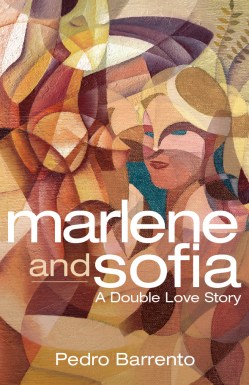
“Marlene and Sofia – A Double Love Story,” the latest from Portuguese author Pedro Barrento (author of the whimsical-yet-deep Prince and the Singularity) is an ambitious novel.

Complex and thought-provoking, it can be hard to follow the various plots and diaries and takes a while to understand how this would considered be a love story. Characters introduced in separate storylines are slowly developed and then interact with each other, as the reader discovers their connections – be it by relatives or online interaction. The title characters Marlene and Sofia themselves take a while to appear. Then there is Joaquim, Manual who is father to Sofia, and the fling with Tiago. Some chapters are flashbacks to an earlier time as well. Pasts, from the sordid to the innocent, are revealed.

Right from the beginning, there is a clever metatextual section about how best-selling authors the world over secretly being assigned settings and characters by a mysterious imposing body. It is satirical and amusing, and oddly enough it rather fits with regards to Hollywood-style rules in the Writer’s Guild.

But this is no Hollywood formulaic story. It has more depth than that. There are treatises and quips on freedom, sexuality, family, and youth. Observations on the advantages of a simpler authoritarian past versus a bureaucratic modern democracy. Conversations about Marxism. Cynical takes on how men and women treat each other. Tragic short stories that are harsh critiques on sexist conservative 1940s culture, contrasted with the burgeoning sexuality of other character’s histories. Hints of supernatural forces at play. Digital futurism, and more.

In one early scene, an old man walks a dog and the narration describes the differing sensory perception of each species, and then states “they walked along together, but in two distinct universes.” It’s a nice line, and upon reflection it’s also just might explain more to what this story really means…

Halfway through the story becomes extremely intriguing, and gets into more science-fiction cyberpunk elements. Profound questions on the nature of experience and reality arise. Re: worldfromyoursofa.com (Not a real site, yet.)

And, inevitably, as we all know, the uses of the latest digital technology tend to immediately be co-opted by humanity’s baser sexual instincts. As even the most proper old lady users end up paying an online service to see the world through another’s eyes, it quickly escalates to something explicit. And what of those providing the online services, how do they process what they have done?

There are many surprises as the story goes on, and you’ll have to read for yourself to understand the rest. It’s always charming, always makes you think, this double love story. “Marlene and Sofia” is a unique novel unlike anything else out there.

Book Review: The Tibetan Affair

tibetan affair book cover

http://www.amazon.com/The-Tibetan-Affair-Three-stories-ebook/dp/B00JTI91WM

The Tibetan Affair by Wang Xiao Hui is a novella which also includes two short stories. An interesting look into the world of Chinese journalists and the conflicts in Tibet, the main novella offers a readers an opportunity a window to observe this little-known scene.

The introduction comes slowly at first, opening with the personal lives and drama of the Beijing TV crew before they head to Tibet. There are interesting anecdotes along the way, such as the issue of altitude sicknesses and various vices.

Mainly the story centers around Mickey, who is bored of his wife and loves a younger coworker. Trouble comes when they do get to Tibet, from rocks thrown at trains to sexual tension in the hotel room.

Largely a critique of both the reactionary Chinese government and the hypocritical, submissive media, the journalists interview the police who expound on their obviously ridiculous views about foreigners the CIA and the Dalai Lama… Then conversations start to get more cynical, with takes on selling out your own country. The truth comes out and there is a bit of real journalism, but in a certain self-serving way.

But that’s just a backdrop to the romantic plot, which is the meat of the story. The sex scenes are quite steamy. Dreams are a constant theme as well; sexual dreams, dreams of jealousy, and strange nightmares. The plot patiently develops until the romantic plot overlaps with the journalism plot, and then they literally *climax* into a tragic ending.

It’s all too brief, and sometimes the story could have used more action and more character development. There are interesting vignettes and intriguing descriptions, but just not enough going on. The Tibetan Affair is very much worth a read, but it would have been a stronger story with simply more going on.

Continue reading

Book Review: No City for Slow Men

http://szdaily.sznews.com/html/2014-03/25/content_2819411.htm

Image

Despite Hong Kong’s reputation for being very welcoming to foreigners, it’s not always that easy for expats to deeply understand the city. Hong Kong is famous for its international style, and people from all over the world enjoy the city’s comforts, yet there remains a barrier between the locals and those who hail from other places.

To share the truth about Hong Kong culture with the English-speaking world, Jason Y. Ng — resident blogger and columnist for Hong Kong-based newspaper South China Morning Post — has written “No City for Slow Men,” covering every subject an HK-phile could ask for.

Published by Blacksmith Books, the book contains 36 essays and covers a broad range of topics. For some writers, it might be a struggle to have so many chapters and keep the quality high, yet every line of Ng’s prose is well-written and full of crucial information for piecing together the puzzle of Hong Kong’s identity.

Split into three parts, the first section “Our Way of Life” concerns corrupt property tycoons, the culture of taking out loans for expensive watches, and the rise of Taobao. The title piece “No City for Slow Men” is about one of the very first impressions a visitor of the city will have — the high speed of life. Ng laments about the lack of relaxation when he writes, “Hong Kong is charming when it is bustling, but loveliest when it is tranquil.”

The second part, “Our Culture,” contains such topics as Chinese New Year and includes many interesting childhood anecdotes. The autobiographical element starts to seep in, which shows off some of Ng’s best writing. There is more on restaurants and cooking, which is, of course, very important to Chinese culture worldwide, as well as an overview of the history of the city and the famous sites that rapidly changed through generations and development.

Finally, “Our Identity” has some of the most compelling pieces of all. “HKID” says it best: Hong Kong is stuck somewhere between the Chinese mainland and the rest of the world, and that causes a bit of an identity crisis. The tense relationship with the mainland is an important point, reaching new lows with the labeling of mainland tourists as “locusts,” which Ng points out is an undeserved reputation. A letter from a mainland student best expresses the argument against prejudice. Another major theme is the contrast between the lives of expats and locals — with their gambling by way of cards instead of mahjong, the strange sport of rugby and lack of Cantonese fluency.

The plight of the domestic worker is an especially important topic, written about with great heart. The personal stories of abuse and tragedy of Indonesian and Filipino maids are very moving. Ng is certainly a compassionate writer and should be commended for bringing these issues to the public’s attention.

As the book concludes, the final essays cement the autobiographical element. After a piece detailing Ng’s struggles with stuttering in his early life, the penultimate “My Father the Artist” goes over the very man whose illustrations pepper the book. It all ends with a touching interview of the author’s mother.

As an emigrant from Guangdong Province who struggled through years of tumultuous change, from poverty to a happy retirement abroad, she best exemplifies the contradictions that make up the history and identity of Hong Kong. “All these years, mother and son have been swept up in a complicated dance of love and reticence,” Ng writes. “Each aching to reassure the other of their happy existence.”

“No City for Slow Men” is available at bookstores in Hong Kong and on Amazon.