By no means comprehensive, this is how my bookshelf happens to look lately.
See anything interesting? China books, science fiction, literary.
Discuss.

By no means comprehensive, this is how my bookshelf happens to look lately.
See anything interesting? China books, science fiction, literary.
Discuss.
![Pageflex Persona [document: PRS0000037_00023]](https://rayhecht.com/wp-content/uploads/2014/04/ishamcook_theexactunknown_ebook_final.jpg)
Isham Cook is quite the blogger. The mysterious Beijing-based writer has completed a new book of blogs reformatted as literary short tales entitled “The Exact Unknown and Other Tales of Modern China,” a follow-up to 2012’s novel “Lust & Philosophy.” Full of grotesque universal truths, strange depictions of Eastern modernity, and the proverbial expats caught in the middle, the book can be flawed in sections but is always a compelling read.
In the introduction Cook explains to readers that he doesn’t want to write about the exotic, tragic China so popularized by fifth generation art films of the 80s and 90s. But rather, as the title states, it’s about modern China. He also clarifies why he uses the term ‘tale’ instead of short story, in order to have a broader outlook covering all aspects of writing from the semi-autobiographical to straight fiction.
The book is erotic, funny, and sometimes profound. Sexuality is a central theme, but doesn’t always take itself too seriously. Even the most philosophical elements are never dry or academic, but with just the right amount of absurdity to entertain as well as enlighten.
“The Persistent” is first, jumping us right into the subject of dating in China. The tale concerns an obsessive woman who won’t go away, and the narrator describes more than a few of his own experiences with Chinese women. The stalkers, the 30-somethings, the virgins. The line “foreign men in this country do tend to attract the psychos of the female population” sums up well what much of these tales are about. As does a subsequent sentence, issuing no judgments: “This is not necessarily a bad thing.” That’s a bit of the point, wild things happen in China and that’s the reason to be there.
The namesake “The Exact Unknown” concerns seduction via vodka massage, the Surveillance State, a plot about blackmailing over a video which may or may not exist, and in a literally-anticlimactic ending it concludes with no sex. It could almost enter the realm of Philip K. Dick over the speculations upon reality, but ends too prematurely for that kind of depth.
“iProstitution” is one of the funniest pieces, ostensibly about the selling of one’s body for Apple products but really more about sexual frustration in general. “A Little Accident” is refreshingly not about foreigners at all, an original short story just concerning Chinese characters. Again portraying reality as ambiguous, it concerns an elderly man who may or may not be cheating a young woman (and/or doctors cheating her) and the subject of Chinese Medicine which may or may not work at all.
“Good Teacher, Bad Teacher” takes the oft-used campus setting as far as it can go, with an intense Western teacher expounding upon philosophy and culminates in mysterious naked yoga massage advanced courses. There is the unresolved mystery of “Paradox,” whereas an interesting premise is set up with mysterious nude pictures of students emerging yet in the end there is never is a true explanation, no resolution.
“The Curious Benefits of Neurosis” is about various massages, some of which get quite graphic. And hilarious at the same time! The first-person narratives are often the strongest, and (so one assumes) the closest to autobiography.
Some tales like not much of narratives at all. “The Mean and the Angry” is not so much a story as a description of various Beijing subway archetypes. At times it seems as insider knowledge of Beijing is required, and if a reader is not familiar with greater Middle Kingdom tropes then the whole thing may be hard to follow. Still, the audience is sure to mostly consist of expats.
“Let the Sunshine In” is among the best, a truly engaging work of drug literature about a naïve Chinese student’s first LSD experience. Very vivid descriptions of a bathroom setting, which tends to be a terrifying and confusing place when having a bad psychedelic trip. Not to mention the chronological distortions at play.
Two tales are written in play script formats are used, with “The Hickey” and the penultimate “Reset.” They read well as prose in of themselves. It’s hard to expect that anyone will ever act out the plays in real life, with the copious nudity and sex scenes and all; but it’s nice to imagine. “Reset” is the longest piece in the book, about sentient robotic sex toys. The tale is extremely philosophical, hard science fiction, and well-written social commentary/speculation on the future of China and all humanity’s sexual relationships.
The final story, “Injaculation” is written in the second person and mixes Taoist sexuality with hard scientific biological-psychedelic principles. There is a diverse range of writing styles, but same themes keep coming up…
The author clearly has a vivid imagination, and is talented at the craft of writing. Still, whether semi-autobiographical or not, it would be nice to not lean so often on the cliché of expat teacher in China. There are expats doing other things, and maybe more Chinese protagonists would be nice. While the setting is something that Cook is truly an expert on, and he really writes about it compellingly, it can get repetitive. Let’s hope Cook’s next book takes up more original territory. I for one am extremely anxious to read more.
Isham Cook’s blog can be seen at Ishamcook.com and the Exact Unknown is available on Amazon.com.
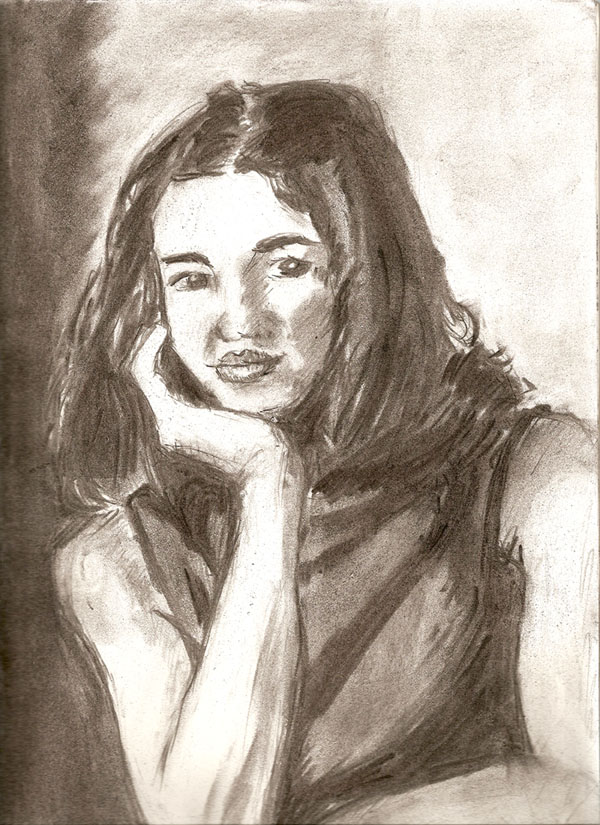
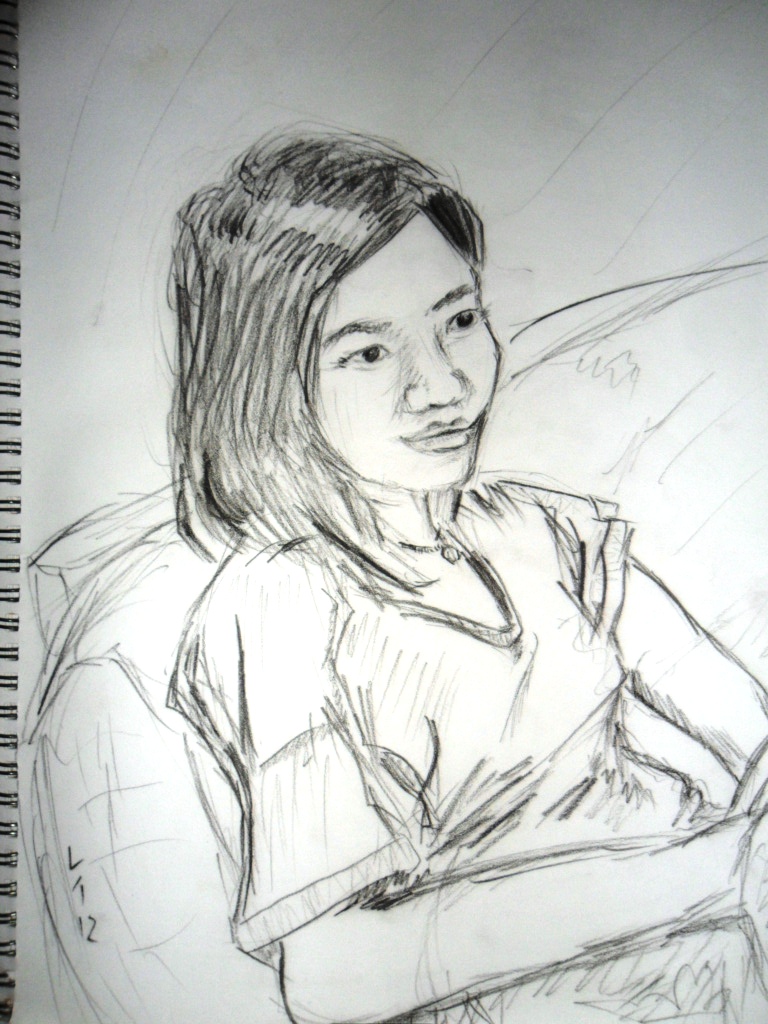
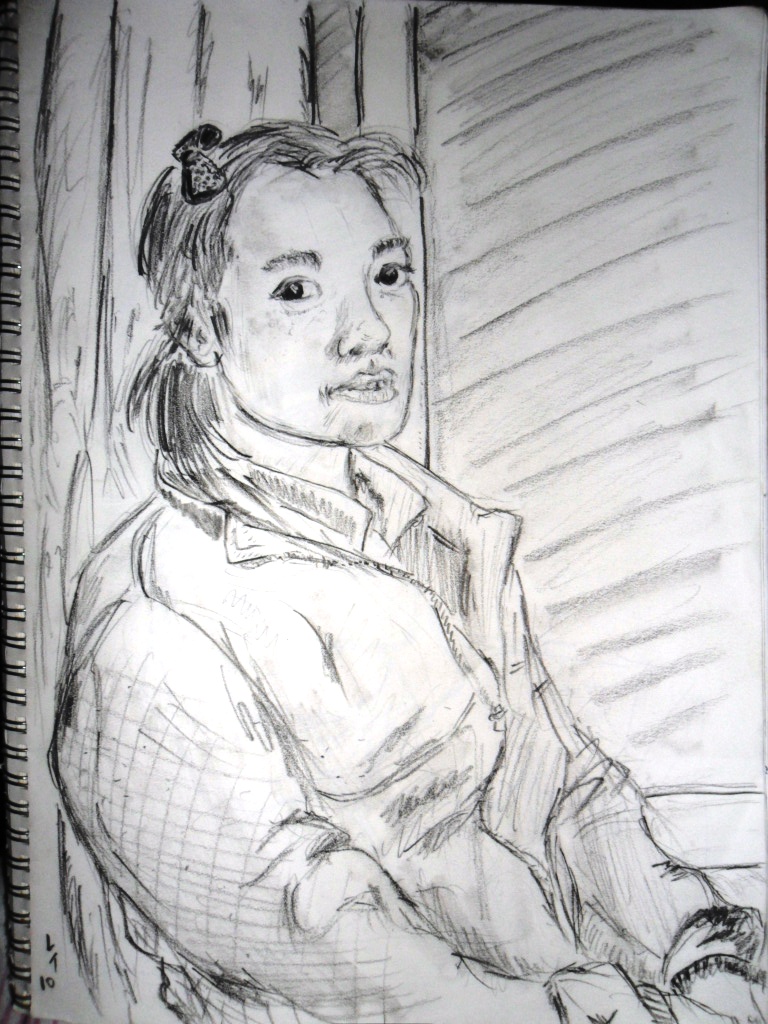
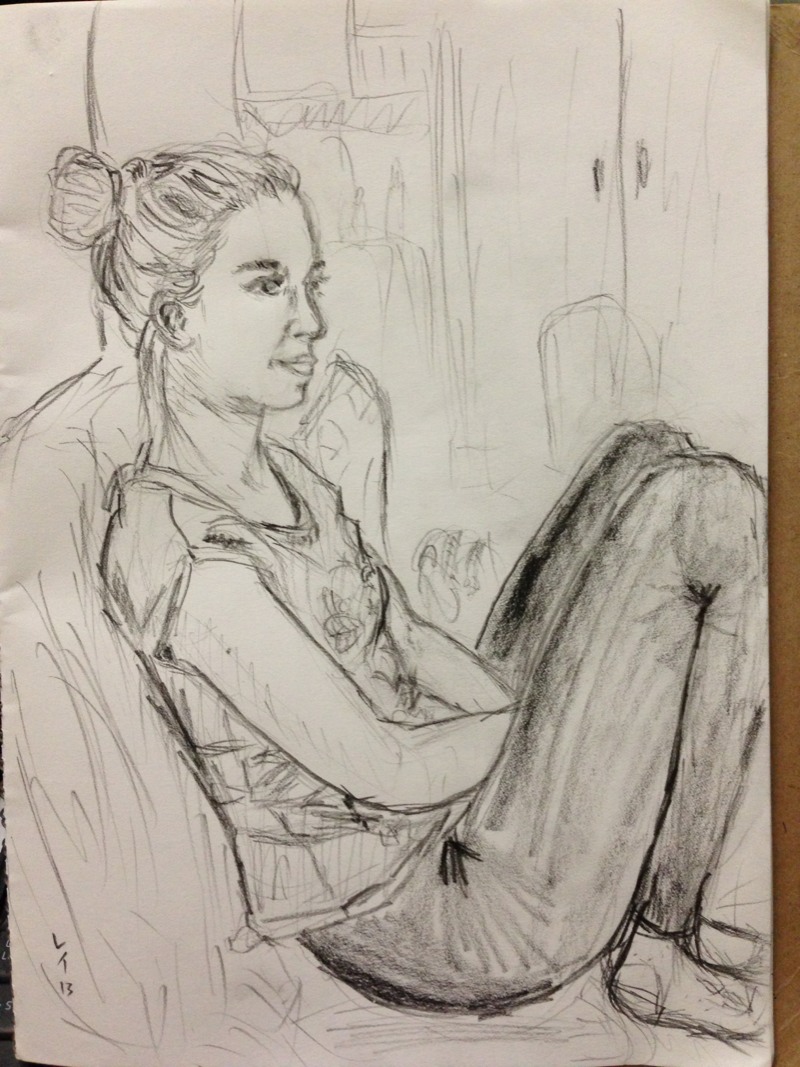
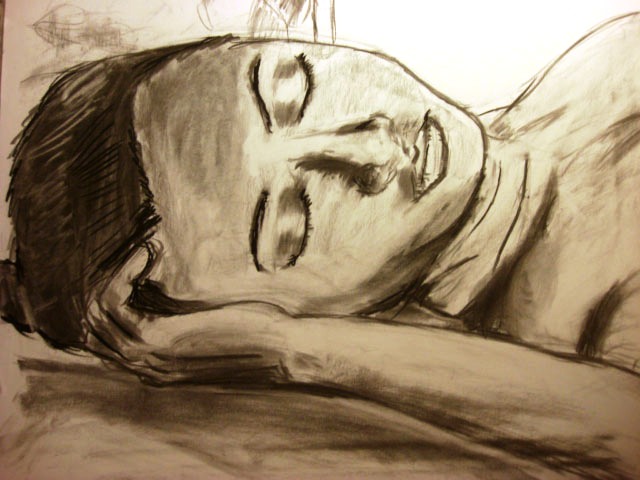
Here’s a hobby of mine, I like to draw. I know I’m not quite good enough to ‘dream’ to become an artist (I have other unrealistic dreams thank you very much), but it’s something I like to do for fun.
Perhaps I do have a bit of talent, you be the judge. Yet, I’m too lazy. I don’t like rulers, dull backgrounds, or even color. If you contrast with my cartoon style that stems directly from the imagination–which to me is more about story-telling over purely visual craft–it’s a quite different style than with these live models whom I’ve been lucky enough to sketch. Well, I generally like drawing pretty girls… especially faces…
The materials are charcoal pencils, pens, sketch pads and bristol board. Please allow me to share a few of my drawings through the years:


http://szdaily.sznews.com/html/2014-03/25/content_2819411.htm

Despite Hong Kong’s reputation for being very welcoming to foreigners, it’s not always that easy for expats to deeply understand the city. Hong Kong is famous for its international style, and people from all over the world enjoy the city’s comforts, yet there remains a barrier between the locals and those who hail from other places.
To share the truth about Hong Kong culture with the English-speaking world, Jason Y. Ng — resident blogger and columnist for Hong Kong-based newspaper South China Morning Post — has written “No City for Slow Men,” covering every subject an HK-phile could ask for.
Published by Blacksmith Books, the book contains 36 essays and covers a broad range of topics. For some writers, it might be a struggle to have so many chapters and keep the quality high, yet every line of Ng’s prose is well-written and full of crucial information for piecing together the puzzle of Hong Kong’s identity.
Split into three parts, the first section “Our Way of Life” concerns corrupt property tycoons, the culture of taking out loans for expensive watches, and the rise of Taobao. The title piece “No City for Slow Men” is about one of the very first impressions a visitor of the city will have — the high speed of life. Ng laments about the lack of relaxation when he writes, “Hong Kong is charming when it is bustling, but loveliest when it is tranquil.”
The second part, “Our Culture,” contains such topics as Chinese New Year and includes many interesting childhood anecdotes. The autobiographical element starts to seep in, which shows off some of Ng’s best writing. There is more on restaurants and cooking, which is, of course, very important to Chinese culture worldwide, as well as an overview of the history of the city and the famous sites that rapidly changed through generations and development.
Finally, “Our Identity” has some of the most compelling pieces of all. “HKID” says it best: Hong Kong is stuck somewhere between the Chinese mainland and the rest of the world, and that causes a bit of an identity crisis. The tense relationship with the mainland is an important point, reaching new lows with the labeling of mainland tourists as “locusts,” which Ng points out is an undeserved reputation. A letter from a mainland student best expresses the argument against prejudice. Another major theme is the contrast between the lives of expats and locals — with their gambling by way of cards instead of mahjong, the strange sport of rugby and lack of Cantonese fluency.
The plight of the domestic worker is an especially important topic, written about with great heart. The personal stories of abuse and tragedy of Indonesian and Filipino maids are very moving. Ng is certainly a compassionate writer and should be commended for bringing these issues to the public’s attention.
As the book concludes, the final essays cement the autobiographical element. After a piece detailing Ng’s struggles with stuttering in his early life, the penultimate “My Father the Artist” goes over the very man whose illustrations pepper the book. It all ends with a touching interview of the author’s mother.
As an emigrant from Guangdong Province who struggled through years of tumultuous change, from poverty to a happy retirement abroad, she best exemplifies the contradictions that make up the history and identity of Hong Kong. “All these years, mother and son have been swept up in a complicated dance of love and reticence,” Ng writes. “Each aching to reassure the other of their happy existence.”
“No City for Slow Men” is available at bookstores in Hong Kong and on Amazon.
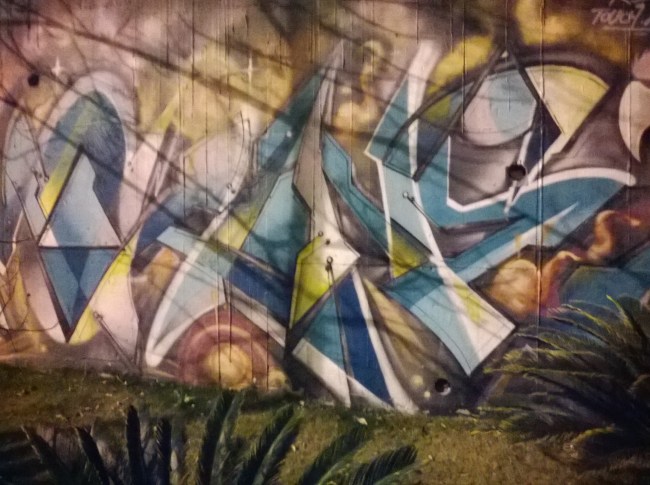
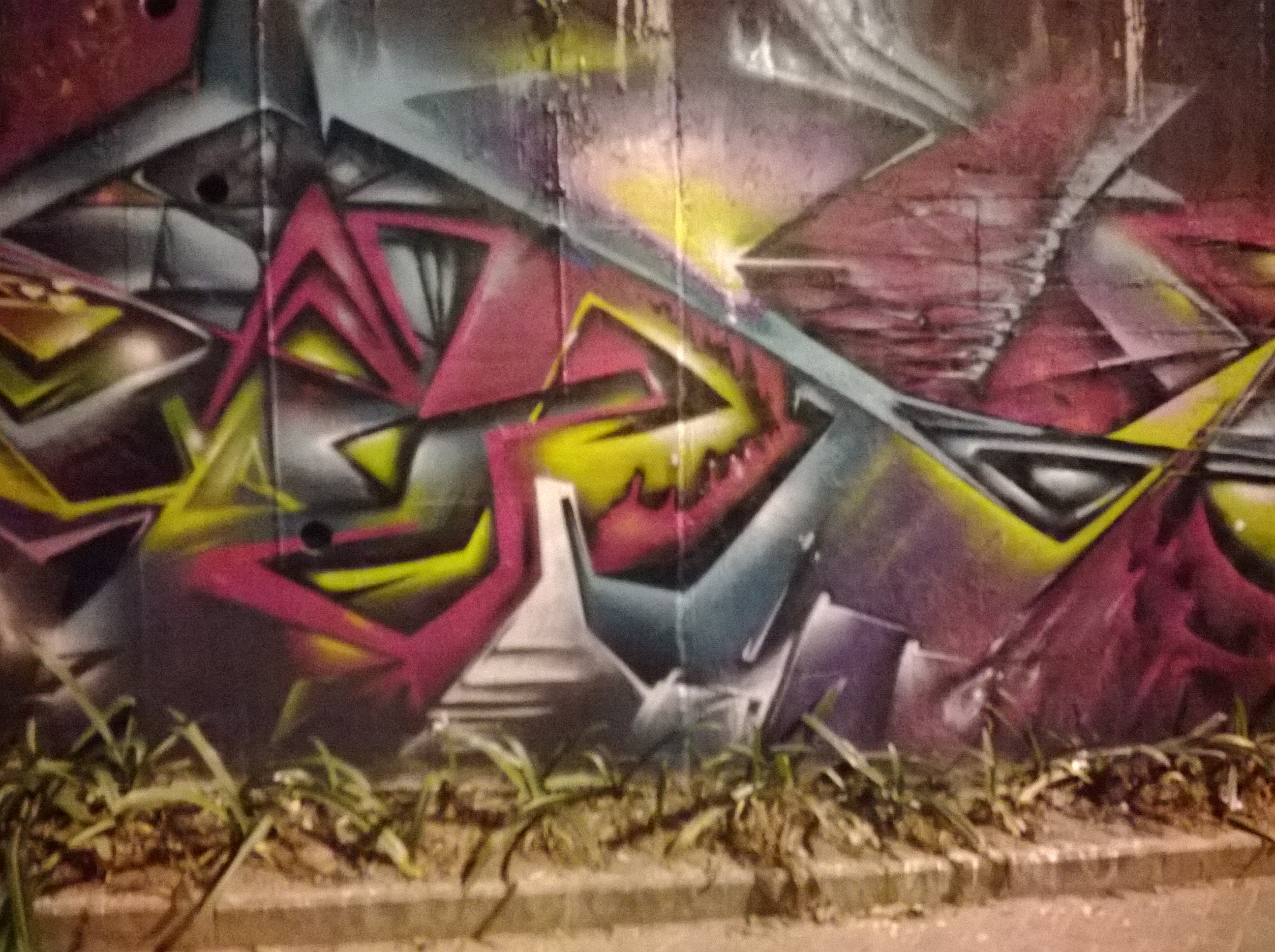
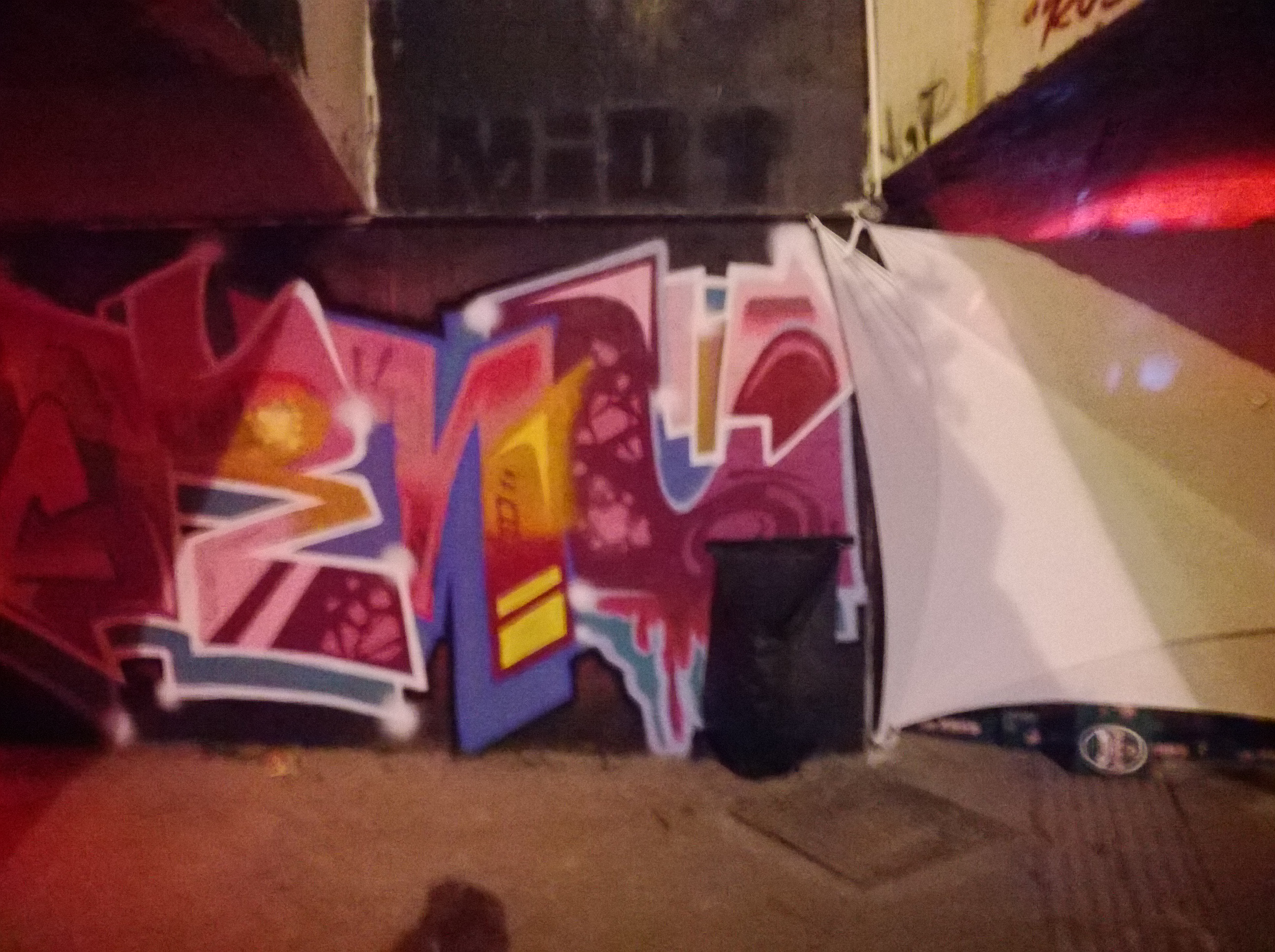
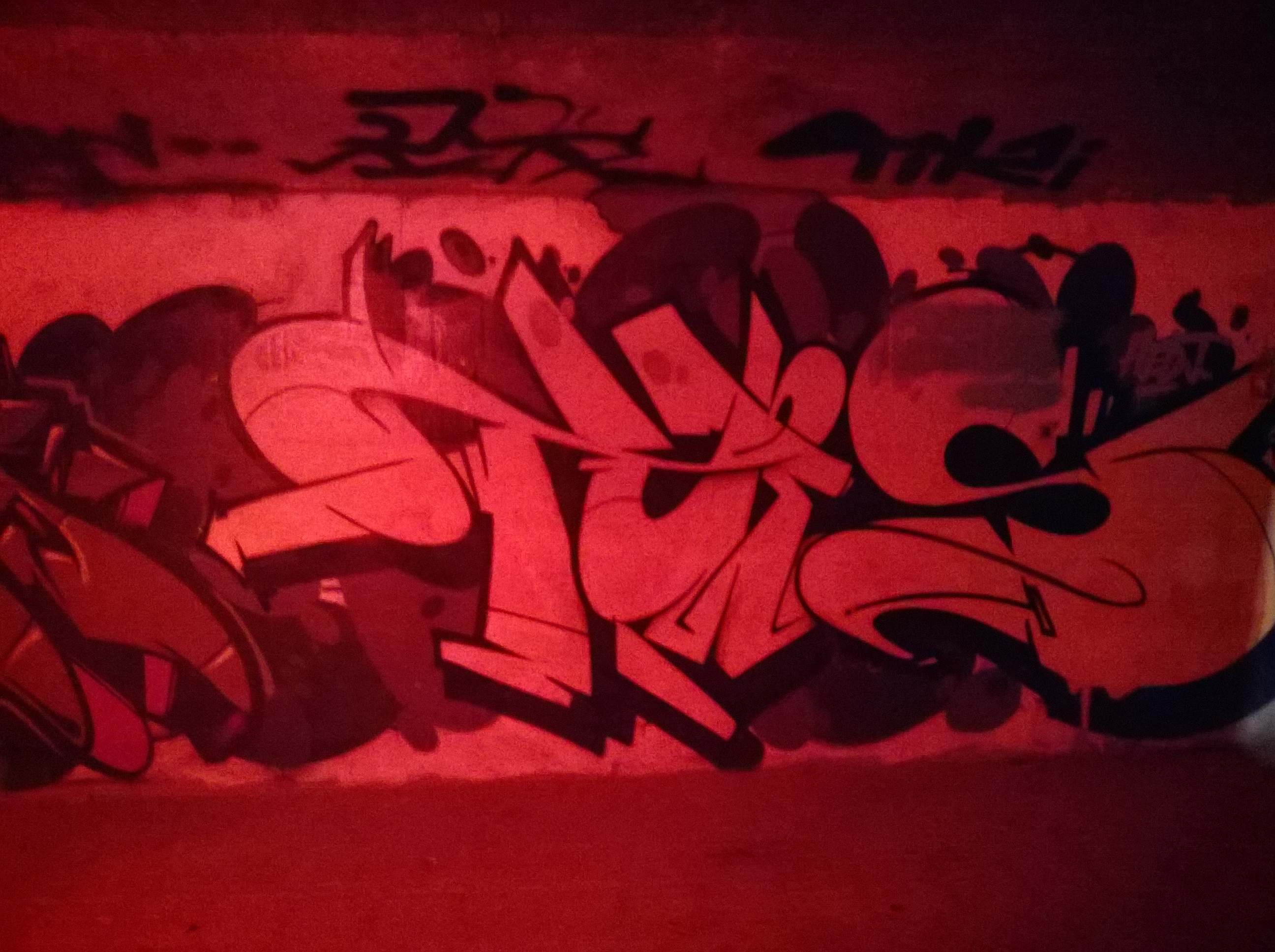
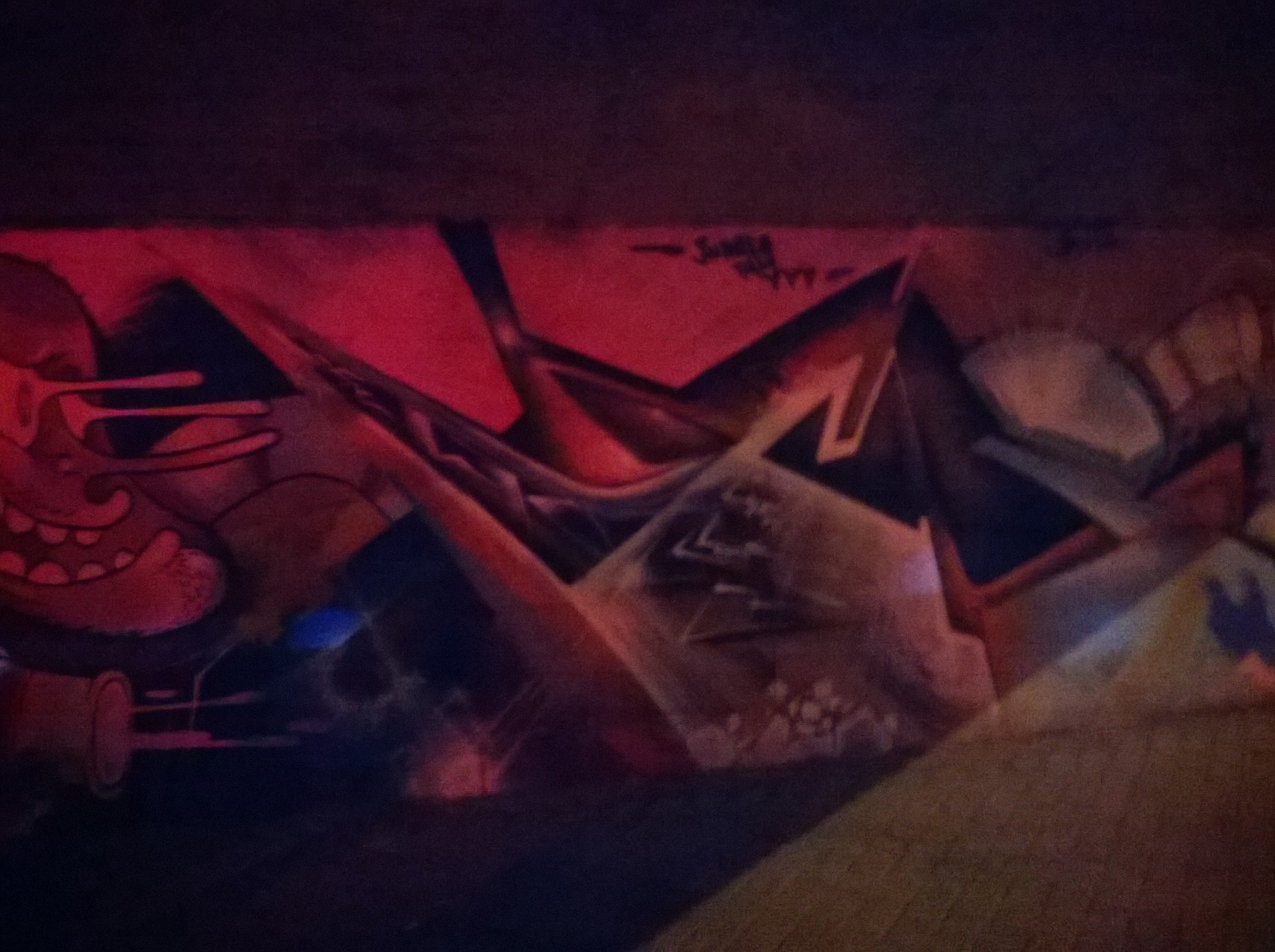
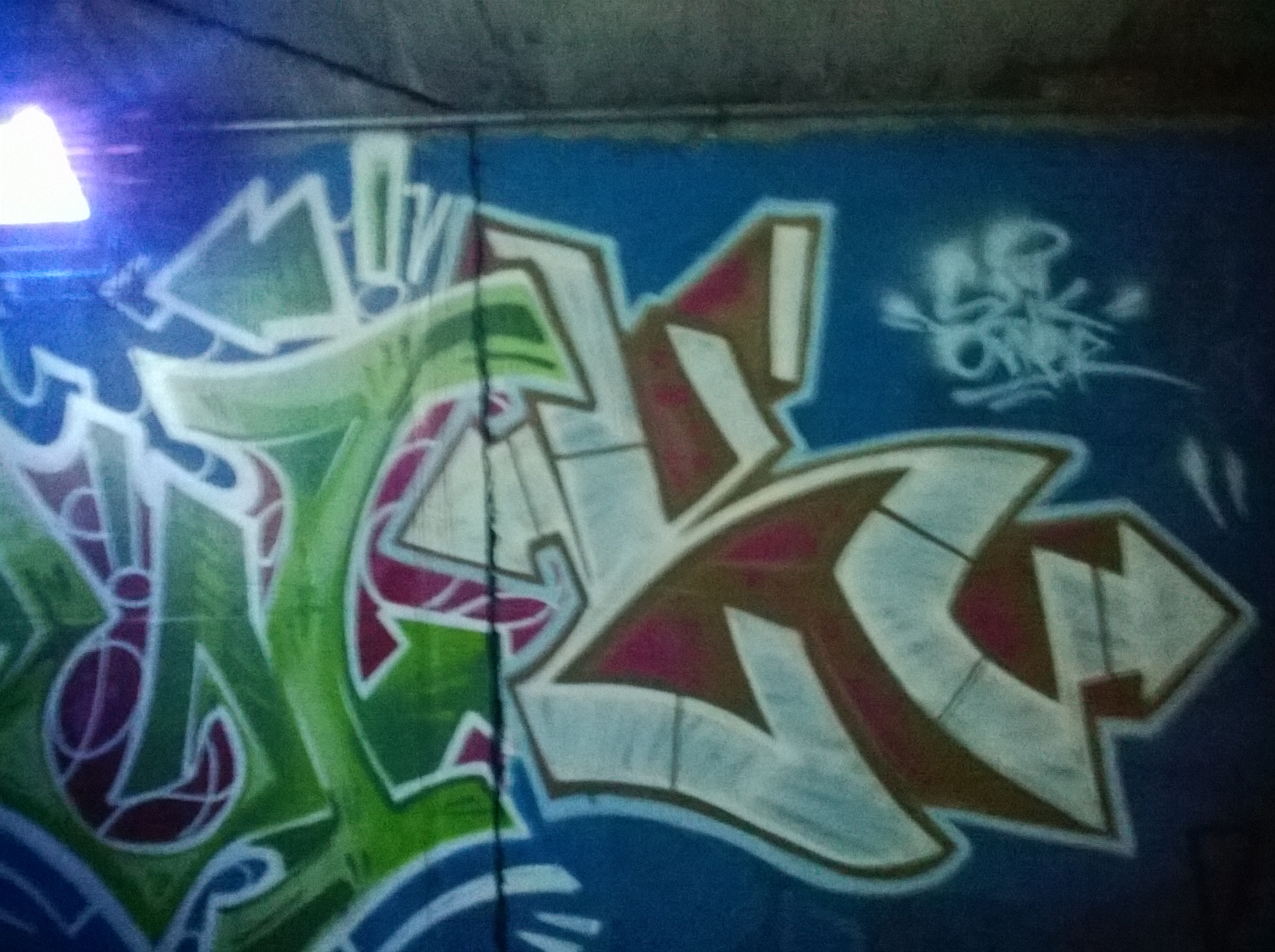
Something missing in Shenzhen, and Chinese cities in general, is graffiti. While people don’t mind tagging phone numbers for services rendered and pasting ugly little ads all over the place, there is a serious lack of creativity. Any good graffiti often gets immediately painted over by the buzz-killing authorities.
It’s not an Asian thing by the way, Japan has some of the best street art in the world. I believe it’s a cultural right, to decorate the blank walls and boring buildings and aging train cars. Real first-tier cities the world over have great tags (especially in Europe)…
Let me just add that in America it is largely a myth that graffiti signifies gang activity. Gang tags are fucking bad art, just stupid geometrical shapes to signify territory in the worst neighborhoods. Good street art, however, is done by real artists and gives a place color and vibrancy. It’s life! It’s pure art, free for everyone to enjoy! No price! Paint over it and there will be a new one, that’s what it’s all about!
So, I’m happy to see good tagging in China. Often the artistic areas of Guangzhou, and Beijing have some quality works. I’m no expert on the subject, but check hereas check out what I’ve seen and liked in SZ:




Taxi drivers are easily impressed. Servers less so. But no matter how many times I hear “Your Chinese is so good!” I know it’s not true. In fact, it loses meaning the more I hear it.
I’ve been in China almost six years. I bought textbooks upon textbooks, I rote-wrote thousands of characters, begged my friends to help me study, listened to all the free ChinesePod podcasts I could get my digital hands on, emptied out my flashcards, and read three whole children’s books. But I’ve been in a bit of a slump lately. Really, my Chinese should be better by now.
Shoulda listened to that advice years ago to ditch all my expat friends and only hang out with Chinese. Me and my English-bubble lifestyle~
(If I do say so myself, I still think my writing is not bad for a foreigner. I’ve been told my handwriting is like a child’s, but that’s still better than most foreigner’s even the ones who are totally fluent and literate. This is because I studied Japanese in high school and college and at least I got that headstart, although besides kanji the languages are quite different. One day I’ll blog about survival-Japanese while wandering Tokyo…)
I have no natural ability at language—just as I have no natural ability at writing. Simply gotta work hard at it, long as it takes. Can’t blame it on my Anglosphere background either; my overachieving younger sister speaks four languages totally fluently. You’d think I’d have the language gene but I don’t. And I didn’t study Chinese young, the first of it was reading a phrasebook on the plane ride over to learn pinyin basics. I moved here when I was 26, mostly a fully-formed grownup (mostly but not completely), isn’t that relatively old in learning-new-languages age?
So, for years I’ve been able to go shopping and order what I like to eat from menus and travel by myself and ask for directions and yell at taxi drivers and tell kids to be quiet and introduce myself, and of course ask where the toilet is. It’s no longer enough.
I need more. I need something that validates I learned something in my years abroad. I need something to put on my resume. I need a piece of paper.
I have since given in and been seeing a qualified Mandarin tutor for the past few months, and I plan on taking the HSK 4 test later this year. That’s ‘Hanyu Shuiping Kaoshi ‘ 汉语水平考试, (四级). No pinyin, lots of listening, lots of grammar, writing, etc. I got the proper books, I meet my teacher once a week at KFC and I do my homework and now onwards and upwards. The reading is easiest. In speaking, I feel my tones are mostly okay—more or less intuitive at this stage—but I need to form longer sentences. More vocabulary. Remembering stroke order without and how to write without looking at my phone. Counters. Idioms. Again, grammar grammar grammar. The passive form 被/把 particularly confounds me. SO MUCH TO LEARN.
Wish me luck and 加油!
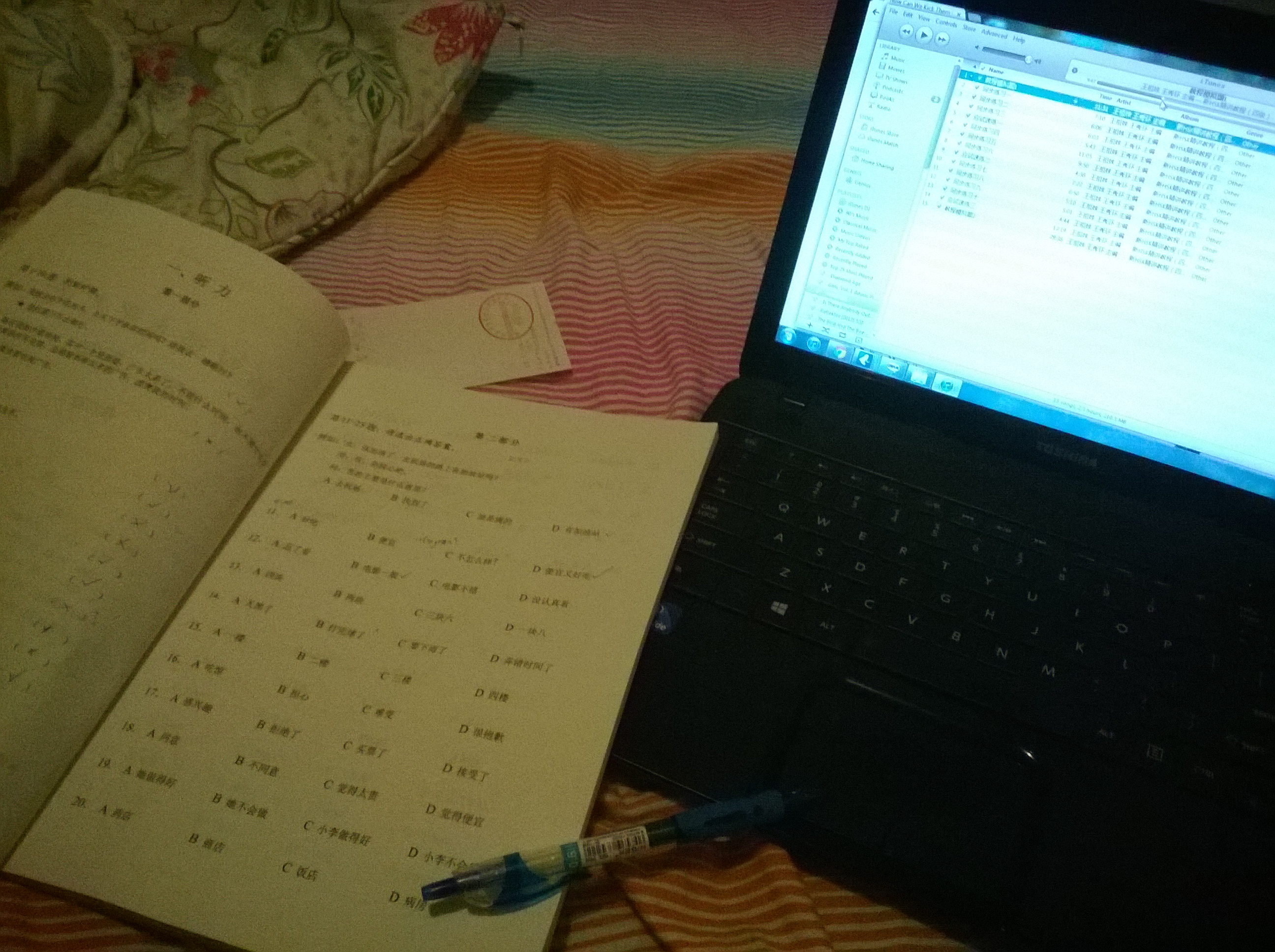

And finally, some handwriting
In our last section we went over the English teacher dilemma. Suffice to say, many are losers but not all. Now on to my personal classifications for those with real jobs. Again, forgive me for generalizing but it’s too much fun and isn’t that what we humans do…
Good Businessmen: Your average fellow who happens to work here. Maybe they’re interested in China and came on purpose and learn the language, but it’s also possible they were relocated here and make the most of it. Either way they aren’t the complainy type.
Long-term or short-term, they respect others and are citizens of the world and know how to conduct themselves with dignity. It’s no big deal to be in China, it’s simply a good place to work and live. The more ambitious ones start their own company, trading or whatever, and make good money and contribute to the world well enough.
I’ve particularly met a lot of cool Germans of this variety. Point is, they are quality people who work here and act like they would anywhere else in the world. These are expats worth networking with at parties, and most of all worth making friends with.
Evil Businessmen: Personally, I’d argue that the arrogant rich trader doesn’t get enough of a bad rap in the expat scene.
Some people might be easily impressed by such big spenders, but I just know there’s something off about them. They complain, they don’t want to learn the language, and deep down they seem hostile to it all behind their sales-trained smiles. Most of these guys aren’t even that rich, they’d be middle managers back home but abroad they think they are so damn big shit.
There is a tinge of racism and classism that one can sense as well. Sometimes it’s not about sensing at all, sometimes it’s blatant racism. Sexism too, more on that below.
This kind of expat has a privileged background and has come to this poor country to do whatever he wants. The locals are seen as merely the servant class meant to massage his feet (or elsewhere) and serve him food and work in his factory. Any friendships to be made are rather shallow and condescending.
Note this sort of expat never ever makes friends with Chinese males. But how very interested he is in local females. Here’s the sexist part– listen to the ol’ rant about how feminism has ruined the women back home, and he prefers uneducated Asians for their docile submissiveness as well as allowance for cheating. He might even be fine with outright paying for it and uncomfortably likes to tell you so, complete with details about his latest Southeast Asian business trip.
Let me just say it, there are a whole lot of these very old men with very young girls. Perhaps we’ve all had May-December romances in our past or present, mistakes to learn from or maybe a true love for the ages. It is kinda natural for girls to be attracted to mature men, and for men to like younger women. Yet, once you start getting into twenty-year gaps, upwards to thirty or forty, let us simply agree that is creepy and more than a tad undignified. I know way too much: the American in his forties in open relationship with teenager, the Brit in his sixties with a stream of twenty-something girls around him. Am I being ageist; are they supposed to be breaking down generational barriers or something? Come on. OK, moving on from that subject now.
There are all stripes out there. Nobody’s perfect and some may lean towards these general aspects without being that bad, some are more decent than others. But I’ve met some true sociopaths in this world, and they have a talent for masking their evil with material success. Watch out. I’m serious.
Call me bitter, but I never cared much for expats of that ilk.
That should about cover it. Am I on to something? Or am I being too harsh? I have left out plenty, but don’t you see someone you know? How about reflections of yourself? Let’s discuss.
And I might as well put it out there: guess which demo(s) go for me…
In my latest post, I shall attempt to categorize the demographics of the mainland Chinese expat in four quadrants. Just a theory of mine I like sharing. Please note this is very much generalization. It is not meant to encompass all foreigners, it’s about Westerner expats and their scene. In fact, this mostly goes for males so I’m going to assume masculine terms below. Forgive me for painting with a broad brush, there are degrees and exceptions but I think it by and large counts.
Often the casual observer makes an even simpler observation on expat demos; there are loser English teachers, and everybody else. There is more than a kernel of truth in that stereotype to be sure, but I hope to be a bit more detailed so as a to give a break to our ESL friends and simultaneously not give a break to some other sorts.
It breaks up as so: Loser English Teachers & Cool English teachers, and Good Businessmen & Evil Businessmen
Loser English Teachers: This is an archetype we all know well. The dropouts, the drunks at clubs, the young and (sadly, sometimes very) old who don’t seem to be employable anywhere else in the world and tend to have no skill sets and are only hired because of a foreign face. It’s downright profiling.
Not necessarily native-English speakers at all, they can hail from any country in the world and simply bounce from one ‘performing monkey’ job to the next. The blond Russians, the aloof central Europeans, and some seriously awkward French-Canadians.
The native speakers themselves are more often than not terrible at English, especially in writing, and obviously have no business teaching anything. Yet here they are. The Australians with serious alcoholism issues, the Americans with barely a high school education, the British sex addicts.
They drink, they party, they fuck, and they learn nothing. And, without being too crass, let’s just say they are into Asian chicks. And they generally can’t get chicks back home. You surely know what I mean.
It should be noted, however, that as China has progressed these past years the average Chinese female citizen is not so easily impressed by a white face and expects more. Time to learn some new skill sets, people.
Simply put, these guys are not TEFL-certified and the desperate shady schools that hire them are not doing a service to their students at all.
Cool English Teachers: But it’s not all bad. A lot of people take up the opportunity to move to China because they are actually interested in Chinese culture. They might go after graduation, or later in life to reinvent themselves, perhaps take advantage after a gap year of backpacking, and ESL is an easy enough job to see the world and get your foot in the door in China.
They might party, but that’s not all they do. With more long-term plans in mind, they learn Mandarin and can eventually get jobs in other fields. Then there are the very long-term expats who settle down here and raise families as well.
Anyway, no shame in being that kind of ESL guy at all, and I for one think they are undeservedly lumped in with the losers. As for teaching, credentials aren’t everything and there are solid people out there who just have a knack. There’s my defense.
What do you think? Recognize any expat friends up there? Ever taught English yourself, where do you fall on the scale?
(Btw, a group I notice left out is the qualified international school teacher. Like, they can teach math and actually majored in teaching. That is a wholly different animal, more like the Good Businessman than anything else as far as being people with “real jobs” who just happen to work in China. With that…)
Part the second, Good Businessmen & Evil Businessmen, to be continued…

Jason Stine presenting at the Shenzhen Idea Exchange event in
OCT-LOFT last Saturday
http://szdaily.sznews.com/html/2014-03/03/content_2793413.htm
THE local expat community is full of nice people, but they aren’t generally known for charitable contributions. However, 25-year-old Jason Stine, an American from San Diego, California, said he appreciates his life in China and is excited about giving back to the community that he feels is his new home.
“My parents live in Houston, Texas, now,” he explained. “My life and friends are here in China. To that extent, this is my primary home.”
Stine has been in China for four years. After graduating with a combined major of liberal arts and engineering — the liberal arts half included studying Mandarin — he moved to Shanghai. He moved to Shenzhen four months ago, for the weather.
While he was in Shanghai, he got involved with a volunteering and networking organization called BEAN, or Business Entrepreneurs Altruism Networking. Founded in 2003 in Seattle, it has expanded globally and now helps people all over the world.
“It became my community away from home,” Stine said, adding that the Shanghai BEAN chapter hosted several events per week and had hundreds of members. “The Shanghai model is huge.”
He volunteered for activities including playing board games and mahjong with senior citizens, spending time at a shelter for stray cats, and leading a Reading Buddies event at a center for poor children of migrant workers while collaborating with included.org.
“What interests me with these events is more the social interaction aspect of it, and the feeling that I’m a leader of something truly worthwhile. I love socializing with others, and I love being the leader; these moments can make me feel like I really belong in the community,” Stine said. “Volunteering can be really fun, too, so why not use the two latter qualities and put them to some good use to help those in need and benefit the local community?”
The heart of BEAN’s strategy is to connect the community with charities in need of manpower.
“BEAN gives foreigners a chance to volunteer with no language-barrier issues, and connect with other organizations that focus on their own niche,” he added.
Stine, an events and project manager in Nanshan District, said he’s very optimistic about the future of BEAN in Shenzhen. The local chapter is still new and not quite as active as its Shanghai counterpart yet, he said. An early step is learning about local organizations — such as the Shenzhen Blue Ocean Conservation Association, which cleans up trash at beaches in Yantian District — and connecting them with expats.
“I can provide the framework for volunteers. All I need are people, and it’s ready to go. The toolbox is there,” Stine said.
More information about BEAN and volunteering with the local chapter can be found online at:
http://shenzhen.beanonline.org/
❤
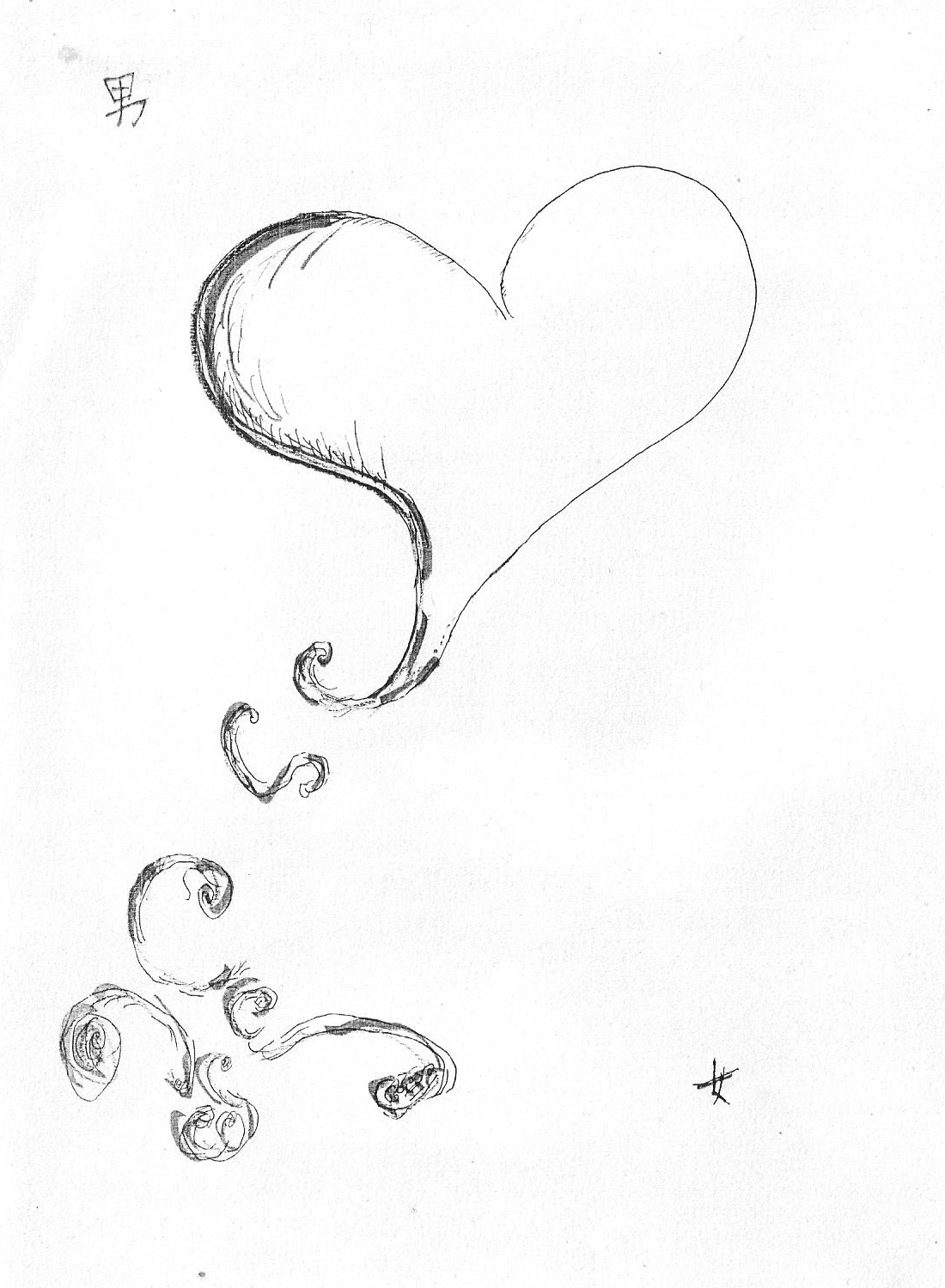
 <
<
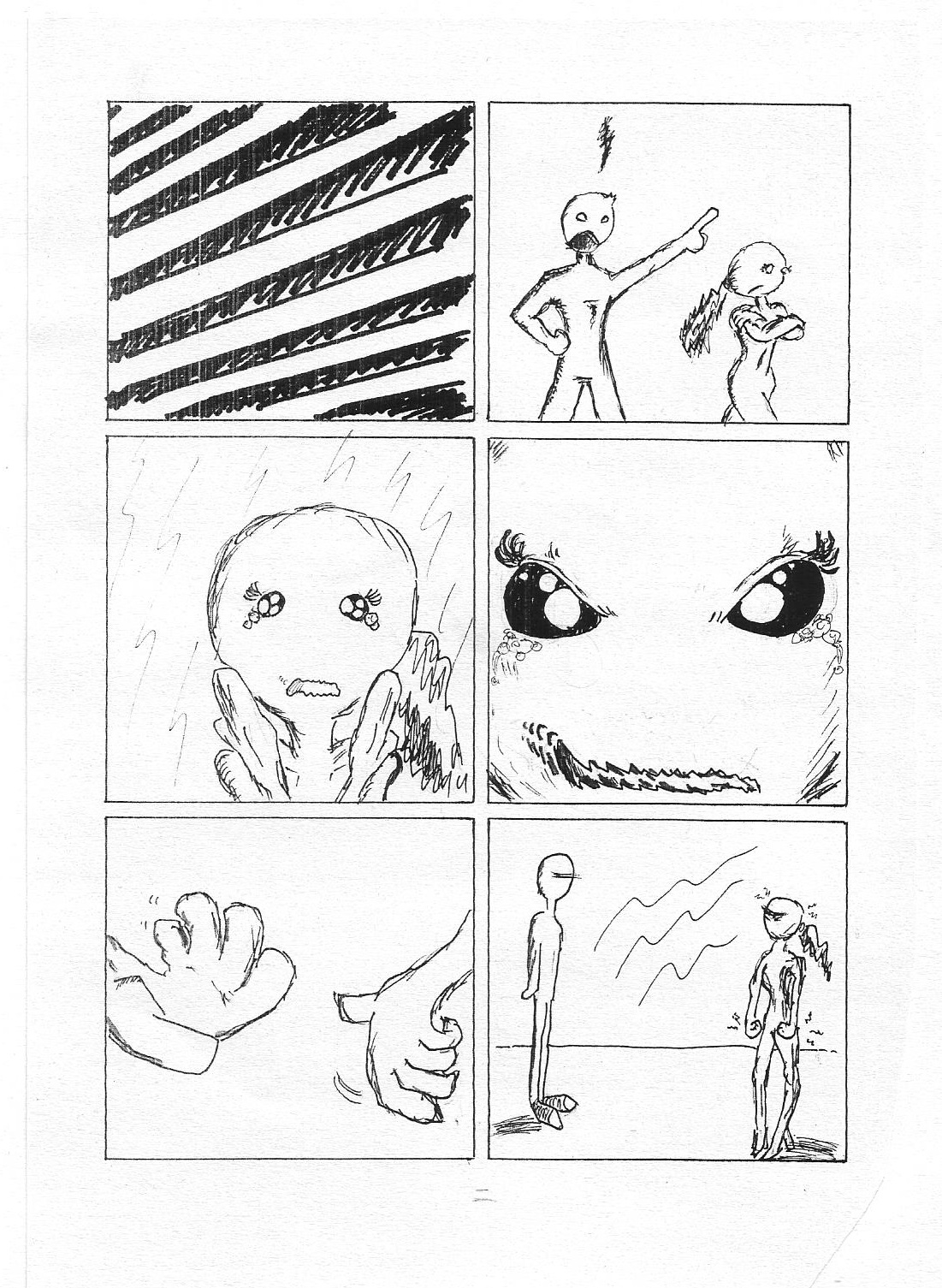


</3
In the final instalment, let’s check out Dafen oil painting village.
Wasn’t too busy during the holidays, but who wants crowds?
In the outskirts of suburban Longgang District we find the famous village, a landmark of the city. I hadn’t been here in years. This time it isn’t so much a high-brow art scene as a place to buy copies of famous paintings for your hotel or restaurant or something. Classics, pop art, commissioned portraits, a few originals. All is wholesale, bargainable, assembly-line. It is good to see some lowly art students be so capitalist and hustle to make a living.
THAT is rather Shenzhen
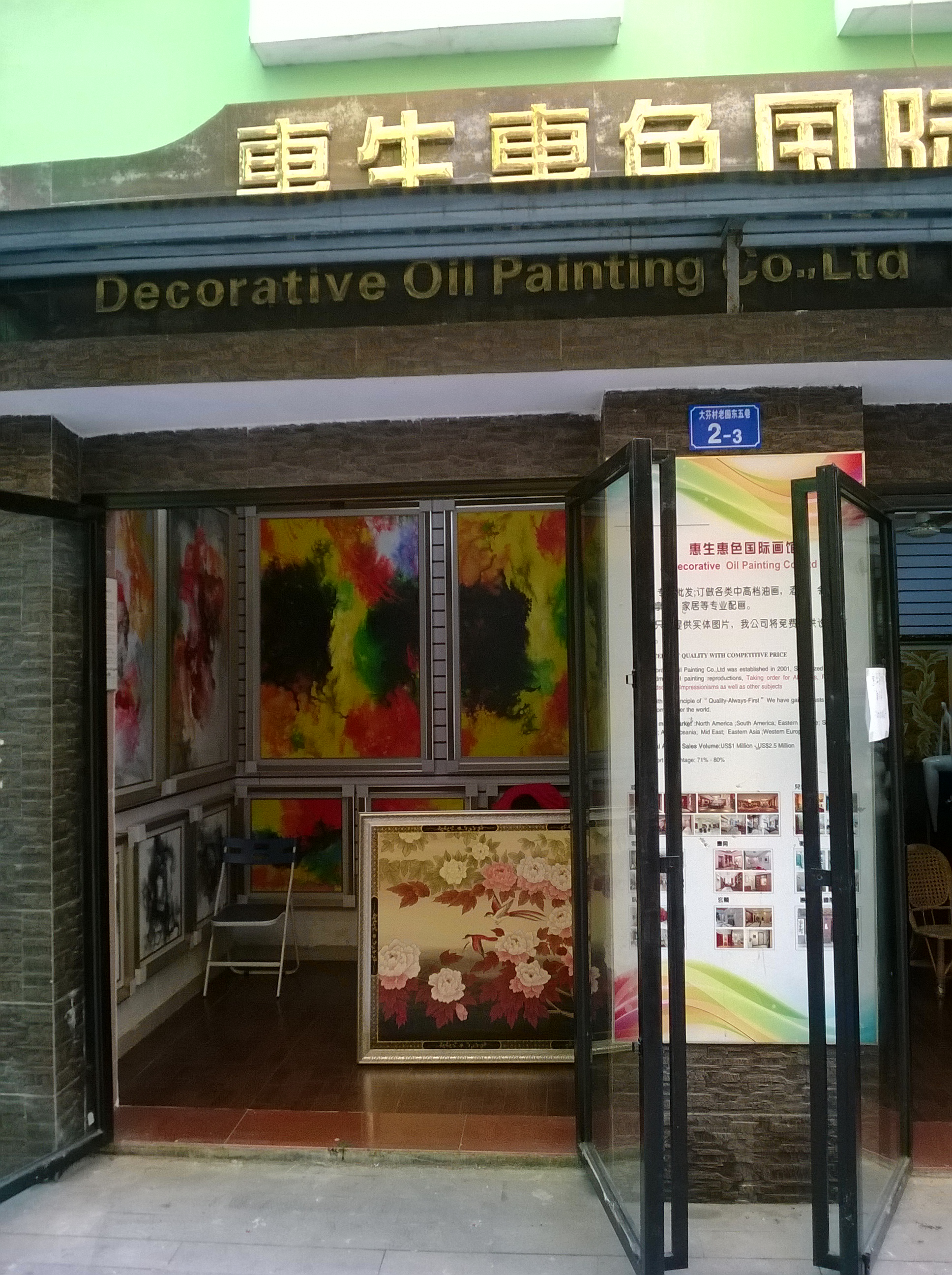


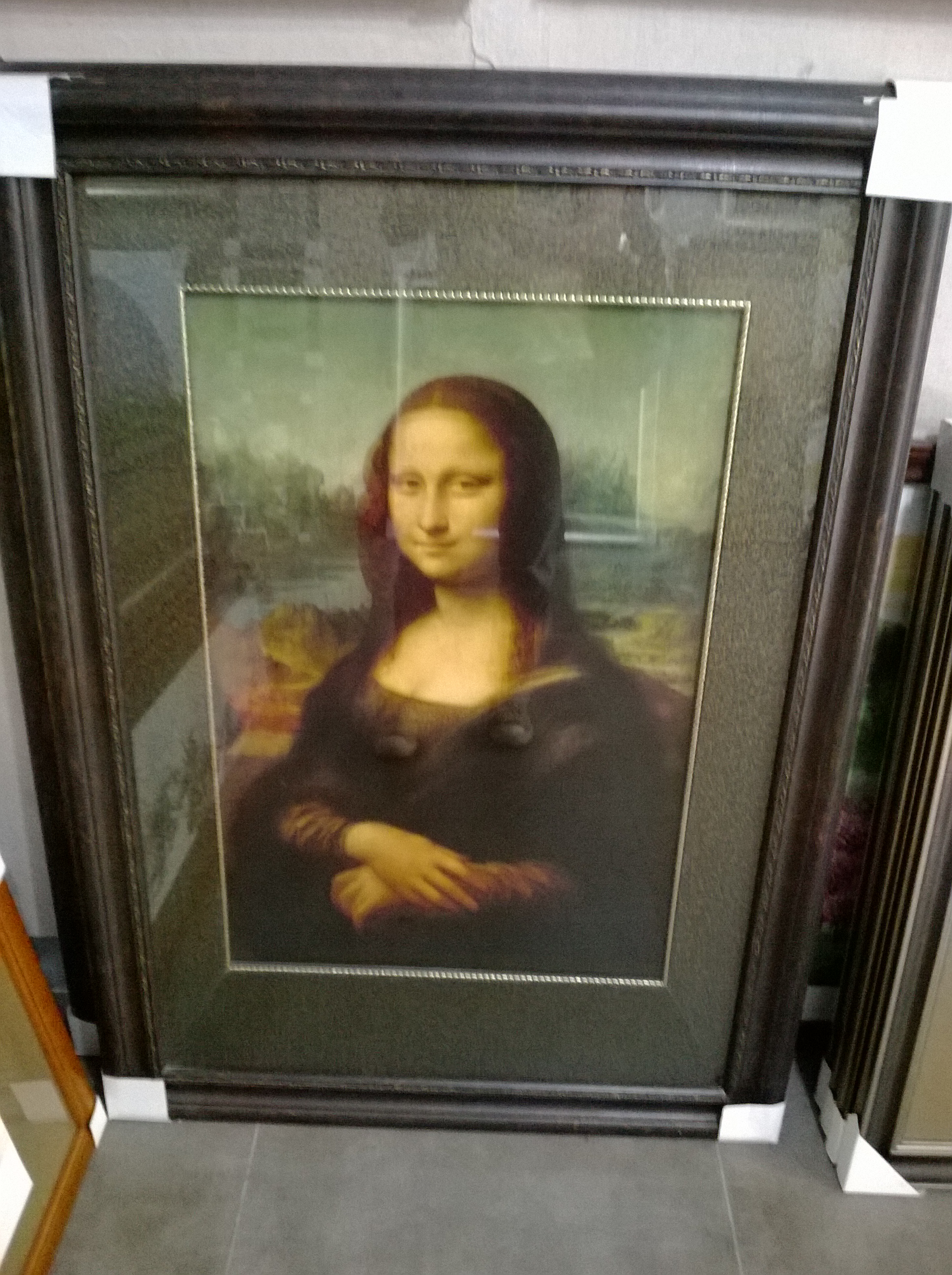
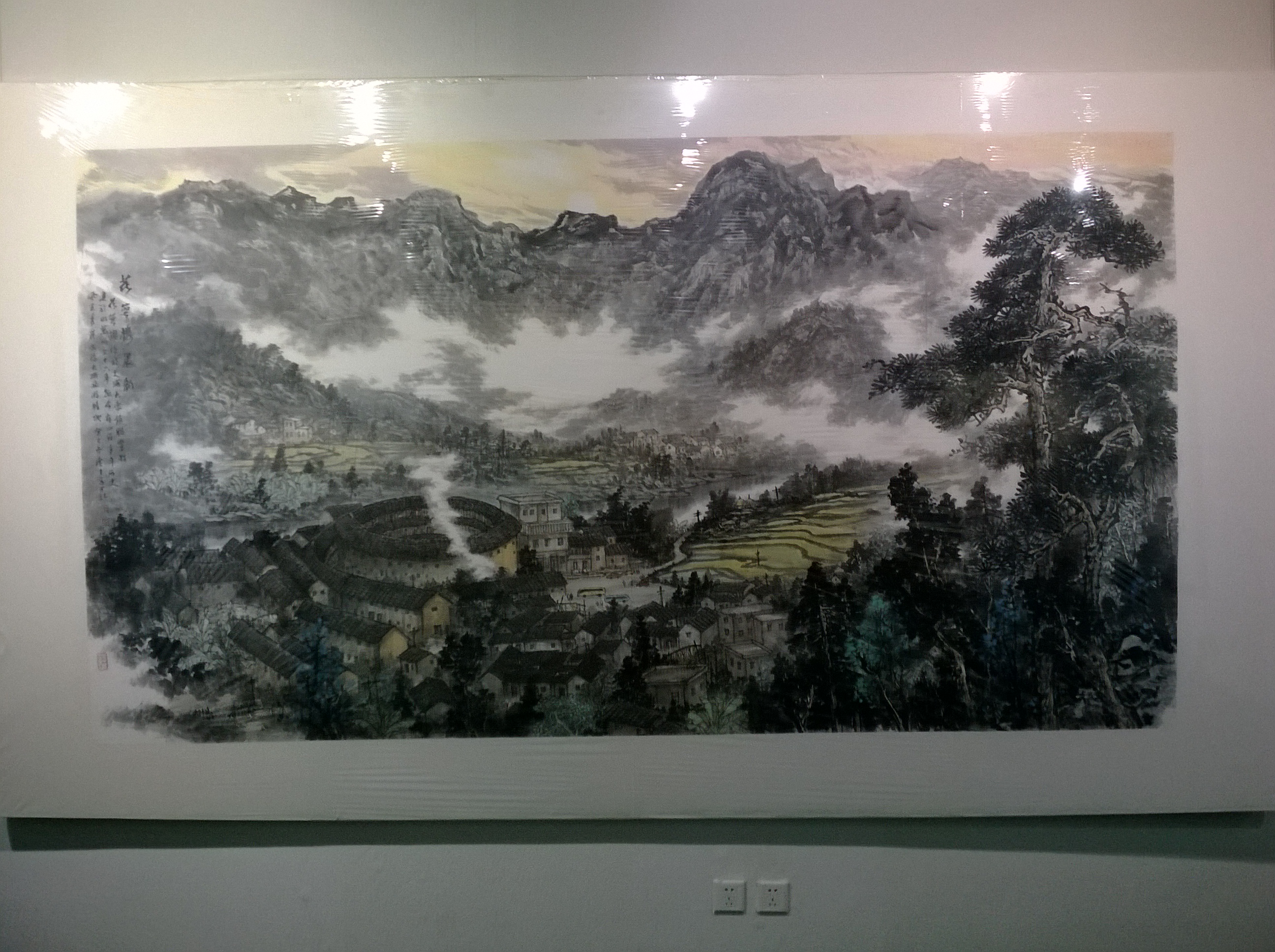
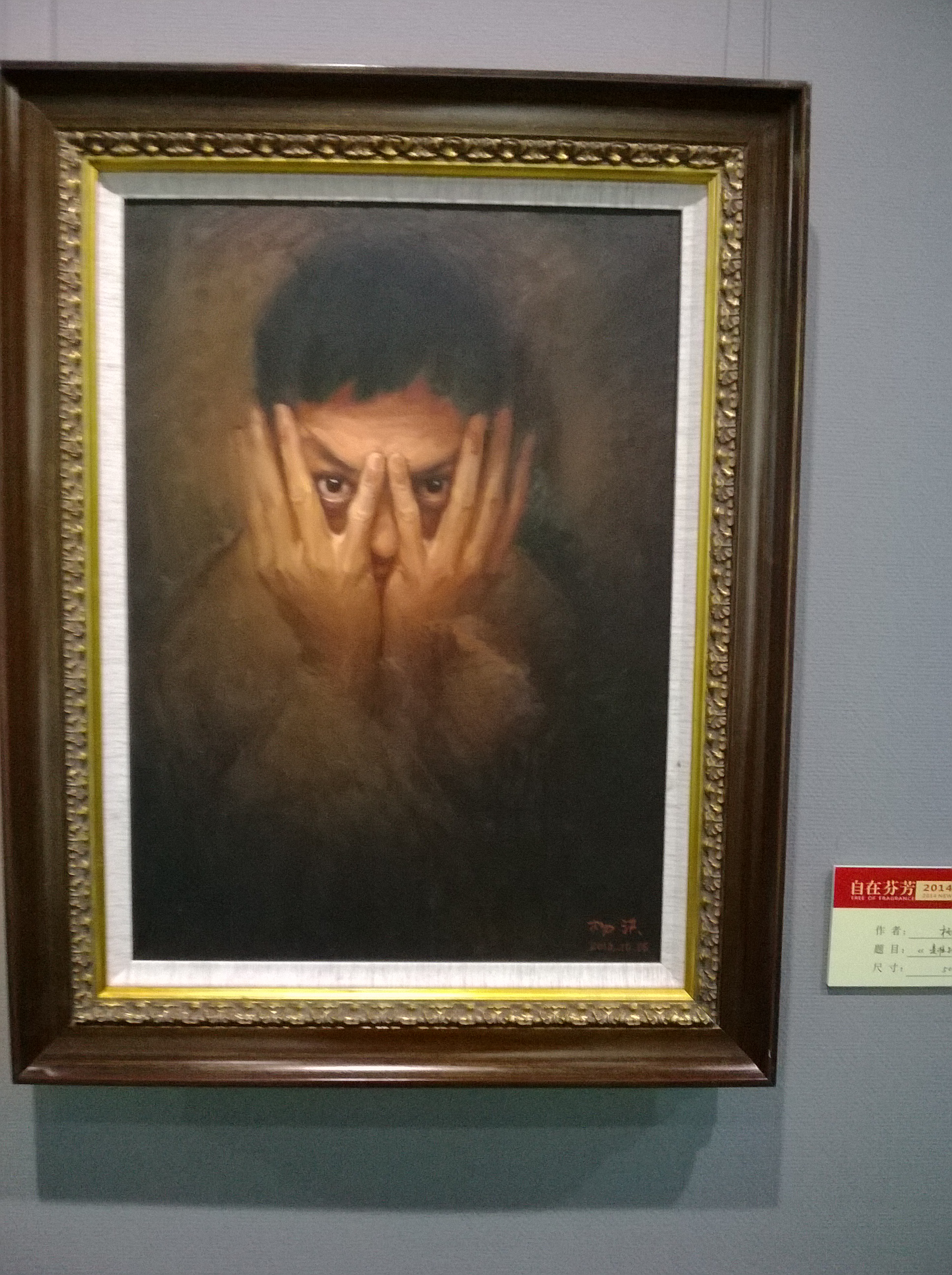
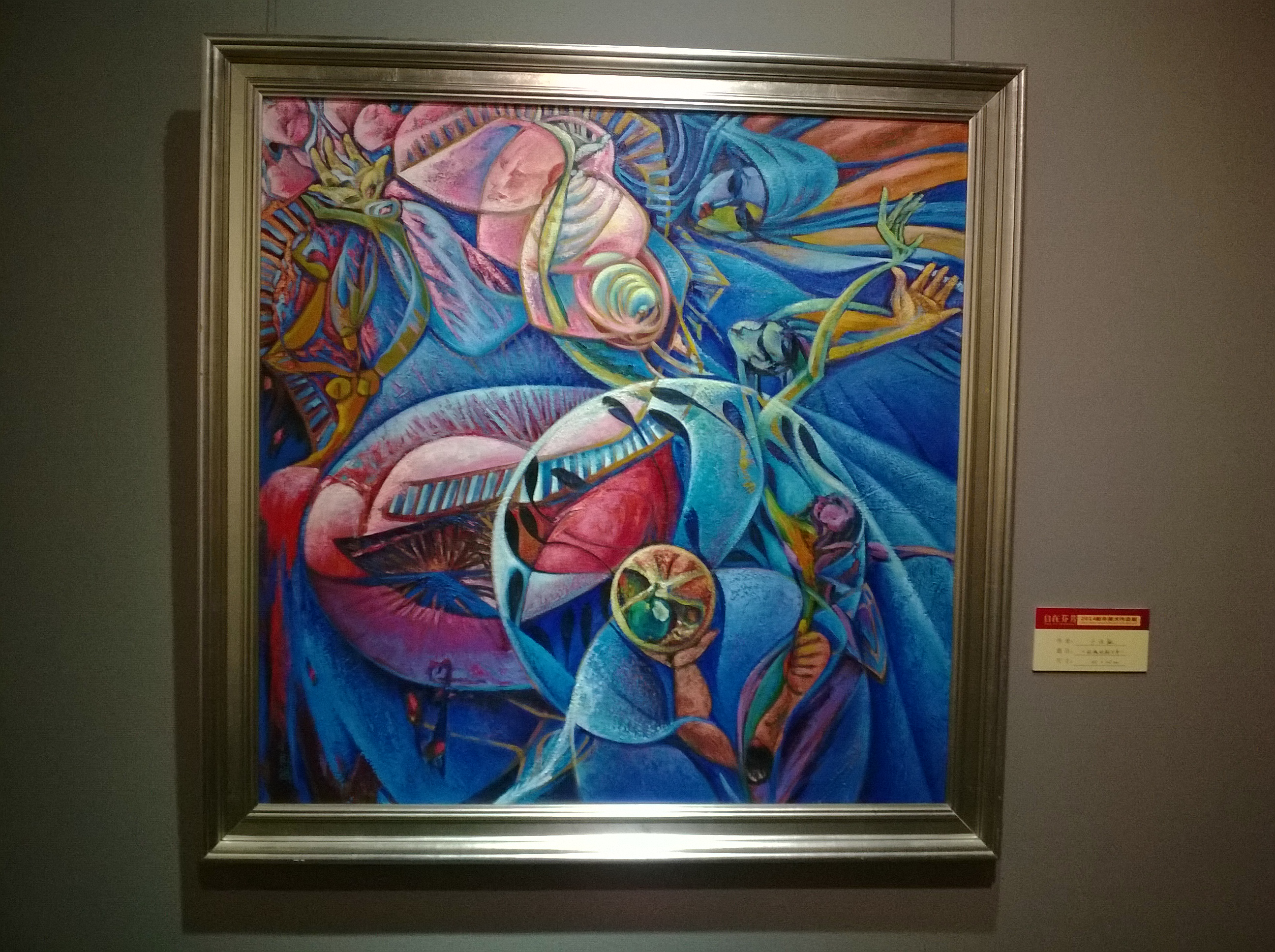
There is a museum with a proper gallery, and there were some interesting works by very talented artists in there as well worth seeing. I enjoyed the Steve Jobs done in traditional Chinese painting style, that is really rather Dafen/SZ…




And back to the village,

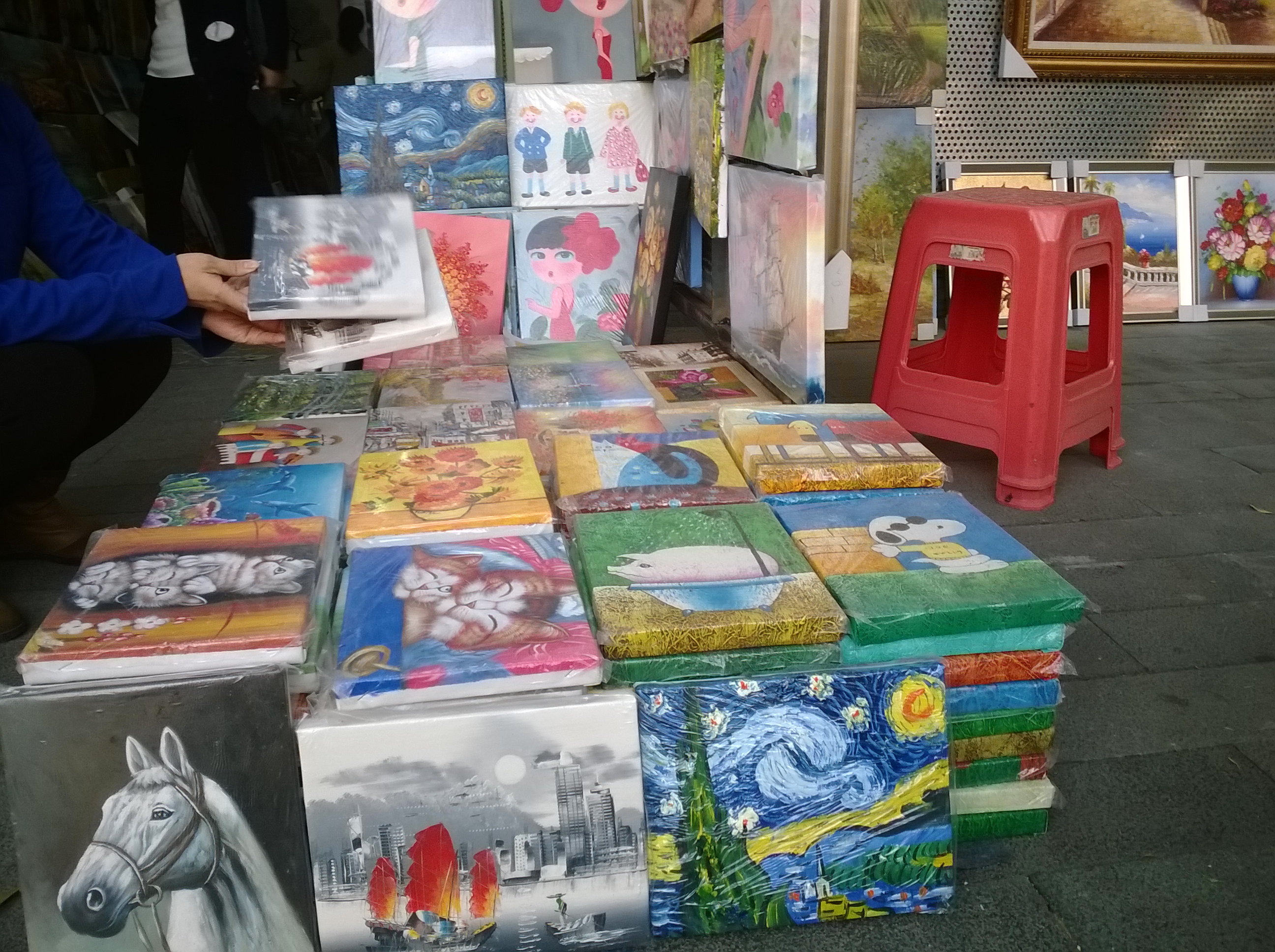


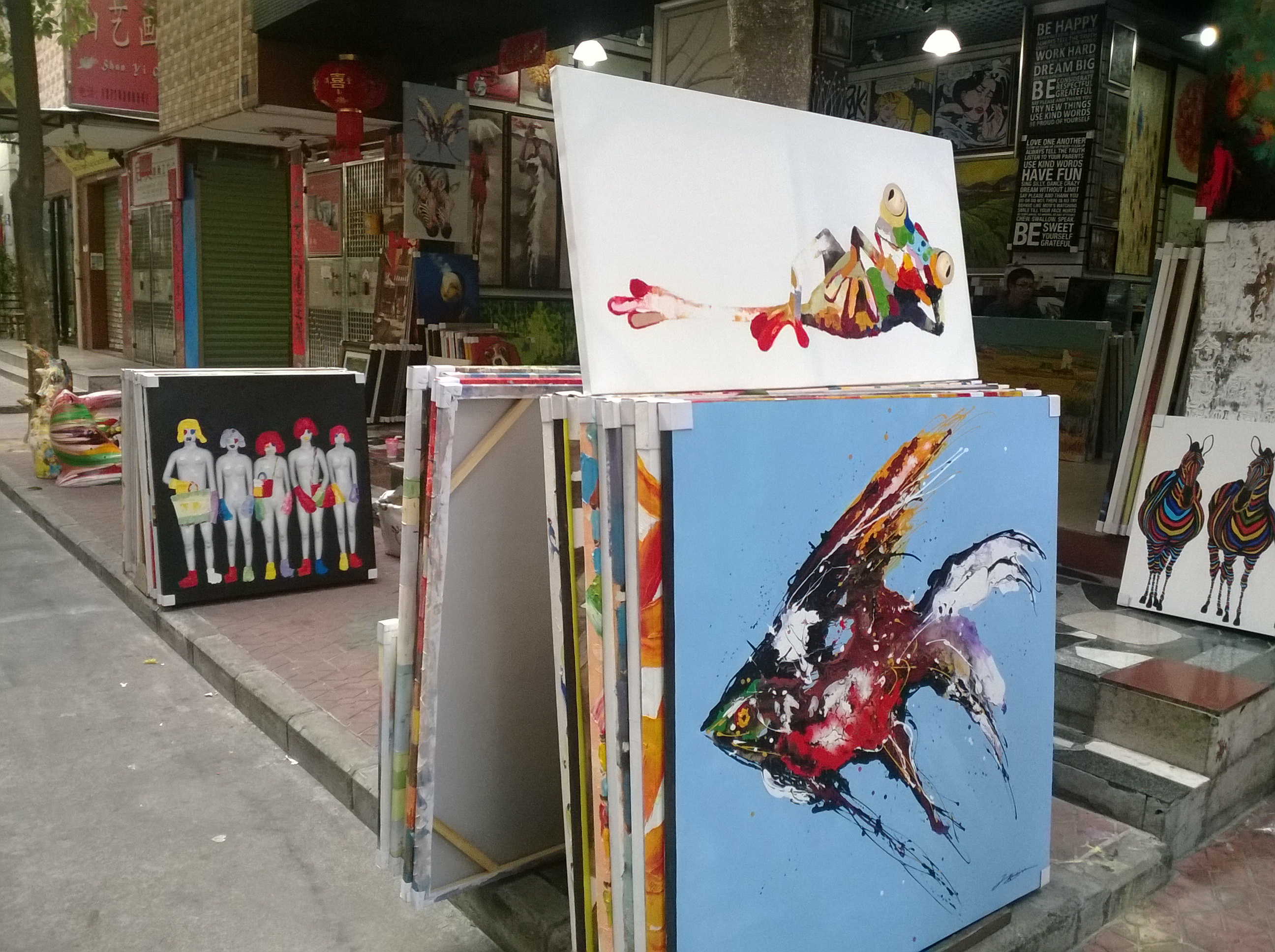

Among other sights, it was nice to watch an artist at work. Incredible.
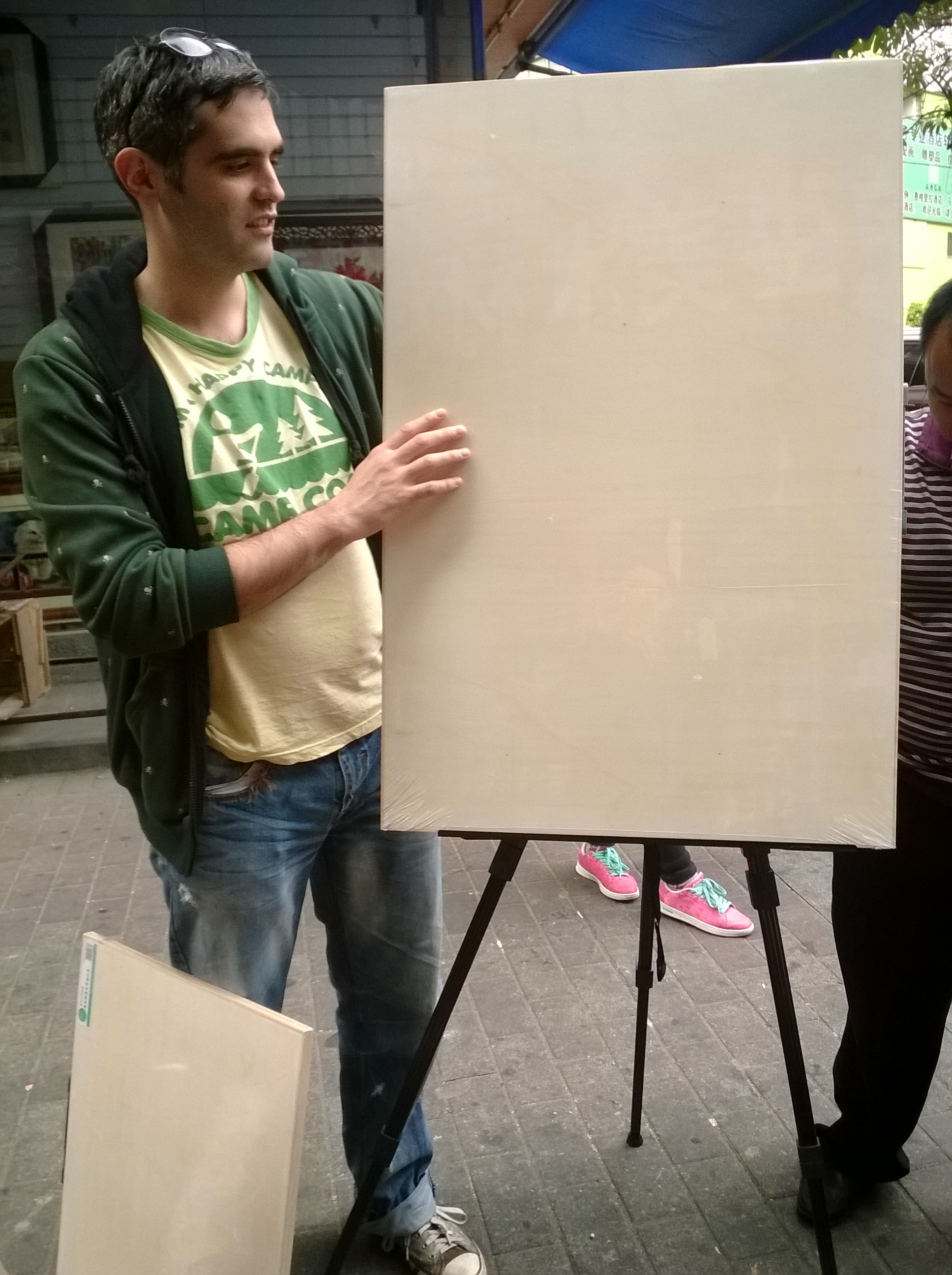
Lastly, feeling inspired, I conclude my Shenzhen art tour with the purchasing of some supplies of my own.
When next I blog, hope to have something to show off.
Thanks for click!

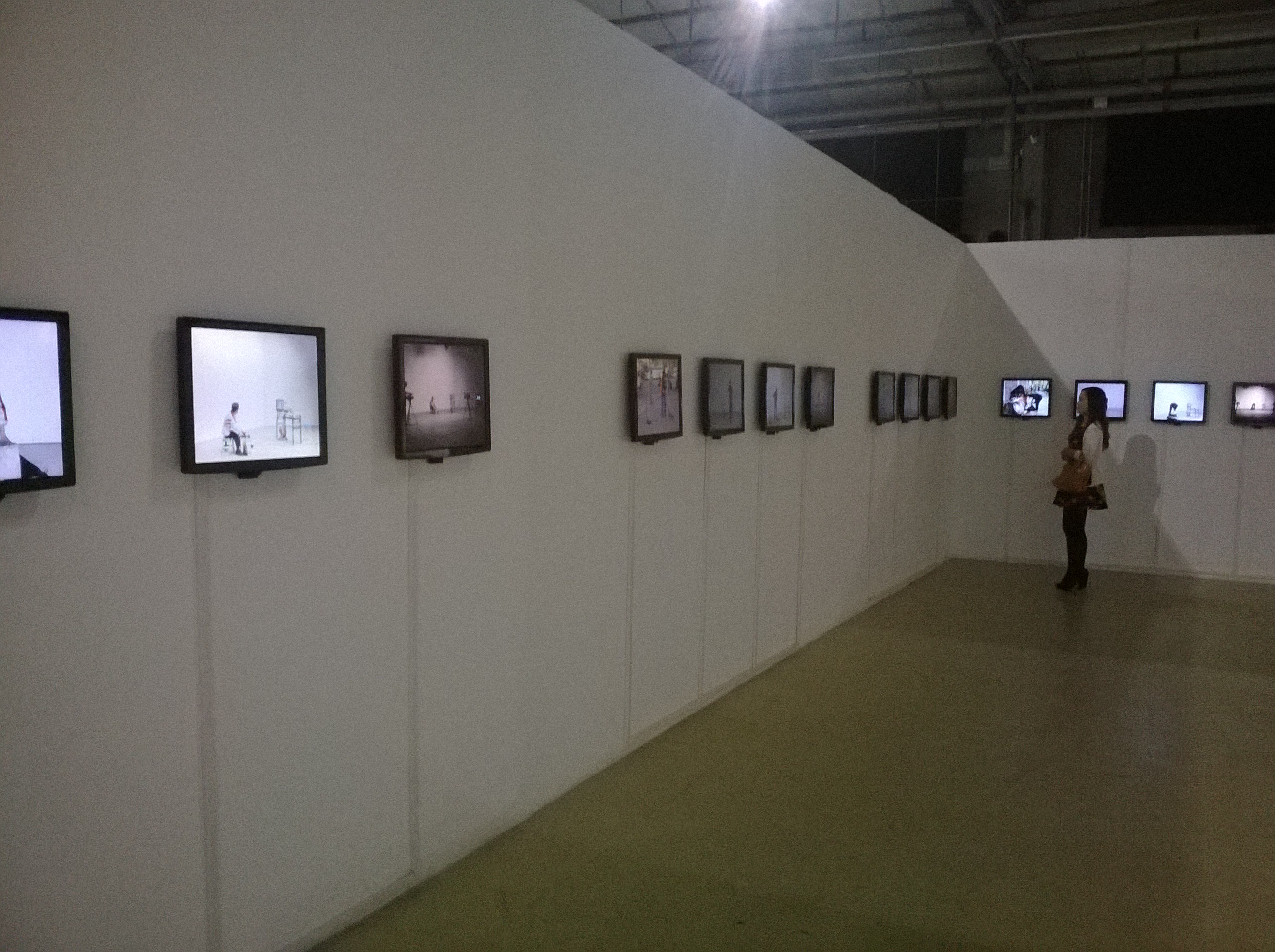
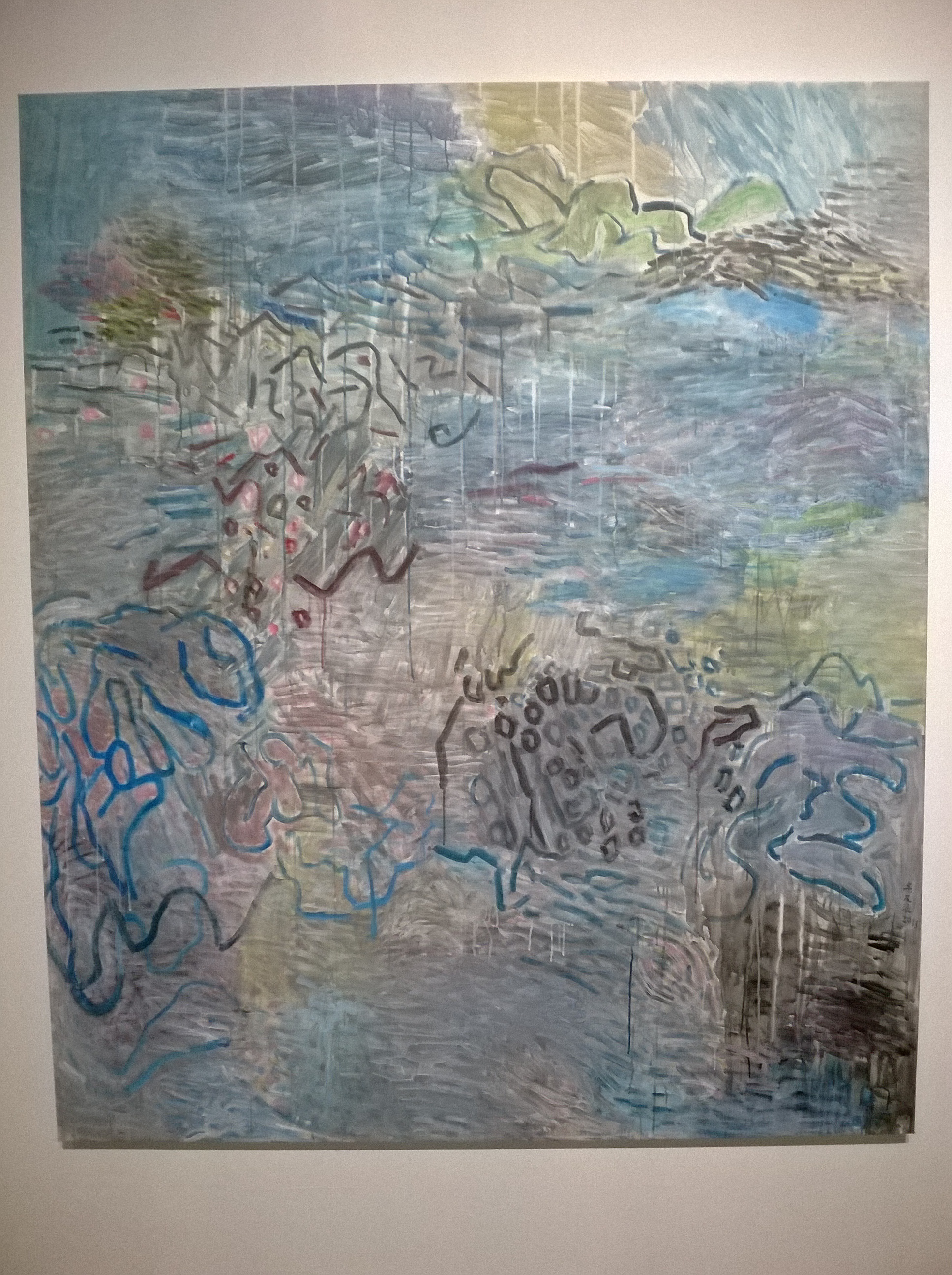
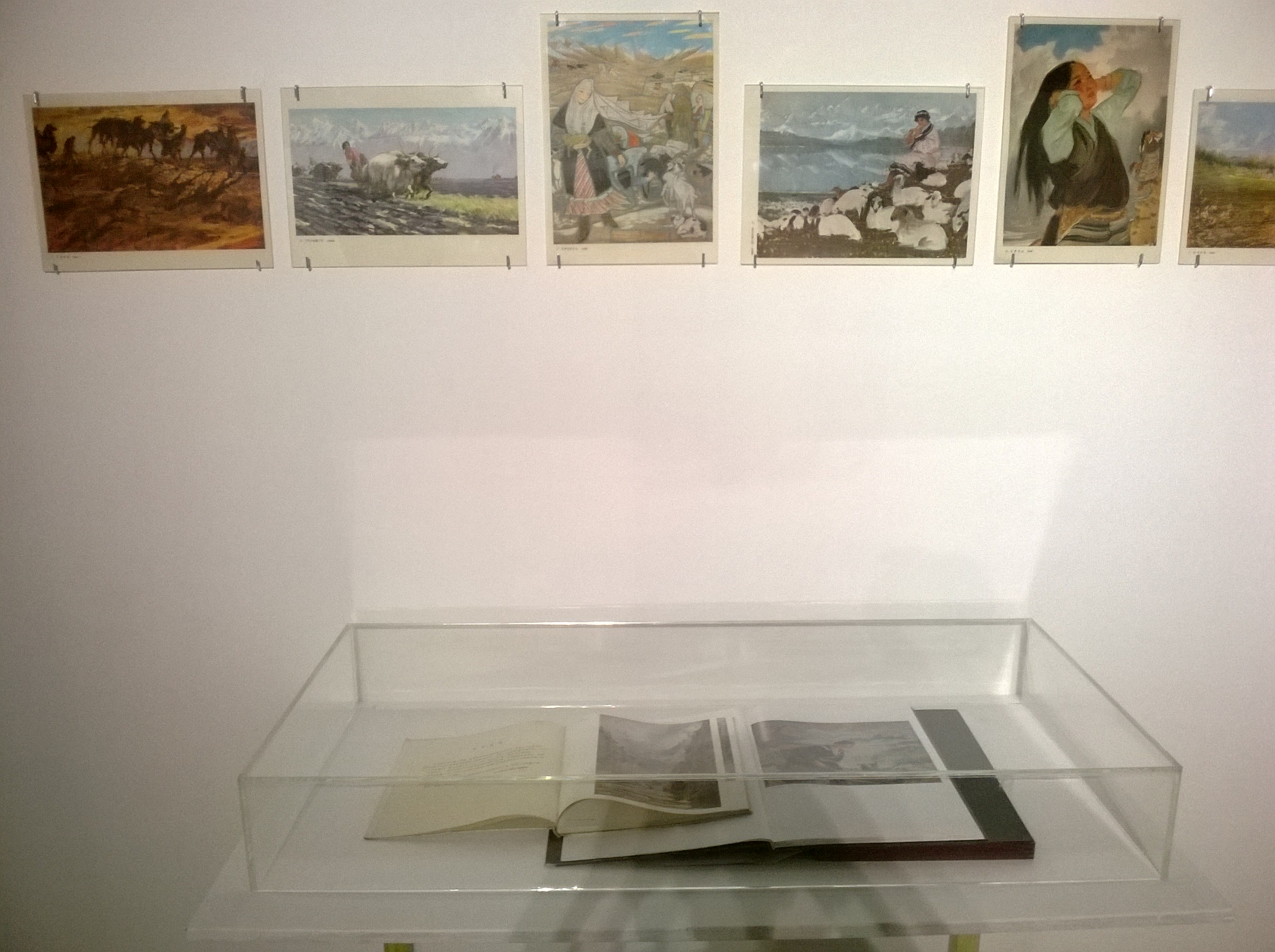
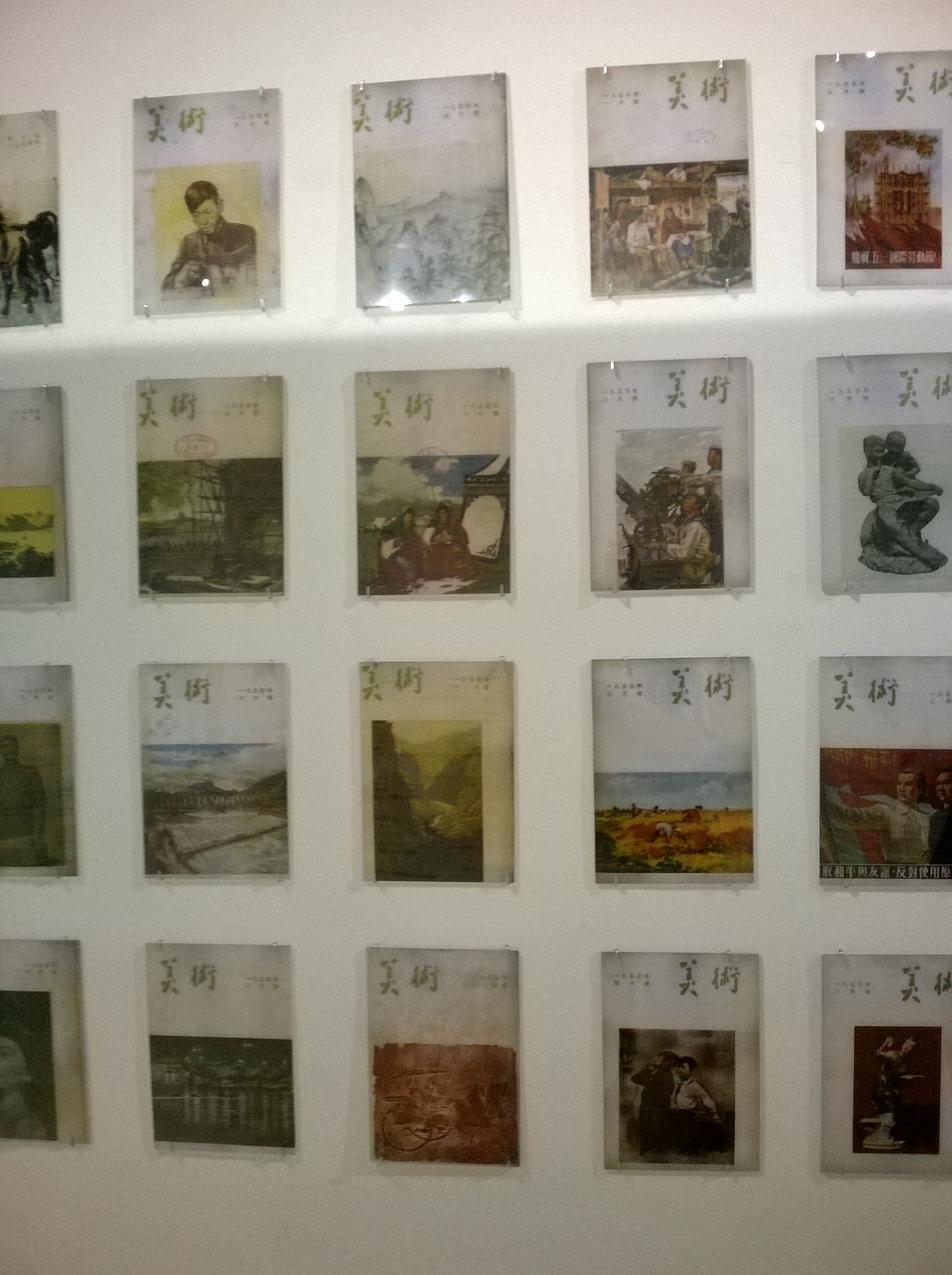
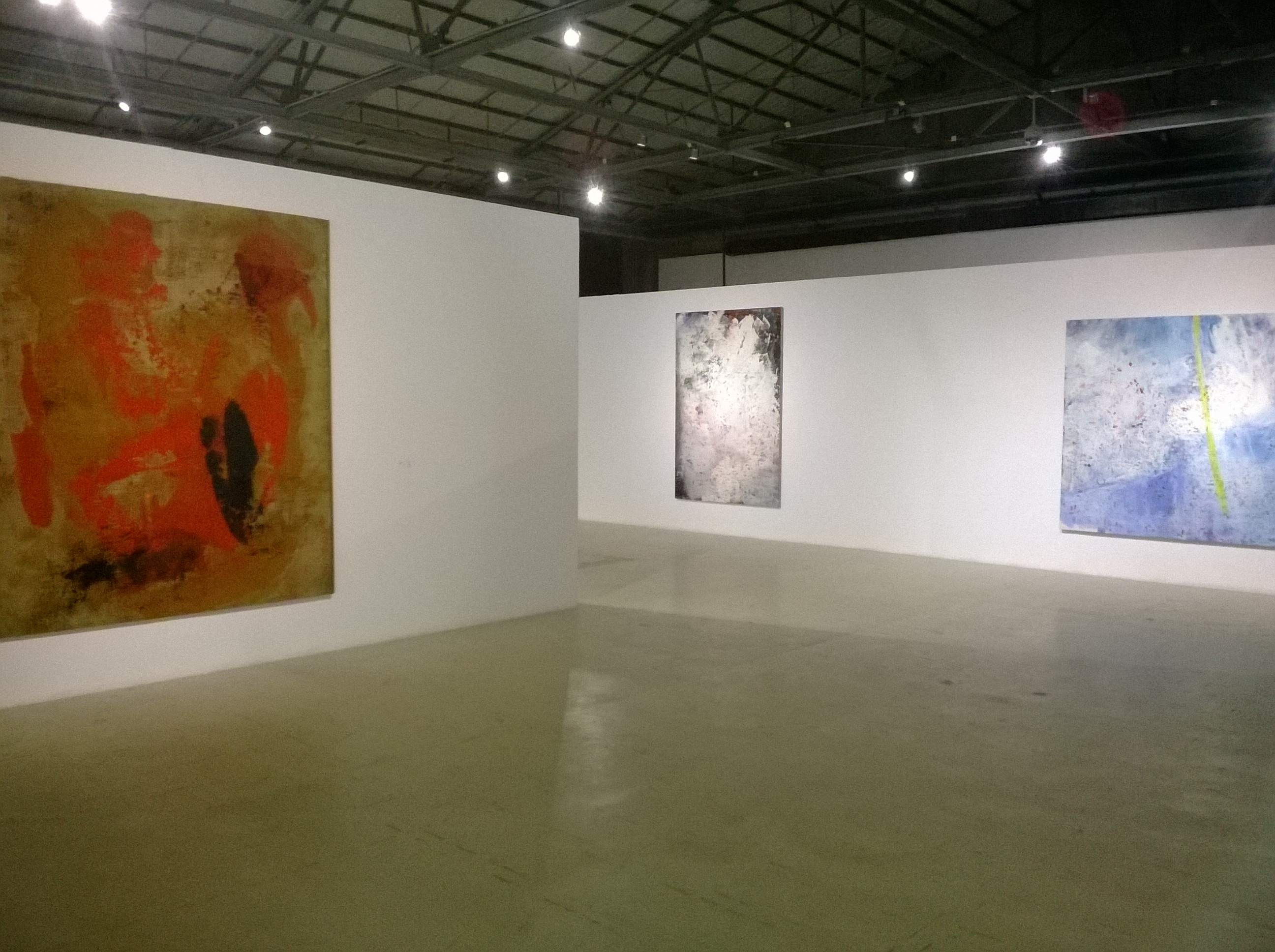
OCAT (OCT Contemporary Art Terminal) is is the central exhibition hall in the heart of the OCT-LOFT area, and currently houses this time-spanning exhibition covering the remnants socialist realism from the Communist red era to see how it influences and inspires modern art and then carries predictions of the future. It is important to know where one comes from, and move forward, isn’t it?
I enjoyed the large-scale canvasses myself.
From Shezhen Daily: http://szdaily.sznews.com/html/2014-01/30/content_2770271.htm
The exhibition is divided into three sections: “From the Issue of Art to the Issue of Position: Echoes of Socialist Realism,” “Keep the Modern Going: Immersion, Awaiting and Idealism” and “Multi-Future.”
The exhibition, showcasing oil paintings, installations, video, dramas and fine art research in China from 1949 to 2013, attempts to reassess how realism influences and molds art.
…
The exhibition also presents some rethinking and reevaluation of old works. It studies Chinese contemporary art as early as the year 1949, instead of starting from the 1980s. “To revisit the past is to rediscover the work and ideas that were yet to be fully explored and recognized. It is to expand the historical dimensions within which we study Chinese art and to position our current work in a richer and more open context,” said curator Lu.
The exhibited Chinese artworks created from 1949 to the end of the Cultural Revolution in 1976 reflect the socialist realism style, which often glorifies the roles of the working class. While realistic paintings in the late 1980s and 1990s depict the real, sometimes negative, aspects of life. Scenes that took place in people’s homes, on the streets, in parks and on buses are seen in that era’s artworks.



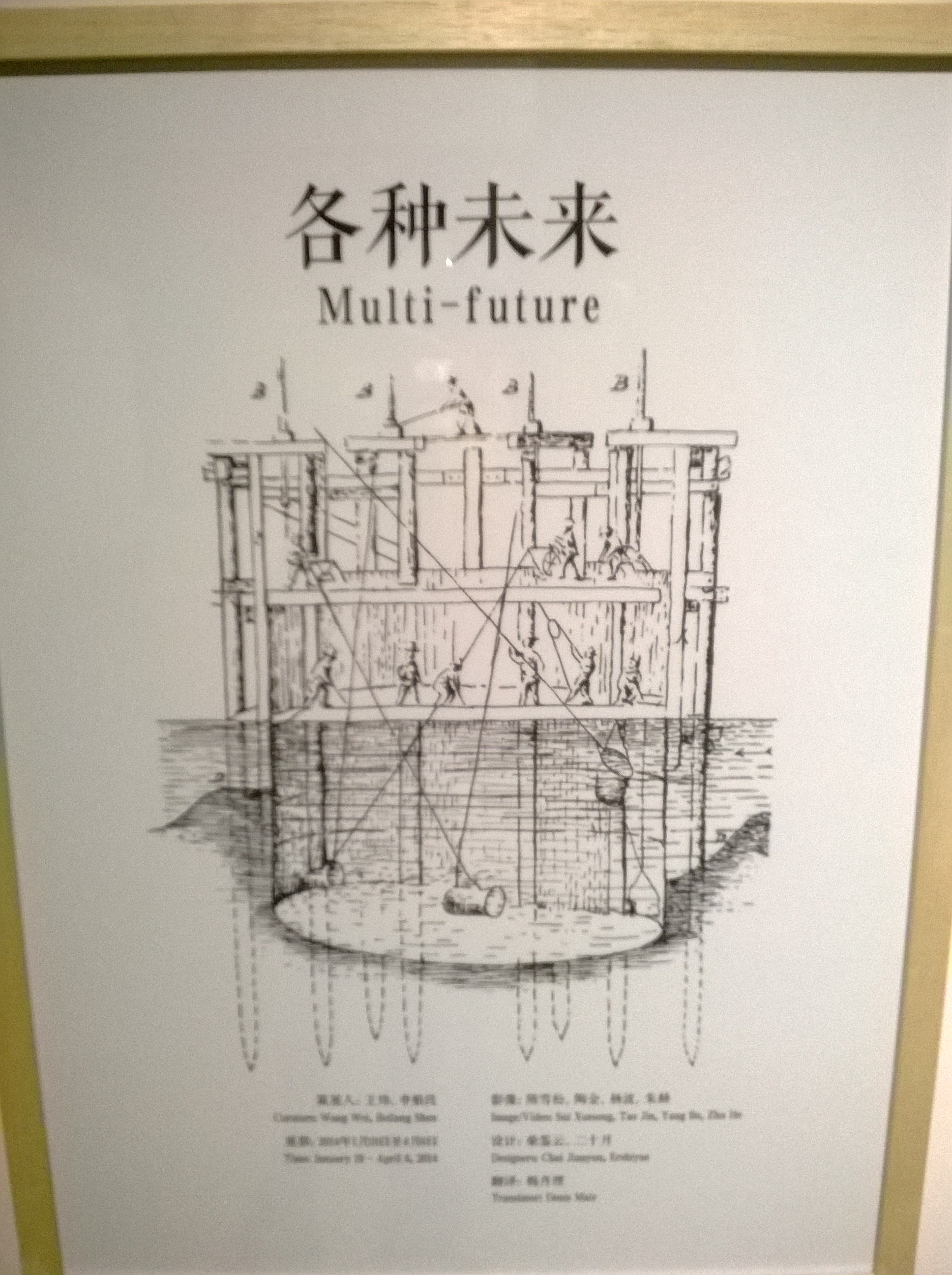
Let us now travel to OCT-LOFT, the creative center of Shenzhen.
B10 is an amazing warehouse gallery in heart of the ‘hip’ Loft neighborhood. A huge venue, an incredible project. As part of the OCT-LOFT Creative Festival, this exhibition really brings it.


From their publications:
The “design experimental field” mentioned here contains three levels;
First, the field that breeds design experiments [the lab];
Second, the field that leads to imaginations regarding the future [Utopia];
Third, the field that is reconstructed in the real world [improvement of the present reality]
Ambitious, right!
There are nine international design research projects exhibited, hailing for all over the world. Self Unself. Inside the White Wale. Connecting Cities. Fluid Archives – Data Come to Me. Mobile Voices – Projecting the Voices of Immigrant Workers by Appropirating Mobile Phones for Popular Communication. The Museum of the Future 2040. Emotive Environment – Thinking and Creating with Active Materials. Multilingual – Typography. E-embroidery and Interior Embroidery.
Ranging from video art to walk-in instillations, there’s too much to go over in one brief blog. Please check it out in person for more. You have until March 8th…

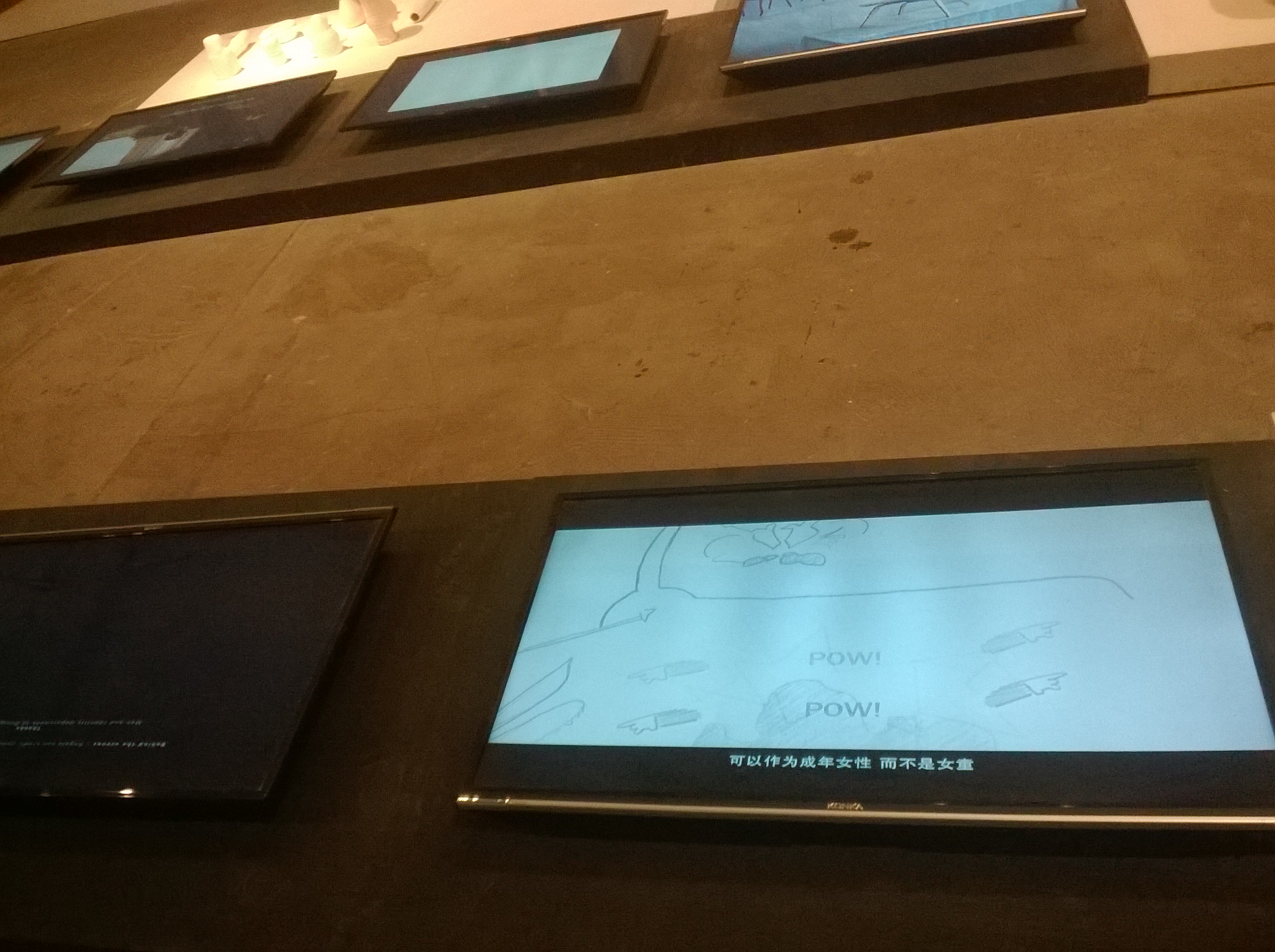
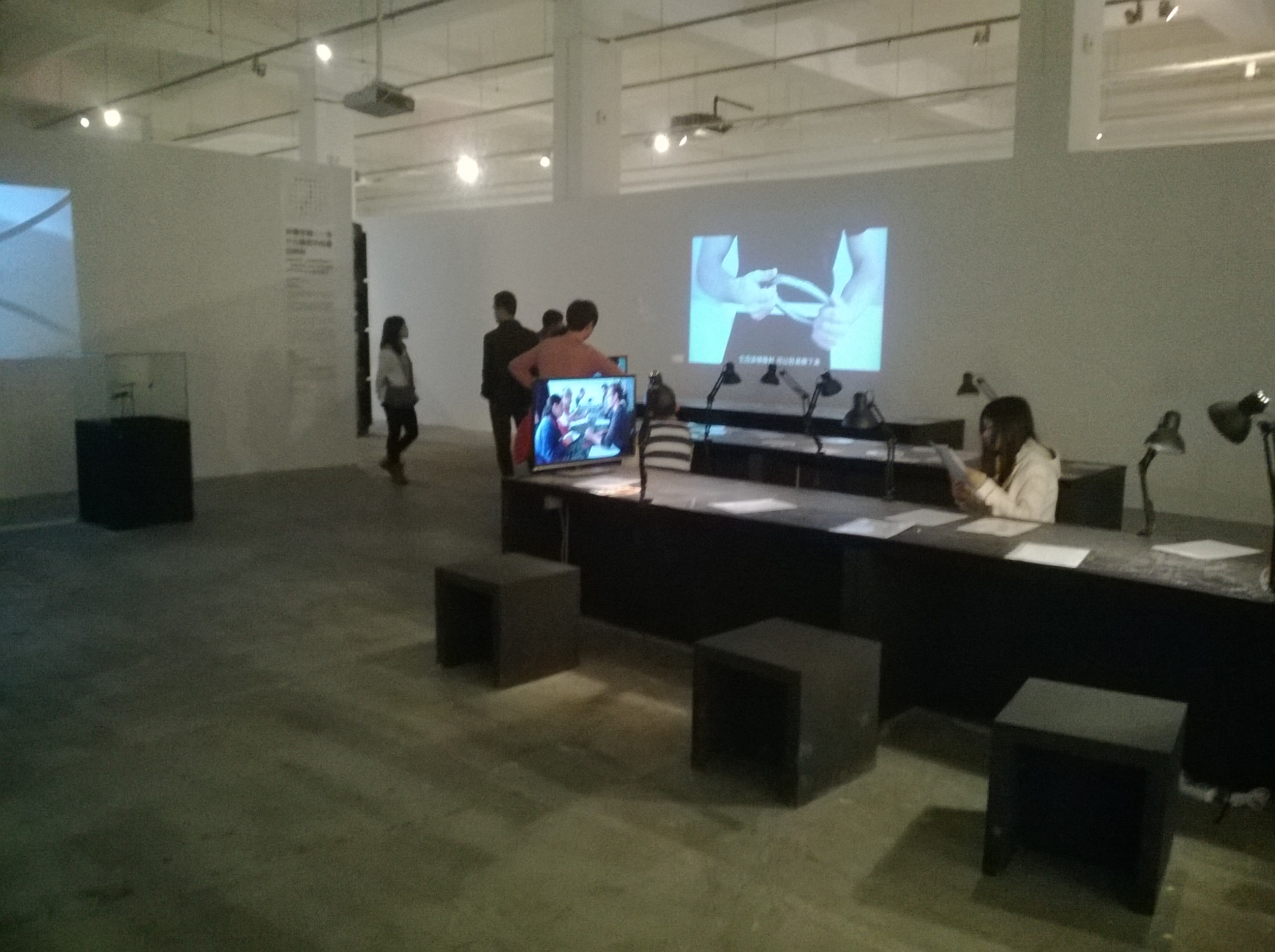


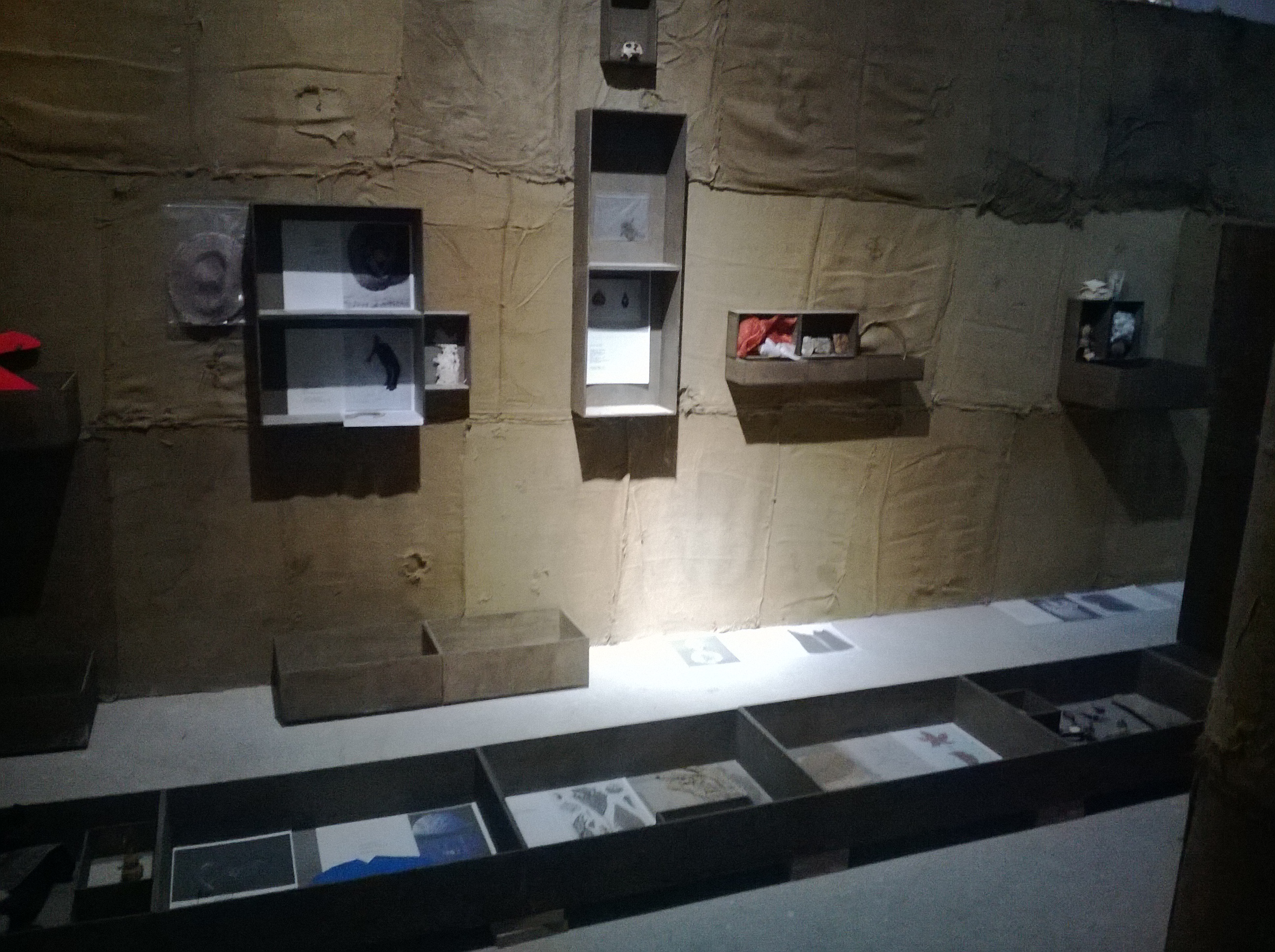


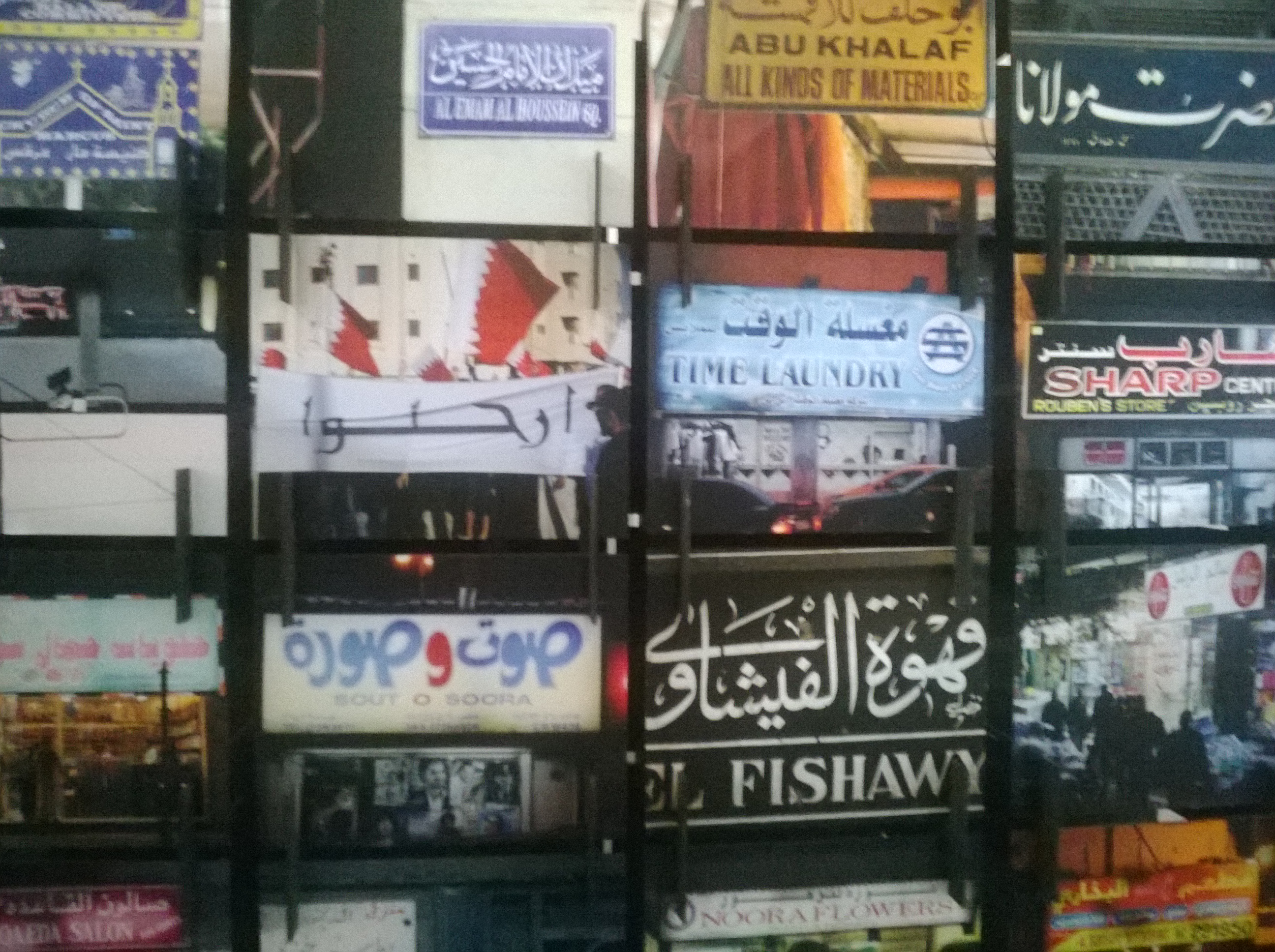
I’d like to add that I was particularly impressed with the Multilingual Typography instillation, brought to you by the Geneva University of Art and Design. I think that it is a very important subject in an increasingly globalized world. Typesetters can’t be pleased with just one language anymore, it’s not enough. And cities like Shenzhen and Hong Kong and elsewhere prove it; modern fonts must be designed with multiple languages in mind. A lot to think about, and a lot to enjoy in these recordings of such.



On the next installment of my holiday-in-Shenzhen, let us check out He Xiangning (何香凝) museum.
Here is an excerpt from an article I wrote in May of last year about the museum, outdated but some pertinent information: http://szdaily.sznews.com/html/2013-05/03/content_2466061.htm
Right next door and also in the OCT area is the more traditionally styled He Xiangning Art Museum devoted to the artist of the same name, who lived from 1878 to 1972. Born in Hong Kong, she later studied in Japan, and rose to prominence during tumultuous times in Chinese history. The first floor has a section devoted to her hybrid Japanese and Chinese style water paintings, full of mountainside landscapes and poems. The remaining halls are simply titled “Collection of Contemporary Art,” an eclectic mixture of mainland art from classical realism to impressionistic abstract. The second floor includes sculptures and photography, and the present exhibition will continue until this weekend. It all makes for a lovely atmosphere, but unfortunately the museum is not very English friendly and translations are lacking. Open 10 a.m. to 6 p.m. Admission is free.
Closed Mondays by the way.
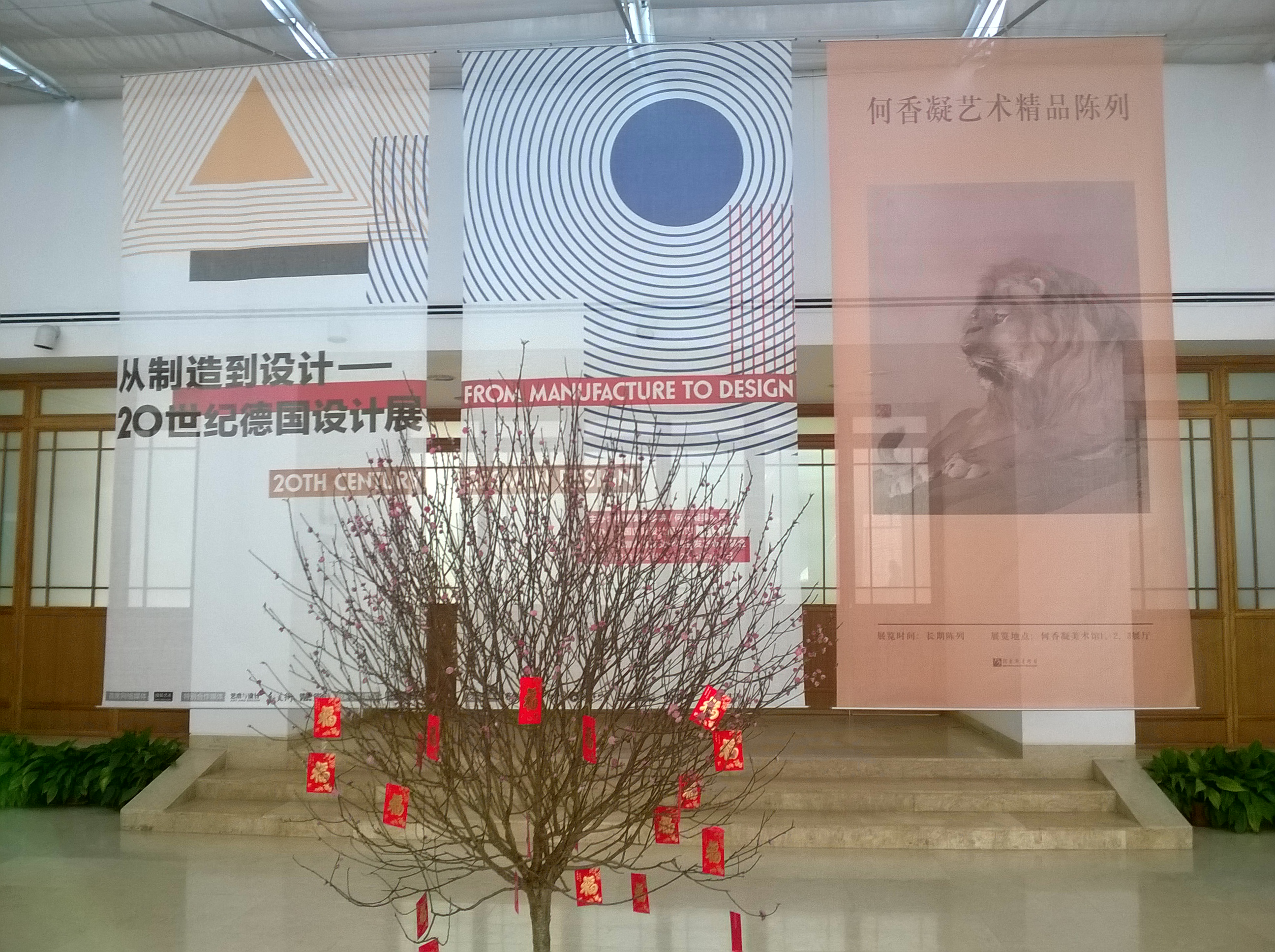
The current exhibition concerns German design through the ages and is quite interesting indeed.
Shenzhen Daily has more, as a matter of fact… http://szdaily.sznews.com/html/2013-12/10/content_2714414.htm
“From Manufacture to Design: 20th Century German Design” in He Xiangning Art Museum narrates the story of Germany’s design success, giving an inspiring overview of the past 100 years.
The exhibits are provided by China Design Museum from the prosperous coastal city of Hangzhou. In 2011, Hangzhou purchased 7,010 pieces of items from German collector Torsten Broehan, including furniture, houseware and posters, dating from the 1850s to the end of the 20th century.
Many of the pieces, which make their public debut in Shenzhen, are considered landmarks of the design industry. One of them is a prototype of the Barcelona Chair designed by Ludwig Mies van der Rohe and Lilly Reich. It was originally designed for the International Exposition of 1929, which was hosted by Barcelona, Spain. The chair’s frame was formed by steel, with a leather cushion above, giving it a smoother appearance. Since 1953, Knoll Inc. has manufactured the chair and copycats also proliferate worldwide. The prototype exhibit in Shenzhen doesn’t have a leather cushion.
“This exhibition focuses on the historical relationship between designers, manufacturers and users. Visitors will be informed about German design’s evolution from a social perspective,” said Zhang, who works for China Design Museum.
The striking feature of the exhibits is their simple and neat modernist style. Zhang said in the early days of industrial development, to meet the need of mass production, German designers had to adopt a simple style.
“Traditional crafts focused on art while industrial manufacture considered techniques. For mass production, designers needed to solve the integration of techniques and art,” said Zhang. “Although Britain was the frontier of the Industrial Revolution, English Arts and Crafts Movement and English Art Nouveau failed to integrate traditional crafts and industrial mass-production techniques, while Germans made it. Germans believed that the Industrial Revolution was basically a reconstruction of productive relations and would finally benefit the masses.”
The exhibition, with more than 100 pieces of work, covers all important periods of German design’s development, including 1899’s Darmstadt Artists’ Colony, 1907’s Deutscher Werkbund (German Association of Craftsmen) and the Bauhaus school of 1919. The two associations and the school were the driving forces in Germany’s modernism in the early 20th century. Outstanding designers included Peter Behrens, Ludwig Mies van der Rohe and Walter Gropius.
Darmstadt Artists’ Colony was the center of German Art Nouveau and the earliest group of designers to experiment the combination of crafts and techniques. The Deutscher Werkbund was meant to establish a partnership of product manufacturers with design professionals to improve the competitiveness of German companies in global markets. One example was Behrens’ pioneering industrial design works for the German electrical company AEG, which successfully integrated art and mass production on a large scale and developed a consistent corporate identity.
Bauhaus was founded amid the ideas of rational, functional and standardized manufacture. The school was famous for not only the approach to design it taught, but also its experimental workshops which focused on practice.
When Bauhaus was closed under pressure from the Nazi regime, who claimed that it was a center of communist intellectualism, some designers and manufacturers had to leave Germany and immigrated to the United States, which helped take German design concepts to the world.
Apart from showcasing products, the Shenzhen exhibition also displays German efforts in promoting a lifestyle to the world. The Deutscher Werkbund’s motto “from sofa cushions to city-building” indicates the integration of products and life, promoting a better way of living. The association also held a string of renowned industrial design exhibitions, such as the Cologne exhibition in 1914. The acceptance of modernist design into everyday life was the subject of all these publicity campaigns.
In less than 100 years, Germany used clean-lined designs, standardized manufacture and newly developed materials to put itself on a competitive footing in the world.

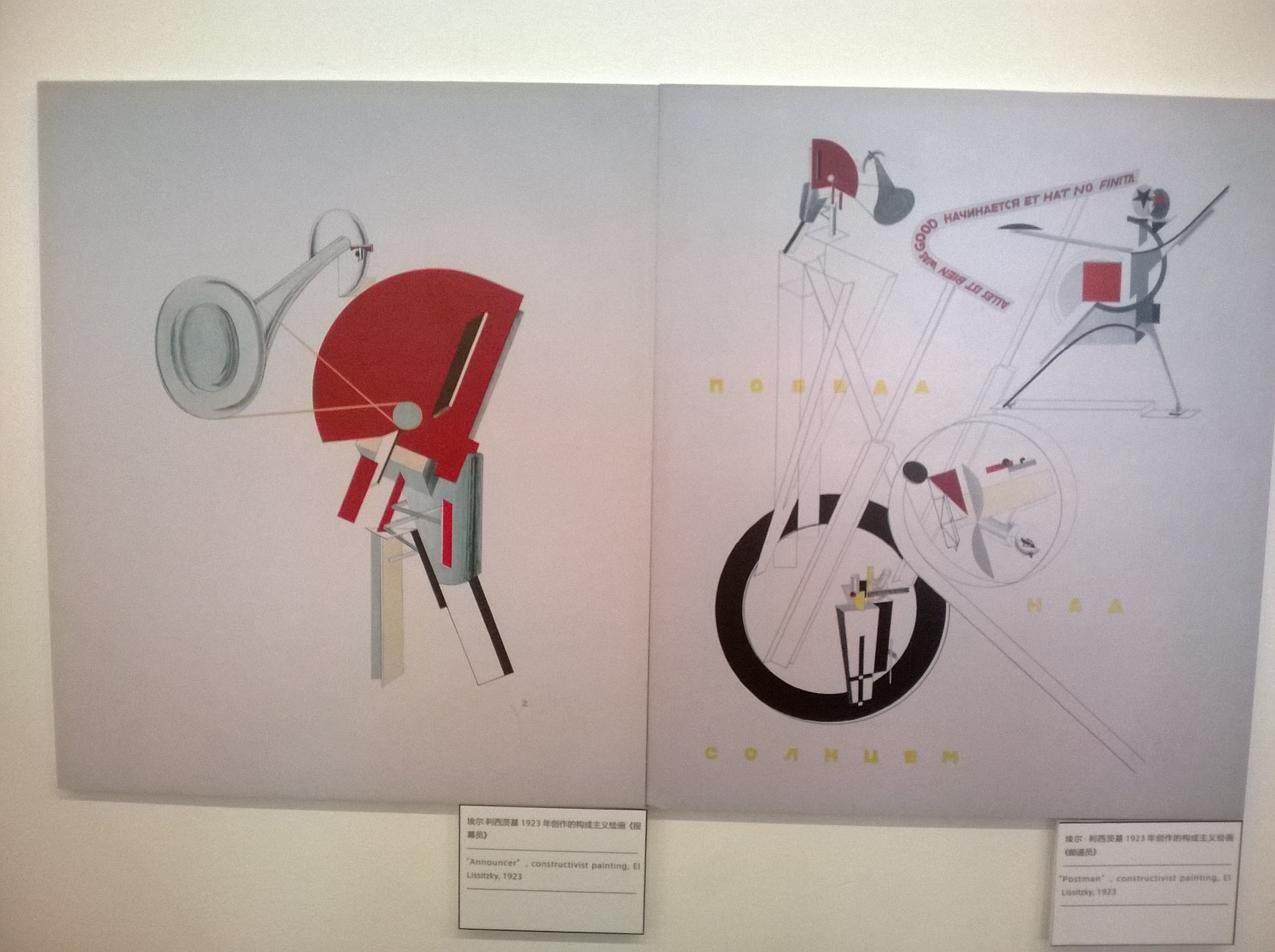
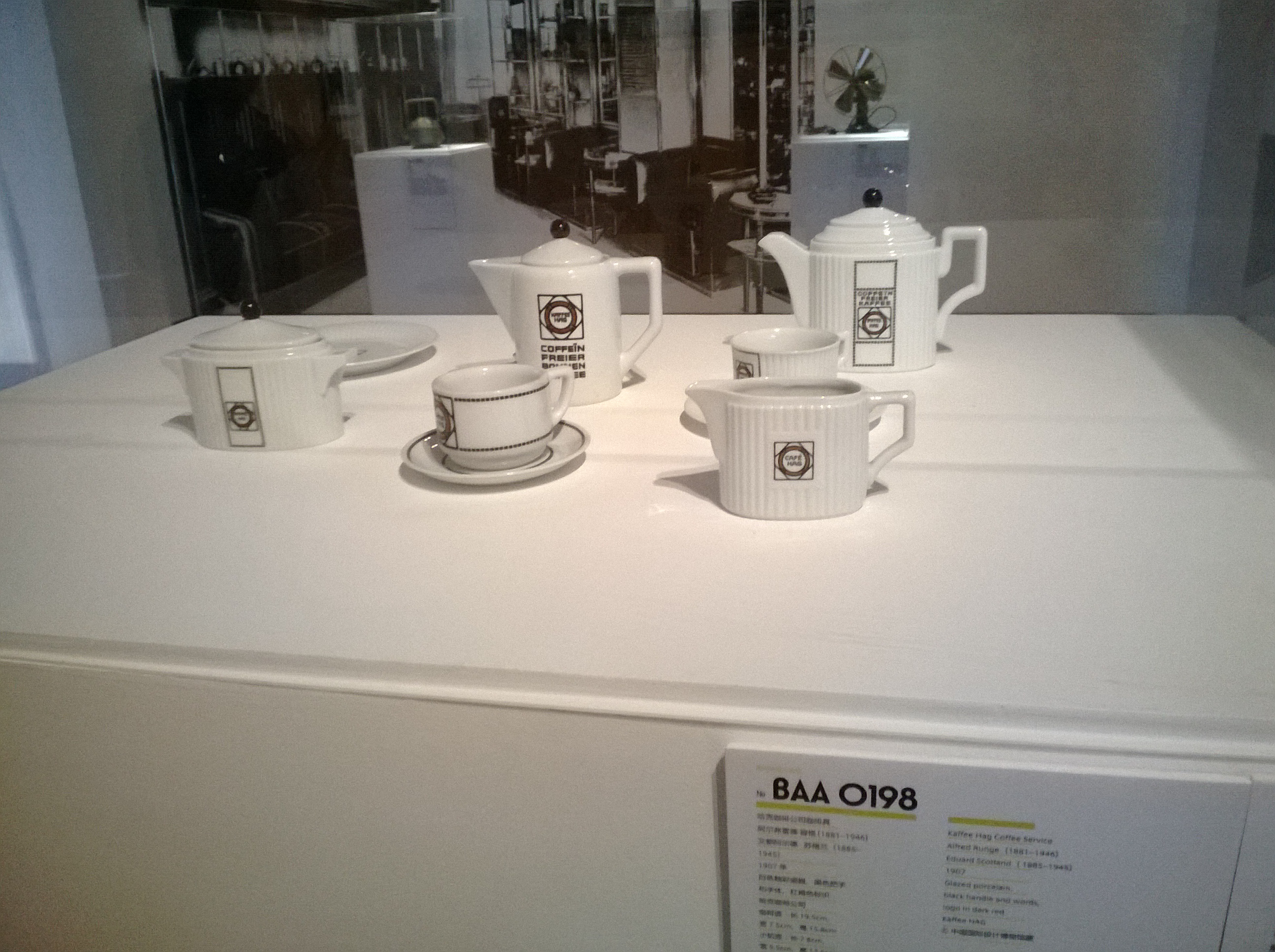

Having stayed in Shenzhen during the Spring Festival holiday, I decided to play the tourist in my own city. I went from museum to museum, getting my art on and trying to find my own creative inspiration.
It’s been said many times before that Shenzhen has no culture, but we all know that not to be true…
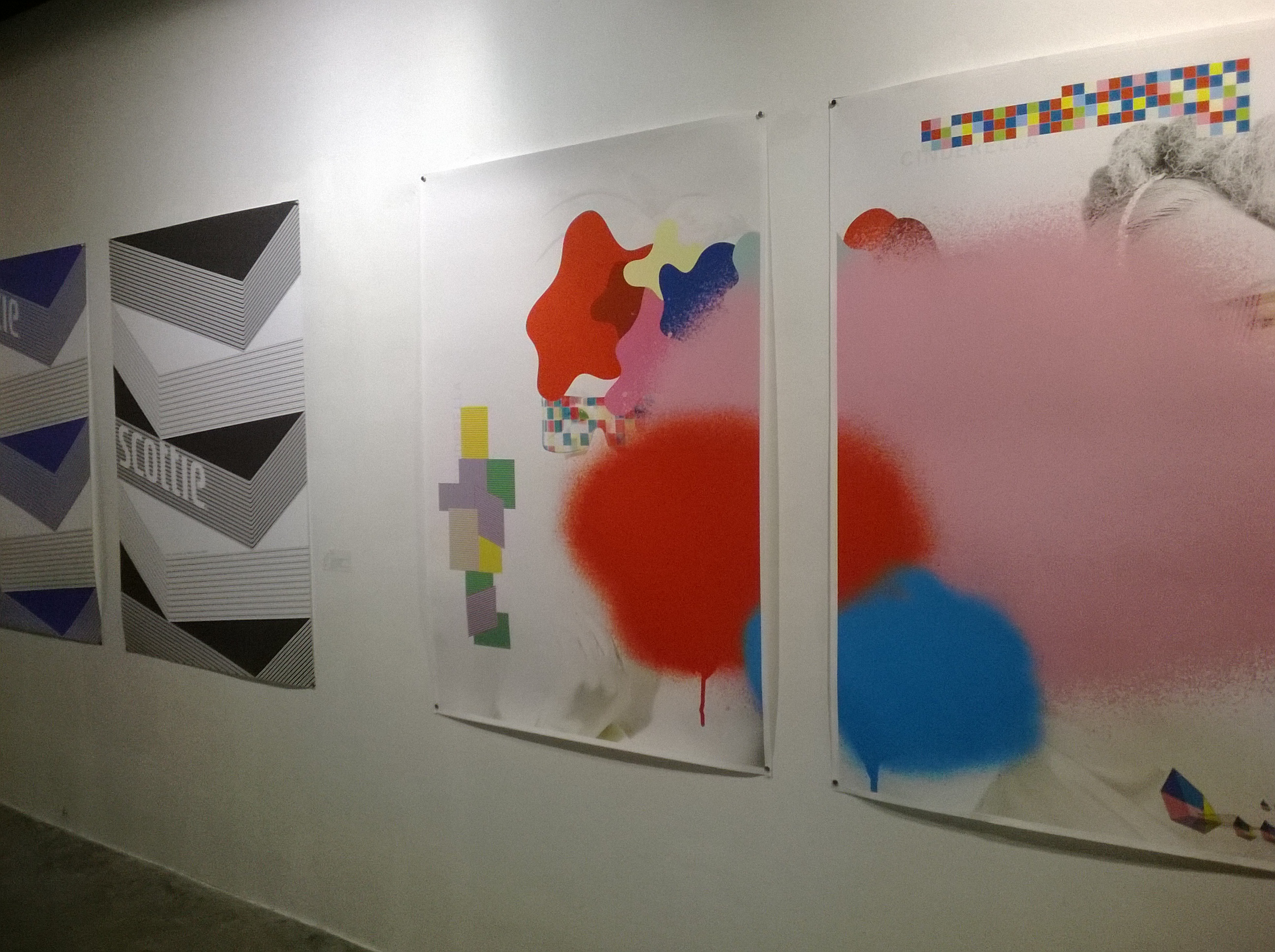
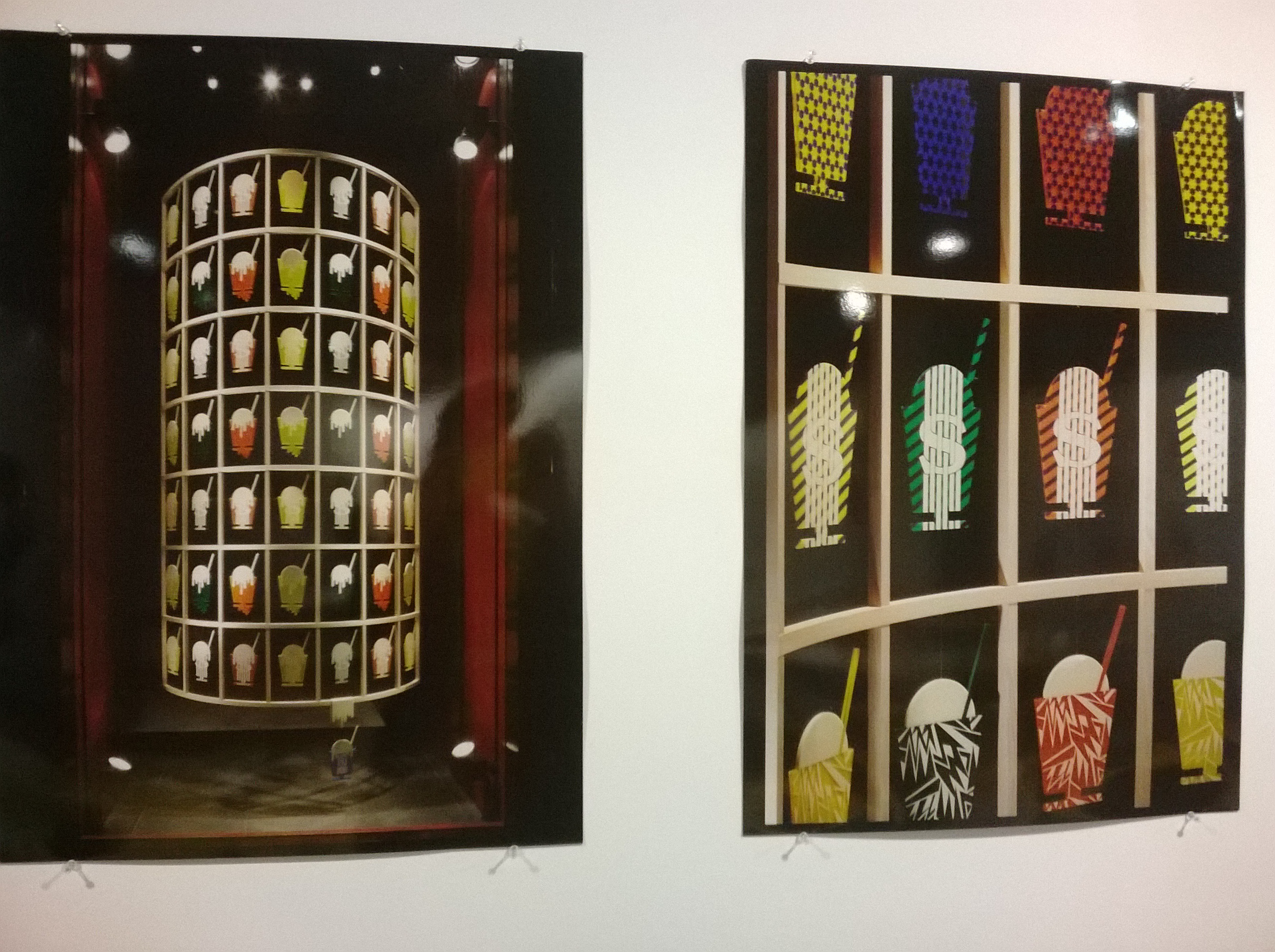
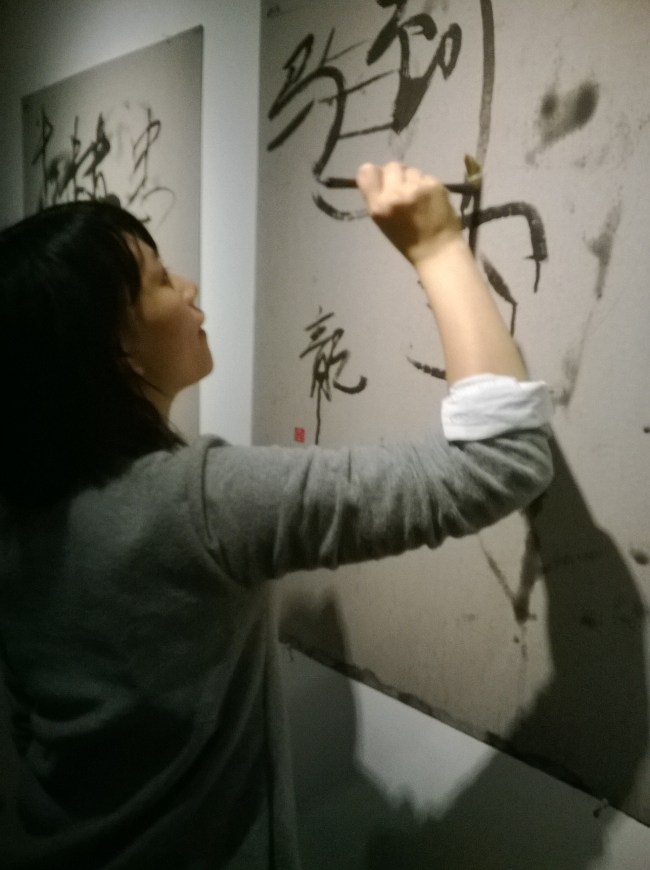
This first installment is the OCT Art & Design Gallery. Featuring various winners of Tokyo’s TDC competitions, all focusing on modern design. At a cost of only 15 to enter, it’s always worth a look!
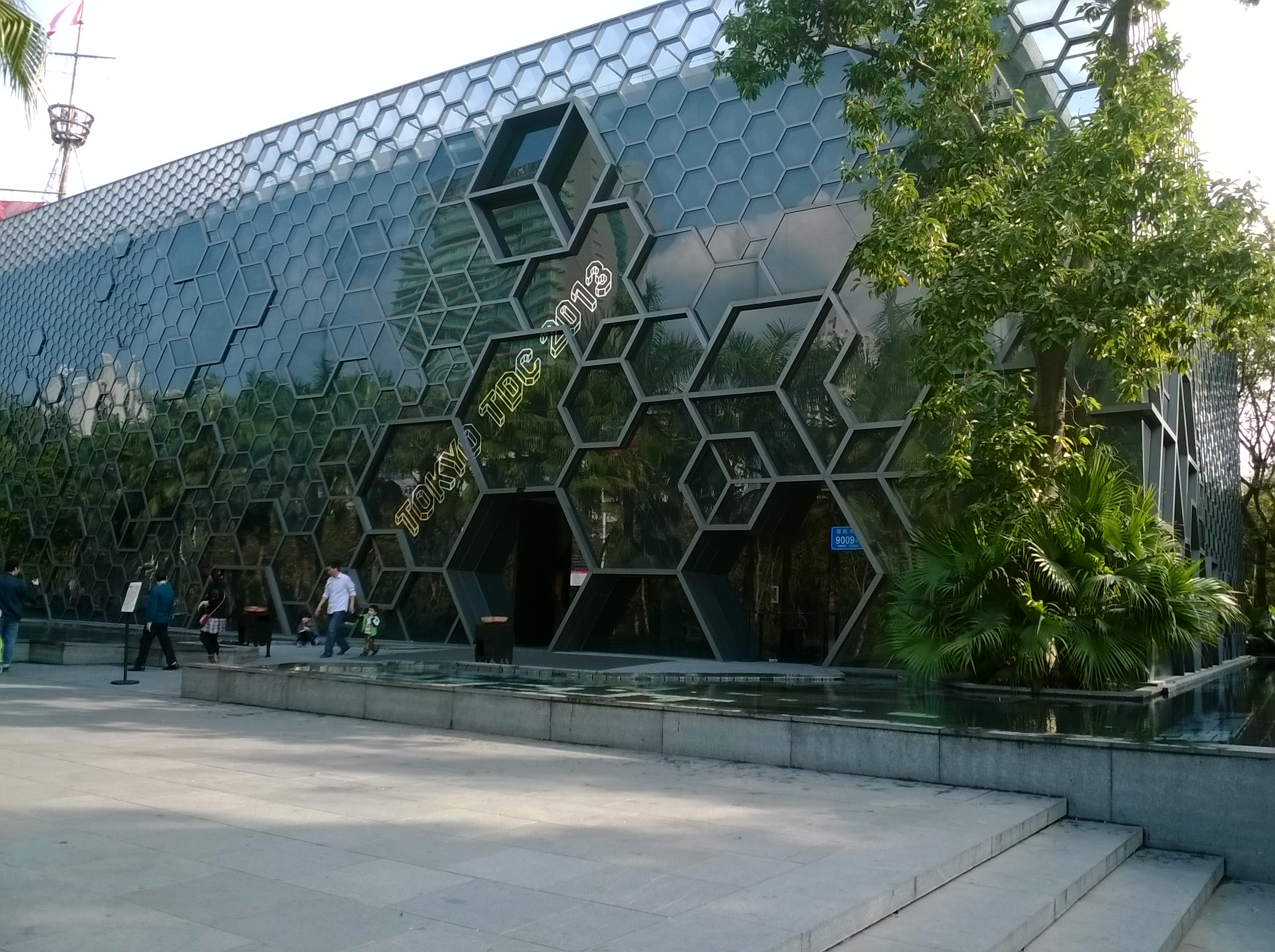
Here is an excerpt from my museum article published last year for Shenzhen Daily, concerning OCT Art & Design: http://szdaily.sznews.com/html/2013-05/03/content_2466061.htm
(However, note that it may not be up to date)
On the other side of the district, bordering Nanshan, is Overseas Chinese Town, also known as OCT. Rich in creativity and hip design studios, several art galleries are located in the area. Adjacent to Splendid China is one of the best — OCT Art & Design Gallery. The building itself is totally avant-garde, a large black glass building held up by steel hexagons. With a focus on powerful contemporary design and hosted by Tokyo Type Directors Club/TDC, the gallery is full of nominees for their annual prizes. The subject matter is very diverse, including book design, typography, catalogues, record sleeves and other products. The first floor is especially concerned with fonts, and also has video installations featuring music videos by Icelandic pop star Bjork and Japanese rock band Androp. The second floor has posters, newspaper ads, bags, logotype, stationary and packaging, with designers from such countries as Britain, Russia, and Japan. The sparse third floor showcases the winners of the TDC prizes, from 2002 to the present. Open 10 a.m. to 5:30 p.m. The price of admission is 15 yuan (US$2.4), 8 yuan for students. Admission is free for all on Tuesdays.




 Ray-Comics