Comic Review: Haruki Murakami Manga Stories makes for some unique and sometimes haunting adaptations

As a young man in my twenties, I devoured Haruki Murakami. The Wind-Up Bird Chronicle, Norwegian Wood, Kafka on the Shore, Sputnik Sweetheart, IQ84, and more. Seventeen at last count. The dreamlike fantasies of other worlds, the magical realism, the meticulous prose of the English translations, the lack of plot and the melancholic atmosphere, I found great comfort in reading book after book. And then one day, after the author went past his prime, I started finding them repetitive and I stopped reading. Perhaps my tastes have changed, perhaps they weren’t as sophisticated as I once thought. I like to think my standards have improved, but who knows? In any case, it can’t be denied that Haruki Murakami is among the most successful fiction writers on earth and has had a great impact on literature.

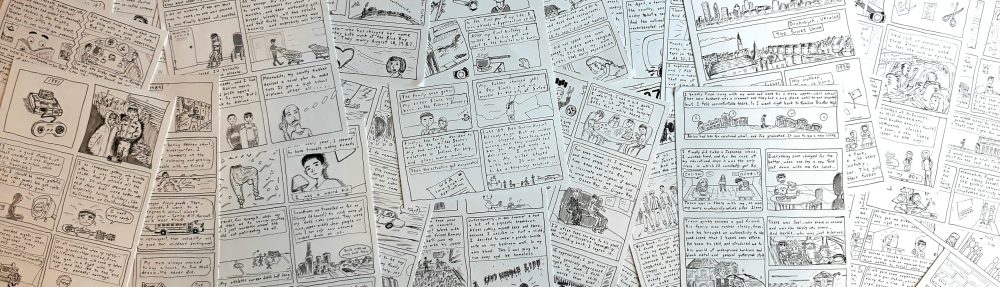
I also happen to be a fan of Japanese manga comics. So therefore, a manga adaptation of Murakami short stories should be right up my alley. I have now finally read Haruki Murakami Manga Stores Volume 1, which adapts the author’s short stories “Super-Frog Saves Tokyo,” “Where I’m Likely to Find It,” “Birthday Girl,” and “The Seventh Man.”

I’m not totally sure these always work, but it’s certainly an interesting idea to adapt these stories into another medium. (There have been several successful film adaptations of his works, in fact.) The term manga in the title, however, does not really lend itself to assumptions about heroic shonen adventures and cutesy anime girls. Perhaps this should be thought of more as artistic indie comics.

The first story, “Super-Frog Saves Tokyo” is a weird tale of a Super-Frog. With a typical Murakami protagonist, a dull businessman/sarariman type having an existential crisis, it’s unclear in the story if the frog is real or just a figment of his imagination. In that way, it’s a good introduction to the vibe of this collection. I also don’t know what to make of it. Is it good literature? Is it just weird for weird’s sake? For more depth, I’d have to read the original prose short story to analyze. The comic version, with decent colorized art, is as confusing as it is anything else.

“Where I’m Likely to Find It” is in black & white, which is more typical for manga, albeit using a bit of color in some scenes in which a mirror seems to show an alternate world. This is what Murakami often writes best, a subtle fantastical mystery without any true resolution. In a sort of neo-noir genre, an amateur investigator explores a staircase to find a missing husband. There’s something of satisfying conclusion, but of course what really happened is never quite explained in the end.

“Birthday Girl” feels different in starring a female character, and probably has the most dynamic art. Maybe it’s clichéd that the main character is a waitress, but it’s suitable for the purposes of the plot. She meets an old man, they have a drink together, and she gets a birthday wish granted which the reader doesn’t get to know. It does inspire imagination, which is ultimately the point of this kind of style.

The final one is “The Seventh Man,” and it is the most haunting of them all. A story-within-a-story, a nameless man speaks about his childhood from a less modern era. There is nothing necessarily supernatural, when he experiences a typhoon and its horrifying aftermath. A childhood friend drowns, which is expressed with sadness and mystification. A good meditation on trauma. Like the rest of the stories, this may not be a good read for everyone. The overlap of Murakami and literary comic readers is rather specific, but for me I’m glad I gave it a try.

Audiobooks – Part 2: Many favorites

As promised in my last installment in which I introduced my hobby of Audiobooks, I shall now go through a long list of my favorites recommendations. This post may be a bit all over the place but I perhaps you’ll find something you may like and it was worth it~

(Here is my full Goodreads list for those interested, and links to specific bookshelves shall be shared intermittently below)


First off, this doesn’t even technically count as audiobook but sometimes there’s nothing like a BBC radio drama–well, not always BBC but usually the BBC. Instead of one actor reading an entire book, the lost art of the radio drama employs multiple actors and gets rid of those pesky “he said” and “she said”s to efficiently tell the tale in a manner best suited to this particular medium. They are often much quicker listens than the unabridged texts and more entertaining.

Several classics come to mind, but above all The Hitchhiker’s Guide to the Galaxy stands out as the greatest. Trippy sci-fi and trippy comedy, nobody does it better than Douglas Adams! Interestingly, before any other iteration it was meant to be a radio show originally and that was always Adams’ preference. The saga started way back in 1978, and do check out the 2004 and 2005 series too.

Other noteworthy radio dramas include The Hobbit by Tolkien, Neverwhere and Good Omens by Gaiman, Foundation by Asimov, and Neuromancer by Gibson.

If you ask very nicely I may even send you the files but you didn’t hear that from me; support your local BBC and buy legit whenever possible 😉


Next I feel I must continue on the subject of Neal StephensonSnow Crash as said is my the best ever, but pretty much any Stephenson tome will give hours upon hours of thought-provoking big ideas and exciting writing.

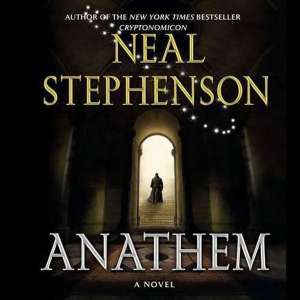
The pseudo-sequel postcyberpunk The Diamond Age is quite well done, but my second favorites are tied with the epic hacker thriller Cryptonomicon and philosophical extreme geek discourse that is Anathem. I am due to even listen to those a third or fourth time eventually. Reamde is another fun tech thriller, and by the way next on my list whenever I find the time is Seveneves.


On the subject of quality science fiction, I’d be remiss if I did not mention the late great Philip K. Dick. A powerful and timeless author who prediction the confusion of reality-questing modernity more than anyone else, P.K. Dick’s novels are not too long and pack quite a punch hence well suited to the audio format.

Do Androids Dream of Electric Sheep? is an obvious recommendation (and Blade Runner is indeed currently back in the public consciousness!), but my ultimate top pick is the theological tale of madness VALIS. That one needs to be reabsorbed every few years for maximum pondering. Other listens include the also-currently-back-in-the-public-consciousness tragic nazism of The Man in the High Castle, and the random enjoyable mindfuckness of Counter-Clock World.

What should I listen to next? I was thinking either Ubik or A Scanner Darkly. 


If I may feel more literary, there’s always acclaimed Japanese novelist Haruki Murakami. The dreamy magical realism style makes for gooood listening on those long melancholic nights of travel and introspection…

So far I have only listened to a few favorites The Wind-Up Bird Chronicle and Norwegian Wood, with the former being a slightly superior book in my opinion but the latter’s more grounded nom de plum stylings a better fit in the audio format. Kafka on the Shore made for an interesting production employing multiple actors but it just doesn’t seem to work as well. Honestly, as my reading tastes evolve, I find Murakami becoming more hit or miss. But the hits when hitting are still amazing.


Next up is my ‘not even reread’ section. What I mean is, because of my low-attention span I am a quirky yet stubborn reader so I have figured out my best method for audiobooks is to listen to one of my favorite novels that I have already read. It’s a great way to reread and absorb the content more deeply.

However, some audiobooks are so engaging even I can listen to an entire book for the first time and actually pay attention to most of it. These are the not-even rereads.

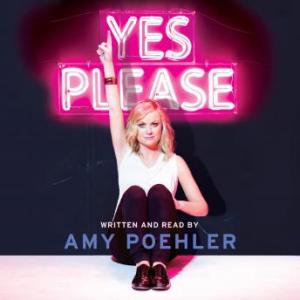
Often, that especially goes for books written by performers in which the performers say aloud their own works. Especially with comedy books. Yes Please by Amy Poehler was a great surprise in one of the best memoirs I had come across. A lot of charm and heart, with guest speakers. So far it’s the only audiobook I’ve gotten others to listen to! Bossypants by Tina Fey was also wonderful in a similar vein, and The Girl With the Lower Back Tattoo by Amy Schumer didn’t quite work as well but did showcase a perspective worth listening to. And now I have just noticed that pattern has emerged with regards to comedian demographics. I should mix it up. So how about next on my list is Born a Crime by Trevor Noah.


Just a few more of my very favorite favorites to round it out:

There are the nonfiction social justice books, such as Life Inc. and Throwing Rocks at the Google Bus by Douglas Rushkoff. I learned a hell of a lot about the system, man. The controversial Going Clear by Lawrence Wright displays a fascinating study of the Scientology Cult, an unbelievable true story of American insanity that left me on the edge of my toes.

Some newer science fiction such as Ready Player One by Ernest Cline which may not always be as smart as it strives but is eminently entertaining. Gun Machine by graphic novelist Warren Ellis was a wild ride told in the grittiest of grit.

Lastly, the absolute most interesting book of them all is certainly Sapiens by Professor Yuval Noah Hareri. A sprawling history of the human race that gives a new light to all that makes us human, expressed in myth-busting factoid after myth-busting factoid. The entire anthropological record always in readable prose. It has since impacted me more than any other book I’ve read in years, giving me so much to think about with where humanity has gone and where to go next. I recommend this book to everyone, from cynics who need to get the proper big picture to naive optimists who don’t truly understand the past. An incredible book, and I just hope I learned as much as I can from initially listening instead of reading. (I did purchase the paperback of Hareri’s followup, Home Deus, so I should be all around good.)


That’ll have to be about it. So many memories of walking around the neighborhood and experiencing other worlds, sights and sounds and smells reminding me of the voices who told me stories…

What have I left out? So much! Classics like Orwell, or of the beat era like Burroughs, and important contemporary American authors Bret Easton Ellis and Janet Fitch. I can only fit so much in one organized blog posting, but in any case I hope you will consider some of these brief introductions and enjoy the possibilities of literature in whole new ways.

What are you going to read/listen to next?